

Concrete
Practising Sustainability at Every Step

Pearl Tiwari, Director and CEO, Ambuja Cement Foundation (ACF), takes us through the efforts taken and progress made by the community development initiatives undertaken by ACF, which is making a difference in the areas of healthcare, water conservation, livelihoods, education and women empowerment.
Ambuja Foundation is an independent, pan-India development organisation, committed to generating prosperous rural communities. They believe in the vast, untapped potential of rural communities and the unstoppable power of the people that live there. With investments in water, agriculture, skills, women, health and education, they enable ‘livelihoods’ as a pathway to unleashing that potential.
Partnering with like-minded corporations, governments and others, they work collaboratively with communities to solve pressing community problems – empowering local people to be the catalysts and drivers of change. With over almost three decades of work, they have seen a complete transformation in the remote geographies in which they work.
Today, with the full support and encouragement of Ambuja Cements, ACF is committed to expanding their footprint and impact of their work even further, through partnerships – building many more sustainable, prosperous rural communities and revitalising rural India as the backbone of this country.
Community Development Initiatives
Ambuja Cements has been working with grassroots communities for over 30 years – its founders had the vision that, as the company prospered, so should the communities around them. Community development initiatives were, therefore, carried out extensively long before the CSR law came into play.
As the company, and therefore its CSR, grew, there became a need to create a separate organisation of development professionals to execute projects. For the last 29 years, Ambuja’s CSR initiatives have been implemented through Ambuja Cement Foundation. ACF has played a pivotal role in improving the lives of the communities, in and around ACL plant operations, with an objective to energise, involve and enable them to realise their potential. This has enabled the company to fulfil its commitment to be a socially responsible corporate citizen.
Over the years, Ambuja Cement Foundation as a stand-alone development organisation, has grown exponentially, due to Ambuja Cements support and also its expansion into various other geographies. It has progressed so well by facilitating the convergence with government schemes to support projects, and via the active participation of the community members – encouraging community members to actively contribute and take ownership of the projects. With successful community participation, this impactful, on the ground model has led to ACF being recognised as a leading CSR implementing agency. As a result, several other corporates have invited ACF to be an implementing partner in executing their own CSR, so with full encouragement from Ambuja Cements Ltd, ACF has grown its footprint significantly in terms of size and reach – beyond ACL territories, working in needy districts and communities where ACF’s expertise in remote rural community development is most needed.
In terms of governance, Ambuja Cements has a very active and involved CSR Board Committee. They see great benefit in the work of the Foundation as there are many direct benefits to the business also – which reinforces the statement ‘you can do well by also doing good.’ The CEO of the Foundation reports to the MD of Ambuja Cements and the board is frequently updated on the impacts, achievements, and interventions of the Foundation.

Rural Communities
Livelihoods are the key to solving the riddle of rural poverty. With a good livelihood, most people can solve many of their own problems.
Whilst there have been great gains in the reduction of poverty across the country over the last 25 years, many of those that have ‘come out of poverty’ still live in dire and difficult circumstances – they simply do not have a level of income to enable them to live a decent quality of life, rather than just bare subsistence.
Income levels, therefore, need to be sufficient enough to enable them to meet some fundamental household needs – food, energy, housing, drinking water, sanitation, healthcare, education and social security. Whilst it may sound simple, it’s not. Livelihood is a multifaceted issue, and is so much more than just the impact of skills and education.
Following the livelihoods pentagon approach, ACF believes that for any person to earn a livelihood, they require five sets of capital to support them:
- They need skills, but if they have health problems, the skills do not matter.
- They need a basic education, but if they cannot access affordable loans they get into a vicious cycle of debt.
- They need technical know-how, but if there is no water for the family or farming, it is of
- little help.
- They need bargaining power, but if they do not work together their voice cannot be heard.
To prosper, rural villagers need all these things and more, to support them in earning a livelihood. Therefore, ACF takes a holistic approach to helping rural families generate livelihoods – working across 6 thrust areas of water, agriculture, skills, women, health, and education. ACF works with 2.2 lakh farmers, 35,000 women and 88,000 youth – directly helping them enhance livelihoods, build businesses, diversify income streams and skills for a
strong livelihood.
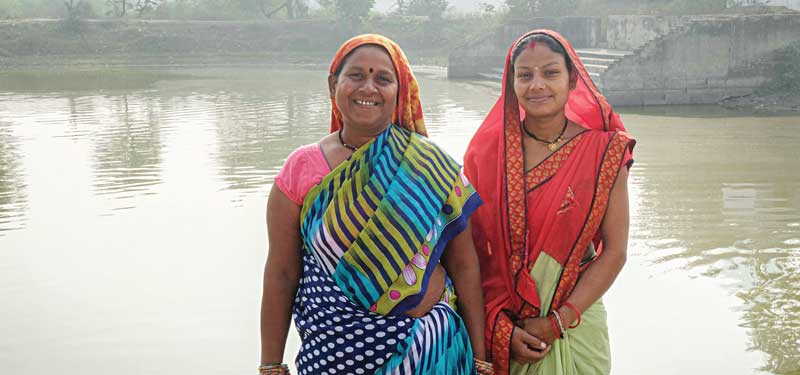
ACF Sakhis are a key vehicle of health care delivery, driving various health promotion initiatives at a community level.
Key Programmes
ACF works with a vision to create a sustainable and self-dependent society, by generating livelihood opportunities for the rural population. For this, ACF has chosen to work in the selected thrust areas:
- Water Management
- Livelihoods (SEDI and Agro-based)
- Women empowerment
- Health
- Education
All programmes at ACF are undertaken with community participation with the help of tools like Participatory Rural Appraisals (PRAs), which ensure better understanding of local nuances and hence efficient implementation in varied geographies.
ACF has also worked in water resource management for almost 30 years across 11 states – from the deserts of Rajasthan, to the mountains of Himachal Pradesh, and from the interiors of Maharashtra to the coastline of Gujarat. Over this period, they have learnt first-hand how water issues in India vary greatly from region to region.
The semi-arid Rajasthan, for instance, has always had to adapt to limited water supplies. In mountainous states such as Himachal Pradesh and Uttaranchal the water holding capacity of the soil is low and susceptible to excessive soil erosion. Moreover, the undulating topography and steep slopes lead to high water runoffs and landslides. The coastal regions grapple with salinity creeping inland rendering ground water unfit for agriculture and domestic use. In other regions such as Maharashtra, the water crisis is mostly a man made calamity. India’s water challenges, therefore, require deep knowledge of local conditions and the development of hyper local solutions.
Working hand in hand with local communities and Government ACF has built drought resilient villages – empowering the community to secure their water future.
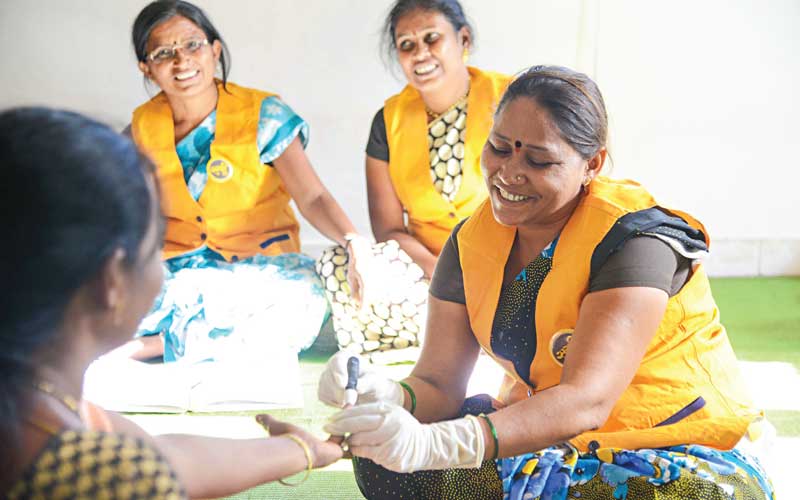
ACF’s work in women led microenterprises has helped over 10,000 women to kickstart their businesses.
Water needs both technical and social solutions and hence their work focuses on both the demand and supply side interventions in three core areas:
Drinking Water Security: ACF works with families and communities to ensure clean drinking water availability for daily household consumption. This includes solutions such as Rooftop Rainwater Harvesting Systems to ensure fresh water availability and the revival of drinking water sources such as pumps, tube wells and village ponds. ACF distributes water throughout villages via solar pumps, overhead tanks, and pipelines to bring water to within 200m of each household, and ensures schools have water also. Access to safe water is paramount, and so ACF trains communities to test and monitor the quality of their water and where necessary, install filtration plants as a solution. Source sustainability is also addressed.
Water for Livelihoods: ACF works hand in hand with local communities to plan, implement and manage projects to harvest rainwater and ensure all-year-round water for farmers, families, and communities. They do this by building and renovating water harvesting systems like ponds and check dams – supporting groundwater recharge along the way. ACF also works with communities to revive the ancient traditional systems of water. Soil moisture is critical and farm bunds, trenches and loose stone check dams are built to conserve it for livelihoods. Additionally, ACF works with communities to rejuvenate watersheds and restore the natural ecosystems that support water.
Water Use Efficiency: Once water has been made available, the communities need to be educated on its management and efficient usage. Agriculture consumes almost 80 per cent of available water due to the widely prevalent flood irrigation techniques. Their interventions focus on promotion of micro irrigation techniques, reduction of conveyance losses, small lift irrigation schemes and both participatory groundwater management and irrigation management.
ACF’s health programmes integrate preventive, promotive, and curative care, using our Sakhi’s as grassroot healthcare providers trained to manage a range of conditions.
Maternal Child and Adolescent Health: Their trained Sakhis’ provide home based new-born care services, antenatal and postnatal care, promote immunisation, tackle malnutrition and address anaemia and other issues around adolescent health.
Communicable and Non-Communicable Disease: ACF educates the community and builds their capacity to bring about lifestyle changes, develop a proactive approach to health, and to present for early diagnosis and treatment of communicable and non-communicable diseases. This includes health promotion on NCDs, TB and HIV; screening and diagnosis of high-risk patients, facilitating access to affordable treatment, promotion tobacco free and providing counselling for mental health.
WASH: ACF promotes safe drinking water, sanitation, and hygiene to ensure the health and wellbeing of communities they work in. Promoting personal and environmental health, creating open defecation free villages, ensuring WASH services in institutions like schools and panchayats and tackling menstrual hygiene, they actively work to prevent the spread of disease. Additionally, a cadre of Swachhata Doots (adolescent volunteers) works to keep villages and schools clean.
Curative Health: ACF provides curative healthcare services in collaboration with primary healthcare providers, to address gaps in rural healthcare provision. This includes mobile medical vans, diagnostic centres, and community health clinics. Speciality health camps are organised and ACF also provides health care centres for the migratory trucker population.
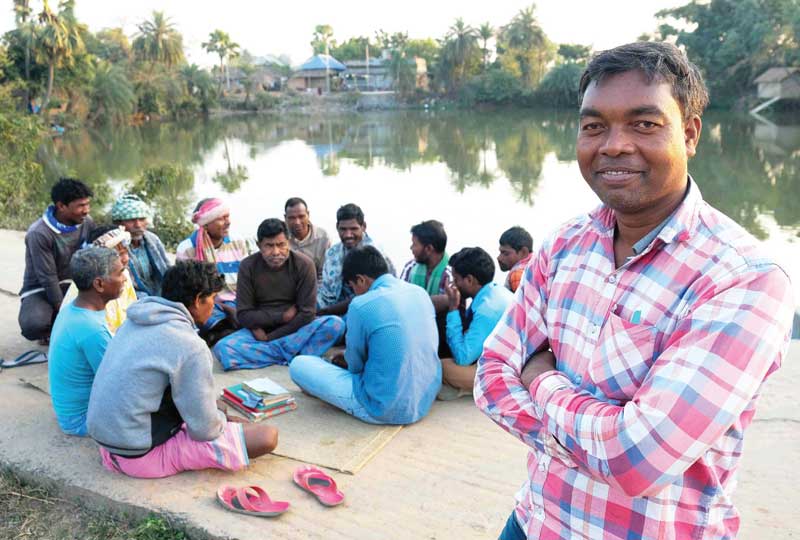
Strategy meeting of the water user committee near their community pond.
Women Empowerment
Gender is a cross-cutting theme at ACF and they ensure that women play an integral role, and are engaged, across all their programme verticals.
Firstly, they focus on the social participation and inclusion of women – drawing them out of their homes and mobilising them into SHGs to initiate saving and forming social networks. They harness the power of women as key drivers for improving the health and sanitation of communities and ensure their participation in village forums such as village development committees, water user associations and other key decision-making bodies.
ACF also provides pathways for women to achieve economic empowerment – generating incomes, starting new businesses, skilling and accessing government schemes and credit. Their work in women-led microenterprises is noteworthy with over 10,000 women kickstarting businesses and thriving. Additionally, they promote inclusive agriculture. Earlier the role of women in agricultural activities were limited to labour, however they have been actively mainstreaming women into agriculture and crop development and engaging them in Farmer Producer Companies as decision makers.
ACF also places a big focus on building local institutions, like Women’s Federations. By collectivising women, they help them unite on common problems and work together to find solutions – creating market linkages, kickstarting their own cooperatives, and actively taking up local social issues like alcoholism, domestic violence, and the ill-treatment of widows. They have 11 Women’s Federations till date, with 14,120 women members.
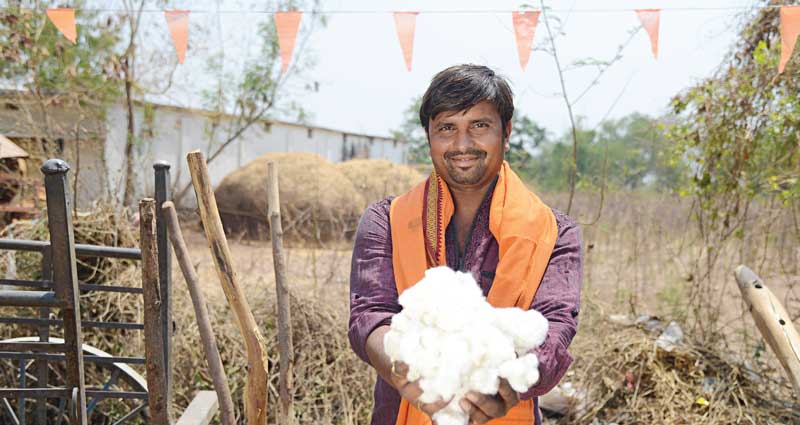
Through its agriculture thrust area, ACF is set to promote micro-irrigation and create additional livelihoods to supplement farmer incomes.
Education and Skill Development
Rural youth, not only lack opportunity, they also lack awareness and the motivation to seek employment; aspirations are often unrealistic and solely focused on white collar jobs. At the same time several skill-based positions are lying vacant for want of appropriately skilled manpower.
At ACF, they follow a unique model of skill training, that motivates and counsel’s youth, offers them a tailored programme designed to meet the employment needs of businesses within their areas, and find good jobs in and around their districts. After placement, rural youth face many challenges in their first job placement. In order to increase retention, they provide ongoing mentoring and support to transition into formal employment.
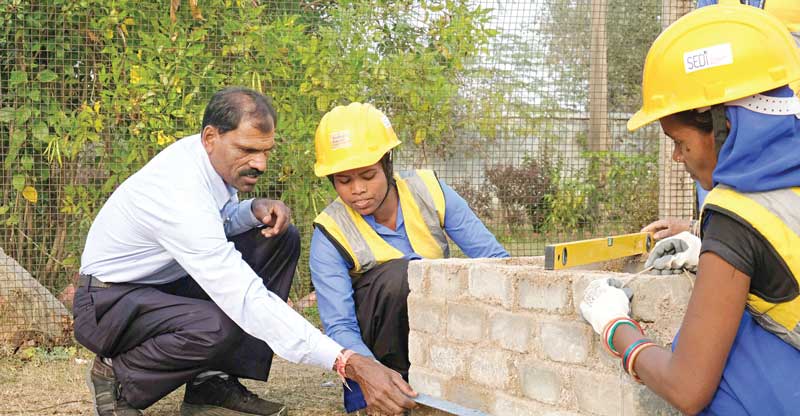
ACF’s 35 Skill and Entrepreneurship Training Institutes (SEDI), across 10 states, currently offer 33 NSDC certified courses in 12 sectors. Their intervention follows a three phased approach:
Training: They closely engage with industry in regional areas to understand their skilling and recruitment needs, and develop tailored skilling courses to impart those skills to unemployed youth in the area. Training is imparted in a classroom setup that stimulates the actual work environment for the respective trades. The training calendar is a balanced schedule of classroom, practical and on-the-job training, soft skills, basic IT and English as well as industry visits to expose the trainees to the realities of the workplace and prepare them for employment. Guest lectures by prospective employers, help their trainees understand workplace realities and prepare themselves to deal with them. Counselling of both the trainees, and their parents to develop their willingness to relocate for employment is an essential element of their training. They actively foster entrepreneurship at SEDI to help students start their own business and equip them with the necessary skills for it to flourish.
Placement: Once skill training is complete, SEDI helps facilitate the placement of graduates into their first jobs, via a network of partnerships with industries and businesses. But it doesn’t end there, as rural youth need a lot of counselling and hand holding in their initial job placements. Group placements, group housing, and other transition facilities such as transport facilities from the remote villages to the cities (as per the felt needs of the trainee cohorts) ensure that peer support and guidance is readily available to the newly placed trainees thus enabling a smooth transition of the trainees into a formal workspace. Refresher Training is a key component of their model.
Entrepreneurship: ACF also promotes and supports entrepreneurship – encouraging graduates to start micro and small enterprises, and training existing entrepreneurs to take their businesses to an all-new level. A new Enterprise Development Curriculum has been launched, which provides training and mentoring on every aspect of starting and growing a small business. Over 23,112 young people have established their own enterprise.
Taking Challenges Head-on
Initially, ACL and ACF faced huge challenges in convincing the local community that ACF was there to help them, not exploit them. There was a need to demonstrate their sincerity via initial projects and slowly build up a reciprocal relationship of trust. That trust has stood the test of time, and today ACF the community relationships are their greatest assets.
Similarly, being a corporate company, community people thought that work would simply ‘be done for them.’ There was a mentality of that nature. However, at ACF, nothing is given for free. They work towards getting community participation, contribution, and involvement – encouraging them to take ownership of projects. Only then, does the sustainability and success of a project develop.
Working in the remote interiors of the country, they have faced challenges in hiring high level professionals. To tackle this, their strategy has been to take ordinary people with basic training in development, but who have the right attitude, values, and ethics, and to train them overtime. Whilst it takes time, this strategy has worked wonders for them and today they have built a loyal and highly skilled staff base who are the best at what they do on the ground in communities. Similarly, finding good quality staff and retaining them in the remote interiors is a challenge. However, today, ACF is a Best Place to Work and a highly sought-after workplace.
Convergence with government schemes has enabled significant growth and funds to support various projects, however the release of those funds for reimbursement are often delayed and so they face an accumulation of cash flow difficulties.
Helping Hands
ACL commenced doing CSR long before it was mandated by the government and over almost 30 years, ACF has developed a core set of expertise and experience which can help other cement organisations and corporates to meet their social responsibilities, impactfully. They are ready to partner with others on joint projects.
ACF’s experience has helped many corporates tackle key challenges they face in executing their CSR. Located in the deep interiors where the problem of rural poverty lies, ACF also has a proven process in place to enable last mile reach. Their core expertise in building community capacity and ownership has been instrumental in making projects sustainable in the long run. By marrying modern technology with the traditional wisdom of the community, ACF has been able to provide lasting solutions to complex local problems. ACF build’s people’s institutions so that the long-term sustainability of each project is managed by the local people. An ability to lead and manage a consortium of partners – helping them find common ground. i.e. Government, NABARD, NGOs, Corporates and Community. Lastly, ACF has a very professional approach, capturing detailed data on impact and sharing it with their partners
via proper reporting – helping them meet their regulatory requirements.
Bringing Sustainability to the Table
While ACF started as a CSR arm of the company, as a foundation their role has expanded exponentially. They now operate in extended territories and are committed to harnessing their interventions to transform rural India joining hands with other corporate, government and nonprofits to support their work.
Looking at the future plans, ACF will focus on ensuring 100 per cent households of the operating communities receive safe drinking water and will continue to promote water stewardship. Through its agriculture thrust area, ACF will promote micro-irrigation and create additional livelihoods to supplement farmer incomes.
ACF will also focus on improving the socio-economic conditions of the communities by increasing outreach and providing access to skill training for needy/marginalised youth and continue supporting the establishment and growth of small business enterprises in rural communities. This will not be possible without ensuring that people receive good quality health and productive services, and improved education systems are in place for the future generation.
ACF has come a long way in bringing transformation in rural India and is committed to playing a small role in helping India progress. While it continues with its vision to building prosperous communities, it will continue its extensive work and operate in alignment to achieve the Sustainable Development Goals. ACF invites like-minded organisations to partner with them and extend their work to more geographies.
ABOUT THE AUTHOR:
Pearl Tiwari, President (CSR and Sustainability), Ambuja Cement Foundation, is a development professional with over 36 years of experience, currently focussed on CSR. She is involved in strategic corporate social responsibility and inclusive development.


















JSW Cement Commissions 1 MTPA Unit in Rajasthan

Wonder Cement appoints Mahesh Singh as VP Corporate Brand Communication

JSW Cement commissions additional 1 MTPA grinding unit in Rajasthan

JSW Cement Boards Approve Proposed Shiva Cement Merger

JSW Cement commissions additional 1 MTPA grinding unit at Nagaur
JSW Cement Commissions 1 MTPA Unit in Rajasthan
Wonder Cement appoints Mahesh Singh as VP Corporate Brand Communication
JSW Cement commissions additional 1 MTPA grinding unit in Rajasthan
JSW Cement Boards Approve Proposed Shiva Cement Merger
JSW Cement commissions additional 1 MTPA grinding unit at Nagaur
-

 Concrete4 weeks ago
Telangana to Supply Subsidised Cement for Indiramma Houses
-

 Concrete2 weeks ago
Andhra Pradesh Clears Rs. 30 bn My Home Cement Plant
-

 Concrete2 weeks ago
JSW Cement Receives Rs. 2.3 bn GST Demand Notice
-

 Concrete4 weeks ago
Centre Defers Clearance for Limestone Mine Near Bustard Habitat