

Concrete
Taking Refractories Towards Net Zero

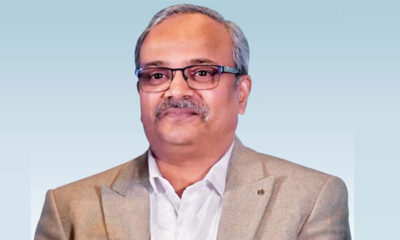
Alok Nagar, Director Sales and Marketing (Thermal segment) and Services, Calderys India Refractories Limited discusses the importance of refractories in the cement manufacturing process, with regards to energy efficiency and digitisation.
Refractories are a very important input for any manufacturing process where temperature is involved. Cement making involves a lot of pyroprocessing and hence, the requirement of refractories. As far as the adaptation goes to the changing requirements of the Indian cement industry, we need to go back to history wherein, traditionally cement manufacturing was more of a wet process. There was a lot of water used in the whole process, which had to be driven out, requiring high temperatures and consequently, refractories.
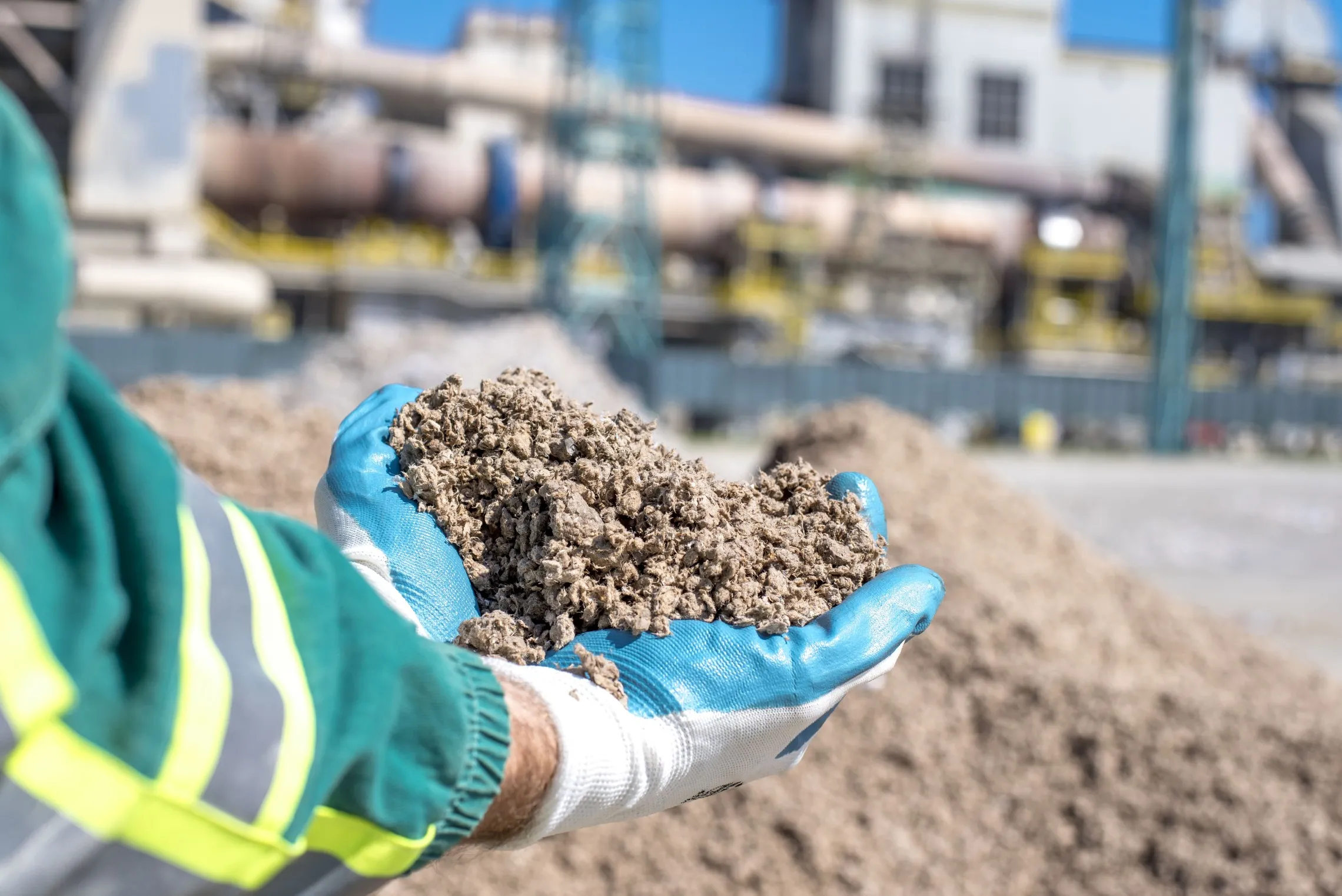
From there, the process moved on to semi-dry process and as manufacturing technology progressed, refractories also progressed. The refractories, which were required for a wet process, were different from what were required for a semi-dry process and today’s modern large cement plants are absolutely dry process plants of high capacity. Their large kilns require very high temperatures for their process and for that they require customised and specialised refractories for which Calderys India Refractories Limited is geared up and keeps upgrading from time to time to move hand-in-hand with its customers.
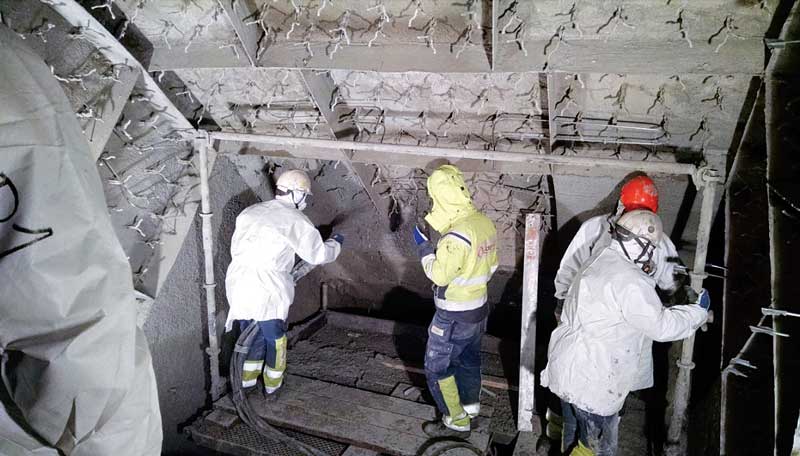
Large kilns require high temperatures for their process and for that they require specialised and customised refractories.
Digital Tools
As far as digitisation is concerned, there is still a long way to go. The industry is in the initial stages of digitalisation. But one noteworthy digitisation involves the use of smart lenses.
Smart lens is a technology in which, when an engineer at the plant site looks at the kiln and the refractory lining wearing the Smart lens, the company’s offices and the research and development centre, positioned anywhere across the globe, can see it on their screens. With this they can understand the issues going on with the lining and can guide from anywhere on how it can be repaired. This is one intervention on digitisation and there are many more to come.
Cost Efficiency
Energy is a very important cost of the cement manufacturing process. If one can conserve energy or help the cement manufacturing customers produce the same quantity of cement with lesser consumption of energy, then the job is done. This is the precise role that Calderys India Refractories Limited plays.
In addition to resisting the heat inside the kiln, there are two specific products in their portfolio, which are energy conservation products, namely: REFRATHACC, high strength insulating bricks used in kilns, also known as Green Bricks, as they help in reducing the emissions; and Hysil, which is a calcium silicate insulation board used in the cement industry to conserve the heat and be energy efficient.
The company is actively working on automation now. Predominantly from the point of safety and reducing the dependence of their customers on manpower. For this, they have come up with mechanised installation of refractories, which is one of the biggest automation the industry has seen.
For this, they have two lines of products: Refractory Gunning Products, in which refractory products are gunned on the surface; and Shotcrete Technology, in which refractories are applied at a much faster and safer rate with the involvement of very less manpower and speacialised machines.
Prerequisites for Refractories
Both cement and refractory industries have been working together in tandem for years together. Issues come up when there is a change in the process. For example, in recent years, the cement industry is opting for a greater use of alternative fuels. Chemistry and constituents of these alternative fuels are very different when compared to traditional fuels (coal). This impacts the refractories adversely.
With a change in fuel, without changing refractories, one can not expect the same performance that they have been expecting in the past.
Calderys India Refractories Limited is working very closely and transparently with its cement industry customers to understand impact of alternative
fuels on traditional refractories and is constantly innovating to develop customised refractories that are compatible with the modern cement making process including deployment of large quantities of variety of alternative fuels.
From the cement customer point of view, it would help if they do not expect the same level of performance that they have been experiencing in the past with the same refractories and alternative fuels. This issue is being addressed with intese interactions with the customers. This would required an understanding of alternative fuels, its chemical compositions, impact on existing refractories and what is being done to make refractories compatible with the use of alternative fuels during cement manufacturing process.
Carbon Footprint
It is important to look at sustainability from a broader perspective, rather than just Net Zero and carbon emissions. Calderys India Refractories Limited is looking at sustainability in areas like biodiversity.
Refractories cannot directly affect the initiative that the customers take in the direction of sustainability. But what the company can do is to support the circular economy. Customers need to come up with a joint project wherein, the company tries to reuse and reclaim refractories in good conditions so that its dependence on virgin raw material can be reduced. Thereby, reducing the customer’s waste management is an initiative in itself towards sustainability.
The country is growing at a very fast pace with the infrastructure development with housing, metro, flyovers and a lot more. So, the future of the cement industry appears to be good, with
projected growth of 6 to 7 per cent every year. As the industry grows, Calderys India Refractories Limited will grow, too.
ABOUT THE AUTHOR:
Alok Nagar, Director Sales and Marketing (Thermal segment) and Services at Calderys India Refractories Limited, has led many business improvement initiatives such as ERP and BPR (SAP), working capital management, ISO implementation, implementing ZERO accident policies, efficiency and productivity enhancement.















JSW Cement Commissions 1 MTPA Unit in Rajasthan

Wonder Cement appoints Mahesh Singh as VP Corporate Brand Communication

JSW Cement commissions additional 1 MTPA grinding unit in Rajasthan

JSW Cement Boards Approve Proposed Shiva Cement Merger

JSW Cement commissions additional 1 MTPA grinding unit at Nagaur
JSW Cement Commissions 1 MTPA Unit in Rajasthan
Wonder Cement appoints Mahesh Singh as VP Corporate Brand Communication
JSW Cement commissions additional 1 MTPA grinding unit in Rajasthan
JSW Cement Boards Approve Proposed Shiva Cement Merger
JSW Cement commissions additional 1 MTPA grinding unit at Nagaur
-

 Concrete4 weeks ago
Telangana to Supply Subsidised Cement for Indiramma Houses
-

 Concrete2 weeks ago
Andhra Pradesh Clears Rs. 30 bn My Home Cement Plant
-

 Concrete2 weeks ago
JSW Cement Receives Rs. 2.3 bn GST Demand Notice
-
 Concrete4 weeks ago
Centre Defers Clearance for Limestone Mine Near Bustard Habitat