

Concrete
Sometimes, a comedy of errors


My first real project was one such. I was just two years out of engineering college, a mechanical engineer raring to have a go at the world. I was fortunate that I got a job in a well-known engineering and projects company, (at a very princely salary of Rs 700 per month, by the way!) and I spent the first two years on the shop floor in a heavy engineering workshop, where no two jobs were alike, no two machine tools were identical, and no two people thought or acted similarly. It was diversity at its best ever, as you can possibly see, and every hour, every day of it was worthwhile. It was here, that one night while I was on night shift duty in the machine shop, I took a break to go into the adjacent central office and typed out a three page letter addressed to the Managing Director, giving detailed suggestions on how the graduate engineers training scheme could be improved. But, that is another story, for another day.

Let us come back to the project story, for now. The year was 1981, I would guess. Without naming the project and the customer, let me just say that it was a hi-tech metallurgical project, being installed for the first time in India in an integrated steel plant, valued at approximately Rs 4 to 5 crore. This was being executed in collaboration with a famous German company. After two years of a good grind in the machine shop floor, I was given the role of a project coordinator in this project, operating initially from the Kolkata Project and Engineering Office, and then moving to site once erection work started. This is when all hell broke loose. This is where we proved beyond an iota of doubt that Mr Murphy was an optimist, because here everything went wrong, and more! I remember that we used to lament that everything that we engineered, manufactured or purchased for this project, gave trouble of some kind or other at site, starting from anti-static floor-mats to Programmable Logic Control Panels, from foundation bolts to hydraulic actuators.
Talking about foundation bolts, this is an item often forgotten, probably because it falls ??etween the stools??of scope of supply of the Supplier and the Erector and the Civil Contractor. First thing we found at site when kicking off erection work, was that the foundation bolts were missing, no one delivered them. It took a few days of running around to get the whole set manufactured, and things got delayed in the process. Today, the first thing that I check in a project, (always, everytime) is have the anchor bolts and inserts been delivered. That was lesson number one!
An anecdotal account of all the pitfalls we encountered at this project site, would have surely made absorbing reading, but sadly, it is somewhat difficult to recall full details of 30 year old incidents. However, some such snippets are still etched in mind.
Another freak problem was, that of fast uncontrolled descent of 25 tonne fabricated vacuum covers, when they were being stopped electrically at the end of the lift. This was due to the few milliseconds of delay of braking through electro-hydraulic thrustor brakes, but the free fall of the heavy covers was really scary. We solved this one at site by installing electro-mechanical timers in the motor circuit, such that motor is stopped with a delay, after the brake gets the signal. I personally loved this one, and that is why I may not forget this incident ever in my lifetime!
Hydraulics were an important part of the project, not only for actuation, but also for fine controls. There were several Moog Control valves with closed loop electronics, and obviously, there were special low-micron high pressure filters upstream of these valves. These were in addition to normal coarse filters in the circuit, as well as LP filters on return line, and recirculating filtration circuits. When we started testing and trial operations of the hydraulics, after thorough cleaning/pickling/pressure test etc, the HP filters started getting choked frequently, and soon we had consumed all spare filter cartridges, which were imported as two years??spares! This, despite the fact that the whole hydraulic Power System along with the Tank were located in a pressurized cellar. What ensued was a lot of study, a lot of data collection, and a lot of consultation with experts. We learnt a lot about selection criteria of hydraulic filters, agglomeration of particulates in hydraulic flow, logjam effect, etc. Ultimately, we zeroed in on a recirculating electrostatic paper filter system, which ran 24×7 in parallel, and brought down the particulate contamination in the tank, of all sizes, to considerably lower levels, and only then the imported HP Filter cartridges started giving long life. This incident made me some sort of an ??xpert??on hydraulic oil filtration.
I know that some the incidents will evoke laughter, but I will still take the risk of narrating the story of the travelling weigh hopper, which refused to travel. This one was a 800 KG capacity load-cell mounted motorised weigh hopper designed to travel on square bar rails, equipped with trailing cable. This hopper was to travel below several bunkers, and receive measured weights of various mineral additives, and then discharge the same into a two chamber vacuum lock. When we did everything right, and switched on the power from local control push button, the small little wheels of the hopper started rotating furiously, but it did not move forward. It was a real hilarious scene. The weight of the hopper was far too less compared to the motor power, and there was inadequate rolling friction for traction to take place. We did a star-delta switch arrangement to reduce the motor power, and it worked beautifully thereafter.
Pages of this issue will fall short of space, if I were to keep talking about all the other problems, related to things like steam ejectors, counter-sunk bolts for liner plates, electro-mechanical actuators, slide gates in ladles, etc., etc, and also, things may become too technical for some of us. The essence is, during design and manufacture phase of a project, we may do many things good or bad, right or wrong, but all of these come home to roost at site, during installation. No more can the problems or mistakes be overlooked or avoided, they have to be resolved then and there, and otherwise work will stall. In that way, Erection at site is the last bit of execution, which is unforgiving, merciless. Here, at site, none of the time-tested strategies like ??assing the buck?? ??elaying/postponing?? ??kirting the issue?? etc work. Here, one has to catch the proverbial bull by the horn and find a solution and implement the solution as soon as possible. Of course, this is the reason why site work is so interesting, at the same time so much more full of adrenalin, action and tension. On hindsight, I liked it. And my advice to young project managers is that they should not miss an opportunity to work at installation sites, particularly if the project is ??irst of its kind in the country?? One or two years of work at site is like five years in the air-conditioned office, in terms of enriching experience of problem solving and project management.
– SUMIT BANERJEE

Concrete
UltraTech Cement Expands in Andhra Pradesh with Rs. 26.5 bn
Petnikota plant adds 3.6 MTPA cement dispatch capacity

Concrete
Nuvoco reports 13.5% revenue growth in Q2 FY27
Cement sales rose 9% to 4.7 MMT, while EBITDA increased 11%.

Concrete
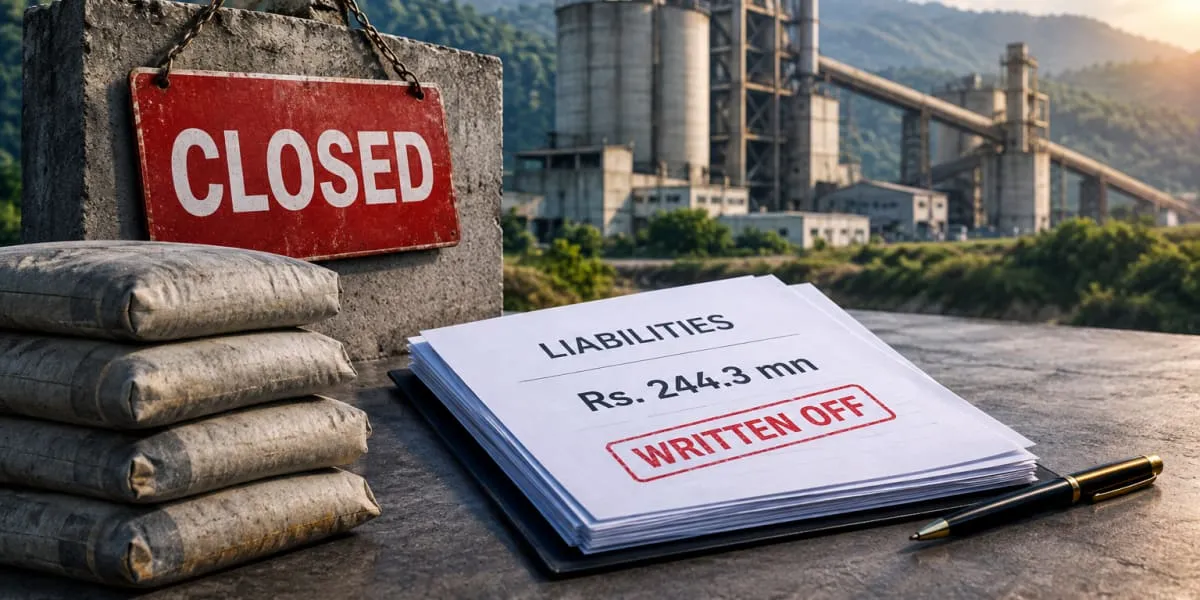
Meghalaya Cabinet Approves MCCL Closure, Writes Off Rs. 244.3 mn
Cabinet approves winding up of state-owned cement company


UltraTech Cement Expands in Andhra Pradesh with Rs. 26.5 bn

Nuvoco reports 13.5% revenue growth in Q2 FY27

Meghalaya Cabinet Approves MCCL Closure, Writes Off Rs. 244.3 mn

Fornnax Wins AIRIA’s Special Export Award for Rubber Machinery in 2025-26

Cement Prices Likely to Rise Rs. 10-15 per Bag from Mid-October
UltraTech Cement Expands in Andhra Pradesh with Rs. 26.5 bn
Nuvoco reports 13.5% revenue growth in Q2 FY27
Meghalaya Cabinet Approves MCCL Closure, Writes Off Rs. 244.3 mn
Fornnax Wins AIRIA’s Special Export Award for Rubber Machinery in 2025-26
Cement Prices Likely to Rise Rs. 10-15 per Bag from Mid-October
-

 Concrete4 weeks ago
JSW Cement Receives Rs. 2.3 bn GST Demand Notice
-

 Concrete3 weeks ago
Andhra Pradesh Clears Rs. 30 bn My Home Cement Plant
-

 Concrete4 weeks ago
Montra Electric, Wonder Cement Deploy 250-Vehicle EV Fleet
-

 Concrete3 weeks ago
Cement Prices Rise Rs. 7 per Bag in September; October Hikes Expected