Professor Procyon Mukherjee follows the progress of green cement across Europe and China, as carbon capture, clinker substitution and alternative fuels are converging to redefine what it means to build sustainably at scale.
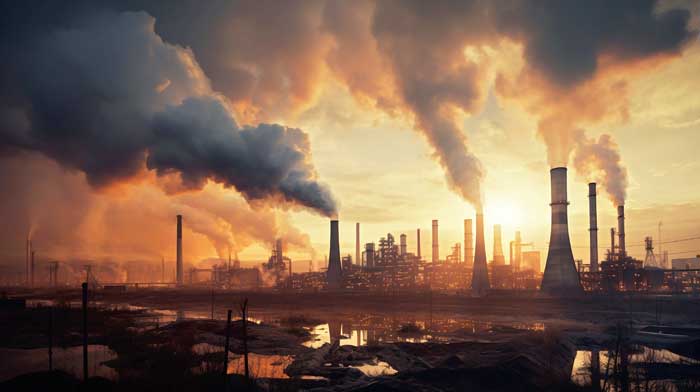
In the race to decarbonise heavy industry, cement has long been considered the immovable object. Responsible for approximately eight per cent of global CO2 emissions, the sector sits at the uncomfortable intersection of necessity and intractability-essential to infrastructure, yet fundamentally carbon-intensive by design. However, something has shifted. Across Europe and China, green cement is no longer confined to pilot projects and academic optimism. It is entering markets, commanding premiums, and reshaping competitive dynamics. The transformation is not incremental-it is structural. And companies that once competed on cost and scale are now competing on carbon.
Why cement is so hard to decarbonise
Unlike many industries, cement’s emissions are not just about energy-they are embedded in chemistry. Nearly two-thirds of emissions come from calcination, the process of heating limestone to create clinker, the binding agent in cement. These emissions are ‘process emissions,’ meaning they cannot simply be eliminated by switching to renewable energy.
This makes cement one of the most difficult sectors to decarbonise-and explains why progress has historically lagged-behind industries like power or mobility. Yet that constraint has also forced innovation along multiple fronts simultaneously.
Europe: Turning regulation into innovation
Europe has emerged as the global testbed for green cement-not by accident, but by design. Strict carbon pricing under the EU Emissions Trading System (ETS), combined with subsidies like the EU Innovation Fund, has created a powerful push toward industrial decarbonisation. The result is a wave of first-of-its-kind projects that are now moving from concept to commercialisation.
The Heidelberg breakthrough
Few companies illustrate this shift better than Heidelberg Materials. At its Brevik plant in Norway, the company has launched what is widely considered the world’s first commercial-scale carbon-captured cement, branded as evoZero. The facility captures around 400,000 tonnes of CO2 annually-roughly 50 per cent of plant emissions-and stores it beneath the North Sea.
This is not a laboratory experiment. It is already supplying real construction projects, including infrastructure in Oslo and 3D-printed housing in Germany. Even more telling, early production has effectively been pre-sold, despite higher costs. Demand is not waiting for cost parity-it is being pulled by sustainability commitments across construction and real estate.
Heidelberg is doubling down. Its ‘GeZero’ project in Germany aims to capture 700,000 tonnes of CO2 annually, supported by significant public funding and designed as a replicable blueprint for inland plants.
Productisation of green cement
What is striking in Europe’s cement transition is not just the pace of innovation, but its productisation. A sector long defined by undifferentiated bulk material is now seeing the emergence of branded, strategically distinct green offerings. Heidelberg Materials’ evoZero signals leadership in carbon capture-enabled cement, while Cementir Holding’s FUTURECEM reflects a pragmatic pathway built on clinker substitution and immediate scalability. At the other end of the spectrum, Hoffmann Green Cement Technologies is redefining the category itself with its zero-clinker formulations, challenging the very chemistry of cement.
Meanwhile, incumbents like Holcim and CEMEX are pursuing portfolio strategies through brands such as ECOPlanet and Vertua, embedding low-carbon options across their product lines. The implication is profound: carbon is no longer an invisible externality-it is becoming a core dimension of competition, with companies differentiating not just on cost and scale, but on the technological pathway they choose to decarbonise.
A portfolio approach to decarbonisation
European players are not relying on a single solution. Instead, they are combining four levers:
- Carbon Capture, Utilisation, and Storage (CCUS) to address unavoidable process emissions
- Clinker substitution to replace high-carbon clinker with materials like fly ash, slag and calcined clay
- Alternative fuels to include biomass and waste-derived fuels (often exceeding 80 per cent substitution rates)
- Circularity to recycle demolition concrete and optimising material use
No single technology solves cement’s carbon problem. But together, they create a viable pathway to near-zero emissions.
China: Scaling through systems innovation
If Europe is pioneering, China is industrialising. As the world’s largest cement producer-accounting for more than half of global output-China’s role is decisive. While regulatory pressure has historically been lower than in Europe, the country is now accelerating decarbonisation through scale, integration, and system-level innovation.
Integration as a cost advantage
Recent research highlights a uniquely Chinese approach: integrating cement production with adjacent industries such as hydrogen and chemicals. For example, coupling green hydrogen production with carbon capture in cement plants can reduce abatement costs to $41-53 per tonne, significantly lower than standalone solutions. This reflects a broader strategic pattern: rather than treating decarbonisation as a cost centre, Chinese firms are embedding it within industrial ecosystems.
Material innovation at scale
China is also aggressively pursuing clinker substitution and alternative binders, often leveraging industrial by-products such as fly ash and slag. The progress on calcined clay in Europe is also noteworthy. These approaches can reduce emissions without fundamentally altering existing infrastructure-making them easier to scale rapidly. At the same time, pilot projects are exploring breakthrough technologies, including electrochemical processes and novel cement chemistries, though these remain at earlier stages of commercialisation.
The emerging competitive divide
What is becoming clear is that green cement is not just a sustainability story-it is a competitive one.
Three shifts are reshaping the industry:
- Carbon is becoming a product attribute
Traditionally, cement was a commodity differentiated mainly by price and logistics. That is changing. Products like evoZero demonstrate that carbon intensity itself can be monetised. Early adopters-developers, governments, and corporates-are willing to pay a premium for low-carbon materials to meet ESG commitments and regulatory requirements.
- First movers are building structural advantages
Projects like Brevik or GeZero are capital-intensive and technologically complex. But they create capabilities that are difficult to replicate quickly:
• Access to CO2 transport and storage infrastructure
• Expertise in CCUS integration
• Early relationships with sustainability-focused customers
This mirrors patterns seen in renewable energy and electric vehicles, where early investments created enduring competitive moats.
- Policy is shaping market demand
Public procurement and regulation are becoming decisive demand drivers. Initiatives such as low-carbon building standards, carbon pricing, and coalitions like ConcreteZero are effectively creating guaranteed markets for green cement. In this environment, companies are not just responding to regulation-they are positioning themselves to benefit from it.
The economics challenge: Who pays?
Despite rapid progress, one challenge remains unresolved: Cost.
Carbon capture and advanced materials increase production costs significantly. Projects like Brevik rely heavily on government support, and long-term viability depends on closing the gap between green and conventional cement.
Three mechanisms are emerging to address this:
• Carbon pricing, which penalises high-emission cement
• Green premiums, paid by early adopters
• Subsidies and incentives, to de-risk early investments
Over time, scale and learning effects are expected to reduce costs-just as they did in solar and wind energy. But the transition period will require careful coordination between industry and policy.
What leaders should take away
For executives, whether in construction, infrastructure, or manufacturing-the implications are immediate:
• Supply chains will decarbonise unevenly.
Access to green cement will vary by region and supplier capability.
• Procurement strategies must evolve. Carbon intensity will become as important as cost and reliability.
• Partnerships will matter. Collaboration with suppliers, governments, and technology providers will be essential to secure low-carbon materials.
Most importantly, green cement is no longer a distant innovation-it is entering the mainstream of strategic decision-making.
From constraint to catalyst
For decades, cement has symbolised the limits of industrial decarbonisation-a sector where physics and chemistry seemed to resist change.
Today, it is becoming something else: a proving ground. Europe has shown that regulation can
catalyse innovation. China is demonstrating that scale and integration can drive cost reductions. Companies like Heidelberg are proving that even the hardest-to-abate industries can move from ambition to execution.
The lesson extends far beyond cement. When constraints are fundamental, transformation does not come from a single breakthrough. It comes from orchestrating multiple solutions-technology, policy, and business models-into a coherent system.
Green cement is not yet the norm. But it is no longer the exception. And in a world where infrastructure demand continues to surge, the companies that master this transition will not just reduce emissions, they will define the future of construction itself.
About the author
Professor Procyon Mukherjee, ex-CPO Lafarge-Holcim India, ex-President Hindalco, ex-VP Supply Chain Novelis Europe, has been an industry leader in logistics, procurement, operations and
supply chain management. His career
spans 38 years starting from Philips, Alcan Inc (Indian Aluminum Company), Hindalco, Novelis and Holcim. He authored the book, ‘The Search for Value in Supply Chains’. He serves now as Visiting Professor in SP Jain Global, SIOM and as the Adjunct Professor at SBUP.