Connect with us

Concrete

We are optimising our power and fuel mix

Published

on

Shares

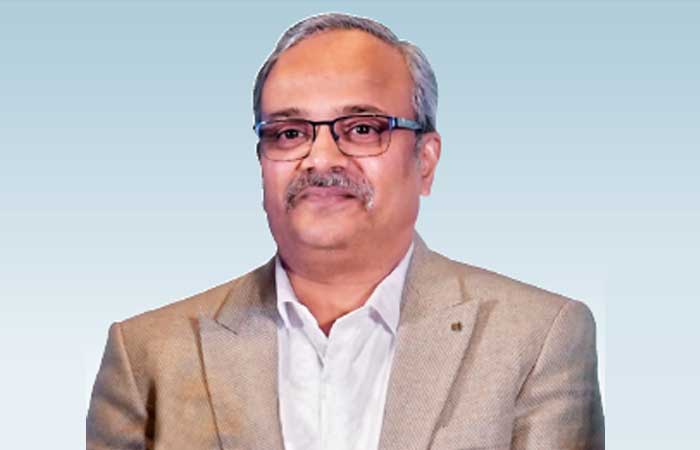
Raju Ramchandran, SVP & Head Manufacturing – Eastern Region, Safety and Sustainability, Nuvoco Vistas, outlines how the company is systematically embedding alternative fuels and raw materials into its manufacturing process.

For Nuvoco Vistas, the shift toward alternative fuels and raw materials (AFR) is woven into the fabric of how the company operates, innovates, and plans for the long term. Nuvoco is approaching AFR as both an environmental imperative and a business advantage. In this interview, Raju Ramchandran, SVP & Head Manufacturing – Eastern Region, Safety and Sustainability, Nuvoco Vistas, discusses the operational complexities of scaling AFR, the evolving role of policy in enabling adoption, and how digitalisation is shifting kiln management from reactive to predictive.

How does AFR fit into your company’s long-term decarbonisation and cost optimisation strategy?
AFR has been a key focus area as we work towards reducing emissions while improving cost efficiency. At Nuvoco, sustainability is embedded in the company’s vision, with a strong focus on advancing circular economy principles across our operations. Over the years, we have steadily adopted practices around reuse, recycling and resource optimisation across our value chain — from raw materials and energy to water, waste and packaging. This has helped us reduce dependence on virgin resources while improving overall operational efficiency.
From a fuel perspective, we are optimising our power and fuel mix by replacing conventional fossil fuels with alternative fuels. Our kilns are designed to safely utilise a wide range of waste streams, including biomass, RDF from municipal solid waste, industrial solid waste and liquid solvents. We are also placing a strong emphasis on biomass and other lower-carbon fuels to further reduce our carbon footprint. Beyond sustainability, AFR also supports cost optimisation by reducing reliance on imported fossil fuels and improving fuel flexibility in our operations.
Our focus is on scaling up AFR usage in a structured and sustainable manner, supported by stronger sourcing ecosystems and process optimisation. This will not only help us lower emissions but also build more resilient and cost-efficient operations over the long term. With rising raw material cost the company is focusing on using alternate raw materials while keeping the quality of product intact. Here the R&D wing of the company CDIC is playing a crucial role in testing various alternative raw materials (ARM) in its state-of-the-art laboratory at Mumbai and bring out tailor made recipes to optimise usage of ARM.

What operational or technological challenges have you faced in scaling AFR usage across plants?
A key challenge in scaling AFR is the inherent variability of waste-based fuels. Unlike conventional fuels, AFR streams can vary in quality, composition and calorific value, which makes maintaining consistent kiln performance more complex. We have addressed this through targeted investments in pre-processing infrastructure, kiln system upgrades and stronger process controls, which help bring greater consistency to fuel quality and operations. Equally important has been building strong in-house capabilities ensuring that AFR is embedded into day-to-day operations. This has helped us move from a trial-based approach to making AFR a reliable and integral part of our manufacturing process.

How do you balance clinker quality, kiln stability, and emission norms while increasing AFR substitution rates?
At Nuvoco, higher AFR usage is never pursued at the cost of product quality or environmental compliance. Every alternative fuel goes through a rigorous pre-qualification and testing process before it is introduced into the system. Once in operation, we rely on real-time monitoring of critical parameters including kiln performance, emissions and clinker quality to ensure stable and consistent operations.
A lot of focus also goes into process optimisation and control systems, which allow our teams to manage variations in fuel characteristics without impacting kiln stability. This is supported by well-defined governance frameworks and trained plant teams, ensuring that AFR integration is handled in a structured and controlled manner. In our experience, when managed effectively, higher AFR substitution does not create trade-offs. Instead, it enables us to run more sustainable operations while maintaining product quality and full compliance with emission norms.

What roles do policy frameworks and regulatory support in India play in accelerating AFR adoption?
Policy frameworks have played a critical role in advancing AFR adoption in India. As highlighted in NITI Aayog’s cement sector decarbonisation roadmap, the use of alternative fuels such as RDF is a key lever for reducing emissions and improving energy efficiency in the industry. This is further reinforced by the GCCA India-TERI (2025), Decarbonisation Roadmap for the Indian Cement Sector: Net Zero CO2 by 2070, which also emphasises scaling AFR as a key pathway for decarbonisation in the cement sector. Regulatory support through CPCB’s co-processing guidelines and the Hazardous Waste Rules has enabled cement plants to safely utilise waste as an alternative fuel, creating a structured pathway for adoption.
More recently, policy direction has become even stronger. The government’s notification in January 2026 outlines a clear roadmap to increase fuel substitution rates from current levels to around 15 per cent over the next few years, along with measures to improve waste processing infrastructure. This provides both clarity and momentum for the industry to scale up AFR usage. At the same time, the opportunity lies in execution. Improving waste segregation at source, ensuring consistent availability of quality RDF, and strengthening coordination across municipalities, waste processors and industry will be critical to fully realise this potential.

How are you building supply chain ecosystems for consistent and quality AFR sourcing in a fragmented waste market?
Building a reliable AFR supply chain requires strong partnerships and a lot of on-ground coordination. Given how fragmented the waste ecosystem is, we work closely with municipalities, authorised waste processors and logistics partners to create stable, long-term sourcing networks. A big focus for us has been on bringing consistency into the system whether it is standardising fuel specifications or investing in pre-processing infrastructure to ensure the material we receive is usable and efficient for our kilns. We are moving towards more structured, long-term partnerships, which help ensure both quality and continuity of supply. Over time, this ecosystem approach gives us greater reliability at the plant level and helps scale AFR usage in a sustainable way.

Can digitalisation and process optimisation unlock higher thermal substitution rates (TSR)?
Digitalisation is becoming a big lever in improving TSR. Earlier, a lot of decisions around fuel mix and kiln optimisation were based on experience and manual adjustments. At Nuvoco, we are leveraging advanced analytics and AI to bring greater precision and consistency to kiln operations. We are working on an AI-enabled dashboard that gives us real-time visibility into kiln operations and waste heat recovery, helping teams take quicker and better decisions on the ground.
Alongside this, we are developing an AI model that recommends the most efficient fuel mix, factoring in variables like moisture, cost, and operating conditions. The real shift is from being reactive to becoming predictive anticipating what works best rather than adjusting after the fact. This not only helps improve TSR but also drives efficiency and cost optimisation.


  • Kanika Mathur

Concrete

Nuvoco commissions Surat grinding unit

Nuvoco posts 20 per cent rise in Q1 PAT

Published

on

By

Shares


Nuvoco Vistas Corp. has announced its financial results for the quarter ended June 30, 2026, reporting growth in volumes, earnings and profitability while advancing its expansion plans in western India.
The company inaugurated a 2-million-tonnes-per-annum (MTPA) grinding unit at its Limla Cement Plant in Surat on July 11, 2026, ahead of schedule. The facility, part of the Vadraj Cement assets, is expected to strengthen Nuvoco’s presence in western India while freeing up capacity at its Rajasthan plants to cater to demand in northern markets.
Progress at the Kutch project remains on track, with phased commissioning scheduled to begin in the third quarter of FY27. The company has also commenced work on a bulk cement terminal at Viramgam, Sachana, Gujarat, featuring a dedicated railway siding. The terminal is expected to become operational by the second quarter of FY28 and will support distribution across Gujarat. These projects form part of Nuvoco’s capacity expansion programme, which is expected to increase its total cement capacity to 35 MTPA by FY28.
During Q1 FY27, the company recorded cement sales volumes of 5.3 million tonnes, up 5 per cent year-on-year. Consolidated total income rose 9 per cent to Rs 31.29 billion, while EBITDA increased 7 per cent to Rs 5.72 billion, marking the company’s highest-ever first-quarter EBITDA. Profit after tax grew 20 per cent year-on-year to Rs 1.60 billion.
Commenting on the results, Jayakumar Krishnaswamy, Managing Director, Nuvoco Vistas Corp., said the company delivered improved business performance despite macroeconomic and geopolitical challenges. He attributed the results to disciplined execution, cost optimisation and operational efficiencies, while highlighting the early commissioning of the Surat grinding unit as a key milestone in the company’s expansion strategy.
He added that the company remains focused on prudent procurement, supply chain efficiency and cost discipline while monitoring geopolitical developments that could affect industry supply chains and input costs.

Continue Reading

Concrete

Cement Sector Faces Sluggish Growth in First Half of FY27

April Price Hikes Unlikely To Offset Margin Decline

Published

on

By

Shares


Nuvama Institutional Equities has warned that India’s cement industry is expected to record subdued volume growth in the first half of fiscal year 2026-27 before a recovery in the second half. The brokerage assessed that price increases implemented in April 2026 will be insufficient to offset an overall decline in sector profitability. It attributed the outlook to weak demand and fresh capacity additions scheduled during fiscal years 2026-27 and 2027-28 that are likely to keep prices under pressure.

The report noted that demand was sluggish in April and May 2026 owing to global uncertainty, labour shortages, heatwaves, constraints in raw materials and unseasonal rainfall. Producers raised prices across regions in April to mitigate rising petcoke costs and higher packaging expenses, but the increases proved short lived. Nuvama reported that standard petcoke prices rose to USD153/t, around USD41/t higher than in the third quarter of fiscal year 2025-26.

Price correction followed weaker demand, limiting the net increase to about Rs 10-12 per bag by the end of the quarter. Imported petcoke prices have since fallen to USD132/t from a recent peak of USD168/t, although they remained roughly USD20/t higher quarter on quarter. The brokerage expected the higher input cost impact to begin reflecting from late quarter one of FY27 and to continue into early quarter two.

Nuvama also estimated that crude linked increases were likely to raise packaging costs by about Rs 120-150/t and to exert upward pressure on freight. It warned that soft demand combined with significant new supply coming on stream in FY27-28 would keep pricing under strain and constrain near term margin recovery. The report concluded that volume growth was likely to be sluggish in the first half of FY27 before recovering in the second half.

Continue Reading

Concrete

Nuvoco Vistas launches Limla cement plant, expands Gujarat footprint

Published

on

By

Shares

Nuvoco Vistas opens a 2 MMTPA grinding unit at Limla, entering Gujarat and advancing its target of 35 MMTPA capacity by FY 2028.

Surat (Gujarat)

Nuvoco Vistas Corporation Ltd, a part of Nirma Group and one of India’s leading building materials company, has inaugurated the Limla Cement Plant in Surat (Gujarat), one of Vadraj Cement Limited’s (VCL) principal manufacturing facilities. The commissioning represents a key milestone in Nuvoco’s acquisition and restoration of VCL, while supporting the company’s expansion across the Western Indian cement market.

Vadraj Cement Limited is a subsidiary of Nuvoco Vistas Corporation Limited and has installed cement capacity of 6 MMTPA across its assets. The Limla inauguration therefore represents the first operational step in the acquired platform’s wider revival, while the Kutch facilities provide clinker supply, mineral security and coastal logistics support for the western business.

Nuvoco completed its acquisition of Vadraj Cement Limited, then under the Corporate Insolvency Resolution Process, after paying a consideration of Rs 1,800 crore in June 2025. VCL’s asset portfolio comprises a clinker unit at Kutch and a grinding unit at Limla in Surat. It also includes high-quality captive limestone reserves and a captive jetty at Kutch, supporting more efficient logistics. Following the takeover, Nuvoco began an extensive programme of restoration, refurbishment and expansion at both locations, leading to the commissioning of the Limla plant.

The Limla Cement Plant is expected to support a phased increase in sales volumes across Gujarat. It will also help Nuvoco supply neighbouring markets in Western Maharashtra and release cement capacity from its northern plants, which can consequently be redirected towards markets in North India. The plant will manufacture a full portfolio comprising Ordinary Portland Cement, Portland Slag Cement, Portland Pozzolana Cement and Portland Composite Cement. It will additionally produce the complete Nuvoco Duraguard range, including the premium Nuvoco Duraguard Microfibre product. The acquisition is also expected to generate operational synergies with Nuvoco’s existing plants at Nimbol and Chittorgarh in Rajasthan, improving logistics optimisation and market reach across important regional markets.

The grinding unit at the Limla Cement Plant was completed ahead of schedule, with 2 MMTPA of capacity now inaugurated to expand Nuvoco’s operating scale and customer reach. After Vadraj Cement’s assets become fully operational, plants in North and West India are expected to account for nearly 40 per cent of Nuvoco’s total cement capacity. This will broaden the company’s manufacturing network, strengthen access to high-growth markets and support its plan to increase consolidated cement capacity to 35 MMTPA by FY 2028, reinforcing its longer-term growth strategy.

Commenting on the development, Jayakumar Krishnaswamy, Managing Director, Nuvoco Vistas Corp Ltd, said: “The inauguration of the Limla Grinding Unit in Surat is an important milestone in Nuvoco’s growth journey and demonstrates our commitment to disciplined, value-accretive expansion. Gujarat is strategically significant for Nuvoco, with substantial opportunities arising from infrastructure investment, industrial growth, rapid urbanisation and continuing demand from the housing and construction sectors. The facility strengthens our regional footprint, improves operational flexibility and increases our ability to serve customers across northern and western markets with greater reliability and efficiency.”

He added: “Through the Vadraj acquisition, we have refurbished and restarted a strategically important asset, returning it to operations in record time through strong execution and collaboration between teams. The achievement demonstrates our ability to create value from acquired assets, fulfil our commitments and retain the confidence of stakeholders. It also highlights the strength of our project delivery capabilities and our continued focus on building sustainable, profitable growth over the long term.”

Nuvoco Vistas Corporation Limited is a building materials company whose vision is to build a safer, smarter and more sustainable world. It is among the leading players in East India and has a significant presence across North and West India. Nuvoco began operations in 2014 with a greenfield cement plant at Nimbol, Rajasthan. It later acquired Lafarge India Limited, which had entered India in 1999, followed by Emami Cement Limited in 2020 and Vadraj Cement Limited in April 2025. The company has also announced an expansion in eastern India through a new grinding mill at the Arasmeta Cement Plant, supported by several debottlenecking programmes involving equipment upgrades, process improvements and internal capacity initiatives. These developments place Nuvoco on track to achieve total cement capacity of approximately 35 MMTPA. The company reported total income of Rs 11,362 crore in FY 2025-26, reflecting its continuing growth trajectory.

Nuvoco operates a diversified portfolio across three segments: Cement, Ready-Mix Concrete and Modern Building Materials. Its cement portfolio includes Concreto, Duraguard, Double Bull, PSC, Nirmax and Infracem, covering Ordinary Portland Cement, Portland Slag Cement, Portland Pozzolana Cement and Portland Composite Cement. Its pan-India RMX business provides value-added products under Concreto for performance concrete, Artiste for decorative concrete, InstaMix for ready-to-use bagged concrete, X-Con covering M20 to M60 grades, and Ecodure for specialised green concrete. Nuvoco has supplied materials to projects including the Mumbai-Ahmedabad Bullet Train, Birsa Munda Hockey Stadium in Rourkela, Aquatic Gallery at Science City in Ahmedabad, and metro railway projects in Delhi, Jaipur, Noida and Mumbai.

Continue Reading

Video Thumbnail

    SIGN-UP FOR OUR GENERAL NEWSLETTER


    Trending News

    SUBSCRIBE TO THE NEWSLETTER


    Don't miss out on valuable insights and opportunities to connect with like minded professionals.


      This will close in 0 seconds