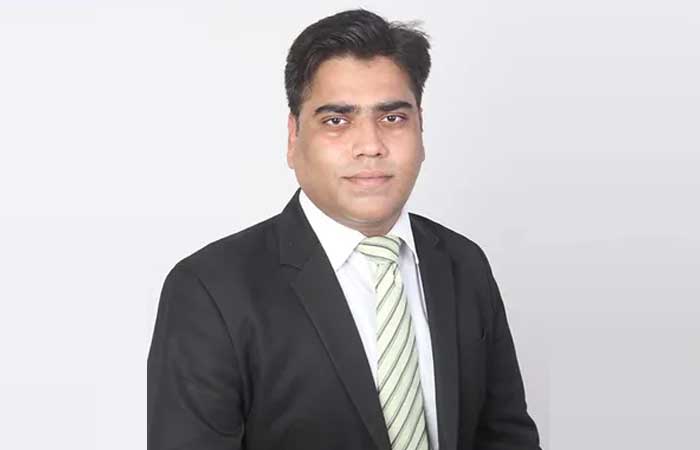
Pukhraj Sethiya, India Managing Director, and Jyotirmoy Saha, Senior Consultant, with guidance and inputs from Kumar Rajesh Singh, Global Managing Director, ReVal Consulting, discuss their approach to sustainable mining, environmental responsibility and innovative mine planning.
Can you define what sustainable mining means to ReVal Consultancy, and how it aligns with your core principles in the capital industry sector?
Sustainable mining focuses on enhancing recovery and resource life, minimising environmental impact, promoting social responsibility and ensuring economic viability in mineral extraction processes. Keeping these objectives in mind, at ReVal we firmly believe in the three pillars of innovation, sustainability, and trust, and our work is governed by this ethos in their true spirit. From the very onset we have prioritised integrating sustainability into our practices and ensuring the benefit of the same is passed on to our clients. A testament to this is our optimised mine plans and mine operational plans, which are conceptualised to maximise resource extraction by minimising waste generation and environmental footprint thus helping our clients in having an efficient and streamlined mining project.
How does Reval Consultancy integrate sustainability into mine planning, and what specific strategies are used to minimise environmental impact while maximising resource utilisation?
Mine planning is a complex job and requires extensive critical thinking along with technical competency. With a core focus on sustainability and resource recovery maximisation, our mine plans are built in ways that ensure long term gains for our esteemed clients. We deploy first principle thinking and create numerous design iterations which helps us in curating a comparative picture of the different ways of operating a particular mine. This involves defining the mine pit boundary first which is of prime importance to ensure optimum land requirement and utilisation.
Further, using advanced software’s like MINEX and SURPAC and others, we ensure an optimised mine design with smooth production sequencing that is viable, ensuring focus on dump balancing, staggered land possession and progressive mine closing activities reducing handling requirement, haul distances and avoid rehandling to the extent possible. To minimise environmental impact, our mine operational plans are formulated with a mix of both conventional fuels based and renewable battery powered equipment. Further we also include afforestation and garland drainage systems in all our mine closure plans ensuring a proper restoration of the site post mining.
What role does technology play in driving sustainability within the mining operations that you consult on? Are there any particular innovations that have been game-changers for your clients?
Technology has a paramount role to play in driving the sustainability initiatives in mining. The industry 4.0 revolution has pushed all the sectors to embrace automation on the backdrop of maximising productivity and achieving sustainable standards. Mining too has been positively impacted by the digitisation and rapid scale adoption of IoT based technologies. Continuous monitoring of emissions from operations, drone deployment for surveys, RFID based data collection and renewable energy-based equipment deployment to mention a few has helped champion both sustainability and operations in the sector. At ReVal, we remain committed in advising our clients on staying at the forefront of tech adoption. We formulate mine plans with advanced scheduling software’s like MINEX and SURPAC that helps clients in real-time visualisation of the mining progression. Besides that, our operational plans embed tech-enabled equipment and data stacks such as automated heavy equipment, GPS enabled truck dispatch systems and interactive KPI dashboards that ensure streamlined operations with real time data capture of all aspects of mining.
What are the biggest challenges that mining companies face when adopting sustainable practices, and how does ReVal Consultancy help them overcome these?
Mining entities face serious challenges regarding their environmental footprint, efficient resource utilisation and community engagement. While there are plausible solutions that exist to tackle these encumbrances, the real difficulty lies in implementing these solutions on the ground. Worldwide mining companies face challenges related to violations in air pollution, emissions, regulations and health and safety to mention a few, solely because of the lack of visibility of operations to stakeholders. Further, the demand of maintaining production and shareholder returns, several times such issues are overlooked and missed. However, the most significant challenge we have encountered in our tenure is the problem related to the availability of land in India. A very complex issue, posed by the communities, severely causes distress for mining companies, leading to the derailment of mining schedules and operational plans.
An uncertain yet a pre-emptive measure that we deploy to tackle this problem, is we work with clients on short term operational planning that can be altered in real-time without significantly hampering the production prospects while keeping a view of Life of Mine Plan. Further in cases where a breakthrough is bleak, we provide the requisite support to the client and prepare an alternative plan with minimum deviation, ensuring minimal hiccups in the project.
ReVal’s approach includes comprehensive mine design optimisation.
How do you ensure that sustainability considerations, such as waste minimisation and environmental protection, are incorporated into mine design and operations?
Our mine plans are highly intuitive in nature and help clients envision the way the mining operations would progress over the mine life. As sustainability has become a norm, we ensure to integrate the same while designing every mine with prime focus on optimum resource recovery, minimum waste generation and less environmental impact. For achieving this we follow a meticulous approach that we have designed in-house. Rather than solely relying on documented data, we start with an on-ground survey of the site and take stock of the infrastructures such as densely populated villages, protected forest areas and other topographical encumbrances that exist. This helps in ensuring a highly optimised mine design when curated in MINEX or SURPAC with less challenges for the client in getting approvals and clearances thereby significantly reducing the time to operationalisation.
Further, we put an increased focus in mine sequencing during the designing phase which helps in regulating the overburden generation and land possession. With an entrenched focus on internal dumping and delayed land possession, we ensure mine operations remain optimised and profitable and communities remain undisturbed. The multiplier effects of these are enhanced ROM production, reduced expenditure and overall maximisation of value for stakeholders.
What is your view on the role of renewable energy in mining operations? How can the cement industry benefit from incorporating sustainable energy practices into their mining operations?
India is the second largest producer of cement in the world and is reliable in the mining sector for its raw material inputs. Big players in the cement manufacturing space adhere to the Sustainable Development Goals framed by the UN, however, implementing, practicing and upholding the standards become a challenge solely due to the uncontrollable ground situations. With the heightened advocacy on decarbonisation, the mining industry is gradually changing its way of operations.
Adoption of renewable energy-based power systems and battery-powered heavy mining equipment is slowly gaining traction and will pave the way for significant reduction in the sector’s carbon footprint, besides making it cost efficient. The cement industry being a part of the mining value chain will gain significantly by the adoption of these sustainable practices. Moreover, the industry is also embracing some of the newer strategies such as deployment of 3R methodology, installation of energy efficient kilns, and waste to energy processes for effectively handling byproducts, thereby propelling the sector towards becoming clean, compliant and efficient.
How does ReVal support mining companies in complying with global and local environmental regulations, particularly in the context of the cement industry’s mining activities?
At ReVal, we believe in providing end to end solutions to our esteemed clients. Our in-house technical team comprises capabilities in both technical and management consulting, which enables us to serve our clients with services ranging from mine planning and designing to project management services. Mining is a complex activity and requires stringent adherence to prevalent rules and regulations. And that’s where our contract management expertise comes into play, helping mining companies abide by the law of land.
We advise our clients periodically on the changing regulatory landscape and simultaneously conduct on ground audits to identify the gaps that exist in the operations. This we achieve by thoroughly checking the documents pertaining to operations, quality parameters and KPI achievements with regards to production, environment and safety and project timelines. Also, managing mine operations is a complex task and iterative in nature and we periodically frame new audit parameters to encompass all the necessary mandates set by the government.
Looking ahead, what are the key trends you foresee in sustainable mining, and how is Reval Consultancy preparing to support its clients in navigating these changes?
The mining sector is undergoing rapid digital transformation and each and every activity in the mines are getting interconnected. This helps in obtaining real-time data and helps stakeholders make strategic decisions efficiently. In recent years, we have witnessed Indian mines investing significantly in installing IoT devices such as robotic equipment and machines and GPS based devices to expand the visibility of the operations, culminating in a ‘borehole to boardroom’ concept.
At ReVal, aligning with this transition, we are dedicated to empowering our clients to navigate the evolving landscape of the mining industry. Our solutions are grounded in rigorous research and analytics conducted by our highly skilled team, enabling clients to have information about their projects at fingertips. Through advanced project management tools and interactive and customisable KPI dashboards, we ensure our clients experience an expansive view of the project anytime from anywhere, reaping the benefits of increased efficiency, reduced costs, less on-site exposure and a healthy work life balance.














 Concrete4 weeks ago
 Concrete2 weeks ago
 Concrete2 weeks ago
 Concrete4 weeks ago