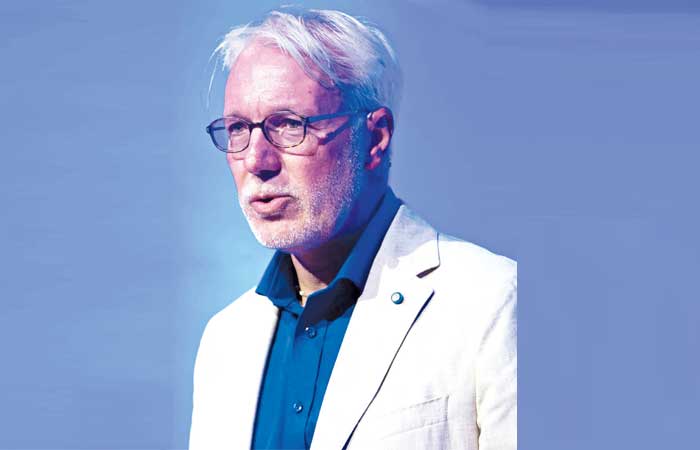
Marco Campanari, CEO, CICSA Group, shares insights into their growth, innovation in chain technology, and their focus on sustainability and digitalisation.
Your company has grown significantly in the past few years. Could you tell us more about that?
We have grown significantly because, on the one hand, we have expanded the range of products we manufacture and sell. On the other hand, we have extended our presence internationally, now operating in over 50 countries worldwide. Last but not the least, we’ve focused heavily on one vertical—chains for bulk materials handling—concentrating exclusively on this sector.
A few years ago, the CICSA Group, continuing on its ambitious growth trajectory, made a strategic investment by acquiring CADERSA, Cadenas y Derivados S L of Barcelona, a leading Spanish company with nearly 50 years of experience in the production of mechanical chains for bulk material handling. As a result of this acquisition, CICSA Group has developed new advanced techniques to design and manufacture high-quality mechanical chains, significantly improving their durability. Having multiple European production sites and upgrading existing infrastructure has helped us optimise our production processes and enhance chain efficiency.
Can you provide an overview of CICSA Group’s range of products, particularly the round steel link chains and mechanical chains, and their application in the cement industry?
Our product portfolio includes a wide range of steel chains, such as round steel link chains (from diameters 10 to 42 mm), forged chains and mechanical chains, along with all corresponding attachments, chain shackles, connecting links, buckets, sprockets and wheels, designed to meet all capacity requirements and any working condition. We cover any kind of chain application in the cement industry.
What recent innovations has CICSA Group introduced in chain technologythat specifically benefit the cement industry, especially in terms of durability and efficiency?
Our R&D department is always active, continuously driving innovation throughout the year. Specifically, we have developed advanced techniques to refine our welding technology, focusing on the butt-flash welding technology with more effective process control. Additionally, we have perfected sophisticated heat treatments, particularly in advanced case hardening processes. These innovations significantly increase the durability and extend the lifespan of our chains.
How is CICSA Group incorporating digitalisation into its manufacturing and product lifecycle processes, and how does this impact the performance and maintenance of your chains?
One of the pivotal innovations we have embraced at CICSA Group is the integration of digitalisation across all our production sites. We leverage data analytics to better manage risks associated with manufacturing and use machine learning to predict future demand patterns. Our advanced automation system, built on efficient spare parts management and rapid information exchange, has one primary goal: to deliver the right product to the customer as quickly as possible.
Can you discuss CICSA Group’s efforts in promoting sustainability and reducing the environmental impact of your chain products used in the cement industry?
At our Italian headquarters, we have on-site renewable energy sources that supply our energy needs, providing a consistent flow of green energy and reducing our consumption of non-renewable resources. We have also implemented various measures to lower our carbon footprint, with initiatives spanning multiple phases of our production process. Additionally, CICSA is making significant strides in improving all ESG-related issues connected to our activities, deeply convinced that this already constitutes
an important distinguishing factor and a critical business driver.
How does CICSA Group work with cement industry clients to customise chain solutions, and what are some examples of tailored solutions that have been particularly successful?
CICSA has always been highly committed to customising its products and services, believing that the best service is providing the customer with the most suitable product for their specific needs. Our goal is to solve a problem or enhance process efficiency for our clients. Being a real manufacturer that directly produces all types of chains for bucket elevators and conveyors, including both round steel link chains and mechanical/pin and bush chains, is unique in the chain manufacturing landscape. This enables us to recommend the best solution for each specific case without constraints.
Could you elaborate on the quality assurance process at CICSA Group, including the types of tests your chains undergo to ensure they meet industry standards?
Since our founding in 1941, our primary business imperative has been to bring only high-quality products to the market. And that’s exactly what we’ve been doing for the past 83 years. Over time, we’ve implemented a very strict Quality Management System, which is continuously updated with various quality initiatives. We were the first chain manufacturer in the world to be ISO certified in 1990 (and among the very first companies overall). Since then, all CICSA products have been manufactured according to the guidelines of our quality management system and certified under EN ISO 9001 standards. Furthermore, 100 per cent of our production undergoes proof testing, and breaking tests are performed on each production batch. In addition, every product undergoes continuous inspections after each stage of the production process.
What are some of the biggest challenges CICSA Group faces in developing chains for heavy-duty applications and how do you address these challenges?
The biggest challenge is continuously pushing the limits of performance while maintaining an unbreakable link with product reliability and, most importantly, consistency in results and quality. We constantly pursue this ongoing goal by ensuring that our core processes are equipped with highly refined control mechanisms. Often, we patent the innovative solutions—both product and process—that we design and successfully test.
What future trends do you foresee in chain technology and material handling solutions for the cement industry, and how is CICSA preparing for these trends?
While I won’t reveal any secrets, I can say that I strongly believe in an increasingly tight integration of manufacturing, digitalisation, machine learning and AI. I can also add that very soon, we will be ready to introduce a groundbreaking solution to the market, one that will have a major impact and positively surprise all users of our products.
How does CICSA Group maintain its competitive edge in the global market, particularly in terms of innovation, quality, and customer service in the chain manufacturing industry?
The answer is a synthesis of the previous questions you’ve asked me. First, our distinctive trait as a real manufacturer of both round link chain solutions and pin and bush chains gives us a tremendous advantage, as we have extensive experience with both technologies. Regarding quality, as I mentioned earlier, we were pioneers in this field, having followed a path of ISO 9001 certified quality for the past 35 years. Lastly, when it comes to innovation and customer service—these are two areas where Italians truly excel.
Historically, Italians have been great innovators; many disruptive things that we use every day were invented in Italy. Innovation runs in our veins, and we exercise it daily. The same goes for customer service: as Italians, we don’t just enjoy selling a product, we enjoy getting to know the customer, building relationships, and ensuring complete satisfaction. In other words, we believe that the relational aspect is inseparable from the product itself.















 Concrete4 weeks ago
 Concrete3 weeks ago
 Concrete2 weeks ago
 Concrete4 weeks ago