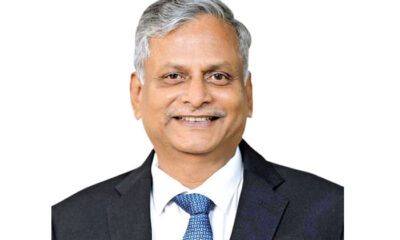
Radha Singh, Senior Manager (P&Q), Shree Digvijay Cement, points out why performance, predictability and life-cycle value now matter more than routine replacement in cement kilns.
As Indian cement plants push for higher throughput, increased alternative fuel usage and tighter shutdown cycles, refractory performance in kilns and pyro-processing systems is under growing pressure. In this interview, Radha Singh, Senior Manager (P&Q), Shree Digvijay Cement, shares how refractory demands have evolved on the ground and how smarter digital monitoring is improving kiln stability, uptime and clinker quality.
How have refractory demands changed in your kiln and pyro-processing line over the last five years?
Over the last five years, refractory demands in our kiln and pyro line have changed. Earlier, the focus was mostly on standard grades and routine shutdown-based replacement. But now, because of higher production loads, more alternative fuels and raw materials (AFR) usage and greater temperature variation, the expectation from refractory has increased.
In our own case, the current kiln refractory has already completed around 1.5 years, which itself shows how much more we now rely on materials that can handle thermal shock, alkali attack and coating fluctuations. We have moved towards more stable, high-performance linings so that we don’t have to enter the kiln frequently for repairs.
Overall, the shift has been from just ‘installation and run’ to selecting refractories that give longer life, better coating behaviour and more predictable performance under tougher operating conditions.
What are the biggest refractory challenges in the preheater, calciner and cooler zones?
• Preheater: Coating instability, chloride/sulphur cycles and brick erosion.
• Calciner: AFR firing, thermal shock and alkali infiltration.
• Cooler: Severe abrasion, red-river formation and mechanical stress on linings.
Overall, the biggest challenge is maintaining lining stability under highly variable operating conditions.
How do you evaluate and select refractory partners for long-term performance?
In real plant conditions, we don’t select a refractory partner just by looking at price. First, we see their past performance in similar kilns and whether their material has actually survived our operating conditions. We also check how strong their technical support is during shutdowns, because installation quality matters as much as the material itself.
Another key point is how quickly they respond during breakdowns or hot spots. A good partner should be available on short notice. We also look at their failure analysis capability, whether they can explain why a lining failed and suggest improvements.
On top of this, we review the life they delivered in the last few campaigns, their supply reliability and their willingness to offer plant-specific custom solutions instead of generic grades. Only a partner who supports us throughout the life cycle, which includes selection, installation, monitoring and post-failure analysis, fits our long-term requirement.
Can you share a recent example where better refractory selection improved uptime or clinker quality?
Recently, we upgraded to a high-abrasion basic brick at the kiln outlet. Earlier we had frequent chipping and coating loss. With the new lining, thermal stability improved and the coating became much more stable. As a result, our shutdown interval increased and clinker quality remained more consistent. It had a direct impact on our uptime.
How is increased AFR use affecting refractory behaviour?
Increased AFR use is definitely putting more stress on the refractory. The biggest issue we see daily is the rise in chlorine, alkalis and volatiles, which directly attack the lining, especially in the calciner and kiln inlet. AFR firing is also not as stable as conventional fuel, so we face frequent temperature fluctuations, which cause more thermal shock and small cracks in the lining.
Another real problem is coating instability. Some days the coating builds too fast, other days it suddenly drops, and both conditions impact refractory life. We also notice more dust circulation and buildup inside the calciner whenever the AFR mix changes, which again increases erosion.
Because of these practical issues, we have started relying more on alkali-resistant, low-porosity and better thermal shock–resistant materials to handle the additional stress coming from AFR.
What role does digital monitoring or thermal profiling play in your refractory strategy?
Digital tools like kiln shell scanners, IR imaging and thermal profiling help us detect weakening areas much earlier. This reduces unplanned shutdowns, helps identify hotspots accurately and allows us to replace only the critical sections. Overall, our maintenance has shifted from reactive to predictive, improving lining life significantly.
How do you balance cost, durability and installation speed during refractory shutdowns?
We focus on three points:
• Material quality that suits our thermal profile and chemistry.
• Installation speed, in fast turnarounds, we prefer monolithic.
• Life-cycle cost—the cheapest material is not the most economical. We look at durability, future downtime and total cost of ownership.
This balance ensures reliable performance without unnecessary expenditure.
What refractory or pyro-processing innovations could transform Indian cement operations?
Some promising developments include:
• High-performance, low-porosity and nano-bonded refractories
• Precast modular linings to drastically reduce shutdown time
• AI-driven kiln thermal analytics
• Advanced coating management solutions
• More AFR-compatible refractory mixes
These innovations can significantly improve kiln stability, efficiency and maintenance planning across the industry.