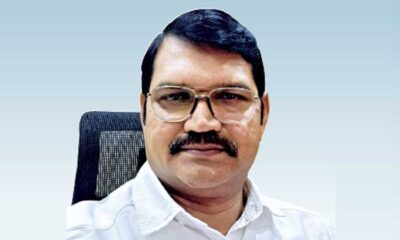
Naveen Kumar Sharma, AVP – Sales and Marketing, Toshniwal Industries, talks about redefining instrumentation with customised, digitally enabled solutions engineered for harsh plant environments.
For over six decades, Toshniwal Industries has played a pioneering role in advancing process instrumentation for Indian manufacturing. In this exclusive conversation with Kanika Mathur, Naveen Kumar Sharma, AVP – Sales & Marketing, explains how the company designs kiln and grinding plant solutions tailored to the unique demands of the cement industry. As plants transition to higher AFR use and smarter automation, Toshniwal’s technologies offer greater reliability, accuracy and predictive insight.
Tell us how are your process instruments and condition monitoring system customised for cement kilns and grinding plant operations?
Toshniwal is a company with a legacy of over 65 years, and our experience has taught us that cement kilns and grinding units are fundamentally different in their operational demands. As an Indian company, we understand the unique requirements of Indian cement manufacturers. We work closely with our customers, engage deeply with their technical teams, and study operational challenges in real-time.
Based on these insights, we customise our solutions for both kiln and grinding applications. This tailoring is not just at a product level, but at a solution level—engineering design, instrumentation logic, and process optimisation. Our primary objective, for both the industry and our customers, is to reduce yield loss. Every customisation we implement is driven by this goal. We engineer smarter systems to reduce waste, improve consistency and increase plant reliability.
Ultimately, our solutions are built on an understanding that cement manufacturers require robust, practical and maintainable instruments. We design with this mindset so plants can operate more efficiently, with better control and higher profitability.
With the rising use of AFR, how do your solutions support thermal zone reliability and process time?
Our solutions are built around four core parameters: energy efficiency, yield loss reduction, product quality and environmental responsibility. These pillars drive our engineering decisions and define how our technologies support cement plants, especially as they adopt alternative fuels and raw materials (AFR).
We strongly believe in energy conservation. Every product we offer—whether for thermal monitoring, kiln control or flame optimisation—is engineered to improve energy performance. Reducing yield loss is another principle deeply embedded in our solutions, because production interruptions and material losses directly affect plant profitability and clinker quality.
We are also highly conscious of the end-product quality delivered by our customers to their markets. Consistency in burning, heat transfer, and thermal profiling directly influences clinker characteristics, and our instruments help maintain this stability.
Lastly, and most importantly, we care about the environment. We want to leave a greener world for the next generation. This mindset aligns with India’s digitalisation movement, advocated by our Prime Minister. Digital technologies are crucial for optimising AFR use, process stability, emissions and kiln efficiency. We are proud to contribute to this transition.
By optimising flame patterns, energy use, and pollution, our solutions deliver direct and indirect savings. Plants benefit from lower operational losses, reduced maintenance, and improved reliability, especially in pyroprocessing zones.
Tell us how do you address harsh environment challenges in cement plants, say dust, temperature, etc. with your sensor and monitoring?
This is a very important question because cement plants, steel plants, and power plants operate in extremely harsh environments. There are two major categories of specifications that we must respect while designing solutions: technical specifications and environmental specifications. Technical specifications relate to performance accuracy, measurement integrity, responsiveness and process safety. Environmental specifications, on the other hand, relate to high temperatures, heavy dust, humidity, vibrations and corrosive atmospheres. Our solutions are engineered to withstand both. We customise sensors, housings, mounting mechanisms and protective systems so that our instruments operate at 100 per cent functionality in harsh conditions. We ensure that the plant experiences minimal downtime from our systems. That is our engineering philosophy—solutions must work reliably in real-world environments, not just in ideal laboratory conditions.
What retrofit pathways do you offer for older cement lines to upgrade measurement and monitoring systems and how is the Indian market responding?
Every solution we provide is scalable and digitally adaptable. Technology evolves rapidly, and our offerings evolve with it. When we upgrade instruments or monitoring systems, we design them to integrate with existing plant infrastructure, so customers do not have to rebuild everything from scratch. Once our solution is installed, software upgrades or performance improvements can often be deployed without major cost. This ensures that customers continue to benefit from ongoing technological advancements. The Indian market has responded positively to this approach. Plant operators appreciate solutions that are future-ready and dynamic rather than static. Scalability helps them maintain competitiveness, extend asset life, and move toward smart manufacturing with confidence.
So how is your organisation leveraging digital technologies in your instrumentation portfolio for cement plants?
Digitalisation is at the core of every product we manufacture. We stand firmly behind the digital movement, not only because it represents efficiency, but because it is the direction in which the Indian industrial ecosystem is evolving. We deploy machine-vision technologies, advanced inline monitoring systems, and solutions capable of visualising the
inside of the furnace. These systems help reduce downtime, enable predictive asset management and provide actionable analytics to customers. All our technologies communicate seamlessly with Level 1, Level 2, and Level 3 automation. This allows integration across SCADA, DCS, ERP, and cloud ecosystems. Digitalisation for us is not an add-on—it is foundational to how our instrumentation is built.
What are your key innovation priorities to help Indian cement plant producers hit harder, higher substitution rates, lower emissions and smarter processing?
Sustainability is a national priority, and we are committed to supporting it. Our current portfolio already helps improve efficiency, reduce emissions, and support alternative fuel integration. But our innovation roadmap goes further. We are now developing specialised productivity-oriented software modules that will provide proactive alerts—not just alarms triggered after a fault has occurred. These modules will leverage artificial intelligence and machine learning to detect patterns early. The intention is to help plant teams take corrective actions ahead of time, reducing yield loss and environmental impact. Instead of informing the plant that a disruption has happened, the system will indicate that a disruption will happen, giving operators time to prevent it. We believe that within the next 12 to 18 months, we will launch these predictive solutions in combination with our instrumentation. When implemented, they will significantly improve decision-making, process stability and environmental performance across the Indian cement sector.
– Kanika Mathur
















 Concrete4 weeks ago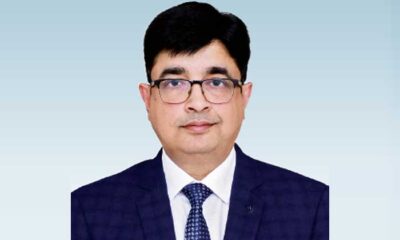
 Concrete4 weeks ago
 Concrete4 weeks ago
 Concrete4 weeks ago