Dr SB Hegde, Professor, Department of Civil Engineering, Jain College of Engineering and Technology, discusses how green hydrogen is a game changer for carbon-neutral cement production in India.
India’s cement industry produces nearly 7 per cent of global CO2 emissions and must move toward Net Zero by 2070. Green hydrogen, made from renewable energy, is a game changer that can replace fossil fuels in cement kilns, helping to cut emissions, modernise cement production, and achieve carbon neutrality.
This paper explores green hydrogen’s potential, early adoption in India, technical and safety requirements and the role of supportive policies. Using global and Indian examples, it presents a phased roadmap with clear data to guide the industry toward a sustainable, carbon-neutral future.
Introduction
India’s cement industry produces more than 350 million tonnes of cement each year and is expected to reach about 451 million tonnes by FY27. While it is one of the largest in the world, it also adds nearly 7 per cent of global CO2 emissions. Around 32 per cent of these emissions come from burning fuels, and 56 per cent come from the chemical process of calcination (IBEF, 2025; IEA, 2020).
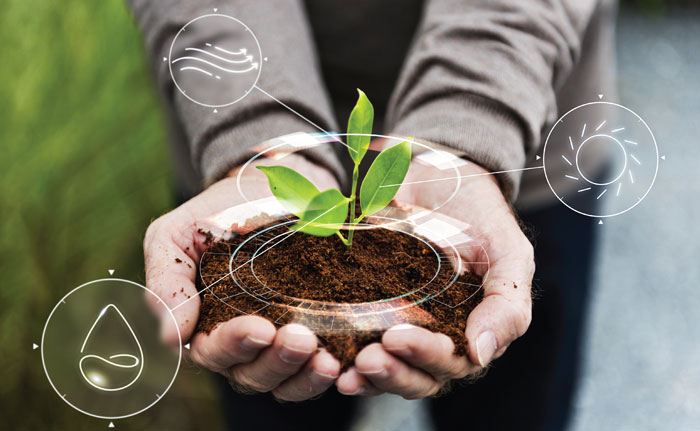
To achieve India’s goal of Net Zero emissions by 2070, cleaner alternatives are needed. Green hydrogen—produced using renewable energy through electrolysis—can be a game changer by replacing coal and pet coke in cement kilns. Just like shifting from a smoky coal stove to a clean electric one, green hydrogen supports the ‘3Cs’: Cut emissions, bring innovation to Cement, and move toward Carbon neutrality.
This paper discusses the potential of green hydrogen in cement production, its current status, challenges, technical requirements, government policies and a step-by-step roadmap. By sharing success stories from India and abroad, including companies like Ambuja and Dalmia, it aims to encourage the industry to lead the green transition.
The promise of green hydrogen
Green hydrogen can transform cement production by eliminating the 32 per cent of emissions from burning coal in kilns, cutting ~0.32 million tonnes of CO2 annually for a one million tonne per annum (MTPA) plant (IEA, 2020).
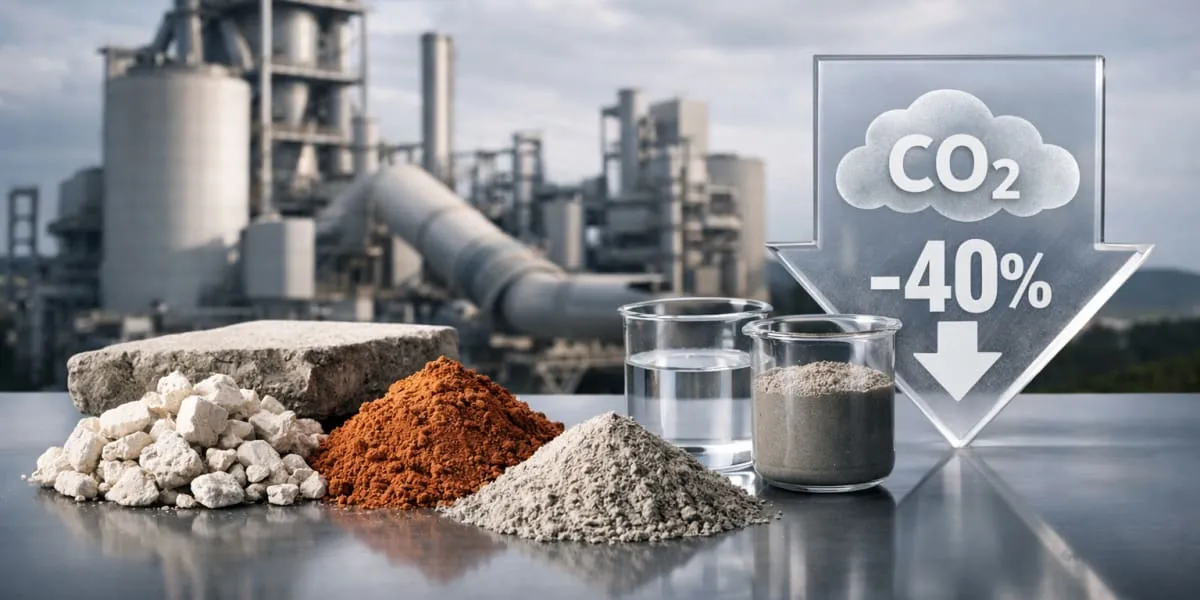
Combined with alternatives like fly ash for clinker and carbon capture, it could reduce emissions by 66–95 per cent by 2050. Unlike biomass, which some plants use to cut emissions by 10 per cent but struggle with unreliable supply (UltraTech, 2024), hydrogen burns consistently at 1400–1500°C, like a steady flame in a gas stove. India’s National Green Hydrogen Mission (NGHM), targeting 125 GW of renewable energy by 2030, supports this shift (MNRE, 2023). Figure 1 shows the potential CO2 reductions.
Current status
The use of green hydrogen in India’s cement industry is still at a very early stage, with less than 5 per cent of plants experimenting with it (CSTEP, 2025). Some key pilots include:
- Adani Cement (Mundra): Ambuja Cements has started a Rs.830 crore project using solar-powered hydrogen, which has helped reduce emissions by about 10 per cent (Devdiscourse, 2025).
- Chhattisgarh Pilot: A smaller plant is testing hydrogen by burning 325 kg per year for calcination. This setup, costing Rs.10 crore, has cut emissions by 5 per cent (IGI Global, 2025).
These projects are like the first sparks of a larger fire—showing that hydrogen works—but scaling it up across the industry will require solving major challenges.
Critical challenges
Using green hydrogen in cement plants is promising, but there are several big challenges that need solutions:
- Limited scale: Because of high costs and low awareness, only a few plants are testing hydrogen.
Infrastructure gaps: As of 2025, India has only three hydrogen refueling stations—like having just a few petrol pumps for an entire city (TERI, 2024).
- High costs: Hydrogen currently costs Rs.300–500 per kg, while coal costs only Rs.6,000–8,000 per tonne (about Rs.30,000 per tonne in energy terms). On top of that, each plant would need electrolysers costing Rs.50–70 crore.
- Technical skills: Converting kilns to use hydrogen requires new expertise, similar to learning to cook with a new type of fuel. Training and retrofitting can cost Rs.5–10 crore per plant.
- Energy demand: Producing one kg of hydrogen needs about 50 kWh of electricity, so large solar or wind farms are required to avoid putting extra pressure on the power grid.
These barriers are serious, but as the next section explains, strong government policies can play a key role in overcoming them.
Government support and policy framework
The Indian government is actively supporting the use of green hydrogen in cement production through several key policies:
- National Green Hydrogen Mission (NGHM): A budget of Rs.19,744 crore has been set aside, with Rs.17,490 crore for production incentives and Rs.1,466 crore for pilot projects in sectors like cement (MNRE, 2023). The scheme covers up to 50 per cent of electrolyser costs (up to Rs.25 crore per plant) and waives interstate renewable energy transmission charges until 2030—like getting a discount on new equipment plus free delivery.
- Carbon Credit Trading Scheme (CCTS): Under the amended Energy Conservation Act (2001, 2022), plants can earn Rs.2,000 for every tonne of CO2 they reduce, similar to collecting reward points for eco-friendly actions.
CPCB regulations: The Central Pollution Control Board has set strict emission limits (for example, 30 mg/Nm³ for dust). Using hydrogen lowers dust and NOx, making it easier for plants to meet the 2025 standards (CPCB, 2025).
- Safety Standards: The Petroleum and Explosives Safety Organisation (PESO) require plants to use leak-proof storage tanks and train workers properly, much like safety rules for handling a gas stove (PESO, 2025).
- Infrastructure Support: Around Rs.4,500 crore is being invested to build refuelling stations and pipelines by 2030, which will make distribution smoother.
Together, these policies make it easier and more practical for cement companies to adopt hydrogen, as already seen in both Indian and global pilot projects.
Success stories: Global and Indian pioneers
Examples from around the world and India show how green hydrogen can work in cement production:
- Heidelberg Materials (Germany): Installed a Rs.370 crore, 30 MW electrolyser at Hannover that replaced 20 per cent of coal use, cutting emissions by 25 per cent (H2 Bulletin, 2024).
- Cemex (Spain): Used hydrogen injection at its Alicante plant to reduce coal use by 15 per cent, cutting 10,000 tonnes of CO2 each year with very little modification needed (Cemex, 2020).
- Adani Cement (India): At Mundra, a pilot project shows how green hydrogen can be scaled up using renewable energy (Devdiscourse, 2025).
- Chhattisgarh Pilot (India): A Rs.10 crore setup proved that even smaller plants can affordably adopt hydrogen, achieving meaningful emission cuts (IGI Global, 2025).
These examples act like guiding lights, showing Indian cement manufacturers, that green hydrogen is both possible and practical. While European projects focus on large-scale, high-investment solutions, India’s pilots highlight cost-effective and scalable approaches—a model better suited for emerging economies.
Economic viability: Costs and benefits
Table 3 compares the major costs and benefits of adopting green hydrogen for a 1 MTPA cement plant.
Currently, hydrogen costs Rs.300–500/kg, compared to coal’s energy equivalent of ~Rs.30,000/tonne. While this looks expensive, incentives under the NGHM—including 50 per cent subsidies on electrolysers and carbon credits of Rs.2,000 per tonne CO2 avoided—help narrow the gap (MNRE, 2023). By 2035, hydrogen prices are expected to fall to Rs.150–200/kg, making it competitive with imported fossil fuels. According to IRENA (2022), this shift could save the global economy Rs.10–15 lakh crore by 2050.
Additional insights
- A 1 MTPA cement plant switching fully to hydrogen could save ~0.32 million tonnes of CO2 annually. At Rs.2,000/tonne (carbon credit price), this alone brings Rs.64 crore/year in value.
- Export markets (especially Europe) are introducing Carbon Border Adjustment Mechanisms (CBAMs), adding €60–70 per tonne of CO2 cost on imports. Early hydrogen adoption could save Indian exporters up to Rs.400–500 crore/year per large plant.
- Long-term fuel independence: India imports 235 million tonnes of coal annually (MoC, 2024). Shifting 20 per cent of cement’s coal demand to hydrogen could save Rs.10,000+ crore/year in import bills.
- ESG Ratings: Adoption strengthens sustainability scores, lowering financing costs. The World Bank estimates green financing can cut loan rates by 0.5–1 per cent, translating into Rs.25–30 crore savings annually for large plants.
Technical requirements: Installations and adjustments
Green hydrogen needs new setups and tweaks:
- Electrolysers: 10 MW units (Rs.50–70 crore, half subsidized) produce hydrogen on-site, like a home generator.
- Renewable energy: Solar/wind farms (Rs.100–150 crore) power electrolysis.
- Storage and distribution: PESO-compliant tanks and pipelines (Rs.20–30 crore) ensure safety.
- Kiln burner modifications: Retrofitting for hydrogen’s hotter flame (2000°C vs. coal’s 1400°C) costs Rs.10–20 crore, needing special nozzles, like upgrading a stove for a new fuel (CSTEP, 2025). Figure 2 shows these changes.
- Pyro-Processing Adjustments: Pre-calciners are adjusted for hydrogen’s quick ignition, with oxygen injection boosting efficiency by 5–10 per cent (EnkiAI, 2025).
Phased implementation
Green hydrogen adoption in cement can move forward in three clear steps (see Figure 3):
- Phase 1: Pilot Projects (2025–28) 5–10 plants set up small 5 MW electrolysers, solar farms, safe storage, and retrofit burners to use up to 10 per cent hydrogen. Training programs for workers ensure smooth adoption. Cost: Rs.500–1,000 crore, with 5–10 per cent emission reduction.
- Phase 2: Scale-Up (2028–35) 50–70 plants expand to 10 MW electrolysers, bigger renewable farms, and pipelines. Full retrofits allow 30 per cent hydrogen use. Supported by Rs.12,500 crore in R&D incentives, costs stay manageable (~Rs.10,000 crore). Emissions fall 20–30 per cent.
- Phase 3: Full Adoption (2035–50) Industry-wide transition with 20 MW electrolysers, renewable grids, and advanced storage. Backed by Rs.19,744 crore in incentives, the sector can cut emissions by 66–95 per cent and build a Rs.340 billion green market.
- Step-by-step adoption—starting small, scaling up, and then going industry-wide—can make green hydrogen both practical and transformative for India’s cement industry.
Future outlook: Green cement pathway to 2050
Green hydrogen offers more than just emission cuts—it ensures steady kiln performance, lowers dust levels, and helps plants meet CPCB standards, saving Rs.1–2 crore per plant each year in health costs (TERI, 2024). On a larger scale, exporting green cement to markets such as Europe and Japan could generate around 3 lakh new jobs by 2030 and strengthen India’s global reputation for sustainability (IRENA, 2022).
Looking ahead, by 2035, most plants could be running on solar-powered hydrogen with zero-carbon kilns and smart CO2 monitoring systems, saving Rs.50–100 crore annually in penalties. By 2040, hydrogen prices may drop to Rs.100/kg, reducing cement production costs by 20–30 per cent. By 2050, hydrogen could fuel nearly 94 per cent of kilns, transforming India’s cement industry into a global leader in green manufacturing.
Green hydrogen is not just an alternative fuel—it is a game changer that can secure India’s economic growth, social wellbeing, and environmental future.
Conclusion
Green hydrogen—already tested by companies like Heidelberg in Germany and Adani in India—shows a clear path toward carbon-neutral cement. With government support through the NGHM and CPCB regulations, and a phased roadmap (pilots by 2028, scale-up by 2035, and full adoption by 2050), India has the chance to lead the global green transition. By investing Rs.100–200 crore per plant, cement manufacturers can build a cleaner, more sustainable future. The real question is: will they take action now?
References
• Cemex. (2020). Cemex advances toward carbon-neutral cement with hydrogen technology.
• CPCB. (2025). Classification of sectors into Red, Orange, Green, White, and Blue categories.
• CSTEP. (2025). Can hydrogen hasten the utilisation of alternative fuel resources in cement kilns?
• Devdiscourse. (2025). Adani’s cement giants lead India’s green transition with net-zero milestone.
• EnkiAI. (2025). Hydrogen in cement industry: Top 10 projects & companies.
• H2 Bulletin. (2024). Cement producers explore hydrogen to tackle emission.
• IBEF. (2025). Indian cement industry report. India Brand Equity Foundation.
• IEA. (2020). Cement technology roadmap: Low-carbon transition in the cement industry. International Energy Agency.
• IGI Global. (2025). Green hydrogen for cement production: A decarbonization pathway.
• IRENA. (2022). Green hydrogen cost reduction: Scaling up electrolysers. International Renewable Energy Agency.
• MNRE. (2023). National Green Hydrogen Mission. Ministry of New and Renewable Energy, Government of India.
• PESO. (2025). Guidelines for safe handling and storage of hydrogen. Petroleum and Explosives Safety Organisation.
• TERI. (2024). Decarbonizing India’s cement sector: Opportunities and challenges. The Energy and Resources Institute.
• UltraTech. (2024). Sustainability report 2024. UltraTech Cement Ltd.
ABOUT THE AUTHOR:
Dr SB Hegde is a Professor at Jain College of Engineering, Karnataka, and Visiting Professor at Pennsylvania State University, USA. With 248 publications and 10 patents, he specialises in low-carbon cement, Industry 4.0, and sustainability, consulting with cement companies to support India’s net zero goals.