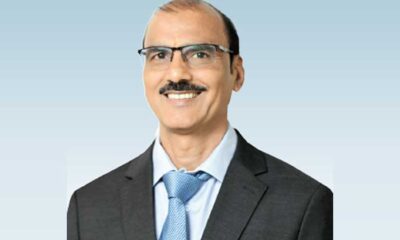
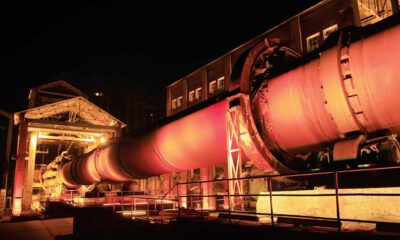
Sanjay Mehta, President Procurement and Corporate Affairs, Shree Cement, explains how integrated initiatives are driving operational excellence in their circular economy initiatives.
In an era where sustainability has moved from the periphery to the core of business strategy, the cement sector stands at the frontline of India’s circular economy transition. Shree Cement has embedded circular principles into every aspect of its operations—from water stewardship and waste co-processing to energy substitution and clinker reduction. Sanjay Mehta, President – Procurement and Corporate Affairs, Shree Cement, shares how the company is leveraging innovation, partnerships and regulatory alignment to transform waste into resources, reduce emissions and set new benchmarks for responsible growth.
How is your organisation integrating circular economic principles into core operations?
Shree Cement continues to advance its circular economy agenda through impactful initiatives across water, energy and material management. To reduce dependency on freshwater, the company integrates STP-treated water from local municipalities and maintains zero liquid discharge across all manufacturing units, ensuring complete wastewater recycling. Extensive rainwater harvesting efforts, both across facilities and by converting mining pits into harvesting structures for nearby villages helped achieve over eight times water positivity in FY25, supporting environmental sustainability and community
water security.
In material substitution, Shree Cement replaced 12.54 million tonnes of raw materials with alternatives such as fly ash, GBFS and chemical gypsum, accounting for 26.36 per cent of total consumption. It also utilises industrial by-products like slag, low-grade limestone, spent acid, red mud and ETP sludge. A patented process for synthetic gypsum manufacturing further exemplifies innovation by repurposing spent acid and low-grade limestone.
On the energy front, Shree Cement has achieved the capability for 100 per cent biofuel usage across all grinding units. In FY25 alone, it utilised 1.08 lakh tonnes of agricultural waste, replacing 328.21 billion kCal of fossil fuel energy and avoiding 1.30 lakh tonnes of CO2 emissions. The company also substitutes traditional fuels with sustainable alternatives such as Refuse Derived Fuel (RDF) from municipal solid waste, industrial waste and agricultural residues, maximising heat recovery and minimising ecological impact.
What types of waste are most commonly co-processed in your plants?
Cement plants are widely recognised as optimal facilities for the safe and efficient disposal of industrial wastes, owing to their high-temperature processing and closed-loop systems. At Shree Cement, we co-process a wide range of materials in strict adherence to Central Pollution Control Board (CPCB) guidelines. Commonly used wastes include agricultural residues (such as crop stubble and biomass), municipal solid waste in the form of RDF, rubber and plastic waste and dried sewage sludge.
This approach not only ensures sustainable waste management but also significantly reduces reliance on fossil fuels and virgin raw materials, reinforcing our commitment to circular economy principles.
How do you assess the environmental impact of your co-processing and recycling efforts?
At Shree Cement, sustainability is not just a commitment, it is a process of continuous evaluation, innovation and accountability.
To ensure our co-processing and recycling efforts deliver genuine environmental benefits and remain in full compliance with CPCB guidelines, we utilise a wide spectrum of waste, including industrial by-products, agricultural residues, municipal waste and hazardous materials as alternative fuels and raw materials in cement kilns.
Key impact assessment measures include:
- Tracking, auditing and transparent disclosure of performance in sustainability reports.
- Continuous emissions monitoring to ensure levels remain well within permissible limits, with measurable reductions in CO2 achieved through fossil fuel substitution.
- Air, water and soil quality assessments, conducted periodically to safeguard ecosystems.
- Independent third-party audits to validate environmental performance and ensure alignment with national and global sustainability standards.
Through this multi-dimensional approach, we ensure that co-processing and recycling not only reduce waste and conserve resources but also contribute meaningfully to environmental stewardship and the circular economy.
How has clinker substitution evolved in your product portfolio over recent years?
Clinker substitution has emerged as a cornerstone of our sustainability strategy, reflecting its commitment to reducing carbon intensity and conserving natural resources.
In FY25, blended cement accounted for 68.5 per cent of total sales volumes, enabled by the strategic use of industrial by-products such as fly ash, GGBS and slag as clinker substitutes. This approach not only reduces reliance on energy-intensive clinker but also supports the responsible disposal of industrial waste.
Benefits include:
- Lower fuel consumption in kilns
- Cost efficiency and
- Significant reductions in GHG emissions.
Are there collaborations with municipalities or industries for sourcing waste?
Yes. Shree Cement actively collaborates with local municipalities to source STP-treated water, reducing dependence on freshwater and with industrial partners to source various wastes and by-products for co-processing.
All waste sourcing and co-processing activities strictly adhere to CPCB guidelines, ensuring environmental safety and regulatory integrity. These collaborations not only support regional waste management but also reduce landfill dependency, lower carbon emissions and promote sustainable industrial symbiosis.
What role do certification or green product labels play in your circular strategy?
Green certifications and product labels are central to our circular strategy, serving as both validation and motivation for sustainable practices. They:
- Validate efforts across the product lifecycle, from sourcing to disposal.
- Encourage use of recycled materials, energy-efficient processes and low-emission technologies.
- Enhance product credibility, build consumer trust and open doors to green markets.
Shree Cement offers a wide range of blended cements, PPC, PSC and CC, all certified under the GreenPro Ecolabel by CII. This not only underscores our sustainability commitment but also positions us as a leader in circular, low-carbon growth.
How supportive is the current regulatory framework for circular economy in cement?
India’s regulatory framework has become increasingly supportive of circular economy practices in the cement sector, recognising its vital role in sustainable development.
Government bodies such as the MoEFCC and CPCB have issued comprehensive guidelines for co-processing industrial, municipal and hazardous waste in cement kilns. Key policies include the Hazardous Waste Management Rules, Plastic Waste Management Rules and C&D Waste Management Rules, all aimed at resource recovery and waste minimisation.
Additionally, NITI Aayog has spearheaded the transition to a circular economy by forming inter-ministerial committees on key waste streams such as gypsum, used oil, agricultural residues and toxic industrial waste, relevant to cement manufacturing.
Shree Cement has adopted pioneering solutions such as clinker substitution, alternative fuel usage and synthetic gypsum production using industrial by-products. These initiatives not only comply with regulatory requirements but also exemplify best practices in circularity.
Our approach, centred on reuse, recycling and responsible resource management, demonstrates how regulatory support can be translated into operational excellence.