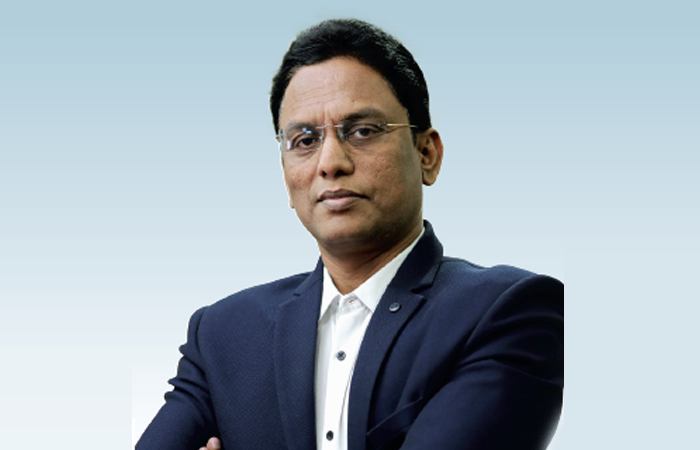
Ganesh W Jirkuntwar, Senior Executive Director and National Manufacturing Head, Dalmia Cement (Bharat), discusses how safety has evolved from a rulebook to a mindset, which is rooted in culture, powered by technology and driven by accountability.
In an industry as operationally intense as cement manufacturing, ensuring the safety of every individual on site is both a moral imperative and a business necessity. Over the past decade, this responsibility has evolved from mere regulatory compliance to a deeply ingrained cultural value. In this exclusive interview, Ganesh W Jirkuntwar, Senior Executive Director and National Manufacturing Head, Dalmia Cement (Bharat), offers a comprehensive look into how safety is being reimagined through leadership accountability, advanced technologies and a people-first mindset. From AI-driven surveillance to drone inspections and immersive training tools, Dalmia Cement is leading the change in making Zero Harm a lived reality.
How has the approach to safety evolved in cement manufacturing over the past decade?
We have moved from compliance to culture, safety is no longer a rule, it’s a value.” Over the last decade, Cement industry has undergone a significant transformation in how it approaches workplace safety. What was once a compliance-driven activity is now embedded into the organisation’s core values. Today, safety is viewed not merely as a regulatory requirement but as a foundational element of operational excellence.
This journey is being guided by a structured Safety Excellence framework developed in partnership with experts like Dupont, Ernst & Young etc. Industry has also strengthened leadership accountability, enhanced risk perception across the workforce and institutionalised global best practices such as HAZOP studies, fire risk assessments, and predictive maintenance protocols. More importantly, safety has become everyone’s business—from the shop floor to the boardroom.
What are the biggest safety risks unique to cement plants today?
Cement plants face uniquely high-risk conditions—our response must be equally specialised. Cement manufacturing is inherently complex, involving high temperatures, heavy mechanical equipment and continuous operations in challenging environments. Among the most pressing risks today are working at heights, confined space entry, hot material handling, and exposure to moving machinery. Moreover, with growing use of alternate fuels and increased logistics intensity, new risk layers have emerged—particularly around AFR handling and traffic safety inside plant premises.
Cement plants address these risks through a combination of behaviour-based safety practices and advanced technological interventions. The plants now utilise AI-based surveillance systems that detect PPE violations and unsafe proximity conditions in real time. Additionally, drones are being deployed for inspection of stacks and inaccessible areas, significantly reducing human exposure to hazardous zones.
How do you integrate safety protocols into daily plant operations?
At Dalmia, safety is embedded into daily work, not treated as a separate task. Integrating safety into day-to-day operations is critical to its sustainability. Every morning begins with structured toolbox
talks mandatorily attended by all workforce and ‘Suraksha Vartalaps’, where teams collectively identify job-specific risks. Across units, daily safety reviews are held as part of the operations rhythm, with real-time data and feedback feeding directly into corrective actions.
Digital tools like the ‘KAVACH’ and ‘Boots on Ground’ platform allow supervisors to log observations, track unsafe conditions and monitor action closures with location-tagged evidence. The Permit to Work (PTW) system is fully digitised, ensuring consistent protocols and visibility for all critical jobs. These practices ensure safety is not a standalone agenda, but rather, an integral part of the operating DNA.
What role does technology play in enhancing plant safety?
Technology is helping us see, think and act faster to prevent incidents before they happen. The company is making targeted investments in digital and AI-powered solutions to enhance safety outcomes. For instance, the KAVACH app provides employees and contractors a platform to report hazards, submit near-miss data, and access standard operating procedures (SOPs) on the go.
AI-enabled cameras now support behaviour recognition, enabling predictive analysis of unsafe conditions even before a violation occurs. Devices that track worker fatigue and proximity to moving equipment are currently under pilot. Combined, these systems create a proactive safety environment that acts as a second line of defence alongside
trained personnel.
Can you share key metrics or benchmarks you track to monitor safety performance?
We measure not just outcomes, but proactive behaviours that shape our safety culture. Safety performance at Dalmia Cement is tracked through a robust set of leading and lagging indicators. On one hand, traditional metrics like Lost Time Injury Frequency Rate (LTIFR) and Total Recordable Incident Rate (TRIR) provide insight into historical safety outcomes.
However, equal emphasis is placed on proactive indicators—such as the number of near misses reported, field safety observations completed, training hours delivered, development of model areas, safety culture feedback and audit closure rates. These metrics help gauge the health of the safety culture and promote early intervention.
How do you ensure contractor and third-party compliance with your safety standards?
Contractor safety is not just monitored—it is built into how we operate together. With a large portion of plant activities executed by third-party contractors, Dalmia Cement has instituted a comprehensive Contractor Safety Management (CSM) framework. All vendors undergo pre-qualification audits, safety inductions, and training based on job scope. Access to the plant is conditional on completion of digital gate passes tied to safety credentials.
On-site, contractors participate in daily toolbox meetings and are subject to random field audits. Monthly performance reviews and incident feedback loops ensure that contractor safety is not just a gate-level compliance, but a daily operating standard aligned with Dalmia’s own expectations.
What kind of training and awareness initiatives are most effective for your workforce?
Our training programmes don’t just inform—they transform behaviours. Continuous learning forms the backbone of Dalmia’s safety culture. The training model blends classroom sessions, vernacular e-learning modules, job simulations and field coaching to ensure relevance and retention. Inductions are now fully digitised with multilingual content, including animated SOP walkthroughs and scenario-based learning.
The company also fosters peer-led learning through Train-the-Trainer (TTT) modules and safety on wheel, and organises periodic safety competitions, awareness weeks and team-based risk hunts. These initiatives help employees and contractors alike to stay engaged and take ownership of safety beyond procedural knowledge.
How are you investing in next-generation safety equipment or systems?
We are building future-ready plants where safety is both smart and sustainable. Looking ahead, Dalmia Cement is accelerating investments in next-generation safety infrastructure. From robotic cleaning systems for Kilns, Silos and bins to AI-assisted hazard analytics, the company is shaping plants that can anticipate and act before incidents occur.
Smart fencing, geo-tagged field monitoring, and drone-based inspection tools are being piloted across multiple locations. These innovations are not just about compliance—they reflect the company’s vision to make safety an enabler of productivity and long-term resilience.
Zero Harm isn’t a target; it’s a mindset. At Dalmia Cement, safety is not confined to departments, dashboards or deadlines. It is a way of thinking that starts with leadership and permeates every individual’s daily routine. By aligning technology, training, and trust, the company is laying the foundation for workplaces where Zero Harm is not an aspiration—it’s a daily reality.




















 Concrete4 weeks ago
 Concrete2 weeks ago
 Concrete2 weeks ago
 Concrete4 weeks ago