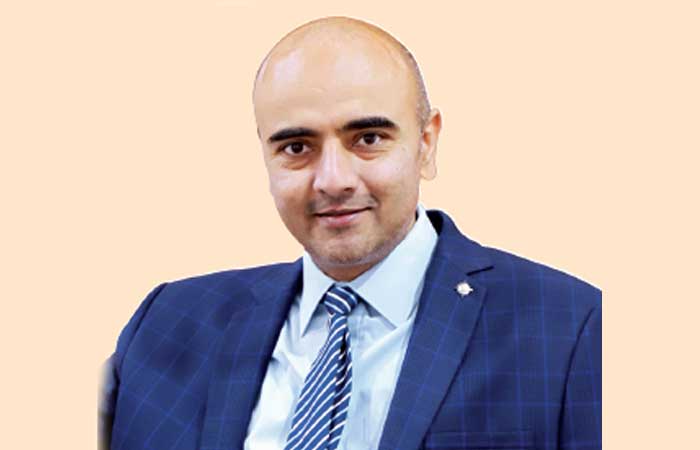
Jignesh Kundaria, Director and CEO, Fornnax Technology, discusses revolutionising waste management with cutting-edge shredding technology.
Fornnax Technology is driving sustainability in the Indian cement industry by providing advanced shredding and recycling solutions. By enabling efficient processing of alternative fuels and raw materials, the company helps cement plants reduce reliance on fossil fuels and lower carbon emissions. Jignesh Kundaria, Director and CEO, sheds light on how they are supporting the industry’s goal of achieving a 30 per cent Thermal Substitution Rate (TSR) by 2030.
How does Fornnax Technology’s expertise in shredding and recycling equipment enhance operational efficiency and sustainability in the cement industry?
Fornnax Technology is accelerating the Indian cement industry’s goal of reaching up to 30 per cent by 2030 TSR from the current four to six per cent by setting up alternative fuels and raw materials and refuse derived fuel plants, thereby reducing reliance on fossil fuels.
Our expertise in developing robust shredding and recycling machinery directly addresses this need.
By providing advanced solutions for processing AFR, we enable cement plants to efficiently utilise waste materials.
Our SR-MAX series primary and R-Max series secondary shredders, for example, are engineered to handle challenging waste streams, including contaminated municipal solid waste, transforming them into valuable alternative fuels for cement kilns.
This will not only enhance operational efficiency by optimising waste processing but also significantly contributes to sustainability by lowering greenhouse gas emissions and promoting a greener approach to cement production.
Essentially, we empower the cement industry to close the gap between current AFR usage and its potential, driving them towards a more sustainable and environmentally responsible future.
What role does advanced technology play in optimising waste recycling for cement production, and how does Fornnax ensure its solutions contribute to energy efficiency and carbon footprint reduction?
Advanced technology is pivotal in optimising waste recycling for cement production. The cement industry’s carbon footprint is substantial, and technology offers the means to significantly reduce it.
At Fornnax, we are at the forefront of this innovation. Our inhouse expert research and development teams are focused on creating cutting-edge recycling solutions that address the specific challenges of waste processing in the cement sector with customised approach.
Our shredders, for instance, are specifically designed to efficiently process heterogeneous and unorganised waste materials and capable of operating for over 200 to 100 tonne per day ensuring consistent and high-quality outputs suitable for AFR and RDF Plants.
This extended operational capacity has given us a distinct advantage over many of our European, American and Chinese competitors.
We believe that innovative recycling technology is the key to providing effective and economical solutions, thus we constantly upgrade our technology as per the evolving regulations and industry standards, ensuring our solutions not only meet but exceed expectations for energy efficiency and carbon footprint reduction.
How does Fornnax differentiate itself from competitors in providing tailored shredding and recycling solutions for cement plants, and what level of customisation do you offer to meet industry-specific requirements?
Fornnax distinguishes itself by offering a comprehensive range of modern, robust, and large-capacity recycling solutions that are specifically tailored to the unique needs of the cement industry.
Our deep understanding of the cement industry’s challenges, combined with our expertise in advanced shredding and recycling technologies, allows us to provide efficient and sustainable solutions.
We prioritise a customer-centric approach, embodied in our Customer-Based Product Development Process (CBPD). This involves close collaboration with clients to understand their specific pain points and develop solutions that meet their exact requirements.
We offer a high level of customisation – from the design and configuration of our shredders to additional features and services that enhance performance and efficiency.
Our highly qualified engineering team works closely with clients to address their specific needs, including production capacity, waste type, desired output size and power constraints.
This ensures that our machinery aligns perfectly with their distinct visions and operational requirements. We also provide robust after-sales support across India, ensuring prompt and timely resolution of any issues.
Can you share insights into any recent innovations by Fornnax that have the potential to transform waste management and alternative fuel processing in the cement industry?
Our recent launch of the SR-MAX2500 primary shredder at IFAT 2024 Mumbai marks a significant innovation with the potential to transform waste management and alternative fuel processing in the cement industry.
This hydraulic drive motor-powered shredder is specifically designed to efficiently shred challenging materials into manageable sizes. The application areas include municipal solid waste (MSW), industrial and commercial waste, bulky waste, construction and demolition debris, wood waste and more.
The SR-MAX2500 Primary Shredder is designed with ease of maintenance in mind, featuring specially designed knives with hard face multiple times for low-cost operations. Additionally, the replaceable cartridge assembly eliminates the need to change the full cutting chamber in case of a worn-out cartridge, reducing downtime and increasing overall efficiency.
In terms of the longevity, the SR-MAX2500 is built to last, boasting a completely hard-faced shaft knives assembly, hard-faced knives and replaceable wear plates to increase the durability of the cutting chamber. Furthermore, the hydraulic hoses are always connected to the motors, ensuring oil cleanliness and prolonging the lifespan of the motors. The heavy-duty, open-grate cartridge and static knives/fingers placement also ensure that abrasives, including aggregate, sand, soils and metal fragments, will fall directly through the cartridge, reducing wear and operating costs. This robust design ensures that the SR-MAX2500 will provide years of reliable service, even in the toughest operating conditions.
Therefore, by prioritising sustainability and aligning with the vision of achieving Net Zero emissions, we believe the SR-MAX2500 primary shredder has the potential to revolutionie waste management and alternative fuel processing in the cement industry, and we are excited to see the impact it will have.














 Concrete4 weeks ago
 Concrete2 weeks ago
 Concrete2 weeks ago
 Concrete4 weeks ago