Connect with us

Concrete

Climate change and pollution are undeniable realities

Published

on

Shares

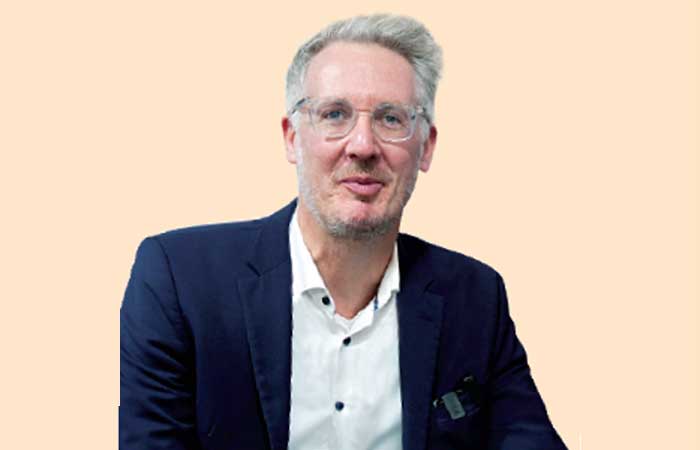
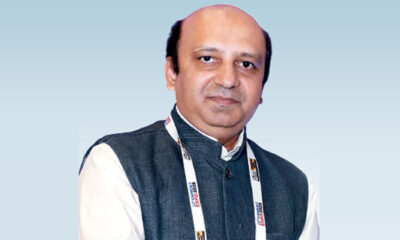
Björn Fahle, Technical Sales and Project Engineer, Westeria, in conversation with Kanika Mathur about the innovative use of alternative fuels and waste management solutions.

Westeria is at the forefront of sustainable solutions, transforming waste into alternative fuels for the cement industry. Through innovative machinery and fuel feeding systems, the company enables efficient waste management while promoting greener practices in cement production. Read on to know more about its endeavours in establishing a sustainable ecosystem.

How are you associated with the cement industry, and how do you help better the operations of cement manufacturers?
We operate in two key areas to support the cement industry. On one side, we focus on creating value from waste materials such as municipal solid waste (MSW) and legacy waste. We are helping to reduce the massive waste mountains that are a challenge in India. Our machinery facilitates the sorting, screening, and size reduction of waste to produce alternative fuels, which can be utilised in the cement calciner. This process plays a significant role in waste management while providing a sustainable energy source.
On the other side, we provide alternative fuel feeding lines to the cement industry, enabling the transportation of alternative fuels from the ground to the calciner, which is often located 40 to 50 meters high and up to 200 meters away. These efforts not only address waste management issues but also contribute to reducing carbon emissions. By decreasing the dependency on coal and substituting it with alternative fuels, we are helping the cement industry adopt greener practices. Alternative fuels have a lower calorific value compared to coke or pet coke, and their integration into operations plays a pivotal role in reducing the industry’s carbon footprint.

Speaking of alternative fuels, how do you customise your offerings to address evolving needs?
Most of our current requests revolve around legacy waste and municipal solid waste, as these are the primary challenges India faces. The massive amounts of daily MSW and the existing mountains of waste make this area our main focus. While the use of alternative fuels is gradually evolving, the immediate priority is managing and utilising waste effectively.
Additionally, our shredders are versatile and cater to various applications beyond MSW and legacy waste. For instance, we offer shredders for tiles, wood, and plastic, allowing us to support recycling efforts across multiple industries. By processing wooden logs, plastics, and other materials, we add value to these waste streams, enabling their reuse or recycling into alternative products. This approach reflects
our commitment to sustainability and innovation in waste management.

How do you support the cement industry in becoming more sustainable?
Sustainability is a critical concern for the cement industry, especially in the context of reducing CO2 emissions. India has made remarkable progress in achieving its 2030 carbon emission targets, and the cement sector has been a significant contributor to this effort. By integrating alternative fuels into their operations, cement producers can significantly lower their carbon footprint.
We also foresee advancements in green cement production, with materials such as clay coming into the picture. Our work helps the cement industry transition towards greener practices by promoting the use of alternative fuels and improving the efficiency of fuel feeding systems. Sustainability is no longer optional—it is imperative for long-term environmental and industrial health. By reducing coal consumption and utilising alternative raw materials, we are
steadily contributing to the industry’s shift toward sustainable operations.

What challenges do you face in collaborating with the cement industry?
There are two primary challenges we face in India. First, the type of waste available here is highly contaminated, making the preparation of refuse-derived fuel (RDF) much more labour-intensive compared to other Asian countries. The contamination levels of waste in India demand higher efforts for segregation and processing, which adds complexity to our operations.
Second, the maintenance of machinery poses a significant challenge. Indian workers often do not prioritise proper care and maintenance of expensive machinery. These machines require regular maintenance and proper handling to ensure their longevity and performance. However, the tendency to push materials through the machines without adequate maintenance can lead to wear and tear, reducing their lifespan and efficiency. Segregation of waste—separating
dry waste from wet waste—is another critical aspect that is often overlooked. Proper planning and maintenance are crucial to preserving the functionality of these machines.

What role does technology play in maintaining and operating your machinery?
The alternative fuel recycling (AFR) sector is still in its early stages and operates on an open circuit system. Unlike closed systems used in traditional cement processes, where input materials are well-defined and controlled, AFR operations deal with unpredictable and variable input. This lack of standardisation poses challenges in designing systems that can adapt to such variability.
Currently, cement producers are primarily focused on cement production rather than waste recycling. As a result, recycling machinery often receives less attention and care. This mindset needs to change for the successful integration of recycling into cement production. Advanced technologies and processes must be developed to handle variable inputs effectively and establish more sustainable systems.

What are your views on achieving net zero carbon emissions?
Achieving net zero carbon emissions is a gradual process that requires significant effort and commitment. Drawing from experiences in other Asian countries, such as China, we can see the transformative impact of government-led initiatives. Over the past decade, China has made substantial progress in recycling and pollution control through decisive action and enforcement. While India’s democratic system may take longer to implement large-scale changes, steady progress is possible with strong government support and public awareness.
Sustainability must become an integral part of daily life. Climate change and pollution are undeniable realities, and addressing these challenges requires collective action. Industries, governments, and individuals must align their efforts to create a sustainable future. The cement industry, given its substantial environmental impact, has a pivotal role to play in this transition. By embracing sustainable practices and technologies, we can move closer to a cleaner and greener future.


Concrete

NDMC Rolls Out Intensive Sanitation Drive Across Lutyens Delhi

Municipal body intensifies cleaning and monitoring across the capital

Published

on

By

Shares

The New Delhi Municipal Council has launched an intensive sanitation drive across Lutyens’ Delhi, aiming to raise cleanliness standards in the capital’s central precincts. The programme will combine enhanced manual sweeping with mechanised cleaning and systematic waste removal to cover parks, heritage precincts and prominent thoroughfares. Authorities described the initiative as a sustained effort to improve public hygiene and reduce environmental hazards while maintaining the area’s civic image.

Operational teams have been instructed to prioritise drain clearing and litter hotspots, with special attention to markets and transit nodes that attract heavy footfall. Coordination with city utilities and waste processing units will be stepped up to ensure timely collection and disposal, and supervisory rounds will monitor adherence to cleaning schedules. Officials also intend to use data-driven planning to deploy resources efficiently and to identify recurring problem areas.

The council plans to engage resident welfare associations and business stakeholders to foster community participation in maintaining cleanliness and to support behavioural change campaigns. Public communication will be amplified through notices and outreach to encourage responsible waste handling and to inform residents about collection timings and segregation norms. Enforcement measures for littering and unauthorised dumping will be reinforced as part of a broader strategy to deter violations and sustain cleanliness gains.

The move reflects a focus on urban sanitation that officials link to public health priorities and to the city administration’s commitment to maintaining civic amenities. Monitoring mechanisms will include regular reporting and inspections to review outcomes and to recalibrate operations where necessary, according to municipal sources. The council emphasised that continued community cooperation will be essential for the drive to deliver lasting improvements in the appearance and hygiene of the capital’s core areas.

Continue Reading

Concrete

UltraTech Appoints Jayant Dua As MD-Designate For 2027

Executive named to succeed current managing director in 2027

Published

on

By

Shares

UltraTech Cement has appointed Jayant Dua as managing director (MD) designate who will take charge in 2027, the company announced. The appointment signals a planned leadership transition at one of the country’s largest cement manufacturers. The board has set a clear timeline for the handover and has framed the move as part of a structured succession plan.

Jayant Dua will be referred to as MD after assuming the role and will be responsible for overseeing operations, strategy and growth initiatives across the company’s network. The company said the designation follows established governance norms and aims to ensure continuity in executive leadership. The appointment is expected to allow a phased transfer of responsibilities ahead of the formal changeover.

The decision is intended to provide strategic stability as UltraTech Cement navigates domestic infrastructure demand and evolving market dynamics. Management will continue to focus on operational efficiency, capacity utilisation and cost management while aligning investments with long term objectives. The board will monitor the transition and provide further information on leadership responsibilities closer to the effective date.

Investors and market observers will have time to assess the implications of the announcement before the change is effected, and analysts will review the company’s outlook in the context of the succession. The company indicated that it will communicate any additional executive appointments or organisational changes as they are finalised. Shareholders were advised to refer to formal filings and company releases for definitive details on governance or remuneration.

The leadership change will be managed with attention to stakeholder interests and operational continuity, and the company reiterated its commitment to delivery on ongoing projects and customer obligations. Senior management will engage with employees and partners to ensure a smooth handover while maintaining focus on safety and compliance. Further updates will be provided through official investor communications in due course.

Continue Reading

Concrete

Merlin Prime Spaces Acquires 13,185 Sq M Land Parcel In Pune

Rs 273 crore purchase broadens the developer’s Pune presence

Published

on

By

Shares

Merlin Prime Spaces (MPS) has acquired a 13,185 sq m land parcel in Pune for Rs 273 crore, marking a notable expansion of its footprint in the city.

The transaction value converts to Rs 2,730 mn or Rs 2.73 bn.

The parcel is located in a strategic area of Pune and the firm described the acquisition as aligned with its growth objectives.

The deal follows recent activity in the region and will be watched by investors and developers.

MPS said the acquisition will support its planned development pipeline and enable delivery of commercial and residential space to meet local demand.

The company expects the site to provide flexibility in product design and phased development to respond to market conditions.

The move reflects an emphasis on land ownership in key suburban markets.

The emphasis on land acquisition reflects a strategy to secure inventory ahead of demand cycles.

The purchase follows a period of sustained investor interest in Pune real estate, driven by expanding office ecosystems and residential demand from professionals.

MPS will integrate the new holding into its existing portfolio and plans to engage with local authorities and stakeholders to progress approvals and infrastructure readiness.

No financial partners were disclosed in the announcement.

The firm indicated that timelines will depend on approvals and prevailing market conditions.

Analysts note that strategic land acquisitions at scale can help developers manage costs and timelines while preserving optionality for future projects.

MPS will now hold an enlarged land bank in the region as it pursues growth, and the acquisition underlines continued corporate appetite for measured expansion in second tier cities.

The company intends to move forward with detailed planning in the coming months.

Stakeholders will assess how the site is positioned relative to existing infrastructure and connectivity.

Continue Reading

Trending News

SUBSCRIBE TO THE NEWSLETTER


Don't miss out on valuable insights and opportunities to connect with like minded professionals.


    This will close in 0 seconds