ICR discusses India’s rapid advances in renewable energy, on track to exceed its 2030 targets, even as the rising energy demands challenge complete reliance on sustainable sources.
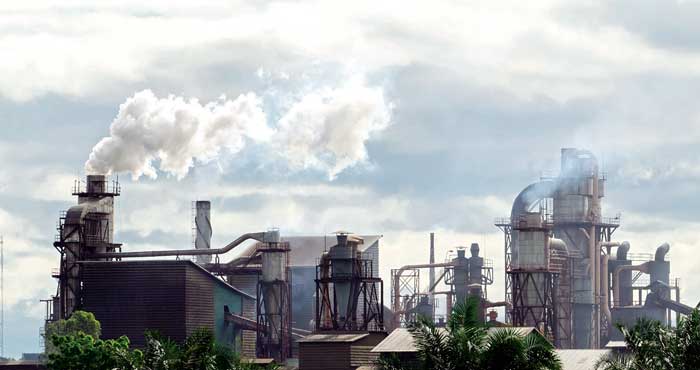
The cement industry, a cornerstone of infrastructure development, has long been associated with high emissions, particularly of CO2. This sector alone is responsible for approximately 8 per cent of global carbon dioxide emissions, primarily due to the energy-intensive processes of clinker production and calcination. Beyond carbon emissions, cement production also generates particulates, nitrogen oxides (NOx), sulphur oxides (SOx), and other pollutants, contributing to environmental degradation and health risks. With the global push towards sustainable practices and carbon neutrality, addressing emissions in the cement industry has become imperative.
According to Climate Change Performance Index, India ranks 7 in 2024. India receives a high ranking in the GHG Emissions and Energy Use categories, but a medium in Climate Policy and Renewable Energy, as in the previous year. While India is the world’s most populous country, it has relatively low per capita emissions. Data shows that in the per capita GHG category, the country is on track to meet a benchmark of well below 2°C.
India’s situation underscores the complexity of transitioning to sustainable energy systems in the face of rising and fluctuating energy needs. International support is crucial for India to access advanced technologies, financial resources, and best practices that can accelerate its transition to a sustainable energy future. Our analysis shows that with current policies, India will overachieve its conditional NDC targets of achieving 50 per cent non-fossil capacity by 2030, so it could set stronger targets. India has ambitious renewable energy plans as outlined in the National Electricity Plan 2023 (NEP2023) aiming for a share of installed capacity of 57 per cent and 66 per cent in 2026-27 and 2031-32, respectively. Share of renewable energy capacity in India reached 44 per cent, ranked fourth in the world in renewable energy capacity installations in 2023, after China, the US and Germany. The NEP2023 is reflected in the lower bound of our current policy and action pathway.
India has seen a steady increase in renewable energy deployment, including both utility-scale and rooftop solar, leading to the share of coal capacity dropping below 50 per cent for the first time. However, this increase in renewable energy capacity is barely able to keep up with the surging demand. As a result, the electricity generation share of renewable energy, including large hydro, remains at around 18 per cent, showing no improvement since last year. Investment in renewable energy projects in India are projected to increase by over 83 per cent to around USD 16.5 bn in 2024, with fossil fuel companies also diversifying their investments into the renewable sector. Despite this, India has not committed to phasing out coal power or fossil gas.
The National Electricity Plan indicated a temporary halt in coal capacity addition, but current under-construction capacity exceeds the threshold stated in these plans. While new gas power projects have been abandoned, the utilisation of existing gas power plants has increased to meet energy demand driven by severe heat stress.
Understanding Emissions in Cement Production
Primary Sources of Emissions: Cement production emissions stem mainly from three sources: calcination, fuel combustion, and electricity use. During calcination, limestone is heated to produce clinker, releasing CO2 as a by-product. This process alone accounts for roughly 60 per cent of emissions in cement manufacturing. The remaining emissions result from burning fossil fuels in kilns to achieve the high temperatures needed for calcination and from electricity consumption across production stages.
Raju Ramchandran, SVP Manufacturing (Cluster Head – Central), Nuvoco Vistas, says, “We consistently track air emissions from fuel combustion in our cement manufacturing and power generation operations. The burning of fossil fuels releases pollutants such as Oxides of Sulphur (SOx), Oxides of Nitrogen (NOx), and Particulate Matter (PM), which require stringent monitoring.”
“We ensure compliance with regulatory standards by using the Continuous Emission Monitoring System (CEMS) to monitor these emissions. For the FY 23-24, both our stack and fugitive emissions have stayed within the permissible limits set by Pollution Control Boards. Moreover, our ongoing monitoring of fugitive emissions ensures that we meet the prerequisite air quality standards,” he adds.
In addition to CO2, the cement industry releases various pollutants that pose risks to air quality and public health. These include particulate matter, NOx, and SOx, which can lead to respiratory and cardiovascular issues, acid rain, and ecosystem imbalances.
Governments worldwide are setting increasingly stringent regulations to curb industrial emissions. Standards such as the EU Emissions Trading System and India’s National Action Plan on Climate Change encourage cement manufacturers to adopt cleaner technologies. Many countries now impose limits on NOx, SOx and particulate emissions, with the aim of minimising the industry’s environmental impact.
Challenges in Reducing Emissions
High carbon intensity of cement production: Cement’s high carbon intensity largely stems from the chemical reactions involved in transforming limestone into clinker, making emissions difficult to reduce without altering core processes. Additionally, achieving the necessary kiln temperatures requires significant energy, often derived from coal or natural gas.
Operational limitations: Altering the traditional cement production process can compromise the quality and durability of the end product. Adapting existing production lines for lower emissions involves extensive R&D and technical trials to ensure the finished cement meets industry standards.
Financial constraints: The cost of implementing green technology is high, creating economic challenges, particularly for smaller cement manufacturers. Equipment upgrades, energy-efficient kilns, and carbon capture facilities require considerable investment, which many companies find difficult to justify without strong financial incentives.
Balancing market demands and environmental goals: With global infrastructure demands rising, the cement industry faces pressure to meet growing production needs while simultaneously working to reduce emissions. Balancing these competing demands requires innovation, efficient resource management, and support from stakeholders.
Technological Innovations for Emission Reduction
Alternative fuels and energy sources: One of the most effective ways to reduce emissions is by replacing fossil fuels with alternatives like waste-derived fuels, biomass, or biofuels. Some manufacturers are incorporating solar and wind energy to power auxiliary processes, further reducing reliance on traditional energy sources.
Sudhir Pathak, Head- Central Design & Engg (CDE), QA, Green Hydrogen, Hero Future Energies, says, “The cement industry is one of the largest consumers of grid power (Scope 2) and also a guzzler of in-process fossil CO2 (Scopem1) including process-based CO2 through limekilns. Decarbonisation can be achieved only up to 50 per cent to 60 per cent through plain hybrid solar and wind. However, for achieving balance 40 per cent, storage is essential, be it chemical or mechanical. Today, HFE is ready to provide such bespoke storage solutions as is evident through several complex RTC tenders that we have won in the last 6-8 months floated by agencies like SECI, NTPC and SJVN. These include tenders for FDRE projects, peak power, load following, etc. Further, regarding green hydrogen and its derivatives, we are ready to apply these for decarbonising industrial heating and mobility.”
Carbon Capture and Storage (CCS): CCS technology captures emissions at the source, storing CO2 to prevent it from entering the atmosphere. Recent advancements in CCS technology make it a viable option for large-scale cement plants, although high costs and infrastructure requirements remain obstacles to widespread adoption.
Clinker Substitution: Reducing clinker content is a promising method for emission reduction, achieved by using supplementary cementitious materials (SCMs) such as fly ash, slag, and calcined clay. These materials not only reduce CO2 emissions but also enhance the durability and performance of cement. SCMs are gradually becoming industry-standard components, especially in eco-friendly and green cement products.
Rajesh Kumar Nayma, Assistant General Manager – Environment, Wonder Cement, says, “The use of AFR plays a critical role in our strategy to reduce the environmental footprint of cement production. By substituting traditional fossil fuels with waste-derived alternatives like biomass, refuse-derived fuel (RDF) and industrial by-products, we significantly lower CO2 emissions and reduce the demand for natural resources. The utilisation of supplementary cementitious materials (SCMs), such as fly ash, helps in reducing clinker consumption, which is a major source of carbon emissions in cement production. This not only decreases our reliance on energy-intensive processes but also promotes waste recycling and resource efficiency. AFR adoption is an integral part of our commitment to the circular economy, ensuring that we minimise waste and optimise the use of materials throughout the production cycle, ultimately contributing to a more sustainable and eco-friendly cement industry.”
“WCL is exploring transitioning from fossil fuels to cleaner alternatives like biofuels or hydrogen or RDF/plastic waste/other hazardous waste. Till date, 5 per cent TSR has been achieved, while the intent is to achieve more than 20 per cent TSR. WCL is utilising the hazardous and other waste as an alternative fuel or raw material. We have used more than 3 lakh metric tonne of hydrogen waste and other waste in FY-2023-24,” he adds.
Improving energy efficiency is critical for emissions reduction. Technologies like high-efficiency kilns, heat recovery systems, and process optimisation techniques are helping manufacturers achieve more output with less energy. These measures reduce the carbon footprint while lowering operational costs.
The Role of SCMs
SCMs serve as partial replacements for clinker, providing a dual benefit of reduced carbon emissions and improved product resilience. The use of materials like fly ash and slag also helps mitigate industrial waste, contributing to a circular economy. Fly ash, slag, and silica fume are among the most widely used SCMs. Each has unique properties that contribute to cement’s strength, workability, and durability. By incorporating SCMs, manufacturers can produce cement with a lower environmental footprint without compromising quality.
While SCMs are effective, several obstacles hinder their widespread adoption. Supply chain constraints, material variability, and lack of technical standards are challenges that manufacturers face. Additionally, geographic limitations impact access to certain SCMs, creating disparities in their usage across regions.
Policy and Industry Collaboration
Policies play a critical role in driving green transitions within the cement industry. Carbon credits, tax incentives, and funding for R&D are some measures governments have introduced to support emission reduction. India’s Perform, Achieve, and Trade (PAT) scheme is an example of a policy incentivising industrial energy efficiency.
Collaborations between government entities, private corporations, and research institutions foster innovation and accelerate the adoption of sustainable practices. Partnerships can also help address funding gaps, allowing companies to explore new technologies without bearing the full financial burden.
International frameworks such as the Paris Agreement and industry-led efforts like the Global Cement and Concrete Association (GCCA) are setting targets for sustainable cement production. These initiatives encourage the sector to adopt environmentally friendly practices and set a roadmap toward achieving net-zero emissions.
Towards a Net-Zero Future
Reaching net-zero emissions is an ambitious but necessary goal for the cement industry. Realistic targets, set with interim milestones, allow companies to gradually transition to greener processes while maintaining production efficiency. Continued investment in R&D is crucial for discovering new methods of emission reduction. Emerging technologies such as carbon-negative materials, alternative binders, and low-carbon clinkers hold promise for the future, potentially transforming cement production into a more sustainable process.
Increasingly, consumers and investors are prioritising sustainability, placing pressure on companies to reduce their environmental impact. This shift in consumer sentiment is driving the cement industry to adopt green practices and focus on transparency in emissions reporting.
Conclusion
The journey toward reducing environmental impact in the cement industry is complex and multifaceted, requiring a combination of innovation, policy support, and industry collaboration. By adopting alternative fuels, implementing carbon capture technology, integrating SCMs, and improving energy efficiency, the industry can take significant strides in minimising its carbon footprint. Achieving sustainability in cement production is essential not only for the industry’s future but also for the planet’s well-being. Together, industry players, policymakers, and consumers can support the transition to a net-zero future, ensuring that cement remains a vital yet sustainable component of global infrastructure.
– Kanika Mathur
















 Concrete1 month ago
 Concrete4 weeks ago
 Concrete1 month ago
 Concrete3 weeks ago