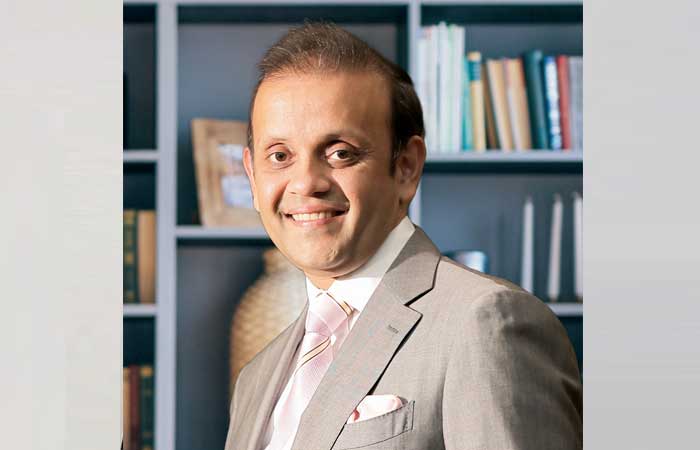
Shrivats Singhania, Director and CEO of Udaipur Cement Works (UWCL), shares how the company has embraced cutting-edge technologies and sustainable practices to strengthen its logistics and minimise its carbon footprint.
What is your current production capacity and what are your plans for expansion?
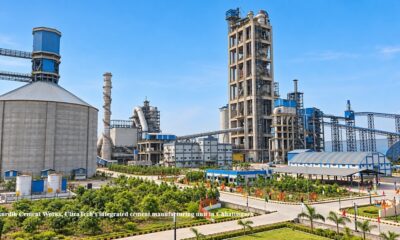
Udaipur Cement Works Limited (UCWL) recently achieved a significant milestone with the inauguration of the newly installed cement grinding and packaging section at our Dabok Plant in Udaipur, Rajasthan. This state-of-the-art facility has nearly doubled our production capacity, from 2.2 million metric tonnes (MT) per annum to an impressive 4.7 million MT per annum.
This expansion wasn’t just about volume – it was a strategic move aligned with catering to the growing demand for high-quality cement in the region. It also allows us to enhance our efficiency and overall competitiveness in the market.
UCWL is committed to continuous improvement and growth within the cement industry. We are constantly looking for ways to expand our operations and better serve our customers.
With the growing production of cement industry wide, how is the cement industry managing its carbon footprint?
The growing production in the cement industry necessitates addressing our collective carbon footprint. At UCWL, we recognise this responsibility and are actively implementing several strategies to minimise our environmental impact. One key approach is embracing advanced technologies. Our recent expansion with the newly installed cement grinding and packaging section incorporates cutting-edge features that enhance efficiency and reduce energy consumption.
Additionally, we have commissioned a Waste Heat Recovery System (WHRS) that utilises waste heat of the pyro-process for power generation. This along with our Captive Solar Power Plants significantly increases our Green Energy share, exceeding 50 per cent of our total electrical consumption.
Furthermore, we recently doubled our Clinker Capacity. While clinker production can be energy-intensive, this expansion allows us to explore alternative fuels and optimise the overall production process, reducing our environmental impact per unit of cement produced.
These initiatives exemplify UCWL’s dedication to environmental stewardship. We are committed to continuous improvement and believe that innovation, coupled with responsible practices, can lead to a more sustainable future for the cement industry.
Tell us about the role of digitalisation and automation in the cement production process.
Digitalisation and automation play a pivotal role in revolutionising the cement production process by enhancing efficiency, productivity and product quality. UCWL has embraced cutting-edge technologies to optimise operations, improve product quality, reduce energy consumption, and ensure timely maintenance. By leveraging automation and digitalisation, UCWL is at the forefront of innovation in the industry, driving operational excellence and setting new benchmarks for efficiency and sustainability.
As the production of cement grows, how does it impact other processes such as logistics, transportation and distribution?
As cement production grows, so does the demand for efficient logistics and transportation. At UCWL, we recognise this link. Increased production volume necessitates a robust and adaptable logistics network to ensure timely and efficient product delivery. We are continuously evaluating and optimising our logistics network to meet this growing demand.
Beyond simply scaling our operations, we are committed to sustainable practices across the supply chain. We have implemented innovative strategies like CNG-powered truck distribution to reduce our carbon footprint during transportation.
These initiatives not only optimise logistics and distribution but also demonstrate UCWL’s unwavering commitment to environmental responsibility. We believe that sustainable practices and efficient operations go hand-in-hand, and we are actively working to achieve both.
What are the sustainability initiatives undertaken by your organisation?
UCWL prioritises sustainability as a core principle. We have actively embarked on a comprehensive journey to minimise our environmental impact and promote responsible practices across our entire operation. This commitment is evident in several key initiatives.
A pioneering first for the Indian cement industry, UCWL deployed a floating solar power plant, significantly reducing our reliance on fossil fuels and contributing to cleaner energy generation. We are also constantly exploring innovative methods for transporting loose cement, with the goal of minimising environmental impact and dust generation during transportation.
These initiatives, along with many others, exemplify UCWL’s unwavering commitment to sustainability. We strive for energy efficiency throughout our operations and are dedicated to environmental stewardship within the cement industry. We believe these efforts will pave the way for a more sustainable future for our company and the environment.
Tell us about the major challenges that may arise in the cement plant and how they are managed.
The cement industry operates in a dynamic landscape, and UCWL recognises that our plants can face several challenges. These can range from managing energy consumption to minimising environmental impact and maintaining peak operational efficiency.
At UCWL, we take a proactive approach to address these challenges. Energy consumption is a significant concern across the industry. We combat this by embracing cutting-edge technologies like automation and digitalisation. These advancements optimise processes, minimise energy waste, and maximise output, leading to greater efficiency in our production.
Minimising our environmental footprint is another top priority. We are committed to implementing sustainable practices throughout our operations. A prime example is our pioneering deployment of a floating solar power plant, the first of its kind in the Indian cement industry. This significantly reduces our reliance on fossil fuels and contributes to cleaner energy generation. Additionally, we utilise WHRS, which not only reduces our environmental impact but also contributes to energy efficiency.
Finally, maintaining peak operational efficiency is crucial for our success. We believe in continuous improvement and are constantly seeking new solutions to further optimise our operations. By proactively addressing these challenges through a combination of innovative solutions, sustainable practices and a commitment to continuous improvement, UCWL effectively manages its plants. This allows us to deliver high-quality cement while minimising our environmental impact.
Tell us about the future outlook of the organisation
The future outlook of UCWL is characterised by a strong emphasis on sustainability, innovation, and growth. By continuing to invest in green energy, automation, and digitalisation, UCWL is poised to maintain its position as a key player in the cement industry.
The company’s strategic vision focuses on meeting market demands, driving operational efficiency and upholding its commitment to sustainability and quality. With a forward-looking approach, UCWL is well-positioned to navigate industry challenges and capitalise on opportunities for continued success and leadership in the cement sector.