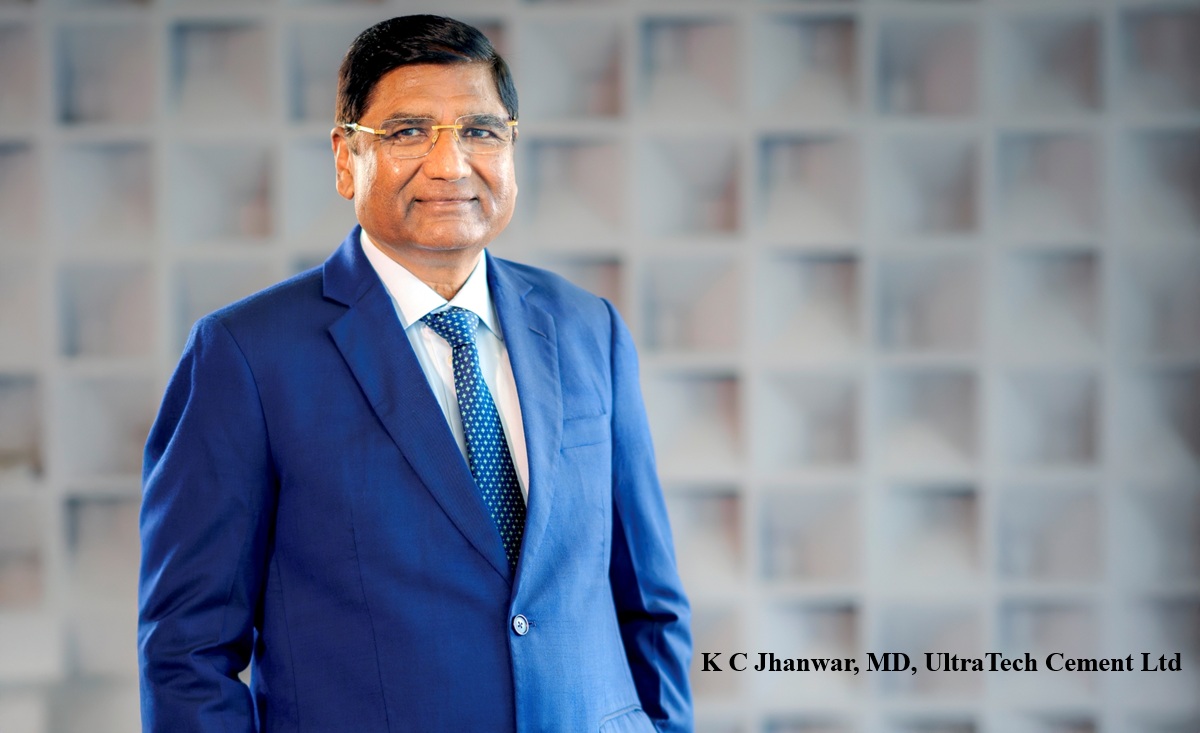
Dr BN Mohapatra, Advisor and Consultant, UltraTech Cement, lays emphasis on the various aspects of decarbonisation that are helping the Indian cement industry make optimum use of technology.
The Indian cement industry is one of the core industries of the country, which plays a vital role in the growth and economic development, because of its strong linkage to other sectors such as infrastructure, construction, housing, transportation, mining, etc. The current annual installed capacity of the cement industry in India is about 594 million tonnes with cement production of around 361 million tonnes (2021-22).
There are a total 333 cement manufacturing units in India comprising 150 integrated large cement plants, 116 grinding units, 62 mini cement plants and 5 clinkerisation units. Cement consumption in India is around 260 kg per capita against a world average of 540 kg per capita, which shows significant potential for the growth of the industry.
At present, India is seeing demand for large-scale infrastructure development and the housing in the country is also on a rise. As a result of this, it is expected that cement demand will grow by around 6-8 per cent by 2030. A growing housing sector, which typically accounts for 60-65 per cent of India’s cement consumption, will remain a key demand driver. Therefore, the challenge lies in making the cement manufacturing process cleaner and efficient and sustainable with innovation and technology.
Shifting to sustainable cement manufacturing is also the need of the hour as cement production is one of the highest emitting industries, accounting for 7 per cent global CO2 emission. It is one of the most widely consumed products globally owing to its various applications spanning from residential to urban constructions, which are indispensable for progress. It is thus, necessary to swiftly adopt sustainable practices to mitigate environmental impact and support achieving sustainability targets such as becoming net zero by 2070.
Adoption of innovation and technology
The cement manufacturers have to play a dual role supporting India’s economic growth by meeting the cement demand and contributing to the sustainability mission by ensuring that cement has minimum impact on the environment. This can be achieved by innovative ways backed by technology.
The Indian cement industry is progressive and is continuously adapting to the latest technologies to make the cement industry more efficient and greener with less environmental footprint.
They utilised strategies such as integrating waste heat recovery systems to meet the energy demand sustainably by lowering dependence on carbon emitting fuels and achieving energy efficiency. This can result in reduction in electricity.
They invested in high efficiency coolers and preheaters to minimise kiln heat requirements.
Using clean energy from renewable sources like solar or wind energy. They developed on-site renewable power generation capabilities to procure clean energy and dependence on fossil fuels.
Capturing of CO2 emissions and storing them or utilising them to produce chemicals, concrete or plastics can prove to be a great alternative to utilise waste and promote a circular economy.
Cement production process using alternative fuel like hazardous waste, biomass, industrial waste, agriculture waste to save the environment and produce greener energy.
Green energy
The productivity of different energy sources for cement plants can vary depending on various factors such as technology being used, availability, cost, infrastructure and local regulations.
Some examples are as under:
Fossil fuels (coal, oil and natural gas): Traditionally being used as the primary energy source for cement production due to their high energy content. However, they contribute significantly to carbon emissions and are considered non-renewable resources.
Agricultural waste: Biomass, such as agricultural waste or dedicated energy corps can be used as alternative fuel source in cement production. Its productivity can vary depending upon the availability and sustainability of biomass feedstock.
Municipal and industrial waste: Certain waste materials, such as shredded tyres or municipal solid waste, can be used as alternate fuel sources in cement kilns. The productivity of waste materials as an energy source depends on their calorific value, their characteristics, availability and proper waste management practices.
Renewable energy sources: Renewable energy sources like solar, wind or geothermal power can be utilised to generate electricity for cement plants. Their productivity depends on factors such as location, resources availability and their ability to integrate them into the plant’s energy infrastructure.
Cement industry exhausts high amounts of hot gases and are being utilised to produce power by using waste heat recovery technologies.
Greener energy has a positive impact on manufacturing, including commercial and technical aspects. Potential impacts on environment, energy efficient and productivity enhancement with lower cost.
Automation and technology
Automation plays a very pivotal role in optimising the use of energy in cement plants. We are using VFD, Smart MCC, Sensors, Integrated Load Management system, Energy Monitoring System and Smart Lighting System for effectively optimising the use of energy. Here are some ways which help in reducing Energy
Energy monitoring and control: Automation systems can continuously monitor energy consumption in various parts of the cement plant such as kilns, mills and crushers. This real time data allows operators to identify pilferage processes or equipment and optimise energy usage.
Process optimisation: Advanced control systems and predictive analytics can optimise the cement manufacturing process to minimise energy consumption. By analysing data from various sensors and instruments, these technologies can identify opportunities for energy savings and automatically adjust parameters to achieve optimal efficiency.
Energy management system: Automation systems can integrate with energy management systems to provide a holistic view of energy usage across the entire plant. This allows operators to track energy performance and accordingly set targets and implement energy savings measures effectively.
Load management: Automation systems can optimise the scheduling and sequencing of equipment to ensure a balanced load distribution, reducing peak demand and improving overall energy efficiency. For example, by co-ordinating the operation of the kilns, mills and other machinery, the system can minimise energy wastage during periods of low demand.
Energy recovery: Automation technology can facilitate the implementation of energy recovery systems in cement plants. For instance, waste heat from kilns can be captured and used to generate electricity or provide heat for other processes, reducing the reliance on external energy sources.
Equipment optimisation: Automation systems can monitor the performances of Individual equipment and identify inefficiencies or malfunctions that may contribute to excessive energy consumption.
Control dust and gas emission
Cement plants have adopted technologies to meet the new emission norms for PM, SO2 and NOX emissions. Plants have installed highly efficient bag filters, ESPs, and hybrid filters to control dust emissions. For NOX reduction, plants have installed secondary control measures like SNCR. All the cement plants have installed a Continuous Emission Monitoring System (CEMS) as per the guidelines of CPCB. In the same spirit cement industry is the first one to adopt filtration technologies like pulse Jet Bag House (PJBH) reverse air bag house and hybrid filters for controlling dust emission from stack. Advent of new fabrics which can withstand higher temperatures and tough working conditions. Controls and advanced electrical systems provided the opportunity to reduce the dust emissions to very low levels. Cement industry embraced these technologies that helped industry today in achieving consistent and lower stack emissions of 30 mg/Nm3.
Cement plants use various types of dust filtration equipment and techniques to control dust emissions and improve air quality. Some of the common methods used include:
- Bag filters
- Electrostatic precipitators (ESPs)
- Cyclones
- Wet scrubbers
- High Efficiency Particulate Air (HEPA) Filters
Digitalisation
In the current era of digitalisation and technological advancements, the companies must accelerate adoption of technologies such as robotics, artificial intelligence, IoT, data analytics and others to expedite sustainability efforts. This can support optimising processes, achieving higher efficiency, visibility and control on operations to speed up the decarbonisation journey. Digitalisation paves the way for implementing advanced digital solutions that can help maintenance team’s transition from reactive to proactive maintenance strategies
Remote monitoring of plant operation: Day-to-day plant operation can be monitored in real time from a remote location using Interconnectivity of Technologies [enabled by Internet of Things (IoT)]. Early detection of equipment issues enables planned maintenance, reducing costly unplanned downtime and minimising repair expenses. This optimisation of Inventory levels minimises carrying costs and mitigates the risk of overstocking or stock outs. Cement plants take corrective actions to reduce energy wastage and carbon footprint, thereby achieving significant cost reductions over time. Automated AI -based predictive maintenance solutions consist of 6-in-1 the Wireless sensors that measure the 6 most important parameters of Tri Axial Vibration, Acoustics, RPM, Temperature, Humidity and Magnetic flux. These sensors act as the vigilant eyes and ears of the manufacturing plants.
Cement industry 4.0: Industry 4.0 or digital innovations, which involves advanced data analytics, intelligent neural networks and Internet of Things (IoT) offer tremendous opportunity to improve the efficiency of manufacturing processes and ease of logistics. AI, sometimes called machine intelligence, is intelligence demonstrated by machines, unlike the natural intelligence displayed by humans and animals. The field was founded on the assumption that human intelligence can be so precisely described that a machine can be made to simulate it.
Simulation techniques for plant optimisation: Cement manufacturers can utilise Computational Fluid Dynamics (CFD) simulation solutions to capitalise on all opportunities to improve processes, either through an engineering contractor or in-house facility. Potential improvements include, but are not limited to, reduction in energy consumption, reduced wear on equipment and improved material distribution to key equipment.
Robotic laboratory and quality optimisation: Indian cement plant has already installed robotic laboratory for automatic sampling and testing. Installed XRF and XRD for both Bogue and actual phases. XRD has wider application in the cement sector like optimisation of burning and cooling conditions in kilns. Prediction of cement compressive strength of 1-day, 3-day, 7-day and 28-day.
Government initiatives
Indian government also takes initiatives through technology for overall economy, development and environment. Here some government initiatives,Decarbonisation of cement industry: Hon’ble Prime Minister of India Shri Narendra Modi has made the pledge to cut the CO2 emissions in the COP 26 summit at Glasgow in November 2021. The new climate action targets ‘Panchamrit’ by India included:
a Net Zero target for India by the year 2070 installing non-fossil fuel electricity capacity of 500 GW by 2030 sourcing 50 per cent of energy requirement from renewable by 2030 reducing 1 billion tonnes of projected emissions from now till 2030 and achieving carbon intensity reduction of 45 per cent over 2005 levels by 2030 PAT scheme and carbon trading: Perform Achieve and Trade (PAT) scheme is a flagship programme of Bureau of Energy Efficiency under the National Mission for Enhanced Energy Efficiency (NMEEE). The PAT Scheme is a regulatory instrument to reduce the specific energy consumption in energy intensive industries.
Science-based targets initiative (SBTi): SBTi drives ambitious climate action in the private sector by enabling companies to set science-based emissions reduction targets. The SBTi defines and promotes best practice in emissions reductions and net-zero targets in line with climate science.
Logistics – PM Gati Shakti: Logistics cost contributes about 30 per cent of the total cost of the cement prices. The Prime Minister launched PM Gati Shakti-National Master Plan for Multi-modal Connectivity, essentially a digital platform to bring 16 Ministries including Railways and Roadways together for integrated planning and coordinated implementation of infrastructure connectivity projects.
Lead IT initiative: For promoting low-carbon transition especially in the hard-to-abate sectors like iron and steel, aluminum, cement and concrete, petrochemicals, fertilisers, bricks, heavy-duty transport, etc. through active participation of private sector companies, Government of Sweden and India launched an initiative ‘Leadership for Industry Transition (Lead IT)’ at the UN Climate Action Summit in New York in 2019. Stockholm Environment Institute hosts the Secretariat of Lead IT. Under
the Lead IT initiative, preparation of the sectoral roadmap for the cement and steel sector in India has been undertaken.
National Hydrogen Mission: The Mission aims to aid the government in meeting its climate targets and making India a green hydrogen hub. This will help in meeting the target of production of 5 million tonnes of green hydrogen by 2030 and the related development of renewable energy capacity.
Circular economy: The Government has been actively formulating policies and promoting projects to drive the country towards a circular economy. It has already notified various rules, such as the plastic waste management rules, e-waste management rules, construction and demolition waste management rules, metals recycling policy, etc.
National Coal Gasification Mission: Coal gasification is considered as a cleaner option compared to burning of coal. Gasification facilitates utilisation of the chemical properties of coal. SynGas produced from Coal gasification can be usable in producing Synthetic Natural Gas (SNG), energy fuel (methanol and ethanol), ammonia for fertilisers and petro-chemicals. These products will help move towards self-sufficiency under Atmanirbhar Bharat Abhiyaan. Ministry of Coal, Government of India has taken initiative for utilising coal through coal gasification to achieve 100 MT coal gasification by year 2030.
Futuristic technologies
The following futuristic technologies are expected to be developed and adopted by the Indian cement industry in the years to come Carbon capture and storage/utilisation Oxy fuel in the carbon capturing Algal growth promotion and use of biofuels
- Nanotechnology in cement
- Concentrated solar thermal calcination
- Aero acoustics grinding
- Beta-mill
- Futuristic low temperature clinker system
Novel cement system
New cement systems, listed below, using various varieties of waste are being explored extensively in India:
- Portland limestone cement
- Portland composite cement (fly ash and limestone based)
- Geo-polymer cements
- Reactive belite and calcium sulphoaluminate-based cements
- Calcined clay-based cement
- Low lime and low energy cements
ABOUT THE AUTHOR:
Dr BN Mohapatra is presently working as Advisor and Consultant to Ultratech Cement Ltd, Mumbai HO. Prior to this, he was the Director General of NCCBM. He is a PhD in Cement Mineral Chemistry and presently pursuing his Doctorate in Science, with 13 years of research experience and 22 years of industry experience. He has a strong academic relationship with premier research institutes.





















 Concrete3 weeks ago
 Concrete2 weeks ago
 Concrete4 weeks ago
 Concrete3 weeks ago