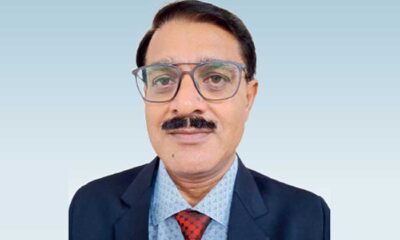
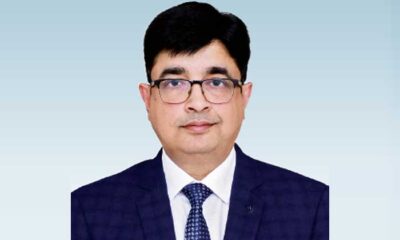
AK Dembla, President and Managing Director, and Deepti Varshney, Deputy General Manager, KHD Humboldt Wedag India, address the issue of thermal energy consumption and the solutions they offer, including preheater cyclones and calciners, and insulation and specialised coatings.
India, being the second largest cement producer in the world, accounts for over 8 per cent of the global installation capacity, yet responsible for huge emissions. Around 70 per cent of total cement production in India revolves across top 20 companies.
Over a decade, the Indian cement industry has spotted uncertainties, increased fuel prices, environment load, sustainability, etc. In view of the relentless requirements of the cement industry, as a responsible partner KHD is steadily delivering and contributing its best for more than 160 years presenting a sterling example in fulfilling the responsibility as a prime technology supplier. Persistent development based on industry needs, which mainly focuses on a green environment, escorts the technology providers to ponder ahead and gear up to impart cement industry with the latest art of technology integrating the innovations leading to plant sustainability in long run. With depleting resources, the growing concerns for greenhouse emissions and sustainable practices, KHD with its visionary approach have unriddled that for consistent growth, the base forming principles should be acquired through sustainable life cycle.
Earlier, cement manufacturers used to set up small plants of about 1.5 MTPA max. But now, it’s more towards installing large capacities for clinkerisation that is >3.0 MTPA. Factors which stimulate manufacturers to set up a single huge capacity plant rather than opting for a small capacity plant comes with benefits like low investments, low transportation costs, installation of utilities, energy conservation, etc. Although huge capacity plants have enough advantages, some concerns always surface like machine maintenance and reliability. KHD, with its huge capacity plants, has proven that such issues can be tackled by selecting the right machinery, which not only meets the environmental requirements but keeps in view the demand grows, too.
Installing efficient systems
Evolvement of calciner series wherein it was developed over a time for usage of alternative fuels of varying quality and degree. The evolutions were made considering the requirement of industry to use more of alternative fuels than the noble non-renewable fuel sources. Today, focus is on efficient use of alternative fuels up to 90 per cent in desired systems thus decreasing the load on mother nature and contributing towards the ‘2050 Climate Ambition.’ Decreasing thermal energy consumption, which is addressed by developing the preheater cyclones and calciner by KHD, to seize radiation losses in the system to protect the environment. KHD furnish proper insulation in preheater and ducts along with special aluminium-based paints to retain the heat within the system and increase the availability for intrinsic processes.
Power generation from exhaust
It is necessary to dissociate economic growth associated with GHG emissions. Energy productivity is required as 50 per cent of total energy consumed by the industrial sector is wasted in the form of heat losses. In the context, Waste Heat Recovery (WHR) system installation has played a vital role towards the capturing waste heat losses utilisation for
power generation.
In accord with The Ministry of New and Renewable Energy (MNRE), the Indian cement sector has the highest potential to generate 1100 MW (2016 estimates) of clean energy through WHRS installation. This capability continues to grow proportionally with an increase in cement manufacturing capacity, bringing it close to 1.3 GW at current production capacity levels. WHRS with its full potential will help replacing energy requirements equivalent to 8.6 MT of coal, resulting in emissions savings of 12.8 MT of CO2 by the Indian cement industry.
Alternative raw materials for clinker production
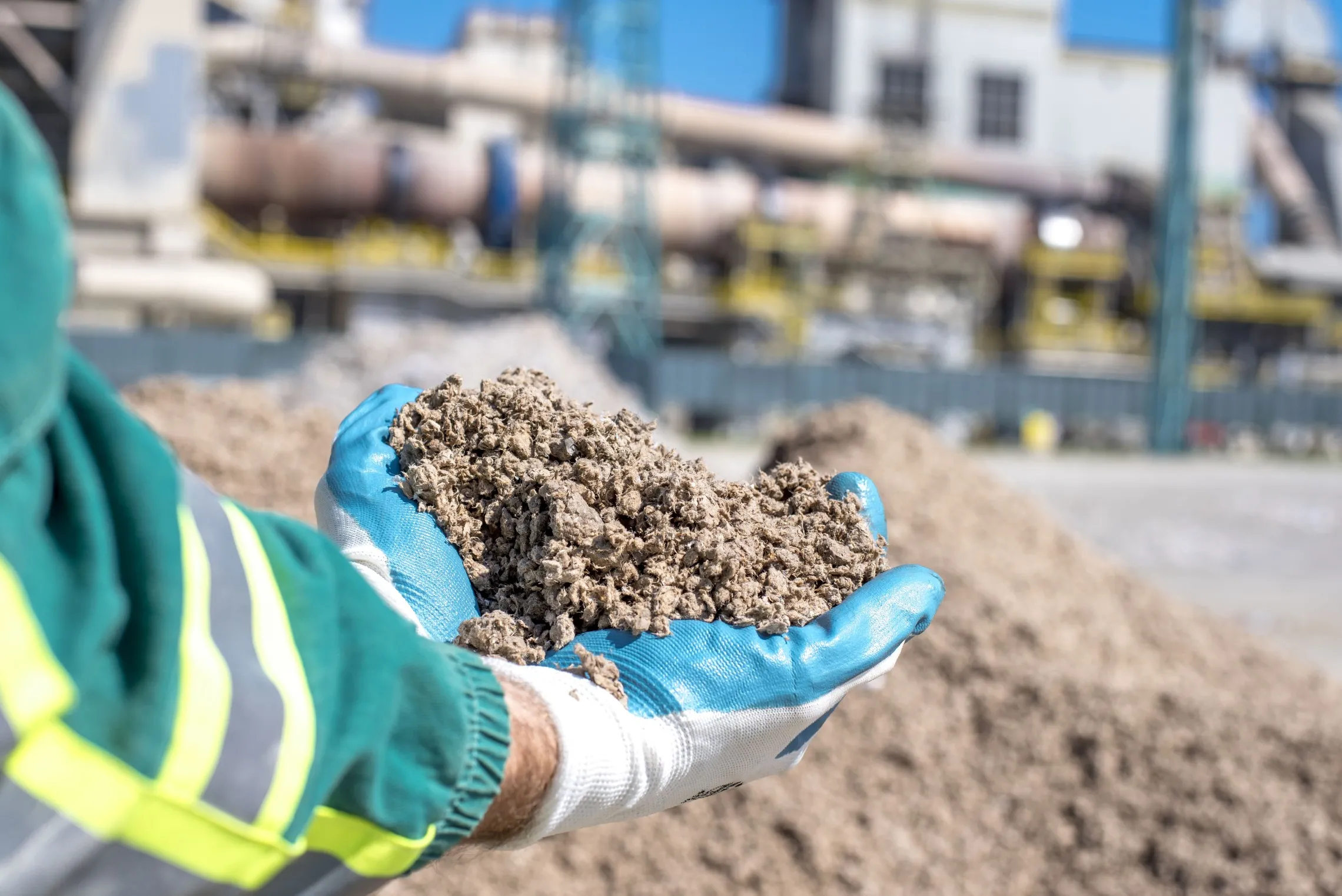
Focusing on usage of alternative raw materials for clinker production without compromising on parameters and quality. Selected waste and by-products containing useful minerals such as alumina, calcium, iron and silica can be used as raw materials in kilns rather than using clay, limestone and shale. Some extent of 3 per cent slag can even be used in raw material replacing few traditional raw materials. One of the KHD plants in Novotroitsk, Russia, replaced up to 30 per cent of raw material for clinker production by copper slag, which is a byproduct from nearby industry. This iron corrective component (Martin Slag) material not only acts as alternative raw material but also produces heat and fulfils the heat requirement for the process. This has led to a world record of specific heat consumption of only 600 kCal/kg clinker.
Utilisation assessment of alternative fuels
Presently, utilisation of alternative fuel in the Indian cement industry is at low level. The country average stands at less than 6 per cent of thermal substitution rate (TSR) as compared to average TSR of about 40 per cent in the European cement industry. The usage of alternative fuel can be enhanced through concerted effort of characterisation, evaluating various types of Waste Derived Fuel (WDF) and initiating their suitable use in cement manufacturing. Database development on availability and characterisation of combustible waste, waste derived fuels and evaluation of international best practices and technology for waste management and utilisation and their adaptation for an Indian cement plant will additionally
be helpful.
The industry has a lot of potential to utilise alternative fuels in cement manufacturing with benefits in terms of conservation of natural resources and prevention of environmental hazards including mitigation of GreenHouse Gas Emission, hence serving the goal of sustainable growth and development in India. Industrial and mineral wastes from mineral processing industries, such as chemicals, metallurgy, petrochemical, power, paper and pulp accounts for more than 200MT out of which more than 6MT are hazardous and can be used alternatively in cement kilns. Today, many cement plants are exploring to collect all the municipal waste of the area, process it and use it as an alternative fuel. Keeping in view all these, long ago KHD has rolled down equipment to use alternative fuels of varying degrees and one such example is of combustion chamber.
The KHD combustion chamber is especially designed to burn the materials, which are coarse and lumpy in nature as well as difficult to ignite. The calciner process is ruled by classical dilemma, that temperature and oxygen levels need to be reduced to the maximum to increase production at reduced heat consumption and emission levels while a complete burn-out is still required to avoid CO-triggered failures. Adding to difficulty, increasingly more often secondary fuels of lumpy size and sometimes problematic combustion properties are fired, which must be given sufficient retention time to burn out and must be kept clear from the bricklining until they are not fully burnt. An optimised flow pattern of gas-meal-fuel suspension within the vessel is necessary to accomplish, without creating excessive calciner dimensions. The Calciner design is based on requirements of creation of subsequent zones with dedicated functions for controlled process of NOx reduction, staged combustion and mixing zone for a reliable final oxidisation on CO-remains.
KHD Pyrorotor® is a unique rotary combustion reactor that sustainably co-processes waste materials. Within the range of modular solutions from KHD for co-processing of alternative fuels in the clinker production process. The Pyrorotor® covers the demands for highest TSR rates of least pre-processed AF. Due to its high temperature process and longer residence time, it is suitable for nearly all types of coarse solid fuels. For burning fuels tertiary air is used as combustion air.
Emissions released from cement kilns, coming from physical and chemical reactions of raw materials and from combustion of fuels. Exit gases contain small quantities of chlorides, carbon monoxide, dust, fluorides, NOx, sulphur dioxides and smaller quantities of organic compounds and heavy metals like mercury (Hg). Presently, norms exist for dust, HCL, HF, Hg, NOx, SOx, TOC, Heavy Metals and Dioxin in India which are comparable or better as compared to other blooming countries. There is a system consisting of equipment to draw, condition and analyse the flue gas sample and provide a permanent record of emissions and process parameters continuously on a real time basis and is called Continuous Emission Monitoring System (CEMS). It’s of vital importance to install a CEMS system as sources can be controlled after measuring emissions. However, some of the cement manufacturers in India have not installed CEMS in their cement plants. It needs to be a collaborative effort of Cement manufacturers, suppliers, consultants, and Govt. to achieve the objective of emission control. KHD is trying to ensure that all the plants equipped with KHD technology get CEMS implemented for environmental protection.
An example, equipment from KHD for reducing the emissions at source is the low NOx burner (Pyro-Jet® Burner). The most imperative features of burner are low NOx emissions, low primary air and flame (stable and uniform) characteristics. The flame of the Pyro-Jet® burner has both an internal recirculation zone and a long external one resulting in substantial NOx reduction.
Pyroclon®-R Low NOx AF is a special design calciner which attains retention time desired for complete burnout of fuel. Another prominent solution from KHD for reducing NOx emissions is the PYROREDOX® system where NOx coming from the kiln gets further reduced and formation of Fuel NOx is suppressed.
Concentrating more on low clinker to cement ratio besides, focusing on steps for reduced carbon print, is already underway in the cement industry. At present, India is one of the fastest moving cement industries towards this aspect of green cover. PSC, PPC and composite cements are the up going curves. The cement industry is well versed with utilisation and manufacturing of blended cement. KHD is one of the key suppliers for providing energy efficient technologies namely roller press grinding for blended cement production. It is estimated that decreasing the clinker ratio in production of cement contributes nearly 37 per cent CO2 reduction targeted. By promoting PPC and PSC cement in India, more than 85 per cent cement is produced as blended cement / composite cement (which has come into existence during the last 3-5 years). PPC allows 35 per cent fly-ash usage at present, whereas PSC allows 55-65 per cent granulated slag in the clinker. Pozzolana (fly-ash) increased usage in PPC up to 45 per cent can reduce carbon footprint further, which has a permissible limit up to 55 per cent in some of the European countries.
Modernisation and Upgradation
More focus is on modernisation and upgradation of existing set-ups, rather than building new production lines to increase capacity. Utilisation of existing kiln to its maximum potential is talk of art, which not only enhances clinker production but significantly contributes to improving the overall operational efficiency. Reduction in electrical and thermal and energy demands will aid in reducing the carbon footprint of existing plants.
Digitisation and Automation
At present time, a number of plants are operating in traditional, non-agile manner with manual or outdated technology infrastructure, while struggling to acquire and retain skilled workers in important roles. The potency of new enterprise-resource-planning systems, process-optimisation tools, and even predictive maintenance has lagged behind due to changed-management challenges and cultural differences between sites.
It’s a considerable fact that future cement plants will operate in dramatically different and green ways as of today’s plants, while achieving considerably lower operating costs and higher asset value through higher energy efficiency, yield and throughput. More targeted and effective maintenance lengthens the lifetime of equipment. Each plant’s environmental footprint is minimised, securing its licence to operate across locations and jurisdictions. For future cement plant volume will be of key focus rather than considering the value. Ecosystem variability lies in norms for real-time, fact-based decision making and continuous adjustments.
Conclusion
Presently, the path is towards shaping the industry to reach the highest point of the curve of sustainability vs time period. Cement manufacturers are taking a big leap for attaining the goals as established by various associations and global bodies. The positive aspects of decarbonisation of industry, capacity utilisations, productivity enhancements and controlled emissions are taking a big leap towards sustainability. The Indian cement industry has been working on the issue of its GHG emissions and has brought down the CO2 emission factor considerably. However, it requires more efforts to achieve the goals of Cement and Concrete Roadmap 2050 for the Net Zero Concrete. The leading cement and concrete companies in India have accepted the goal to achieve Net Zero Concrete by 2050 and committed to fully contribute to building a sustainable tomorrow. However, the industry requires increased efforts for newer technologies like renewable energy, novel cements, carbon capture and storage/utilisation.
Cement technology suppliers are in the process of rolling out these technologies with the main plants. KHD has done advanced work in this field and has solutions such as LC cement. As part of the ‘Made in India’ concept, KHD is also promoting more manufacturing in Indian workshops with improved quality which can aim at efficient reliability of the equipment. All these steps are keen steps to make the Indian cement industry bloom, achieving the roadmaps of carbon reduction, green environment, increased capacity to meet the demands and go in liaising with government plans.
ABOUT THE AUTHOR
AK Dembla, President and Managing Director, was the founder president of Humboldt Wedag India in 2001. He has 36 years of experience in cement industry ranging from responsibility for CEO, profit and loss account, company operations, strategy and advisory support to parent companies. He has worked with Enexco Technologies (part of Beumer Group-Germany), Jaypee Cement, Gebr. Pfeiffer, Cimmco Birla Limited and NCCBM.
Deepti Varshney, Deputy General Manager, KHD Humboldt Wedag India, holds 16 years of work experience in the cement industry and is a passionate professional.