Connect with us

Concrete

Effective communication is essential in precast detailing

Published

on

Shares

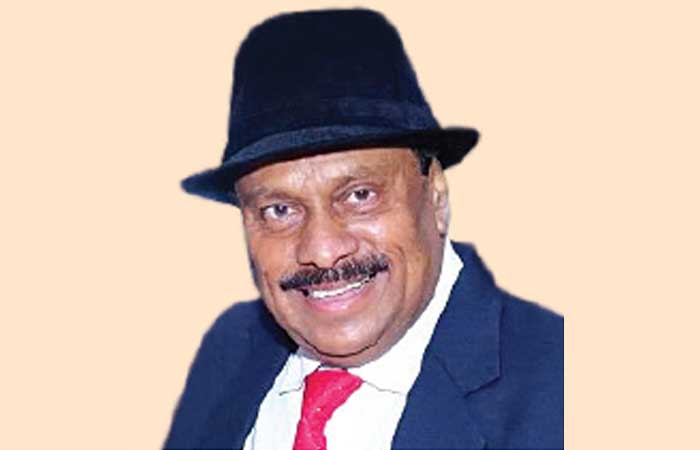
Vijay Shah, Managing Partner, India Precast, talks about the process of making precast concrete shapes, with a focus on the challenges that accompany the production.

Tell us about the process of casting concrete in shapes.
Precast concrete products are made through pouring either wet cast or dry cast concrete into moulds, which are then hardened and removed to be dispatched. These moulds could be from concrete posts, pillars, columns, slabs etc. This benefits the construction process as it can be difficult to manoeuvre or create the right shapes and sizes by pouring the concrete on site.

The process of making precast shapes involve:

  • Build a form. The inside of the form defines the shape that is being created. This form is then filled up with cement and is kept to dry and harden.
  • Clean the mould before adding cement to it. The mould should be lined with materials or chemicals that allow for the hardened concrete structure to retrieve from it.
  • Cement or concrete mix is then created to be poured into the moulds for setting. We use a variety of concrete grades like M25, M30, M35, M40, and M45 for this mix. The mould poured in cement is left alone for 24 hours to harden and removed once set.
  • Once set, a hard mould is either broken or the cast is retrieved from a soft mould by shaking, which is ready to be transported to the location of construction or building activity.

What are the standard sizes and shapes of precast made by your organisation?
Our organisation makes various types of precast elements like:

Solid load bearing floor slabs, load bearing walls, facades, sandwich wall panels and cladding panels
Floor and roof slabs, made from prestressed load bearing hollow concrete slab and ribbed slab. Floors or roofs are also made from half floor slab or semi-finished floor slab with
lattice girder.
Precast stair cases, balcony, toilet pods, lift shafts and water tanks
Prestressed lintel, frames, beams, column and double tee beam
Internal partition walls, made from light-weight hollow core wall panels instead of AAC blocks or bricks
Sandwich walls, beams, columns, I-Beam, tee beam, lintel, footings, boundary walls, retaining walls, fencing poles, U-drainage or trench, box culvert, jersey barriers, covers, paver blocks etc.

Explain the moulds used to make these shapes. Do you customise moulds?
Concrete moulds are moulds that are used to shape the concrete you are working with. The concrete will adopt the shape of the mould as it cures. Concrete moulds are used to give concrete its finishing shape. Moulds are of various types (refer table below). We customise the moulds as per requirements.

S. No. Mould type Uses

  1. Conventional moulds Ribbed slabs, beams, window panels, box type units and special elements
  2. Battery moulds Interior wall panels, shell elements, roof and floor slabs
  3. Tilting moulds Exterior wall panels where special finishes are required on one face or for sandwich panels
  4. Long line prestressing beds Double tees, ribbed slabs, piles and beams
  5. Extrusion machine Roof slabs and hollow core slabs

Concrete

NDMC Rolls Out Intensive Sanitation Drive Across Lutyens Delhi

Municipal body intensifies cleaning and monitoring across the capital

Published

on

By

Shares


The New Delhi Municipal Council has launched an intensive sanitation drive across Lutyens’ Delhi, aiming to raise cleanliness standards in the capital’s central precincts. The programme will combine enhanced manual sweeping with mechanised cleaning and systematic waste removal to cover parks, heritage precincts and prominent thoroughfares. Authorities described the initiative as a sustained effort to improve public hygiene and reduce environmental hazards while maintaining the area’s civic image.

Operational teams have been instructed to prioritise drain clearing and litter hotspots, with special attention to markets and transit nodes that attract heavy footfall. Coordination with city utilities and waste processing units will be stepped up to ensure timely collection and disposal, and supervisory rounds will monitor adherence to cleaning schedules. Officials also intend to use data-driven planning to deploy resources efficiently and to identify recurring problem areas.

The council plans to engage resident welfare associations and business stakeholders to foster community participation in maintaining cleanliness and to support behavioural change campaigns. Public communication will be amplified through notices and outreach to encourage responsible waste handling and to inform residents about collection timings and segregation norms. Enforcement measures for littering and unauthorised dumping will be reinforced as part of a broader strategy to deter violations and sustain cleanliness gains.

The move reflects a focus on urban sanitation that officials link to public health priorities and to the city administration’s commitment to maintaining civic amenities. Monitoring mechanisms will include regular reporting and inspections to review outcomes and to recalibrate operations where necessary, according to municipal sources. The council emphasised that continued community cooperation will be essential for the drive to deliver lasting improvements in the appearance and hygiene of the capital’s core areas.

Continue Reading

Concrete

UltraTech Appoints Jayant Dua As MD-Designate For 2027

Executive named to succeed current managing director in 2027

Published

on

By

Shares


UltraTech Cement has appointed Jayant Dua as managing director (MD) designate who will take charge in 2027, the company announced. The appointment signals a planned leadership transition at one of the country’s largest cement manufacturers. The board has set a clear timeline for the handover and has framed the move as part of a structured succession plan.

Jayant Dua will be referred to as MD after assuming the role and will be responsible for overseeing operations, strategy and growth initiatives across the company’s network. The company said the designation follows established governance norms and aims to ensure continuity in executive leadership. The appointment is expected to allow a phased transfer of responsibilities ahead of the formal changeover.

The decision is intended to provide strategic stability as UltraTech Cement navigates domestic infrastructure demand and evolving market dynamics. Management will continue to focus on operational efficiency, capacity utilisation and cost management while aligning investments with long term objectives. The board will monitor the transition and provide further information on leadership responsibilities closer to the effective date.

Investors and market observers will have time to assess the implications of the announcement before the change is effected, and analysts will review the company’s outlook in the context of the succession. The company indicated that it will communicate any additional executive appointments or organisational changes as they are finalised. Shareholders were advised to refer to formal filings and company releases for definitive details on governance or remuneration.

The leadership change will be managed with attention to stakeholder interests and operational continuity, and the company reiterated its commitment to delivery on ongoing projects and customer obligations. Senior management will engage with employees and partners to ensure a smooth handover while maintaining focus on safety and compliance. Further updates will be provided through official investor communications in due course.

Continue Reading

Concrete

Merlin Prime Spaces Acquires 13,185 Sq M Land Parcel In Pune

Rs 273 crore purchase broadens the developer’s Pune presence

Published

on

By

Shares


Merlin Prime Spaces (MPS) has acquired a 13,185 sq m land parcel in Pune for Rs 273 crore, marking a notable expansion of its footprint in the city.

The transaction value converts to Rs 2,730 mn or Rs 2.73 bn.

The parcel is located in a strategic area of Pune and the firm described the acquisition as aligned with its growth objectives.

The deal follows recent activity in the region and will be watched by investors and developers.

MPS said the acquisition will support its planned development pipeline and enable delivery of commercial and residential space to meet local demand.

The company expects the site to provide flexibility in product design and phased development to respond to market conditions.

The move reflects an emphasis on land ownership in key suburban markets.

The emphasis on land acquisition reflects a strategy to secure inventory ahead of demand cycles.

The purchase follows a period of sustained investor interest in Pune real estate, driven by expanding office ecosystems and residential demand from professionals.

MPS will integrate the new holding into its existing portfolio and plans to engage with local authorities and stakeholders to progress approvals and infrastructure readiness.

No financial partners were disclosed in the announcement.

The firm indicated that timelines will depend on approvals and prevailing market conditions.

Analysts note that strategic land acquisitions at scale can help developers manage costs and timelines while preserving optionality for future projects.

MPS will now hold an enlarged land bank in the region as it pursues growth, and the acquisition underlines continued corporate appetite for measured expansion in second tier cities.

The company intends to move forward with detailed planning in the coming months.

Stakeholders will assess how the site is positioned relative to existing infrastructure and connectivity.

Continue Reading

Trending News

SUBSCRIBE TO THE NEWSLETTER


Don't miss out on valuable insights and opportunities to connect with like minded professionals.


    This will close in 0 seconds