Concrete
Value-Adding to Sustainable Efforts

Hitendra Grover, Director – CAD and MSD (India and South Asia), Thermo Fisher Scientific India, brings to light the role of automated systems in making the cement sector stronger and better equipped to become more sustainable.
Sustainability today is not a choice anymore. It has become a part and parcel of boardroom discussions. It is important to understand and appreciate that some of the most polluting industries, like the cement industry, are paying close attention to the matter and taking steps to make the environment better.
There are two ways to look at sustainability – the process side and the utility side. Thermo Fisher plays on the process and environment side. They help the sector to contribute towards overall sustainability by measuring the level of harmful gases emitted at the plant. Looking at their offering in the AQMS and SEMS space, they have a significantly differentiated product portfolio where they measure the emission of harmful gases like SOx and NOx, PM2.5, PM10, CO and CO2. These are critical gases as per which the leading Pollution Control Boards (PCB) take action.
They partake in supplying end-to-end solutions and not just the measurement or analysis, which will give an input to cement players to understand their emission levels, basis which they can work with technology that help in reducing these emissions. Thermo Fisher is like a barometer that informs cement manufacturers about their current pollution and emission levels and gives them a direction on where they should go. That is a critical piece to environment protection and they are global leaders in providing solutions for the same.
Apart from this, the equipment sets that they offer, like the belt analysers, XRF technologies, are amongst the most efficient technologies in terms of electrical consumption. When it comes to energy consumption, they are efficient and can contribute that much more energy saving at the plant, which may be hardly 1 or 2 per cent, but in absolute numbers, it makes a huge difference, thereby, saving fossil fuels that are consumed. Today, approximately, 65 to
70 per cent of India’s energy mix comes from fossil fuels.
Quality Matters
The cement industry is a highly competitive industry. It is all about efficiency and operational excellence. Being frugal or innovative are the only two levers on which one can charge a premium in the cement industry. Otherwise, there is hardly any differentiation of product in the industry. That is where scale becomes important for any organisation. When the scale is large, operations must be efficient and the cost structure needs to be strong. That is where Thermo Fisher comes into the picture.
If you look at the overall ecosystem of cement of analytical instruments, it can be divided into two parts. At any purchasing CAPEX decision making, there is an upfront CAPEX cost and an OPEX cost. Here a concept known as Total Cost of Ownership (TCO) comes into play. One of the traps that some of the buyers are falling for is the upfront capex cost of any capital equipment. Services, cost of spares, availability and the upfront cost become key pieces for consideration. If one has to consider the TCO of the said equipment, it is not about saving a certain amount while purchasing but the overall cost the equipment shall incur in its lifetime and the cost associated with it. It becomes a reinvestment with spares, services, analytics and performance by having a strong coverage under Comprehensive Maintenance Contract (CMC) for parts and labour. When the total cost is evaluated, that is where Thermo Fisher brings maximum value to its customers.
Looking at the TCO value, given the investment the customer makes and the OPEX he is going to spend over the next five years, the company offers the highest value, thereby contributing to their operational excellence. More importantly, giving the customer savings from this excellence, which is further a reinvestment to the business.
Thermo Fisher is not just a performance brand, but a value brand. They are premium, but are sure of the value they bring. The plant can show good savings on its P&L without product, which makes investment in their solutions worth it. Secondly, they have sophisticated softwares that can conduct predictive analytics and provide insights on preventive maintenance on spares and the lifecycle of the equipment. If there is a predictive alert about ordering spares, or about critical components etc., it can give timely signals from preventing the plant from getting into a shutdown, which is a loss by the hour. Preventing these incidents also is part of indirectly contributing to the cost efficiency of the cement plants.
Optimising with Automation
We have reached a level where Industry 4.0 defines the cement sector. It is not about the benefits of automation; it is more about whether we can even survive without automation. The entire value is not just functional in nature by hardware performance but also deals with how intelligent and energy efficient your systems are and how automated your processes are. This collectively defines the efficiency of operations in a cement plant.
If you look at any of the Thermo Fisher equipment, controller systems or build scales, all of them are automated by default and they bring a significant benefit to the customer. It is all about building efficiencies with automation. Customers are wrapping up their operations and going for equipment that brings automation as part of the system and not just a layer of the offer. And Thermo Fisher provides a deal packaged with automation.
Innovations Ahead
A lot is happening at Thermo Fisher and it is the company’s endeavour to add value to the
cement industry and partner with them in their sustainability journey to achieve energy transition and sustainability goals.
The company is proud of their association with the industry and they know the industry is here to stay. They are seeing a lot of growth in the core sectors like infrastructure, government projects, real estate and the government of India is making massive announcements in infra development. Moreover, the Make In India project is also adding metal to this industry. So, Thermo Fisher maintains a bullish outlook for the cement industry and therefore, as the industry grows, capacities will grow. Every major player with whom they have interacted, and every OEM that they connect with, India is coming to be the centre of attraction and become one of the top five countries in the world where the cement industry will grow at a strong CAGR and they are at the right place at the right time.
All this also puts them in a place of responsibility to be competitive, innovative and most importantly add value. The next decade is set to be some of the strongest years of the cement industry in India.
ABOUT THE AUTHOR:
Hitendra Grover is a business leader and has a rich experience across the domains of General Management, P&L, People management & Go to market strategy.








Concrete
Ultra Concrete Age
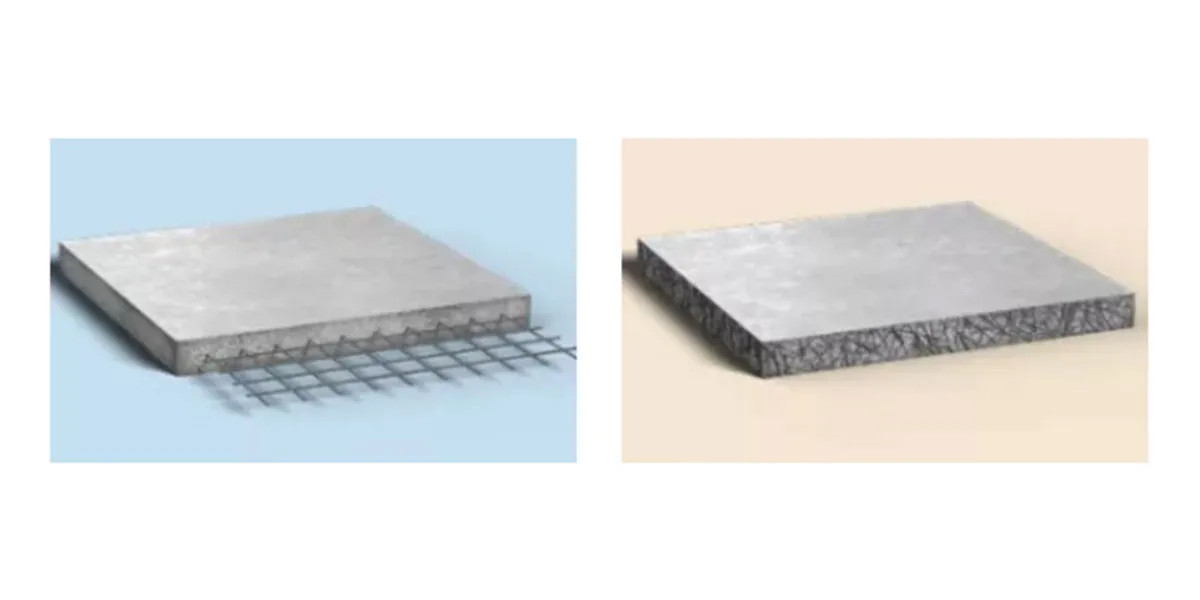
Prof. A. S. Khanna (Retd., IIT Bombay) on how Ultra-high performance concrete (UHPC) improves strength, durability and lifecycle performance.
Concrete
NCB Signs MoU With Cement Manufacturer To Boost Construction Skills
Partnership to deliver nationwide training and certification

Concrete
JSW Cement Commissions Nagaur Plant, Enters North India
New Rajasthan unit boosts capacity to 24.1 MTPA and expands reach


Ultra Concrete Age

NCB Signs MoU With Cement Manufacturer To Boost Construction Skills

JSW Cement Commissions Nagaur Plant, Enters North India

Cement Prices Likely To Rise As Petcoke Costs Increase

IIT Guwahati Develops Radiation-Resistant Cement Mortar
Ultra Concrete Age
NCB Signs MoU With Cement Manufacturer To Boost Construction Skills
JSW Cement Commissions Nagaur Plant, Enters North India
Cement Prices Likely To Rise As Petcoke Costs Increase