

Concrete
A Quizzical Quarter

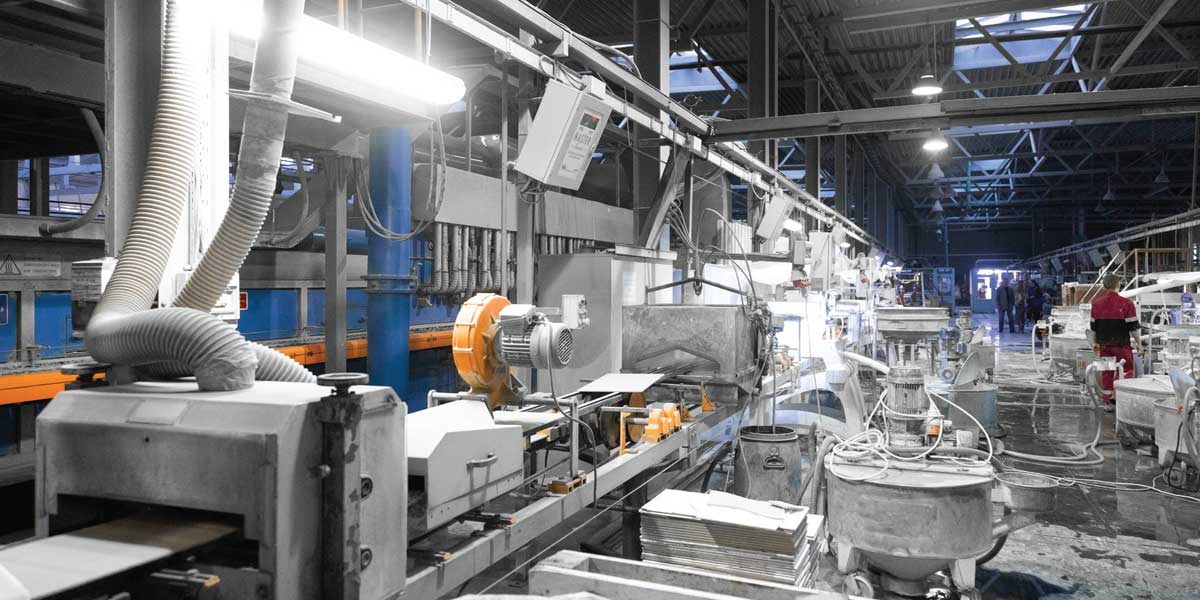
With the cement industry’s combined quarterly earnings in the second quarter of the current financial years reaching its nadir since July-September 2013, the industry is facing tough times. Is this a temporary phase or is it likely to prolong into the next calendar year? ICR analyses various facets of this development to find the answers.
Nearly two years after the Covid-19 pandemic brought the Indian economy to a screeching halt, things are slowly returning back to normal in 2022. Year 2022 was one of reconsolidation for India Inc. While the United States of America is facing a recession, it has resulted directly in the inflow of cash in developing countries such as India, in the form of foreign direct investment. And since the infrastructure is one of the major sectors allowing 100 per cent foreign direct investment [1], it would be expected to boost the entire industry with allied industries such as cement experiencing massive growth. However, it can be noticed that this has yet to happen. In fact, the combined net profits of the top cement companies in India were the lowest in a decade [2] in July-September 2022. The fact that this situation has arisen even after the entry of a wealthy entity such as the Adani Group in the cement sector is even more surprising. So, what exactly does this imply, and what kind of an impact will the weakness of the infrastructure and cement industry have on the overall Indian economy?
Global perspective
Hetal Gandhi, Director – Research, CRISIL Market Intelligence and Analytics, says, “The cascading effect of fuel price hikes and global supply disruptions owing to Russia-Ukraine war in early 2022 has resulted in sharp rise in critical input materials such as coal, oil and gas, which in turn drove cement prices to an all-time high.”
In the light of the above comment, let’s take a look at India’s position on the global level. India is one of the largest players in the global cement industry with over 7 per cent of the total global installed capacity [3]. Within India, about 98 per cent of the total cement production capacity is held by the private sector while the Government only holds 2 per cent. But despite the private sector dominating the cement industry in India, one of the biggest drivers for demand for cement is and always has been the Government. Various infrastructure projects undertaken by the Government of India within the last two years, which include the development of urban infrastructure, commercial real estate, roads, etc., have given a massive boost to the cement sector. In addition to that, the 2022 Union Budget had made allocations worth Rs 4,28,400 crore for various infrastructure-related projects.

Within the time span of 2020 to 2022, the foreign direct investment into manufacturing cement and gypsum-related products reached US$ 5.48 billion. As per Directorate General of Commercial Intelligence and Statistics (DGCIS), India’s export of Portland cement, aluminous cement, slag cement, super sulphate cement, and similar hydraulic types of cement stood at US$ 118.15 million in FY21. India exported cement to countries such as Sri Lanka, Nepal, the US, the UAE, and Bangladesh. In addition to this, within the next 10 years, India is expected to become the main exporter of clinker and gray cement to the Middle East, Africa, and other developing nations of the world [2].
Gandhi points out, “Share of cement in total construction costs varies across segments, with rural housing having the highest share of 15-20 per cent while urban housing and real estate each have a relatively lower share of 5-10 per cent. In infra segment cost of cement as a proportion of overall costs varies from 4-10 per cent. Cement, a key raw material for the construction industry, witnessed a moderate ~3 per cent on-year price growth in H1 FY23 on an already high base (~6 per cent growth compared to same period in 2020). While cement prices had seen relatively moderate price growth, prices of other crucial construction materials like steel, bricks, sand, aggregates, etc. had surged through the roof in 2022 adversely impacting construction demand. Rising material costs impacted launches and completion of projects with many projects getting delayed.”

Market Dynamics
“Cement prices saw a temporary blip in Q3 2022 amidst seasonally lean demand period, however, with peak construction period in H2FY23, cement prices are expected to further increase to abate the impact of high input costs and growing by 4-5 per cent on-year in fiscal 2023, on an already high base of. Despite elevated prices, construction demand to remain strong amidst strong execution in real estate space, higher rural housing shortage and government impetus to infra projects before elections in 2024, driving cement demand growth of 10-12 per cent in FY23,” explains Gandhi.
“Selling and distribution costs, on the other hand, are expected to remain flat this fiscal despite elevated fuel prices. Diesel prices witnessed ~5 per cent on-year growth in H1FY23 on an already high base (~22 per cent growth in H1FY22), however, freight costs to remain stable in current fiscal on back of continued uptick in rail transport and falling lead distances. Further, gradual easing of diesel costs in second half of the fiscal will also limit cost flare-up,” she adds.
The overall cement consumption in India was expected to grow at a CAGR of 5.65 per cent throughout 2016-2022[3]. However, the situation turned out to be vastly different. According to Business Standard, the biggest factor in the reduced margins and earnings for the players in the cement industry was a mix of high operating costs and lower-than-expected volume growth. This has led to the combined profits of 10 of the largest cement manufacturers in India to drop to 71.8 per cent YoY in this quarter. It is important to note that private players dominate the cement industry, as stated above, and even among them, the top 20 companies account for nearly 70 per cent of total cement production in India. Because of this, reduced margins and profits for some of the largest players including Ambuja Cement, Shree Cement, ACC, India Cement, and UltraTech Cement can have implications for the entire sector and the entire economy as well.
So, what should be expected from this turbulence within the sector? Well, the obvious implication is that infrastructure projects undertaken within the country will be affected. This ranges from Government projects on a large scale, to small-scale individual projects. Rural housing demand has been a major driving force in favor of the cement industry in recent years. But even a slight increase in the costs of raw materials can cause that demand to slow down, which would further lead to a negative impact on the economy. The Government, on the other hand, has other options to counter the increase in demand. A large-scale Government project such as the ‘PM Gati Shakti – National Master Plan (NMP)’, or the initiative for the development of 98 smart cities will surely favour the industry and ensure that an evergreen sector such as cement never truly suffers too many losses due to rising demand from such projects.
Optimistic Outlook
Having said that, it is more likely than not that this weak position of the cement industry is only temporary. It is apparent that the drivers behind the demand for cement are still stable and strong, and that the Government is actively pushing for development in all kinds of public infrastructure, as well as providing aid in the development of private infrastructure. Some of the biggest drivers in the sector, roads, and railways, are expecting major expansions in the near future, and cement plants at port ¬¬cities in Gujarat and Vishakhapatnam are also expected to offer other significant boosts to the industry by gaining logistical advantages over the traditional production states such as Andhra Pradesh, Madhya Pradesh, and Chhattisgarh. As far as the fears of the global recession are concerned, it will lead to increased foreign direct investment into developing countries for now. Once the developed countries become attractive for investment again, the increased foreign direct investment will dry up, however, by that point, we will have other advantages to work with. All things considered, the current situation is only a small speed-breaker in the journey toward expansion of the cement industry, and 2023 appears to be good for the economy and every sector therein, especially the ones related to infrastructure, such as cement.
References:
[1] www.dpiit.gov.in
[2] and [3] www.ibef.org
-Aniruddha Bhandare









Concrete
Nuvoco Marks 10 Years, Targets 35 MMTPA Capacity by FY28
Nuvoco celebrates a decade of growth, targeting 35 MMTPA cement capacity by FY28.

Concrete
J&K Government Notifies City Gas Distribution Policy
Policy targets PNG and CNG expansion across all 20 districts
Concrete
JSW Cement Commissions 1 MTPA Grinding Unit at Nagaur
Nagaur unit lifts JSW Cement’s grinding capacity to 25.10 MTPA


Nuvoco Marks 10 Years, Targets 35 MMTPA Capacity by FY28

J&K Government Notifies City Gas Distribution Policy

JSW Cement Commissions 1 MTPA Grinding Unit at Nagaur

JSW Cement Commissions 1 MTPA Unit in Rajasthan

Wonder Cement appoints Mahesh Singh as VP Corporate Brand Communication
Nuvoco Marks 10 Years, Targets 35 MMTPA Capacity by FY28
J&K Government Notifies City Gas Distribution Policy
JSW Cement Commissions 1 MTPA Grinding Unit at Nagaur
JSW Cement Commissions 1 MTPA Unit in Rajasthan
Wonder Cement appoints Mahesh Singh as VP Corporate Brand Communication
-

 Concrete4 weeks ago
Telangana to Supply Subsidised Cement for Indiramma Houses
-

 Concrete2 weeks ago
Andhra Pradesh Clears Rs. 30 bn My Home Cement Plant
-

 Concrete2 weeks ago
JSW Cement Receives Rs. 2.3 bn GST Demand Notice
-

 Concrete4 weeks ago
Centre Defers Clearance for Limestone Mine Near Bustard Habitat