Connect with us

Concrete

The Future of Gypsum

Published

on

Shares

ICR charts out the evolution of gypsum and the role it plays in manufacturing in a bid to understand the economics of sustainability in cement production.

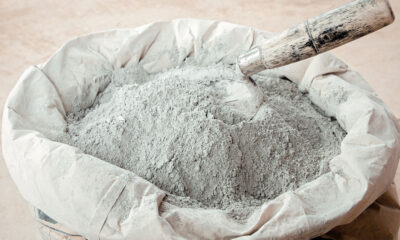
The word gypsum is derived from the Greek word ‘gypsos’ meaning ‘plaster.’ The quarries of the Montmartre district of Paris have long furnished burnt gypsum (calcined gypsum) used for various purposes, this dehydrated gypsum became known as plaster of Paris. The ability to harden or set when added with water makes it a very useful mineral for construction. In the mid-18th century, Gypsum was found to have great capabilities as a fertiliser. It is this connection as a fertiliser that today the world over phospho gypsum is now available aplenty as a by-product from fertiliser plants, and which can be gainfully used as an additive in the cement making process, replacing mineral gypsum.
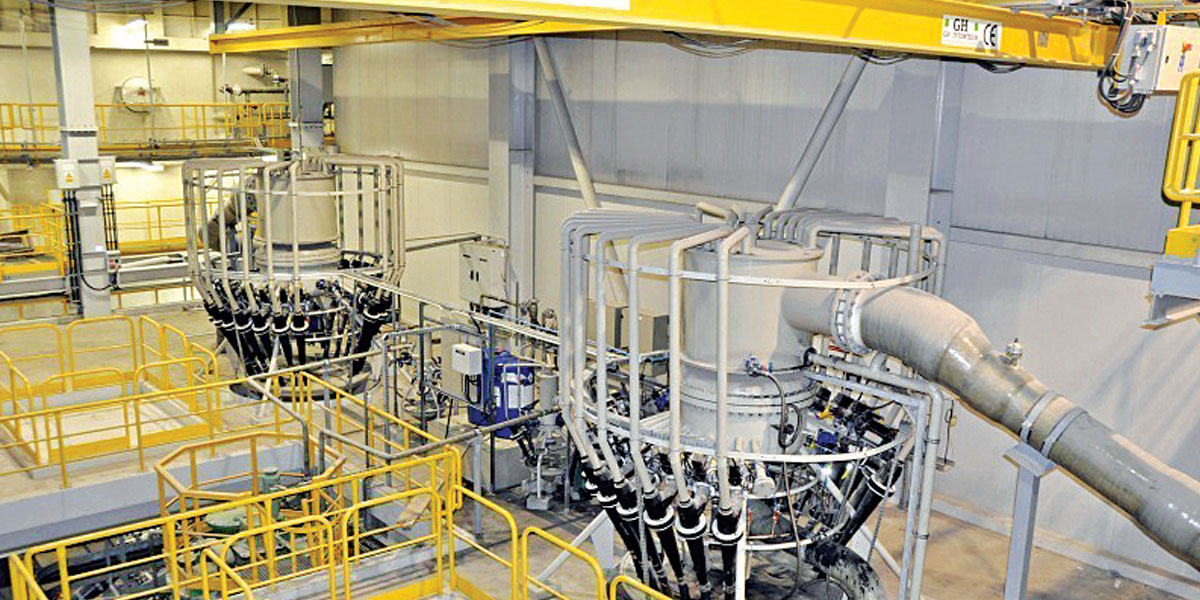
The production of phosphate fertilisers requires breaking down calcium-containing phosphate rock with acid, producing calcium sulphate waste known as phospho-gypsum (PG). Similar is the case with the desulphurisation process of flue gas (to take out the SOx from the emissions) from power plants when natural limestone is used for this process resulting in FGD gypsum as the bi-product. This product is pure enough to replace natural gypsum in a wide variety of fields including drywalls, water treatment and cement set retarder.

Sustainability ahead
As a sustainability initiative, replacing natural gypsum scores better, but first let us understand the role of gypsum in the cement to concrete process.
The main purpose of adding gypsum in the cement is to slow down the hydration process of cement once it is mixed with water. The process involved in hydration of cement is that, when the water is added into cement, it starts reacting with the C3A (tricalcium aluminate, which is the main component of Portland cement) and hardens. The time taken in this process is very less, which doesn’t allow time for transporting, mixing and placing. When gypsum is added into the cement and water is added to it, reaction with C3A particles takes place to form ettringite. This ettringite is initially formed as very fine-grained crystals, which form a coating on the surface of the C3A particles. These crystals are too small to bridge the gaps between the particles of cement. The cement mix therefore remains plastic and workable. The time allowed for mixing, transporting and placing plays an important role in strength, composition and workability of concrete. As gypsum retards the process of hydration, it is termed as retarding agent of cement.
The role of gypsum in concrete making can be summarised as follows:

  1. Gypsum prevents flash setting of cement during manufacturing.
  2. It retards the setting time of cement.
  3. Allows a longer working time for mixing, transporting and placing.
  4. When water is mixed to cement aluminates and sulphates react and evolve some heat but gypsum acts as coolant and brings down the heat of hydration.
  5. Gypsum cements possess considerably greater strength and hardness as compared to non-gypsum cement.
  6. Water required in gypsum based cement for the hydration process is less.
    The use of gypsum as an additive in cement ranges from 2.5 to 5 per cent.
    In its natural form, gypsum can be found as thick layers in shale and as attractive crystals. No gypsum deposits are 100 per cent pure. It is usually found with deposits of a combination of the following: limestone, sand, shale, anhydrite and sometimes rock salt. To be a commercial deposit, gypsum content should be at least 75 per cent. But as mines get old the percentage of gypsum could be as low as 45 per cent in many of the natural deposits.

Logistically speaking
Gypsum mines or deposits can be found all over the world, but Spain, Thailand, United States, Turkey, Russia, UAE, Oman and Chile are the leading producers. India has deposits mainly in Rajasthan and that makes the logistics cost play an important role in the use of gypsum in cement and concrete in India. There are two components to be seen, the percentage of gypsum in the mineral (purity) that one is transporting and therefore total cost of moving it when compared with other forms of gypsum, which could be non-mineral, from synthetic or anhydrous to simply the spent acid or other forms of industrial or chemical waste.
The desulphurisation process itself now being made mandatory for all coal fired power plants creates an enormous opportunity for non-mineral gypsum to be used in cement. But the economics could be very tricky. Let us see the cost dynamics in some details as this could be the most sustainable way for producing gypsum for cement and concrete.
It is calculated that a 500 MW power plant would need 40,000T of limestone annually to take care of the SOx emissions through the desulphurisation process. This would amount to about 12 million tonne of limestone consumption (less than 3 per cent of the total limestone use per year) for the entire power generation of India. But the economics would lie in transportation. Even if limestone is available free of cost, the transportation cost including handling and royalty beyond 250 km could rise to Rs 1000/T as the landed cost at the power plant. The FGD gypsum after production would need to be transported to the cement grinding unit, which if more than 250 km would again cost the same. Thus the FGD gypsum would then compete with phospho gypsum, which is available aplenty in fertiliser or phosphate plants.
As these options compete with each other, use of natural gypsum would subside as the
enormous logistics cost of either importing it or transporting it across India would not be sustainable in the future.

Procyon Mukherjee

Concrete

NDMC Rolls Out Intensive Sanitation Drive Across Lutyens Delhi

Municipal body intensifies cleaning and monitoring across the capital

Published

on

By

Shares


The New Delhi Municipal Council has launched an intensive sanitation drive across Lutyens’ Delhi, aiming to raise cleanliness standards in the capital’s central precincts. The programme will combine enhanced manual sweeping with mechanised cleaning and systematic waste removal to cover parks, heritage precincts and prominent thoroughfares. Authorities described the initiative as a sustained effort to improve public hygiene and reduce environmental hazards while maintaining the area’s civic image.

Operational teams have been instructed to prioritise drain clearing and litter hotspots, with special attention to markets and transit nodes that attract heavy footfall. Coordination with city utilities and waste processing units will be stepped up to ensure timely collection and disposal, and supervisory rounds will monitor adherence to cleaning schedules. Officials also intend to use data-driven planning to deploy resources efficiently and to identify recurring problem areas.

The council plans to engage resident welfare associations and business stakeholders to foster community participation in maintaining cleanliness and to support behavioural change campaigns. Public communication will be amplified through notices and outreach to encourage responsible waste handling and to inform residents about collection timings and segregation norms. Enforcement measures for littering and unauthorised dumping will be reinforced as part of a broader strategy to deter violations and sustain cleanliness gains.

The move reflects a focus on urban sanitation that officials link to public health priorities and to the city administration’s commitment to maintaining civic amenities. Monitoring mechanisms will include regular reporting and inspections to review outcomes and to recalibrate operations where necessary, according to municipal sources. The council emphasised that continued community cooperation will be essential for the drive to deliver lasting improvements in the appearance and hygiene of the capital’s core areas.

Continue Reading

Concrete

UltraTech Appoints Jayant Dua As MD-Designate For 2027

Executive named to succeed current managing director in 2027

Published

on

By

Shares


UltraTech Cement has appointed Jayant Dua as managing director (MD) designate who will take charge in 2027, the company announced. The appointment signals a planned leadership transition at one of the country’s largest cement manufacturers. The board has set a clear timeline for the handover and has framed the move as part of a structured succession plan.

Jayant Dua will be referred to as MD after assuming the role and will be responsible for overseeing operations, strategy and growth initiatives across the company’s network. The company said the designation follows established governance norms and aims to ensure continuity in executive leadership. The appointment is expected to allow a phased transfer of responsibilities ahead of the formal changeover.

The decision is intended to provide strategic stability as UltraTech Cement navigates domestic infrastructure demand and evolving market dynamics. Management will continue to focus on operational efficiency, capacity utilisation and cost management while aligning investments with long term objectives. The board will monitor the transition and provide further information on leadership responsibilities closer to the effective date.

Investors and market observers will have time to assess the implications of the announcement before the change is effected, and analysts will review the company’s outlook in the context of the succession. The company indicated that it will communicate any additional executive appointments or organisational changes as they are finalised. Shareholders were advised to refer to formal filings and company releases for definitive details on governance or remuneration.

The leadership change will be managed with attention to stakeholder interests and operational continuity, and the company reiterated its commitment to delivery on ongoing projects and customer obligations. Senior management will engage with employees and partners to ensure a smooth handover while maintaining focus on safety and compliance. Further updates will be provided through official investor communications in due course.

Continue Reading

Concrete

Merlin Prime Spaces Acquires 13,185 Sq M Land Parcel In Pune

Rs 273 crore purchase broadens the developer’s Pune presence

Published

on

By

Shares


Merlin Prime Spaces (MPS) has acquired a 13,185 sq m land parcel in Pune for Rs 273 crore, marking a notable expansion of its footprint in the city.

The transaction value converts to Rs 2,730 mn or Rs 2.73 bn.

The parcel is located in a strategic area of Pune and the firm described the acquisition as aligned with its growth objectives.

The deal follows recent activity in the region and will be watched by investors and developers.

MPS said the acquisition will support its planned development pipeline and enable delivery of commercial and residential space to meet local demand.

The company expects the site to provide flexibility in product design and phased development to respond to market conditions.

The move reflects an emphasis on land ownership in key suburban markets.

The emphasis on land acquisition reflects a strategy to secure inventory ahead of demand cycles.

The purchase follows a period of sustained investor interest in Pune real estate, driven by expanding office ecosystems and residential demand from professionals.

MPS will integrate the new holding into its existing portfolio and plans to engage with local authorities and stakeholders to progress approvals and infrastructure readiness.

No financial partners were disclosed in the announcement.

The firm indicated that timelines will depend on approvals and prevailing market conditions.

Analysts note that strategic land acquisitions at scale can help developers manage costs and timelines while preserving optionality for future projects.

MPS will now hold an enlarged land bank in the region as it pursues growth, and the acquisition underlines continued corporate appetite for measured expansion in second tier cities.

The company intends to move forward with detailed planning in the coming months.

Stakeholders will assess how the site is positioned relative to existing infrastructure and connectivity.

Continue Reading

Trending News

SUBSCRIBE TO THE NEWSLETTER


Don't miss out on valuable insights and opportunities to connect with like minded professionals.


    This will close in 0 seconds