Concrete
Towards Sustainability: Slag Grinding Circuits

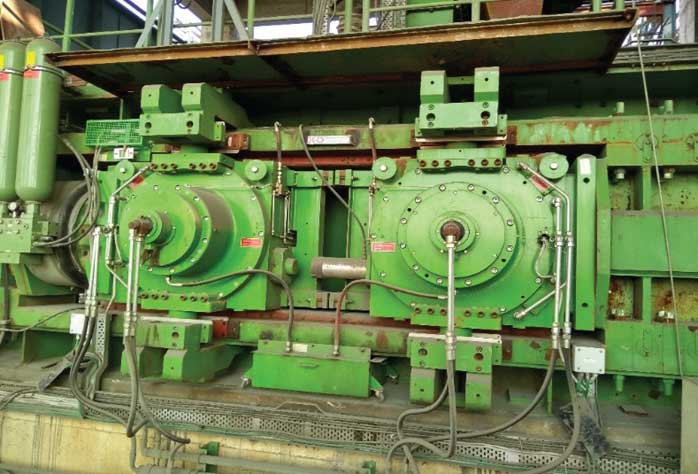
A detailed explanation of the joint approach of JSW Cement and the KHD Group helps in a better understanding on the acceptance of roller press in slag grinding and finish grinding.
JSW Cement has a strong commitment towards innovation in sustainability and technology to offer environment-friendly construction and building solutions. It is one of India’s leading ‘Green Cement’ manufacturers, growing exponentially since its inception in 2009. Today, after reaching a production capacity of 14 MTPA with minimum industrial bye product over the past 13 years, the group has a vision to build a self-reliant India by boosting the colossal infrastructure and fast-growing economy through projects that set benchmarks. The group aims to increase its production capacity to 75 MTPA by 2030.
In 2009, JSW ordered a 6000 TPD pyroprocessing line along with 8 roller presses for JSW’s first cement production facility at Nandyal, Andhra Pradesh, for raw material grinding, clinker grinding and slag grinding applications. This whole plant was ordered with a belief in KHD Technology. Since then the long continued association between the two companies has been a success story.
In 2015, JSW decided to increase capacity and ordered 16 roller presses for slag and clinker grinding (each unit comprising 2 RP @ 1.2 MTPA). Given the success of the Nandyal project and the market uptake in the use of roller press technology, JSW contracted KHD-HWI to execute the project, at the centre of which was the supply of KHD’s new-generation, energy-efficient roller press circuit. JSW Cement installed new slag grinding circuit at Jajpur plant, Odisha, India, with a KHD Humboldt Wedag roller press system.
Going the high-tech way
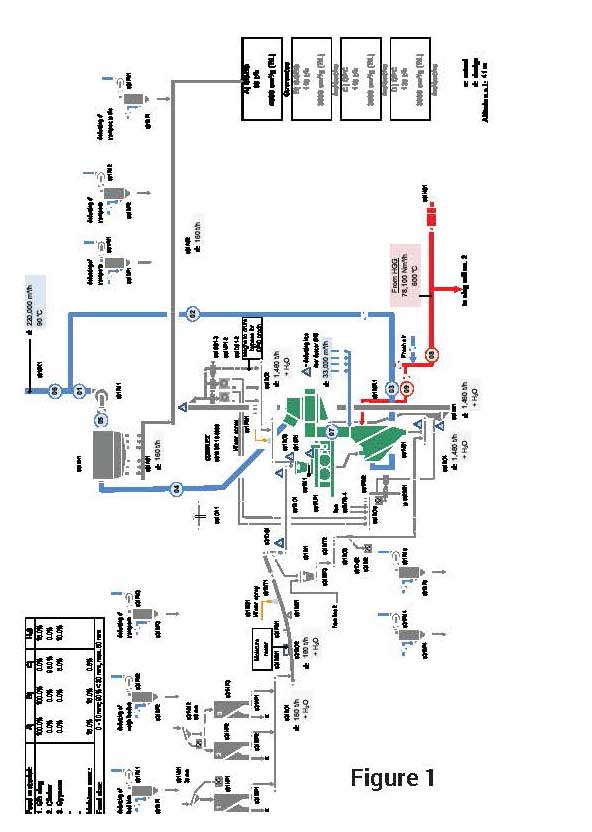
With over 160 years of experience in the cement industry, KHD is considered a global leader in cement plant technology. The system offered by KHD Humboldt Wedag for slag grinding is the most energy efficient grinding machine. Special features of the circuit include includes Roller Press (RP 16-170/180), V-separator (VS 80/20) and the well-proven SKS dynamic separator (SKS-V3000).The advantage of this system is that higher capacity requirements are met with lower specific power consumption. The offered system had a lot of innovative design features like, latest generation SKS dynamic separator at lower level to reduce the overall building height, reduced recirculation load on bucket elevator and reduced dust nuisance with the orientation of RP above V-separator. The fresh feed is put to RP first and the roller press discharge material enters the V-Separator. The material is then separated in SKS Separator, The very coarse fraction is discharged at the bottom end of the SKS separator, entering the feed bin of the roller press for further grinding.
The finished product is separated by SKS Rotor and collected in the baghouse. A reduced recirculation load on the bucket elevator, reduced dust nuisance with the orientation of the roller press above the V-separator, and less dedusting equipment due to the system’s self-venting mechanism in the riser of the separator. Figure 1 gives the configuration of the system offered and remains the key highlights of the system.
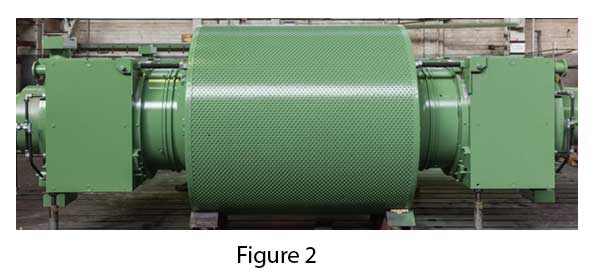
The focus to use roller press in finish grinding to get maximum energy advantage as compared to any other grinding technology is taking an edge day by day. Apart from electrical energy focus the offered roller press stud surface has minimum wear and offers trouble and maintenance free operation. The stud technology is a boon for slag grinding wherein Tungsten Carbide Studs are fixed on the roller surface by pressing in pre-drilled rollers, which offers autogenous grinding and minimum wear. The life expected out of these roller surfaces varies from 25000 to 40000 hours of operations without any surface maintenance. Figure 2 gives a picture of a stud surface roller.
Operational performance
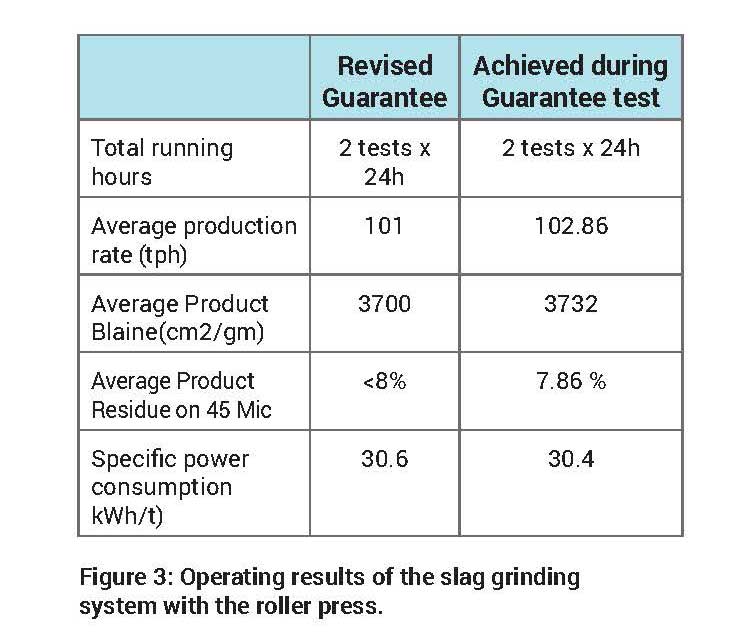
The operating results of the slag grinding system with the roller press in finish mode are summarised in Figure 3. As can be seen, the very purpose of opting for roller press technology for slag finish grinding was significant savings in electrical energy consumption compared to other technologies and were successfully achieved. Furthermore, after stabilisation within months’ time the production figures recorded were higher than the original guaranteed parameters.
Conclusion
JSW Cement uses superior quality slag produced at its steel manufacturing plant, conforming to IS: 12089 standards for producing PSC. It is created with a combination of upto 45- 50 per cent slag, 45 per cent – 50 per cent clinker, and 3-5 per cent gypsum. PSC has been voted as the most suitable cement for mass construction because of its low heat of hydration. At present, carbon footprints of JSW are the lowest per tonne of cementitious products produced by the company.
During the year 2020-21, JSW Cement’s overall average net scope-1 CO2 emissions is 200 kg CO2/tonne of cementitious material, which is best in the industry. The steps to this achievement definitely goes to the meticulous approach of methodologies and technologies adopted to produce the desired quality of cementitious materials. Today, slag
grinding acceptance of roller press in finish grinding is well recognised throughout the cement industry. In the case of slag grinding, acceptance of roller press in finish grinding is well recognised. It offers a distinct advantage of saving of about 6-7 Kwh/t as compared to Vertical Roller Mill at 4200 Blaine. KHD has sold 27 Sag Grinding Circuits and maintains about 70 per cent market share in slag grinding in India. The advantage comes due to hardness of slag and pressure grinding in roller press instead of attrition and low pressure in Vertical Roller Press. The moisture issue is also tackled with the problem of coating by incorporating a V-separator below the roller press.








Concrete
Ultra Concrete Age
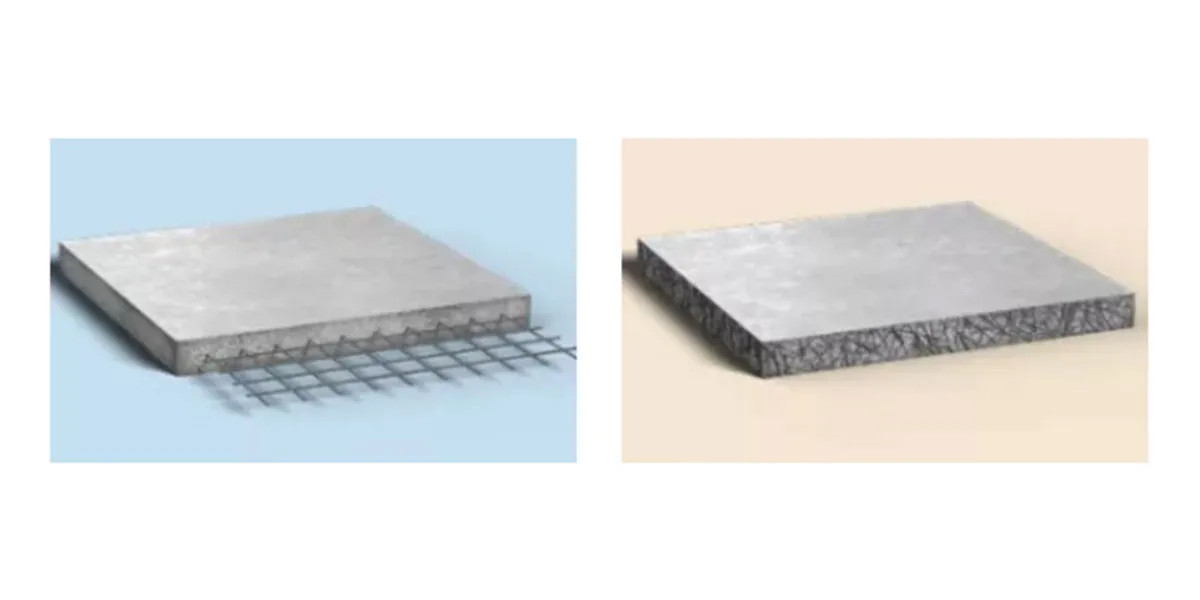
Prof. A. S. Khanna (Retd., IIT Bombay) on how Ultra-high performance concrete (UHPC) improves strength, durability and lifecycle performance.
Concrete
NCB Signs MoU With Cement Manufacturer To Boost Construction Skills
Partnership to deliver nationwide training and certification
Concrete
JSW Cement Commissions Nagaur Plant, Enters North India
New Rajasthan unit boosts capacity to 24.1 MTPA and expands reach


Ultra Concrete Age

NCB Signs MoU With Cement Manufacturer To Boost Construction Skills

JSW Cement Commissions Nagaur Plant, Enters North India

Cement Prices Likely To Rise As Petcoke Costs Increase

IIT Guwahati Develops Radiation-Resistant Cement Mortar
Ultra Concrete Age
NCB Signs MoU With Cement Manufacturer To Boost Construction Skills
JSW Cement Commissions Nagaur Plant, Enters North India
Cement Prices Likely To Rise As Petcoke Costs Increase