Connect with us

Concrete

Paving the Way for a Carbon-Negative Cement Industry

Published

on

Shares

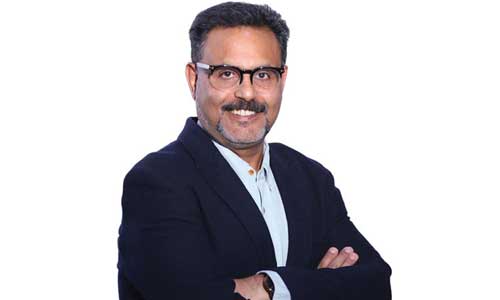
Sanjay Wali, National Sales, Marketing & Logistics Head, Dalmia Cement (Bharat) Ltd, discusses the in-roads the company has made in making production processes more sustainable and in making cement a greener product.

For 80 years, we followed a growth path that mirrored India’s promise and growth opportunities. Our philosophy of ‘Clean and Green is Profitable and Sustainable’ has helped us deliver on the expectations of our stakeholders, create sustained value for the larger ecosystem and show the way for responsible growth to others. Our focused product strategy has been a critical factor propelling us to the leadership position in the manufacturing of green cement.
We are the only cement manufacturer part of the UN Leadership Group on heavy industry net-zero transition. Moreover, we have been ranked #1 in the global cement sector on business readiness for low carbon economy transition by CDP in 2018. As we learn new methods to enhance sustainability, we are confident that our journey to decarbonise our business will pave the way for a carbon negative reality and at the same time inspire others to adopt the same path.

Leading the sector’s green movement
Sustainability led growth has always been our top priority. We are committed to becoming carbon negative by 2040, and for this very purpose, we created a roadmap to bring down our carbon footprint. Our carbon footprint at 492 kg CO2/ tonne of cement (specific net CO2) is one of the lowest group averages in the global cement sector. We installed 9.90 MW of solar and 21.70 MW of Waste Heat Recovery based power generation systems and plan to significantly increase solar and Waste Heat Recovery power generation to run our operations with more fossil-free electricity by the end of FY23. Through our continuous efforts and by proposing to use 100 per cent renewable energy by FY30, we are well on our way to leading the green movement within the sectors we operate in.

Responsible production and consumption
We understand that with leadership, comes responsibility. Therefore, as a leading proponent of ‘Green Cement’, we consume the waste produced by other industries and ensure that the waste produced at our facilities, both hazardous and non-hazardous is disposed-off as per legal requirements and in a responsible manner. In FY21 we utilised 7.83 million tonnes of alternative cementitious material and 0.2 MnT alternative fuels, which includes industrial wastes, for the pyro process. Both these waste categories were sourced from other companies. In comparison to this, the waste generated and disposed of by us stands at a mere 10,245 tonnes.
Our environment discipline is encapsulated in the principle of ‘Producing maximum cement with minimum resources. In FY21, we made a bold commitment to become a 100 per cent blended cement company over the next five years. Currently, our facilities in Eastern India are dedicated to producing 100 per cent blended cement and we now aim to maximise blended cement production across all our operations.

Energy efficiency and energy productivity
Cement production is an energy-intensive process, therefore, responsible use of energy is key to reducing environmental impact. We invest in low carbon technologies to reduce dependency on fossil fuels and better manage energy usage across the production value chain. Our newly commissioned plants are constantly setting industry benchmarks in the adoption and use of energy efficiency measures and our growing network of captive power plants allows us to wheel surplus power across our facilities in different parts of the country to optimise costs further.

Developing greener solutions for a better tomorrow
We are steadfast about our products causing minimal harm to the environment while delivering the highest quality. Our low porosity of Dalmia Infragreen enhances the durability of the product. It does not require any other chemical admixtures and delivers high strength, durable and waterproof concrete. It uses lesser heat in hydration than OPC large and mass concreting and can control thermal linked cracks of large sections better. Dalmia Infragreen has superior water ingress resistance and provides long-term durability against atmospheric carbonation, harmful chlorides and sulphates from groundwater usage. Our product can get runways, highway stretches and metro sections operational in three days, whether used for building, maintenance or repair.

Encouraging stakeholder partnership towards a net-zero pathway
We recognise the importance of reducing carbon emission causing global warming and are committed to climate protection to become a carbon negative cement group by 2040. We are one of the first few cement companies to commit to the Mission Possible Partnership setting science-based targets, and join the First Mover’s Coalition as founding members. Our defined ambition is to become carbon negative by 2040, beyond net-zero and well before the cement sector roadmap’s 2050 targets. We are proud to declare that as of FY21, we are already well below the current global Net Zero pathway target for the cement sector.
To foster greater adoption of this environmentally friendly building material, we have undertaken stewardship to create awareness of the product across our customers, institutional or individual. We encourage the use of blended cement and contribute to protecting our planet. Our dealers and distributors are the critical last-mile link to encourage customers to buy green cement for their building needs. Together, we will propagate the consumption of sustainable products such as our green product line to advance a negative carbon reality. Our efforts have already borne fruit as we recently became the first cement company in India to receive a green accreditation from the Green product rating for Integrated Habitat Assessment (GRIHA) council, and we were also awarded the prestigious GreenPro Ecolabelling Certificate by the Indian Green Building Council (IGBC), a part of the Confederation of Indian Industries (CII). We will continue to drive awareness and understanding of the benefits of green cement across our distribution chain.

We are committed to becoming carbon negative by 2040, and for this very purpose, we created a roadmap to bring down our carbon footprint. Our carbon footprint at 492 kg CO2/ tonne of cement (specific net CO2) is one of the lowest group averages in the global cement sector.

Continue Reading

Concrete

UltraTech Cement FY26 PAT Crosses Rs 80 bn

Company reports record sales, profit and 200 MTPA capacity milestone

Published

on

By

Shares


UltraTech Cement reported record financial performance for Q4 and FY26, supported by strong volumes, higher profitability and improved cost efficiency. Consolidated net sales for Q4 FY26 rose 12 per cent year-on-year to Rs 254.67 billion, while PBIDT increased 20 per cent to Rs 56.88 billion. PAT, excluding exceptional items, grew 21 per cent to Rs 30.11 billion.

For FY26, consolidated net sales stood at Rs 873.84 billion, up 17 per cent from Rs 749.36 billion in FY25. PBIDT rose 32 per cent to Rs 175.98 billion, while PAT increased 36 per cent to Rs 83.05 billion, crossing the Rs 80 billion mark for the first time.

India grey cement volumes reached 42.41 million tonnes in Q4 FY26, up 9.3 per cent year-on-year, with capacity utilisation at 89 per cent. Full-year India grey cement volumes stood at 145 million tonnes. Energy costs declined 3 per cent, aided by a higher green power mix of 43 per cent in Q4.

The company’s domestic grey cement capacity has crossed 200 MTPA, reaching 200.1 MTPA, while global capacity stands at 205.5 MTPA. UltraTech also recommended a special dividend of Rs 2.40 billion per share value basis equivalent to Rs 240.

Continue Reading

Concrete

Towards Mega Batching

Optimised batching can drive overall efficiencies in large projects.

Published

on

By

Shares


India’s pace of infrastructure development is pushing the construction sector to work at a significantly higher scale than previously. Tight deadlines necessitate eliminating concreting delays, especially in large and mega projects, which, in turn, imply installing the right batching plant and ensuring batching is efficient. CW explores these steps as well as the gaps in India’s batching plant market.

Choose well

Large-scale infrastructure and building projects typically involve concrete consumption exceeding 30,000-50,000 cum per annum or demand continuous, high-volume pours within compressed timelines, according to Rahul R Wadhai, DGM – Quality, Tata Projects.

Considering the daily need for concrete, “large-scale concreting involves pouring more than 1,000–2,000 cum per day while mega projects involve more than 3,000 cum per day,” says Satish R Vachhani, Advanced Concrete & Construction Consultant…

To read the full article Click Here

Continue Reading

Concrete

Andhra Offers Discom Licences To Private Firms Outside Power Sector

Policy allows firms over 300 MW to seek distribution licences

Published

on

By

Shares


The Andhra Pradesh government will allow private firms that require more than 300 megawatt (MW) of power to apply for distribution licences, making the state the first to extend such licences beyond the power sector. The policy targets information technology, pharmaceuticals, steel and data centres and aims to reduce reliance on state utilities as demand rises for artificial intelligence infrastructure.

Approved applicants will be able to procure electricity directly from generators through power purchase agreements, a change officials said will create more competitive tariffs and reduce supply risk. Licence holders will use the Andhra Pradesh Transmission Company (APTRANSCO) network on payment of charges and will not need a separate distribution network initially.

Licences will be granted under the Electricity Act, 2003 framework, with the Central and State electricity regulators retaining authority over terms and approvals. The recent Electricity (Amendment) Bill, 2025 sought to lower entry barriers, enable network sharing and encourage competition, while the state commission will set floor and ceiling tariffs where multiple discoms operate.

Industry players and original equipment manufacturers welcomed the policy, saying competitive supply is vital for large data centre investments. Major projects and partnerships such as those involving Adani and Google, Brookfield and Reliance, and Meta and Sify Technologies are expected to benefit as capacity expands in the state.

Analysts noted India’s data centre capacity is forecast to reach 10 gigawatts (GW) by 2030 and cited International Energy Agency estimates that global data centre electricity consumption could approach 945 terawatt hours by the same year. A one GW data centre needs an equivalent power allocation and one point five times the water, which authorities equated to 150 billion litres (150 bn litres).

Advisers warned that distribution licences will require close regulation and monitoring to prevent misuse and to ensure tariffs and supply obligations are met. Officials said the policy aims to balance investor requirements with regulatory oversight and could serve as a model for other states.

Continue Reading

Video Thumbnail

    SIGN-UP FOR OUR GENERAL NEWSLETTER


    Trending News