

Concrete
Taking The Alternative Route


The cement industry can be leaders of change by taking the route of sustainability, using alternatives to conventional methods that shall positively impact the demand and meet goals set by global bodies. Kanika Mathur takes a deep dive into the various alternative fuels and raw materials the cement industry can depend upon to build a better and stronger future.
The world is going through a crisis. Natural resources are depleting, greenhouse gases are being emitted and pollution is on the rise. According to Fortune Business Insights, the global cement market is projected to grow from $326.80 billion in 2021 to $458.64 billion in 2028 at a CAGR of 5.1 per cent during the 2021-2028 period. The sudden rise is attributed to this market’s demand and growth, returning to the pre-pandemic levels once the pandemic is over.
In 2021, India also has chalked plans for infrastructural development like the ‘PM Gati Shakti – National Master Plan (NMP)’ for multimodal connectivity and is aiming for 100 smart cities. The Government also intends to expand the capacity of railways and the facilities for handling and storage to ease the transportation of cement and reduce transportation cost. These measures would lead to an increased construction activity, thereby boosting cement demand. The Union Budget allocated Rs. 13,750 crore (US$ 1.88 billion) and Rs. 12,294 crore (US$ 1.68 billion) for Urban Rejuvenation Mission: AMRUT and Smart Cities Mission and Swachh Bharat Mission, respectively and Rs. 27,500 crore (US$ 3.77 billion) has been allotted under Pradhan Mantri Awas Yojana, as published in the Indian Brand Equity Foundation Report for Indian Cement Industry Analysis 2021.
With the progressing economy and surging demand for cement and concrete, there is growth in infrastructure, but resources are getting exhausted by the day and the environment is facing that impact. It is imperative that an industry of this magnitude take steps by looking for alternative raw materials and fuels to meet the rising demand as well as protect natural reserves and nature on a whole.
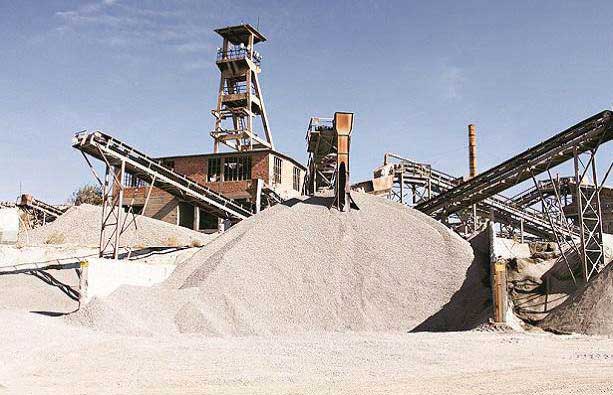
Cement manufacturing process and conventional fuels and raw materials
All over the world, cement is one of the most important building materials. The process starts with extracting raw materials, crushing and transporting them to the manufacturing facility. The most important raw materials for making cement are limestone, clay and marl. These are extracted from quarries by blasting or by ripping using heavy machinery. Wheel loaders and dumper trucks transport the raw materials to the crushing installations. There the rock is broken down to roughly the size used in road metaling. It is then blended and homogenised, dried, and grinded.
The prepared raw material is then burned at approx. 1,450°C in a kiln. In this process, a chemical conversion takes place where carbon dioxide is emitted, and the product is the clinker.
Once the burnt clinker is cooled down, it is stored in clinker silos. From there the clinker is conveyed to ball mills or roller presses, in which it is ground down to very fine cement, with the addition of gypsum and anhydrite, as well as other additives, depending on the use to which the cement is to be put. The finished cement is stored in separate silos, depending on type and strength class.
The fuel used to heat the kiln is mainly coal which is a naturally occurring resource that is getting extinct by the day and also emits carbon. Similarly, limestone in the chemical process produces a large amount of carbon dioxide. This leads to the need of alternative raw materials and fuels in the cement manufacturing process.
Switching to alternative fuels and raw materials
Fuel is majorly required to heat the kiln. The products that would otherwise unrecyclable and may end up in landfills can serve as the perfect fuel for burning in the kilns. This would also mean disposing off the waste that may have polluted the land or sea.
By their nature, these fuels can be variable in quality, behaviour, moisture content and calorific value and will be difficult to convey, store, discharge and accurately dose into the fuel stream. Alternative fuels can help to reduce CO2 emissions.
Some of the widely used fuels that the industry is switching over to are: Refuse Derived Fuel (RDF), Solid Recovered Fuels (SRF), Wood, Waste Wood, Agricultural Waste, Tyre Derived Fuel, Meat and Bone Meal (MBM), Sewage Sludge Profuel, Chemical Residues, Oil Seeds, Municipal Solid Waste (MSW) and Sludge.
Leading cement manufacturing organisations have aligned themselves with the mission of the United Nations to achieve Net Zero Environment by 2050 and are on a pathway of creating greener solutions by switching to these fuels.
Saurabh Palsania, Executive Director, Dalmia Cement says “Cement industry has been using waste since its inception, be it fly ash or slag as an alternative fuel. Use of MSW in the cement industry is as good as fuel, but it comes with its own set of challenges. There are approximately 2000 sump sites and as per records there are about 1855 lakh tonnes of waste lying across India. The kilns in the cement industry that run at over 1300 degree Celsius can easily consume the waste and prevent it from ending up in landfills”.
“The industry has tie ups across multiple municipal corporations. We must improve our equipment and better utilise this available resource that can substitute carbon intensive fuels. We must also make this sector an organised sector for seamless operations” he adds.
Limestone makes up for 95 per cent of the raw material used in cement production. According to some estimates as mentioned by the Cement Manufacturers Association, around 180-250 kg of coal and about 1.5 tonne of limestone is required to produce a tonne of cement. Cement manufacturing also consumes minerals such as gypsum, Quartz, bauxite, coal, kaolin (china clay) and iron ore too in varying amounts.
Limestone is a naturally occurring mineral. Large amounts of limestone are calcified in cement manufacturing units to produce cement which leads to rapid depletion of this resource. It also emits a large amount of carbon dioxide in the process.
Cement industry has taken this into consideration and are moving towards materials like clay, chalk etc. to produce clinker that is less energy intensive and has reduced emission of carbon dioxide. These steps are important to ensure that the resource is conserved in nature and does not harm the environment as the chemical process cannot be changed. Organisations are constantly looking for innovations in the field of raw material and have employed experts in the field of alternative fuels and raw materials to come up with more sustainable solutions for this process.
Waste as an alternative to fuel and raw materials in the cement industry
Various types of cement have been introduced in the recent past by cement technologists the world over. Most of these cements have been developed by the addition of alternative waste (also known as SCM, supplementary cementitious materials) produced by other industries. Fly ash and various slags produced by metal industries are the two of the most significant components added as raw materials to the clinker production in cement kilns. Additionally, limestone is also used as a component of cement.
These additives are independently added as well as in combination in permissible percentages in the cement mixture along with clinker. Fly ash and GGBS slag are added in cement grinding to produce PPC and PSC cement. This combination of clinker, fly ash, and slag along with gypsum is used in cement grinding. The combinations of these three raw materials are based on the physical and chemical characteristics of the waste materials.
Similarly, organisations are working on supporting the circular economy concept and are collaborating with other organisations to collect various types of waste like plastic waste, agricultural waste, pharmaceutical waste etc. to use in the kilns and produce the required heat while substituting the role of coal in this process. This creates a huge impact on the environment in a positive manner as waste from the other industries does not pollute the land or water bodies and reduces the consumption of coal in cement making process.
According to Manoj Rustogi, Head – Sustainability, JSW Cement, “Wastage recovery is a very valid process in the alternative fuel and raw material context. As a policy intervention, recognising wastage recovery as a renewable power because there is no additional material used. It is the waste coming out from the cement making process that is used and tapped for electricity and power generation. 70 per cent of power requirement for clinker production can come from wastage recovery”.
“Another source of energy organisations must tap is solar energy. Combining the energy from waste recovery and solar power can take care of energy requirements of certain types of cements. A push from the government is required to adapt to this form of energy and it will surely take away a major chunk of carbon emission that we are currently dealing with” he adds.
Other efforts towards creating a sustainable environment
Leaders in cement manufacturing, organisations are taking the greener routes to keep the environment condition in check. From waste management facilities to rainwater harvesting and use of alternative fuels and raw materials, a lot of effort is being taken to develop a green economy.
Predicting the future of cement production, fuels and raw materials, SK Rathore, President, JK Cement says, “The world is now looking towards hydrogen as a green fuel. It is depending on how hydrogen is produced that makes it green and it is an expensive process. Another method of making cement greener and reducing the emission of carbon in the cement manufacturing process is the reduction of losses during clinker production with technological innovation”. He believes that development in these areas will be key in the near future and the cement industry will be quick to adapt to them for a better tomorrow and cleaner environment.
Pledging towards a net zero environment and building a better environment for the country is the goal of the cement industry in the decades to come. For this they are taking all efforts to look for alternative sources of energy as well as raw materials that does not compromise with the quality of the end product but also improves the operation process and gives least harm to the environment. Technical innovations and research in the area is sure to come up with solutions that will let the industry achieve their goals in the race to 2050.
Kanika Mathur







Concrete
Cement Prices Likely to Rise Rs. 10-15 per Bag from Mid-October
Input costs and steady demand may drive cement price increases
Concrete
Nuvoco Marks 10 Years, Targets 35 MMTPA Capacity by FY28
Nuvoco celebrates a decade of growth, targeting 35 MMTPA cement capacity by FY28.
Concrete
J&K Government Notifies City Gas Distribution Policy
Policy targets PNG and CNG expansion across all 20 districts


Cement Prices Likely to Rise Rs. 10-15 per Bag from Mid-October

Nuvoco Marks 10 Years, Targets 35 MMTPA Capacity by FY28

J&K Government Notifies City Gas Distribution Policy

JSW Cement Commissions 1 MTPA Grinding Unit at Nagaur

JSW Cement Commissions 1 MTPA Unit in Rajasthan
Cement Prices Likely to Rise Rs. 10-15 per Bag from Mid-October
Nuvoco Marks 10 Years, Targets 35 MMTPA Capacity by FY28
J&K Government Notifies City Gas Distribution Policy
JSW Cement Commissions 1 MTPA Grinding Unit at Nagaur
JSW Cement Commissions 1 MTPA Unit in Rajasthan
-

 Concrete3 weeks ago
JSW Cement Receives Rs. 2.3 bn GST Demand Notice
-

 Concrete3 weeks ago
Andhra Pradesh Clears Rs. 30 bn My Home Cement Plant
-
 Concrete4 weeks ago
Jammu Division Begins First Cement Rail Traffic to Anantnag
-

 Concrete3 weeks ago
Montra Electric, Wonder Cement Deploy 250-Vehicle EV Fleet