Concrete
CSR is an enabler of aspirations and achievements

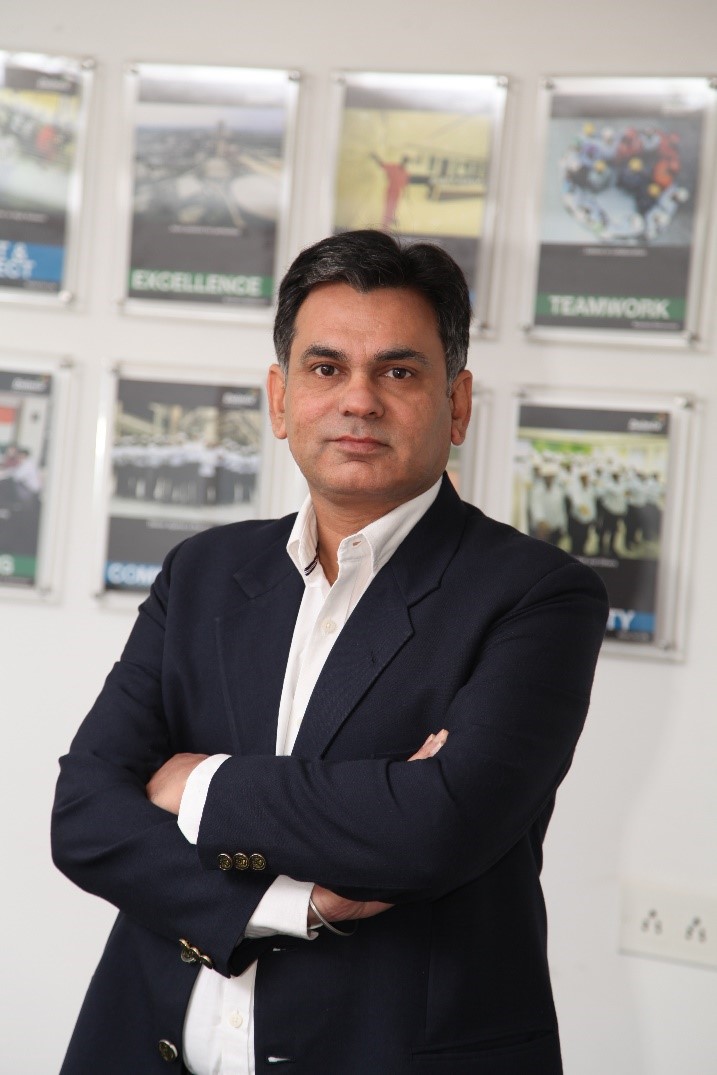
Dalmia Bharat Foundation has an internal monitoring and evaluation wing that provides actionable insights to better execute CSR projects, shares Vishal Bhardwaj, Group Head- CSR, Dalmia Bharat Group and CEO of Dalmia Bharat Foundation.
Please tell us about CSR activities done in Dalmia? Do you believe that it helps in building a strong brand name and good customer base?
It is broadly divided into three buckets. So the first bucket is the livelihoods bucket wherein we work both on the farm and the non-farm sector. The second bucket under climate action is about our work on water and access to clean energy while the third is social development where the focus is largely on infrastructure building. The needs and requirements vary from geography to geography. We try to fill existing gaps in villages around us, be it in the schools, Anganwadis or health facilities. So, these are the three major buckets where we keep our CSR focus.
We sincerely believe that there cannot be a complete disassociation between CSR and business. Water is very important to us. Wherever we have our cement plants, we share the aquifers with the local communities that need water for agriculture and domestic consumption. We do not want to put any pressure on the available water resources. Even though cement is not a very water-intensive manufacturing process, still, even if we draw 1 per cent of water from the aquifers, we want to give back many times of that to the communities. It gives us immense pride to share that Dalmia Cement is almost 10 times water positive. So for every litre of freshwater that we take from the shared resources, we make sure that we create a harvesting and conservation capacity of 10 litres. It ensures the long-term sustainability of the business and acts as a risk management tool to avert any conflicts between us and the communities related to resource sharing.
Further, the cement business is a pretty energy-intensive business. Dalmia is one of the most sustainable and least carbon footprint cement manufacturers. despite that, we do not lose out on any opportunity to offset our footprints. Taking a step further, we also assist communities around us to offset some of their footprints by adopting clean energy solutions. At least 10-15 Kgs of wood is burnt in each household around us in kitchens and one can only imagine the level of carbon emissions and the impact of fumes on the health of women and children. So, we provided them access to fuel-efficient cook-stoves and alternative fuels like biogas and LPGs. Then we saw people burning kerosene for lighting purposes, which is the biggest cause of burn injuries in rural areas. We encouraged such households to switch to solar lighting solutions. Our intent is to make the environment around us as clean as possible. We cannot ignore the issue of livelihood of our stakeholders. Our work on water gives us a good opportunity to work with the farmers on improving their productivity, yield, and therefore income. Besides, in sync with the Skill India initiative, we started to skill individuals who didn?? work on farms with the aim of creating alternative employment opportunities for them.
What were your CSR spending for the year 2020 and 2021? What is the strategy for planning CSR spending?
CSR in Dalmia is more than 80 years old. We started CSR ever since our genesis, even though it was not called CSR back then. But the trusteeship approach was similar to CSR. A decade before the CSR laws were promulgated, we had already established our Dalmia Bharat Foundation and were proactively engaging with our stakeholder communities. Our CSR budgets are driven by program needs. The 2 per cent limit doesn?? restrict us from investing in CSR when it is required. It is a beginning point to ensure that we spend what is mandated. But more often than not, we have actually gone beyond the mandate.

How do you evaluate and monitor CSR activities?
We proactively seek to measure the change brought out by our initiatives. In the last five years, we have carried out some independent assessments. One of the most important of them was the social returns on investment (SROI). We have used it to measure the impact of our work and have seen encouraging results. For every rupee that we invest in the livelihoods and water space, we get a return of about Rs 7 and Rs 3 respectively. We have also undertaken participatory appraisals through independent partners. Recently E&Y conducted an impact assessment of our work on livelihood, skilling and water. This is integrated into our strategy also. We have a theory of change that encompasses what we aspire to do and how do we achieve it. We also have an internal monitoring and evaluation wing that provides us with actionable insights to better execute our projects.
What has been the impact of the pandemic on CSR activities in cement and other industries?
It is noteworthy that we didn?? lose the momentum of what we were doing with respect to the three buckets even during the pandemic. Covid 19 brought in a different kind of challenge and we thought that it was our responsibility to work for all the stakeholders and not just the villages around us. During the first phase of Covid with the national lockdown imposed, we offered shelter, ration and medical assistance to the needy. We contributed financially to the PM Care Funds and various Chief Minister Relief funds. We extended a mix of financial and material support to our stakeholders.
The challenge of the second wave was principally around oxygen supply. We actively set up isolation facilities, Covid treatment centres, supplied oxygen and other medical equipment to hospitals. We believe that vaccination is now key to control the third wave. Due to the digital divide, we helped the villagers in getting registered on the vaccination portal. Eventually, we organised vaccination camps and arranged for their to-and-fro transportation. In the last month (June 2021), we assisted about 17,000 people to get vaccinated and I am sure that we will surpass that number this month.
What kind of feedback do you get from stakeholders in terms of meeting business objectives and how does CSR help in achieving the ultimate business goals of a company?
While the structures that we create for our projects like water harvesting are clearly visible, the need is to go much beyond that. That’s where studies and assessments step in. The E&Y study looked at various indicators to assess the quality of life in our communities. Through the study, we were able to understand whether the spending of the individuals went up, have they shifted from kacha house to pakka house, or has their mode of transportation changed. From a business point of view, many community members look at Dalmia as a potential employer. We absorb many of them into our workforce and provide upskilling opportunities for others to find an alternative source of livelihood. This creates harmony between us and the communities.
What are the key challenges while undertaking CSR activities? What best practices would you recommend overcoming those challenges?
During the initial days, we faced challenges in terms of deciding the organization?? priorities and strategies. We have come a long way from that. Until a decade back, we collaborated with NGO partners who delivered quality work but there was no direct link with the communities. That?? when we decided to capacitate our foundation to forge direct relationships with the people. Today, the Dalmia Bharat Foundation has been able to garner partnerships with communities, government and other corporates. This has enabled us to amplify our work and bring in more resources. We have institutionalised our CSR roadmap for 2030. In 2015, we aligned our CSR objectives with millennium development goals and later incorporated sustainable development goals to ensure that there is continuity throughout. So, there are more opportunities than challenges for us in CSR.
What is your CSR budget and roadmap for the next few years?
In terms of the roadmap, we propose to continue working largely on the issues of livelihood and climate action, with skilling and water being the major focus of these verticals. This is going to be our focus for the next 8 to 10 years, in line with our roadmap for 2030. In terms of the budget, this year our cement business is mandated to spend about Rs 13 crore. But with our ongoing projects, my hunch is that we would be exceeding the budget. Upon adding the contributions of other group companies and our partners, the entire resource pool would be in the range of Rs 40-45 crore.





Concrete
Ultra Concrete Age
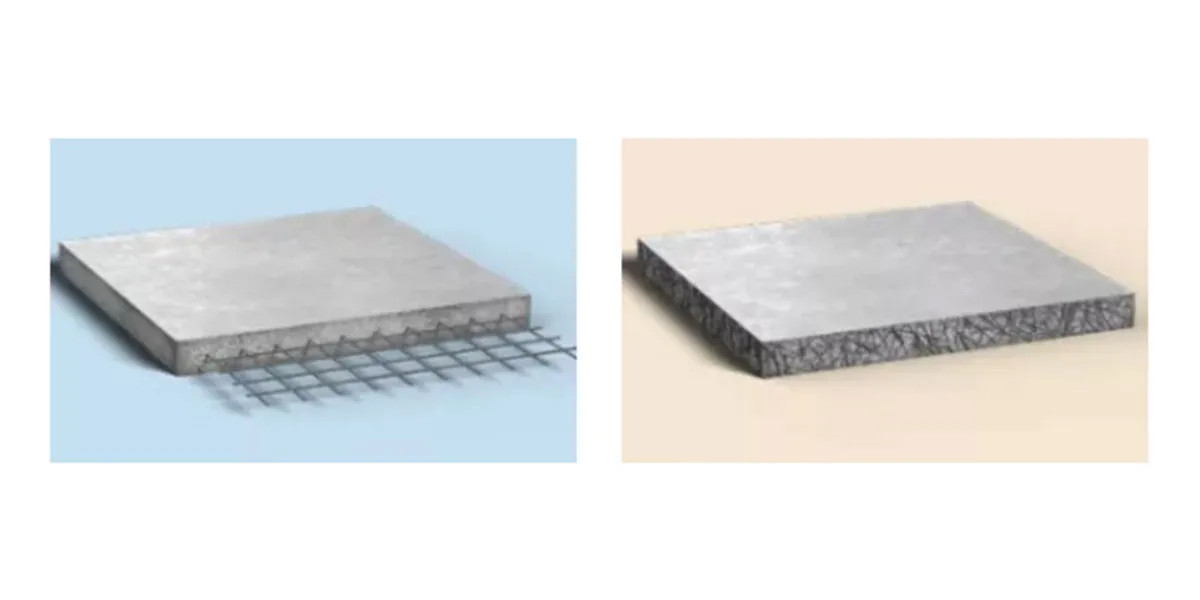
Prof. A. S. Khanna (Retd., IIT Bombay) on how Ultra-high performance concrete (UHPC) improves strength, durability and lifecycle performance.
Concrete
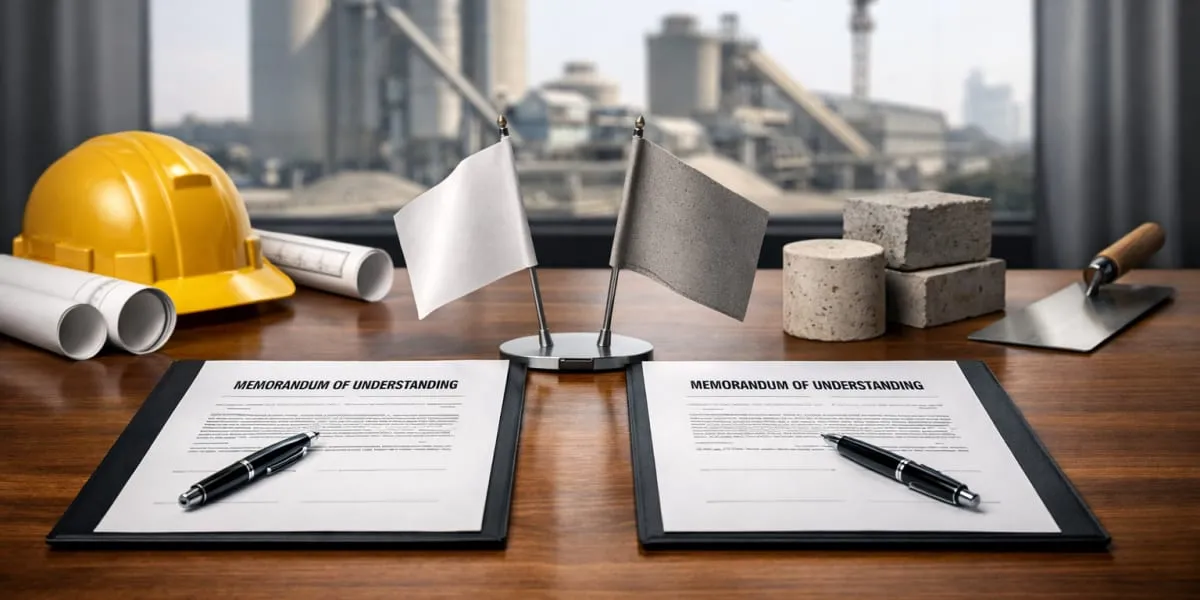
NCB Signs MoU With Cement Manufacturer To Boost Construction Skills
Partnership to deliver nationwide training and certification
Concrete
JSW Cement Commissions Nagaur Plant, Enters North India
New Rajasthan unit boosts capacity to 24.1 MTPA and expands reach


Ultra Concrete Age

NCB Signs MoU With Cement Manufacturer To Boost Construction Skills

JSW Cement Commissions Nagaur Plant, Enters North India

Cement Prices Likely To Rise As Petcoke Costs Increase

IIT Guwahati Develops Radiation-Resistant Cement Mortar
Ultra Concrete Age
NCB Signs MoU With Cement Manufacturer To Boost Construction Skills
JSW Cement Commissions Nagaur Plant, Enters North India
Cement Prices Likely To Rise As Petcoke Costs Increase