

Concrete
Material, Machinery and Manpower!

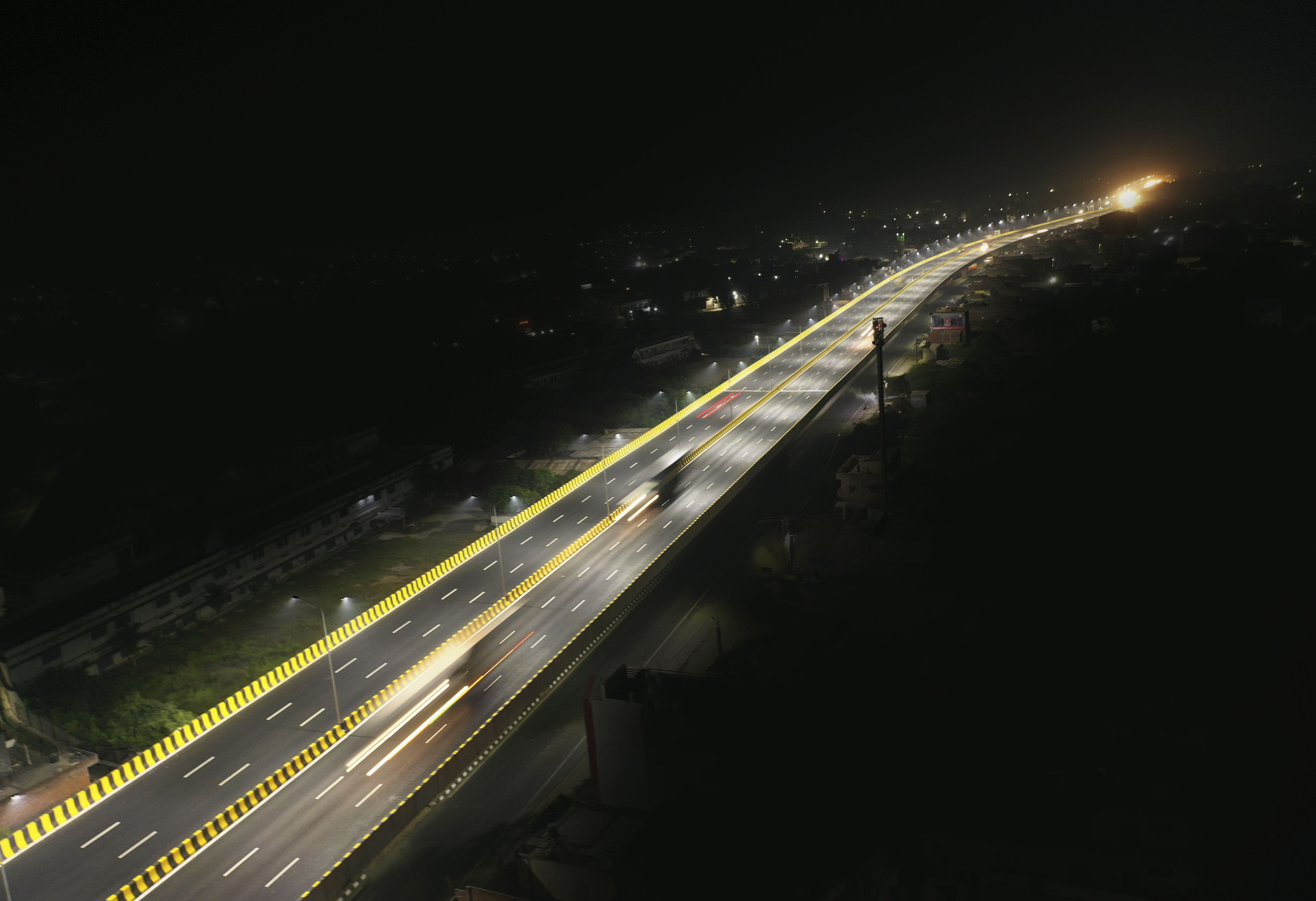
Here?? the latest connection between the ancient cities of Prayagraj and Varanasi: the six-laning of the Handia to Varanasi section of NH-2 from 712.900-km to 785.544-km in Uttar Pradesh under NHDP Phase 5 on HAM. At Rs.24.47 billion, the completion of this highway has opened doors of accessibility for national and international tourists and devotees. It is also a major part of the Delhi Calcutta Golden Quadrilateral Project-1 and Asian Highway-1. The stretch passes through the major districts of Eastern Uttar Pradesh, i.e. Prayagraj, Bhadohi, Mirzapur and Varanasi.
With this project, the travel time between Prayagraj and Varanasi has been reduced to between one-and-a-half and two hours only, from three to four hours previously.
Initial brief
The NHAI (developer) tender document provided the development features as six-laning of the existing four-lane road in 72.644-km length, with the provision of five new elevated structures, three new grade separators, three minor bridges, 10 new VUPs, and 12 new PUPs, and provided the inventory of the existing four-lane road.
As for manpower, machinery and time, RC Jain, Senior Vice-President – Operations, GR Infraprojects, says. ??e have used a short-term schedule to map out the detailed tasks needed to coordinate day-to-day work in each specific activity for timely completion of the project.??The schedule was developed by the key personnel of the highway and structures team to plan and coordinate their work at the detail level. Further, the schedules used to be revised by the team every one, two or four weeks depending on the complexity of the work. ??his encouraged continuity of work to complete it within its given time schedule of 910 days. Although it was one project, we planned it in five separate packages and mobilised the team accordingly.??/p>
Machinery and materials
A huge fleet of specialised plant and equipment was procured. Ratan Lal Kashyap, Senior Vice-President – Procurement, GR Infraprojects, says, ??amp sites were established at five locations on the project stretch to execute such a humongous task within such a short period. Further, the advanced and newly purchased equipment fleet and machineries have played a vital role, resulting in less maintenance and good efficiency.??/p>
In highway works, this included two concrete batching plants for PQC concrete, an advanced HMP plant and WMM plant along with a number of pavers, graders, dozers, excavators, rollers and dumpers. As for structure works, here?? the list:
-
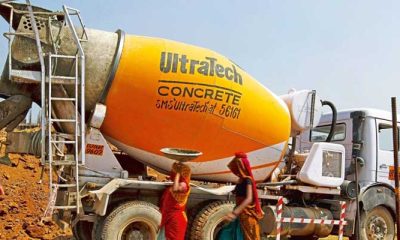
Four concrete batching plants to produce concrete
-
Three hydraulic rigs for piling works along with cranes of the required capacity
-
Boom placers, transit mixers, shuttering and stagging material and other allied tools and tackles for concreting works
-
Four launching girders operated simultaneously on five elevated structures with 228 spans of PSC precast segmental spine and wings in the superstructure
-
Four high-capacity cranes to launch the flyover girders
-
Development of a casting yard with EOT cranes, batching plant, and automatic cutting and binding machine for reinforcement
-
Advanced quality control lab for testing concrete and various other materials.
Further, in terms of vital construction materials used in highway construction, Kashyap mentions ??G-40 grade of bitumen for enhanced performance; polymer-modified bitumen for BC for enhanced performance; and CTSB in subbase to improve the CBR.??As for structure works, he adds, ??MT steel of Grade FE 550D: 45,000 mt; high-tensile strand (HTS): 6,500 mt; spherical bearings: 932; and modular expansion joints, which were used in the superstructure of the elevated structures.??/p>
How technology took over the construction challenge!
Jain elaborates on the role technology played in overcoming construction-related challenges that arose during the project:
-
RE wall: A huge quantity of earth fill was required for filling at the RE wall locations. For fulfilling the required quantity, the earth was stocked at various locations prior to the rainy season, by which we were able to continuously carry out the work. Further, traffic was also plying on the existing four-lane area; hence, work had to be executed with deployment of machinery with precise safety.
-
Kanwar Yatra during July-August each year and Kumbh Mela in January 2019: These were major deterrents to progress. During this period, the administration would take over control of the site to maintain safe passage for pilgrims travelling between Prayagraj and Varanasi. Progress was drastically hampered during such events. To overcome the situation, additional machinery and manpower were deployed during the day and night.
-
Highway works: Availability of hindrance-free land is the challenge, which constrains execution of work to bits and pieces, involving a lot of shifting of machinery. Thus was overcome by deploying extra machinery and continuous planning.
-
Structure works: An elevated structure having a 23.55-m deck width with a single pier is the most challenging to design and even more difficult to execute in a densely populated area managing the flow of existing highway traffic in available ROW of 26-30 m at most places. To overcome such challenges, a segmental superstructure with spine and wings arrangement was adopted. The spine and wing segments were cast in the casting yard, transported by specially designed trailers, erected by launching girders and, thereafter, prestressed with high-capacity jacks.

Despite the deployment of various techniques and technologies, work was completely suspended at the onset of pandemic. ??ut later,??as Kashyap shares, ??ith the help of the administration, adopting standard operating procedures for preventing COVID-19 among workers and maintaining social distancing and hygienic conditions at camps and workplaces, we could start critical works with 20 per cent of the workforce. We gradually increased this in the next three months as per approval from the local administration.??/p>
Accident-free execution and safe activity
The total number of labour involved in this project has varied month to month; on average, 367,500 man-month labourers were deployed during the construction period. Also, an elaborate safety plan was prepared at the start of work and regular safety audits were conducted by the safety consultant appointed by the client, NHAI. Jain says, ??HAI helped us ensure safety in the work zone for traffic and the workforce. We also had our separate safety team, which ensured safety measures were undertaken before the start of each activity and until the safe completion of the same.??/p>
Impact on economic development
This project will lead to various benefits such as economic development owing to better connectivity between Prayagraj and Varanasi and other areas of Uttar Pradesh; employment opportunities to locals during construction and operation phases; greater road safety; reduction in vehicle operating costs, environmental benefits such as reduction in emissions and noise levels because of smooth traffic flow on the improved road; and improvement in existing cross-drainage structures, minimising water logging along the road.
– SHRIYAL SETHUMADHAVAN
Project Details:
Cost: Rs 24.47 billion
Completion: November 2020
Construction period: 910 days
Total length: 72.644-km
Developer: National Highway Authority of India (NHAI)
Concessionaire: Varanasi Sangam Expressway
EPC contractor: GR Infraprojects
Consultant: Theme Engineering Services, Jaipur
Equipment supplier: Owned equipment by GR Infraprojects
Steel supplier: SAIL, TATA Steel
Road signage and thermoplast production: In-house development











JSW Cement Commissions 1 MTPA Unit in Rajasthan

Wonder Cement appoints Mahesh Singh as VP Corporate Brand Communication

JSW Cement commissions additional 1 MTPA grinding unit in Rajasthan

JSW Cement Boards Approve Proposed Shiva Cement Merger

JSW Cement commissions additional 1 MTPA grinding unit at Nagaur
JSW Cement Commissions 1 MTPA Unit in Rajasthan
Wonder Cement appoints Mahesh Singh as VP Corporate Brand Communication
JSW Cement commissions additional 1 MTPA grinding unit in Rajasthan
JSW Cement Boards Approve Proposed Shiva Cement Merger







