Connect with us

Concrete

CemHack for Green Infra Hackathon

Published

on

Shares

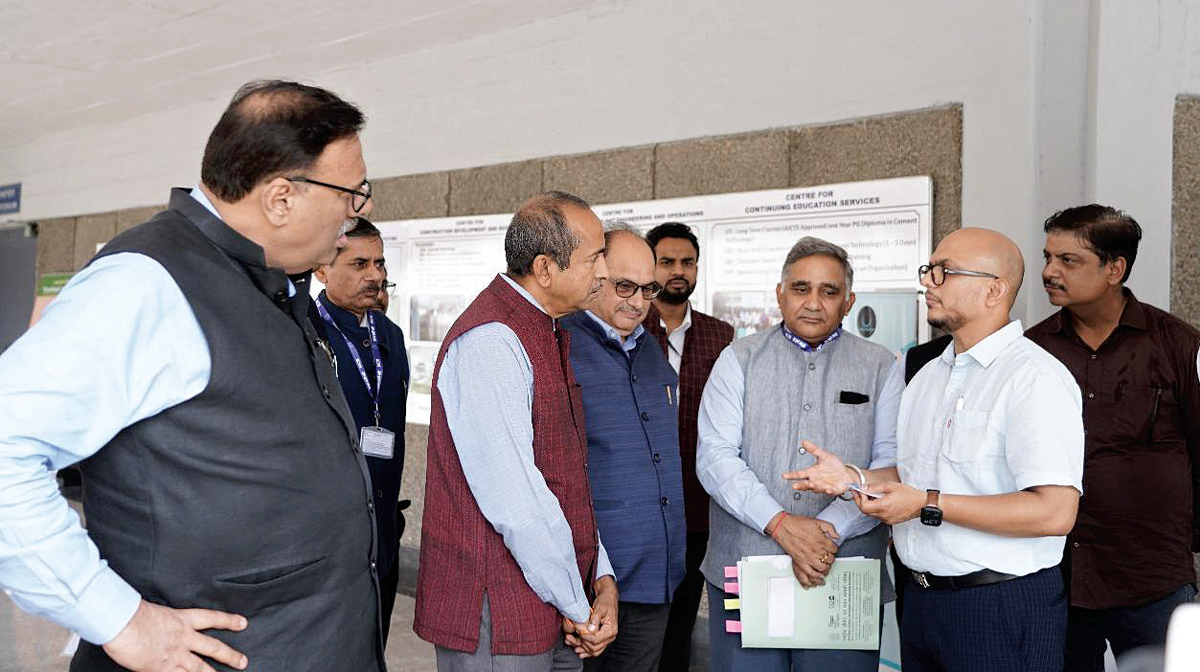
Organised by the National Council for Cement and Building Materials-Incubation Centre (NCB-IC), the CemHack for Green Infra hackathon was a first-of-its-kind event for the cement and construction sector.

A national-level hackathon called the ‘CemHack for Green Infra’ was launched to encourage innovation and ideation in the construction and cement industries. This unique initiative was inaugurated by Sanjiv, Joint Secretary, DPIIT, Ministry of Commerce and Industry, Government of India, in presence of Professor KK Pant, Director, Indian Institute of Technology, Roorkee; Neeraj Akhoury, Chairman-NCB & MD-Shree Cement; and Dr LP Singh, Director General-National Council for Cement and Building Materials (NCB). The event took place on 20th May 2025 at NCB Ballabgarh, and was attended by research scholars, students, industry experts and NCB scientists and engineers.
Sanjiv, JS-DPIIT, complimented NCB Incubation Centre in organising the hackathon for cement and construction sector on the first anniversary of its establishment. He desired that the reputed institutes and colleges like IITs, NITs, technical universities and regional institutes, should be encouraged for maximum participation in this hackathon. He hoped to see success stories from startups incubated at NCB.
Professor Pant supported NCB’s effort in organising this hackathon as it brought a unique opportunity for students, research scholars and researchers. The participants got the opportunity to showcase their innovative ideas and get support from the industry. He informed that IIT Roorkee is collaborating with NCB on plasma-based electrification and carbon capture and utilisation (CCU) in the cement sector.
In his speech, Akhoury emphasised that the Indian cement industry is at the forefront of adopting newer technologies and innovation. In the light of the MoU between Shree Cement signed MoU and StartUp India, which was signed last year, the company will continue to extend its support to NCB in organising this event and supporting the winners of the hackathon.
While speaking at the event Dr Singh stated that the purpose of organising hackathon to promote innovation in cement and construction sector. He also highlighted the endeavours of NCB towards Net Zero in cement industry including award of project grant to a consortium of NCB-IIT Roorkee-J K Cement, by Department of Science & Technology, Government of India on establishing CCU test beds in cement sector. He also showcased the outline to establish Centre of Excellence at NCB Ballabgarh on CCU in cement sector.
Dr SK Chaturvedi, Joint Director and Secretary-NCB, proposed vote of thanks on the occasion. He thanked DPIIT, Shree Cement, JSW Cement and J K Cement for supporting the hackathon.
The hackathon aims at fostering innovation and building an entrepreneurial ecosystem in the cement, construction, building materials and allied sectors in India. NCB Incubation Centre serves as an umbrella platform providing comprehensive support from start to scale for entrepreneurship and start-ups. It facilitates the commercialisation of ground-level research by promoting innovation and product development.
Dr Kapil Kukreja, GM & Incharge-NCB Incubation Centre briefed about the hackathon ‘CemHack for Green Infra’ and informed that this has been organised to foster innovation and develop sustainable, technology-driven solutions in the cement ecosystem. There will be two tracks in this hackathon: First track for startups, professionals and individuals and second track for students, researchers and academia. Participating teams will address real-world challenges faced by the cement sector. There will be no participation fee.

There are six themes of hackathon as follows:
1. Green Cement (alternative raw materials, higher use and new types of supplementary cementitious materials, new binders, AI/ML application etc.)
2. Green Process (H2, solar thermal, micro grids, waste heat recovery, alternative fuels, AI/ML application etc.)
3. Green Concrete (sustainable and novel materials and special concrete application)
4. Carbon Capture, Utilisation and Storage in Cement Industry
5. Logistics and Supply Chain Management in Cement and Construction Industry
6. Achieving Net Zero and Sustainable Development Goals in Cement and Construction Industry

Rewards and benefits for the winners:

  • Track-1: Startup/professionals/individuals
  • First Place Winner: Rs.1,00,000
  • Second Place Winner: Rs.50,000/-
  • Third Place Winner: Rs.30,000/-

(With incubation opportunity at NCB-IC)

Track-2: Students/Research Scholars/Academia

  • First Place Winner: Rs.75,000/-
  • Second Place Winner: Rs.35,000/-
  • Third Place Winner: Rs.15,000/-

(With certificates and mentoring opportunity at NCB)

NCB is an apex research and development organisation under the administrative control of Department for Promotion of Industry and Internal Trade (DPIIT), Ministry of Commerce and Industry, Government of India. NCB is dedicated to research, technology development and transfer, education and industrial services for cement, allied building materials and construction industries. NCB’s areas of work span over the entire spectrum of cement manufacturing and usage-starting with geological exploration of raw materials through the processes, the machinery, the manufacturing aspects, energy and environmental considerations to the final utilisation of materials in actual construction, condition monitoring and rehabilitation of buildings and structures.


Concrete

Building a Greener Future Together

Published

on

By

Shares

Environmental sustainability requires immediate action, not just long-term commitments and discussions. Recycling, circular economy practices, and technology-driven waste management can help industries reduce environmental impact while supporting sustainable growth.

Author: Jignesh Kundaria, Director and CEO, Fornnax Technology

World Environment Day serves as an important reminder that environmental sustainability can no longer remain confined to discussions, reports, or long-term commitments. The environmental challenges facing the world today demand immediate, measurable, and collective action. Across industries and communities, waste generation continues to outpace our ability to process it responsibly, placing increasing pressure on ecosystems, natural resources, public health, and the well-being of future generations.

One of the most significant shifts required today is a change in how society perceives waste. Rather than being viewed as a material to be discarded, waste must be recognised as a valuable resource that can contribute to both economic growth and environmental protection when managed through the right technologies and systems. This mindset forms the foundation of the circular economy model that countries across the world are increasingly adopting to reduce landfill dependence, recover valuable materials, and create more sustainable industrial ecosystems.

India has made meaningful progress in strengthening awareness around sustainability, recycling, and environmental responsibility over the past decade. Significant efforts are being made to formalise the recycling sector through improved infrastructure, technology adoption, policy implementation, and broader stakeholder participation. These developments are creating a stronger foundation for responsible waste management and resource recovery across the country.

However, achieving long-term environmental impact requires collaboration from all stakeholders. Industries, policymakers, technology providers, and communities must work together with greater accountability to strengthen recycling ecosystems, encourage responsible waste management practices, and create sustainable outcomes through consistent execution rather than temporary interventions.

As someone closely associated with the recycling industry, I firmly believe that technology will play a decisive role in addressing future environmental challenges. Advanced recycling systems have the potential to recover valuable resources, reduce pollution, minimise landfill burdens, and conserve energy, creating a more sustainable future for generations to come. This belief is deeply reflected in Fornnax’s motto, “Committed to Create a Green Future,” which embodies our commitment to building long-term environmental value through innovation and responsible action.

At the same time, technology alone cannot deliver meaningful change. Real progress requires intent, awareness, participation, and a shared sense of responsibility. Sustainable development can only be achieved when innovation is supported by collective action and a genuine commitment to environmental stewardship.

On this World Environment Day, let us move beyond conversations and take meaningful steps towards creating a cleaner, greener, and more sustainable planet. By embracing innovation, strengthening recycling ecosystems, and acting responsibly today, we can create lasting environmental impact and secure a better future for generations to come.

Continue Reading

Concrete

JK Lakshmi Advances LC3 Cement Expansion

Company highlights commercial production and research partnerships

Published

on

By

Shares


The meeting reviewed progress in limestone calcined clay cement (LC3) technology and its commercial adoption in India’s cement sector, focusing on low-carbon alternatives to conventional binders. JK Lakshmi Cement noted that limestone calcined clay cement can reduce carbon dioxide emissions by up to 40 per cent compared with conventional cement and said this reduction supports industry decarbonisation. The company highlighted that it was among the first two cement manufacturers in India to move LC3 into commercial production after the Bureau of Indian Standards approved the technology as a cement standard.

Vinita Singhania said the transition of LC3 from research to commercial production reflected collaboration between industry, academia and international institutions. Maya Tissafi acknowledged JK Lakshmi Cement’s role in advancing LC3 adoption in India and its contribution in taking the technology from laboratory trials to commercial implementation. Both representatives underlined the growing relevance of sustainable construction materials as India expands infrastructure and urban development.

The meeting explored continued collaboration with Swiss research institutions such as EPFL, EMPA and ETH Zurich alongside Indian academic partners and development organisations. JK Lakshmi Cement has been associated with the LC3 initiative since 2014 and worked with EPFL, IIT Delhi, IIT Madras, Development Alternatives and Technology and Action for Rural Advancement. The company conducted one of the earliest industrial trials of LC3 and recently announced commercial production of Green Pro LC3 cement from its Jaykaypuram plant in Rajasthan.

India remains the world’s second-largest cement producer and expansion of infrastructure, urbanisation and housing demand continue to support long-term sector growth, increasing interest in low-carbon technologies. The company reported an annual turnover of more than Rupees (Rs) 60 bn and current cement capacity of about 18 million (mn) tonnes (t) per annum, with a target of reaching 30 million (mn) tonnes (t) by 2030. Apart from grey cement, the company also makes ready-mix concrete, gypsum plaster, wall putty, primers, adhesives and fly ash blocks, and both sides concluded on the need for continued collaboration to develop sustainable construction solutions.

Continue Reading

Concrete

Burnpur Cement Reports Standalone Net Loss Of Rs 207.4 Million

Standalone net loss of Rs 207.4 mn in March 2026 quarter

Published

on

By

Shares


Burnpur Cement reported a standalone net loss of Rs 207.4 million (Rs 207.4 million) for the quarter ended March 2026. The company said the loss reflects its financial performance for the period and will be reflected in its results filed with regulators. The announcement followed routine quarterly reporting by the listed cement manufacturer. Burnpur Cement is a cement manufacturer operating in India and serving construction markets, with operations spanning production, distribution and sales across the domestic construction sector.

The March 2026 quarter result marks a weakening in profitability for Burnpur Cement as market conditions in the sector remained challenging. The company attributed the outcome to operational and market factors, while outlining measures to manage costs and working capital. The reported standalone loss of Rs 207.4 million will be central to assessments by analysts and investors, which will be weighed alongside sector trends and company guidance. Management indicated continued focus on stabilising operations and optimising production efficiency.

No further numerical details were included in the initial summary, and consolidated figures were not disclosed in the brief notice, constraining immediate analysis of underlying drivers. The firm reiterated that it will provide comprehensive results and explanatory notes in its annual filing and investor communications. Analysts will assess the full disclosures when detailed financial statements become available. The timing of those detailed filings will determine how soon stakeholders can access full data.

Investors and stakeholders were advised to review the filings and the company’s releases for complete information, including cash flow and segmental performance, before drawing investment conclusions. The company’s operations and future guidance will determine recovery prospects in subsequent quarters. Regulatory disclosures and investor communications will guide market interpretation of the quarter and inform analyst forecasts. Burnpur Cement remains subject to the regulatory reporting process applicable to listed entities.

Continue Reading

Video Thumbnail

    SIGN-UP FOR OUR GENERAL NEWSLETTER


    Trending News