Ensuring occupational safety, no harm to existing health and proper working condition for all the workforce in every enterprise is a necessary and essential requirement for running any business, In India we have four main legislations that cover Occupational Safety and Health at workplace. (i) The Factories Act, 1948 , covering factories wherein the enforcement of safety at workplace is by the Chief Inspector of Factories in the respective states, (ii) The Mines Act, 1952 and Mines Rules, 1955 for mining industry where the enforcement is by Directorate General of Mines Safety (DGMS) under Ministry of Labour & Employment , Government of India, (iii) The Dock Workers (Safety, Health and Welfare) Act, 1986 followed by notification of the Dock Workers (Safety, Health and Welfare) Regulations, 1990 dealing with the major ports of India and the enforcement is by Director General, Directorate General of Factory Advice Service & Labour Institutes (DGFASLI), under Ministry of Labour & Employment, Government of India, and (iv) The Building & Other Construction Workers (Regulations of Employment and Conditions of Service) Act, 1996, covering construction workers at construction sites wherein the enforcement is by the State Government.
The Second National Commission on Labour submitted its Report on ??ccupational Safety, Health and Working Conditions of the Workers??in June, 2002 and made certain recommendations including the need to consolidate various laws. In pursuance of the recommendations of the said Commission, the National Democratic Alliance Government has introduced Bill Number 186 of 2019 on 23 July 2019 called ??he Occupational Safety, Health and Working Conditions Code, 2019??in the Lok Sabha, which has 134 clauses and three schedules. While the schedule one and three are identical to the schedules in The Factories Act ,1948, but the schedule two covers many items relevant to occupational safety, health and working conditions. The Code will subsume 13 labour laws and would apply to all establishments employing 10 or more workers. These include (a)The Factories Act, 1948; (b) The Mines Act, 1952; (c) The Dock Workers (Safety, Health and Welfare) Act, 1986; (d) The Building and Other Construction Workers (Regulation of Employment and Conditions of Service) Act, 1996; (e) The Plantations Labour Act, 1951; (f) The Contract Labour (Regulation and Abolition) Act, 1970; (g) The Inter-State Migrant Workmen (Regulation of Employment and Conditions of Service) Act, 1979; (h) The Working Journalist and other News Paper Employees (Conditions of Service and Miscellaneous Provision) Act, 1955; (i) The Working Journalist (Fixation of rates of wages) Act, 1958; (j) The Motor Transport Workers Act, 1961; (k) The Sales Promotion Employees (Conditions of Service) Act, 1976; (l) The Beedi and Cigar Workers Act, 1966; (m) The Cine Workers and Cinema Theatre Workers Act, 1981 (details refer section 134). Presently each of these 13 labour laws have Rules and we still have to await the Rules that the Central Government frames for this code, which can be the same or modified by the State Governments.
This code is one of the four labour codes and is currently referred to the Parliamentary Standing Committee for consideration, and hence will take some time, before it gets passed by the Lok Sabha and becomes an Act. The rules with reference to the Code have still to be framed and made public.
Given below are summary analysis of certain relevant sections in the code:
Section 2 of every labour legislation deals with definitions. Since, this code is to replace 13 labour legislations which deal with various aspects apart from the area of Occupational Safety, Health and Working Conditions the definition of the words in section 2 needs to be understood and analysed, to realise the modification where they are taking place through the code. In most cases, the word as defined in the code is a continuation of the definition in one of the 13 acts, but in certain cases the same has been modified and hence has implications of applicability.
Section 2 (g): In ??uilding or other construction work??the definition specifies that it does not include any building or other construction work of any factory or mine or any building or other construction work employing less than ten workers.
Section 2 (u): The term ??stablishment??has been defined as a place where any industry, trade, business, manufacture or occupation is carried on in which ten or more workers are employed; or a factory, motor transport undertaking, newspaper establishment, audio-video production, building and other construction work or plantation, in which ten or more workers are employed; or a mine or dock work. The word ??stablishment??is used in many of the sections
Section 2(zb)(b): The term ??ndustry??does not include domestic service.
Section 2(zo): The term Occupier has been modified compared to The Factories Act, 1948 and an independent director cannot be an occupier.
Section 2(zz): The term ??ales promotion employees ??efinition does not include apprentices as specified in The Sales Promotion Employees (Conditions of Service) Act, 1976;
Section 8 specifies duties of manufacturers, designer, importers or suppliers and holds them responsible for the safety of the equipment and material designed, imported, supplied, erected, installed as to be safe and without risk to the health of the workers when properly used. There are details specified which were not covered in the existing legislations.
Section 9 in detail specifies the duties of architects, project engineers and designers and holds them responsible for ensuring that they have considered all aspects of safety and health for the workers that are carrying out the construction, but to also take into account the safety aspects associated with the maintenance and upkeep of the structures and buildings where maintenance and upkeep may involve special hazards.
Section 12: (1) and 12(2) deal with notice of certain diseases and these sections are identical to section 89 and 90 of The Factories Act, 1948 except the word factory has been replaced by the word establishment. Also, the Schedule Three specifying list of notifiable diseases is identical to the schedule three in The Factories Act, 1948.
Sectior 16 and 17 deal with constituting a National Occupational Safety and Health Advisory Board and State Occupational Safety and Health Advisory Board which is something new compared to the present legislation. Section 18 deals with occupational safety and health standards and the second schedule is a very exhaustive list covering list of matters to be covered in factories, mines, ports, construction, offices, plantation and others. The second schedule under section 41-F of The Factories Act, 1948 which dealt with permissible limits of 116 chemical substances is not to be found in the second schedule of the code and since the schedule mentions that ??he Central Government shall declare, by notification, standards on occupational safety and health for work places relating to factories, mines, dock work, building and other construction work and other establishments ??robably these will be specified later .
Section 21 deals with an effective programme of collection, compilation and analysis of occupational safety and health statistics.
Section 22 deals with Safety Committee and safety officers in establishments.
Section 24 deals with welfare facilities in the establishment and in subsection (2) specifies bathing places and locker rooms for male, female and transgender employees separately. This is a recognition of accepting the employment of transgender employees at the work place.
Section 25 deals with weekly and daily working hours, leave, etc. and since the Code also covers sales promotion employees. It is silent on the working hours of sales promotion employees but specifically in sub – section (3) in detail specifies the leave benefits. It has to be seen how this will get interpreted, as sales promotion employees have to work when they can meet the doctors and the eight hours working per day cannot be from 9 am to 5 pm like the general shift of establishments.
Section 37 provides for a third-party audit and certification for start-up establishments and class of other establishments to get the same done and submit their reports to the concerned employer and Inspector-cum-Facilitator separately for the purpose of ensuring compliance of the provisions of this Code.
Section 43 provides for women to work in with her consent, to be employed in an establishment before 6 a.m. and beyond 7 pm.
Section 45 to 62 deal with contract Labour and Inter State Migrant worker, as both these Acts have been merged with this code.
Section 50 (1) states that when a contractor receives work order from an establishment, he has to intimate the same to the appropriate Government.
Section 60(1) the contractor to every inter-State migrant worker at the time of recruitment, has to pay a displacement allowance equal to fifty per cent of the monthly wages payable to him which was already there in the existing act.
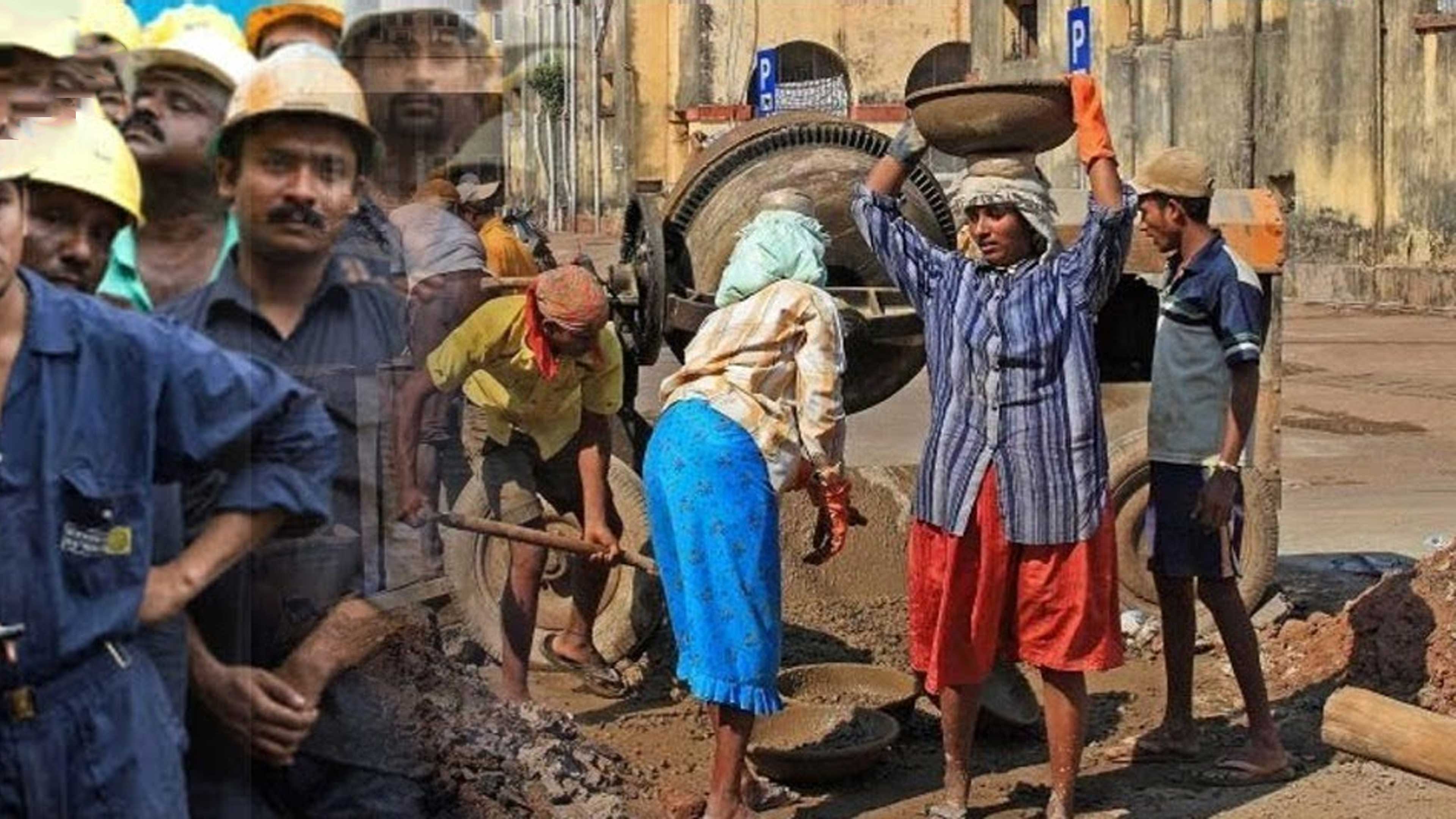
Section 73 states that a person who is deaf or has a defective vision or has a tendency to giddiness be not employed in building or other construction work which is likely to involve a risk of any accident either to the building worker himself or to any other person. This is keeping safety in mind.
Section 75 deals with premises or buildings leased to different occupiers for use as separate factories, the owner of the premises and occupiers of the factories utilising such common facilities include safety and fire prevention and protection, shall jointly be responsible for providing maintenance of common facilities and services as may be prescribed.
Section 83 deals with maximum limit of exposure of chemical and toxic substances in manufacturing process in any factory. Earlier these limits were specified in Schedule Two of The Factories 1947. Act, Under the code these are not specified and it is mentioned that the limits of exposure of chemical and toxic substances in manufacturing process in any factory will be decided by the State Government.
Section 87 deals with general penalty which shall not be less than Rs 2 lakh to the employer of any establishment for the contravention of the code.
Section 96 (1) deals with a dangerous occurrence resulting in (a) death, then the person responsible shall be punishable with an imprisonment for a term which may extend to two years or with a fine which shall not be less than Rs five lakh or with both.
Section 107 (1) deals with compounding of offence and its procedure.
However, this compounding is only applicable for offence in which the punishment does not involve imprisonment.
Conclusion
The Code is an effort by the Ministry of Labour & Employment, Government of India at combining 13 labour laws which not only dealt with safety, health and working conditions plus other areas relevant to the workers employed in factories, mines, docks, building and construction, plantation, motor transport, beedi and cigar, cine and cinema theatre, journalism, field force, plus the contract workers and interstate migrant workers.
Presently a large number of enterprises are engaging contract labour through contractors/ service providers under the existing Contract Labour (Regulation and Abolition) Act, 1970. It is to be seen how the proposed code will impact the employers, contractors and contract workers once the Rules to the Occupational Safety, Health and Working Conditions Code, 2019 are released.
There are techniques such as ??ontrolled Implosion??which can be used for swift demolition of structures and there was need that these from the point of occupational safety and health should have been included in the Code , Also new forms of employment based on App Platforms that have entered the business area have not been dealt with, as we need to also look at their occupational safety, health and working conditions
Since the code subsumes 13 labour laws the terminology of enterprise is used in most sections. Since this code is going to replace legislations of 1948 and later, it is too early to predict how this legislation will help the workers, trade unions and employers associated with enterprises in India in ensuring occupational safety and improved health. The acid test on the clarity of a legislation comes with judicial interpretations.
ABOUT THE AUTHOR:
Dr Rajen Mehrotra is past President of Industrial Relations Institute of India (IRII), Former Senior Employers??Specialist for South Asian Region with Internation.al Labour Organization (ILO) and Former Corporate Head of HR with ACC, and Former Corporate Head of Manufacturing and HR with Novartis India Ltd. Email: rajenmehrotra@gmail.com













 Concrete4 weeks ago
 Concrete4 weeks ago
 Concrete1 month ago
 Concrete4 weeks ago