Connect with us

Concrete

Refractories: ‘Tech’ing Up!

Published

on

Shares

Refractory failure is considered the most critical upset in a kiln operation. Considering the importance of refractories in the cement making process, ICR delves into the various types of refractories, their operations, challenges and the efforts taken by cement manufacturers in keeping up with innovations and automation of refractories for more efficient processes.

Cement is the most consumed man-made product across the globe. The modern civilisation owes a lot to the contribution of cement and concrete as a building material for construction of bridges, buildings, roads, dams, tunnels, and tall structures which are being used by the people everywhere in every walk of life. Manufacturing process of cement involves high temperatures. The combustion of limestone, clay or other materials to form clinker is an extremely energy intensive and temperature intensive process. This high-temperature reaction takes place inside a reactor called a kiln.

To contain the temperature inside the kiln on a continuous basis and to make the manufacturing possible on an industrial scale, Refractories play a very important role. A refractory lining inside the reactor maintains the temperature range of the reactor metal structure within a tolerable limit. This lining, also known as refractory, also inhibits the heat flow from inside of the reactor to outside. Thus, it helps in conserving the energy, which makes the cement manufacturing process productive and profitable.

There are two major purposes of refractories in a cement manufacturing unit:
To contain the high temperature or heat generated during pyroprocessingTo insulate the reactor and prevent the heat from dissipating in the environment

The special demands of cement manufacturing have always required specialised refractories – especially now, when more and more alternative fuels are used.

Types of Refractories

The special demands of cement manufacturing have always required specialised refractories – especially now, when more and more alternative fuels are used. There are two main types of refractories: castable and brick, each with distinct advantages and disadvantages.

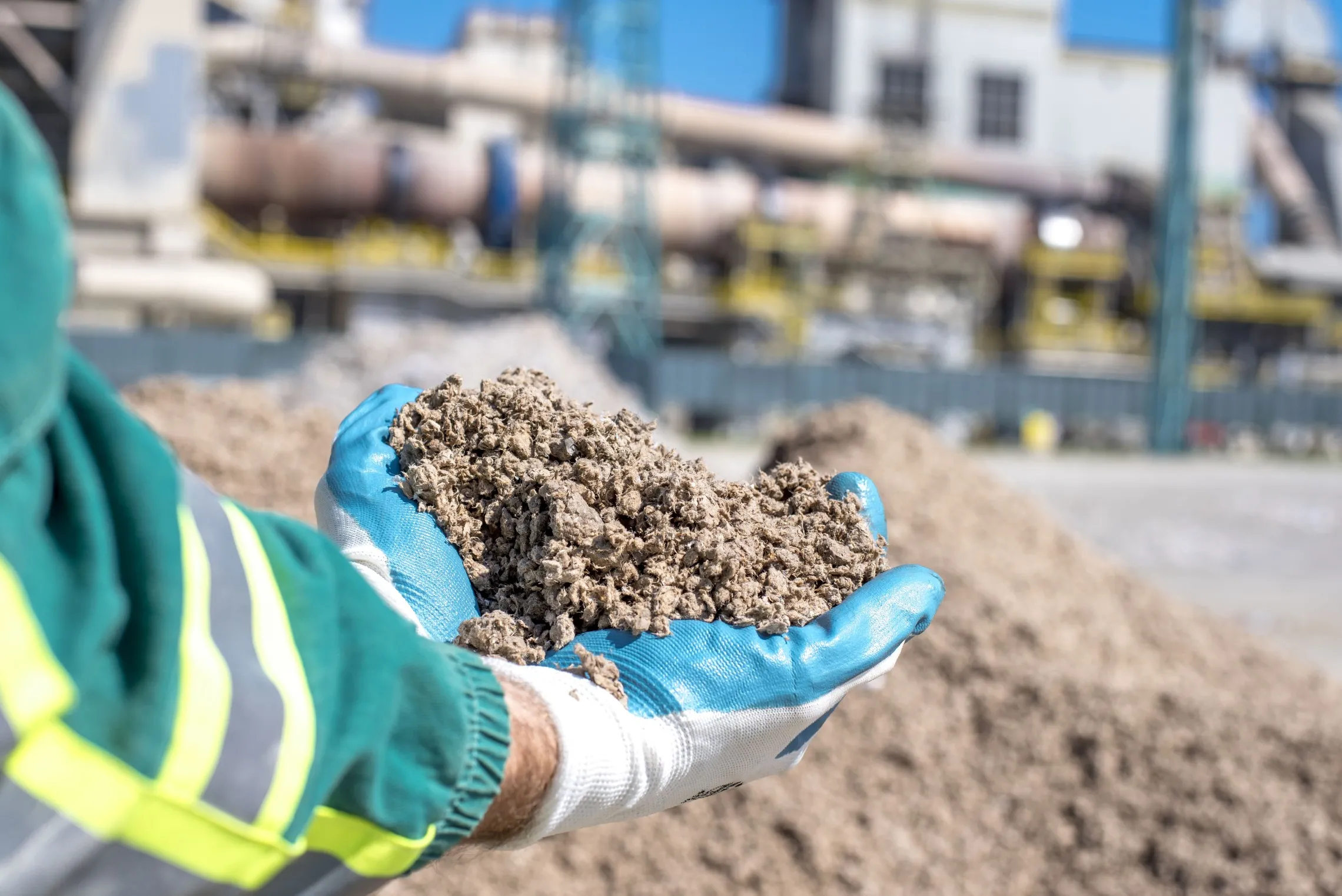
Castable Refractory: This refractory comes in a powder form and is mixed with water on-site. Before the mixture can be put in place, anchors are installed. These Y-shaped anchors are similar to rebar in cement; they help give the castable lining its strength. Once these anchors are in place, the cement-like mixture is pumped into the lining of the rotary kiln, and allowed to cure for several days.

Brick Refractory: Brick is fired in a furnace under tightly controlled conditions that allow it to achieve better properties than a similar composition castable refractory.

Castable refractory has a similar material cost to brick. However, brick installation is much more labor intensive, as each brick is individually installed. This makes the overall cost of a brick lining more expensive than castable. While brick refractories are slightly more expensive than castable refractories, bricks do not require anchors, and their quality is superior. When processing a highly abrasive material, brick refractory is advisable most of the time, as castable does not have the durability to stand up against abrasive materials as well as brick.

Besides lower overall cost, the advantage to using a castable refractory in a rotary kiln is that it is usually easily patched when a problem is encountered. Down time is typically minimal, because the problem area can be cut out and new refractory poured into the cavity.

The disadvantage to using a castable refractory in a rotary kiln is that it is very susceptible to installation problems. When a castable refractory is expertly installed, it can nearly match the quality of brick.

But if installed incorrectly, there can be a considerable difference in quality, and the life of the refractory can be severely compromised.

The disadvantage to brick refractory is that it is kept in place much like a roman arch: bricks are held in place by the pressure of the other bricks pushing against each other. When a problem is encountered, typically the failed brick needs to be replaced, but when one brick is relying on the bricks around it to hold it in place, often one cannot replace just one brick, and whole sections of the refractory must be replaced. Unlike castable refractory, the repair of a failure in brick refractory is much more involved.

Need and Function of Refractory in a RotaryKiln
Cement rotary kilns are kilns that conduct pyroprocessing. It is a machinery in the cement manufacturing plant that is used to heat materials to high temperatures in a continuous process. The kiln body is a cylinder vessel with a certain degree of tilt to the horizontal level. Raw materials are fed into the vessel from the upper end and moved to the lower end, being stirred and mixed relying on the inclination and rotation of the kiln. The kiln burner produces a lot of heat by burning fuel. This kind of heat is usually transferred to materials through flame radiation, hot gas convection, kiln brick conduction, etc., which causes the chemical reaction between raw materials and finally forms a clinker.

Rotary kilns can be divided into cement kilns, metallurgical and chemical rotary kilns, lime rotary kilns and so on. Cement rotary kilns are used for calcining cement clinkers in the cement plant, which can be divided into dry cement kilns and wet cement kilns. Metallurgical and chemical rotary kilns are mainly applied in the metallurgical industry. As for the lime rotary kiln, it is the main equipment for calcining active lime and light burned dolomite used in iron and steel plants, ferroalloy plants, calcium carbide plants, and magnesium metal plants.

The cement rotary kiln is mainly composed of a cylinder, supporting device, drive gear, refractory lining, catch-wheel device, kiln head sealing device, kiln tail sealing device, kiln hood, and other components. On the cylinder, there is a large gear ring fixed with a spring plate near the kiln tail; some pinions below are engaged with it, jointly forming the drive gear. In normal operation, the main drive motor will transfer power to this gear device through a reducer to run a rotary kiln. The raw material usually enters the rotary kiln from the upper end and moves slowly to another end along with the chamber as it rotates. In this process, raw materials will be heated by high temperature and then decompose and produce chemical reactions so that their state finally changes. Under normal conditions, the heat source of indirect fired rotary kilns is supplied from the kiln burner outside the kiln. This kind of way protects the integrity of raw materials, while the heat source of the direct-fired rotary kiln is inside the kiln. Besides, the rotation speed and temperature of the cylinder are tightly controlled and changed according to different desired processes and material applications. After the calcination is completed, the clinker will be pre-cooled in the chamber and then be sent into the cooler for further cooling.

With the continuous progress of the cement industry, rotary kilns, as the core cement equipment of the cement production line, is developing towards a large scale. Compared with the traditional rotary kiln, its technology is more complex, and the requirements for rotary kiln design and accessories are higher. The rotary kiln refractory lining is a layer of refractory material installed inside the kiln cylinder, which plays a protective role in many aspects, and is an important part of cement rotary kiln.

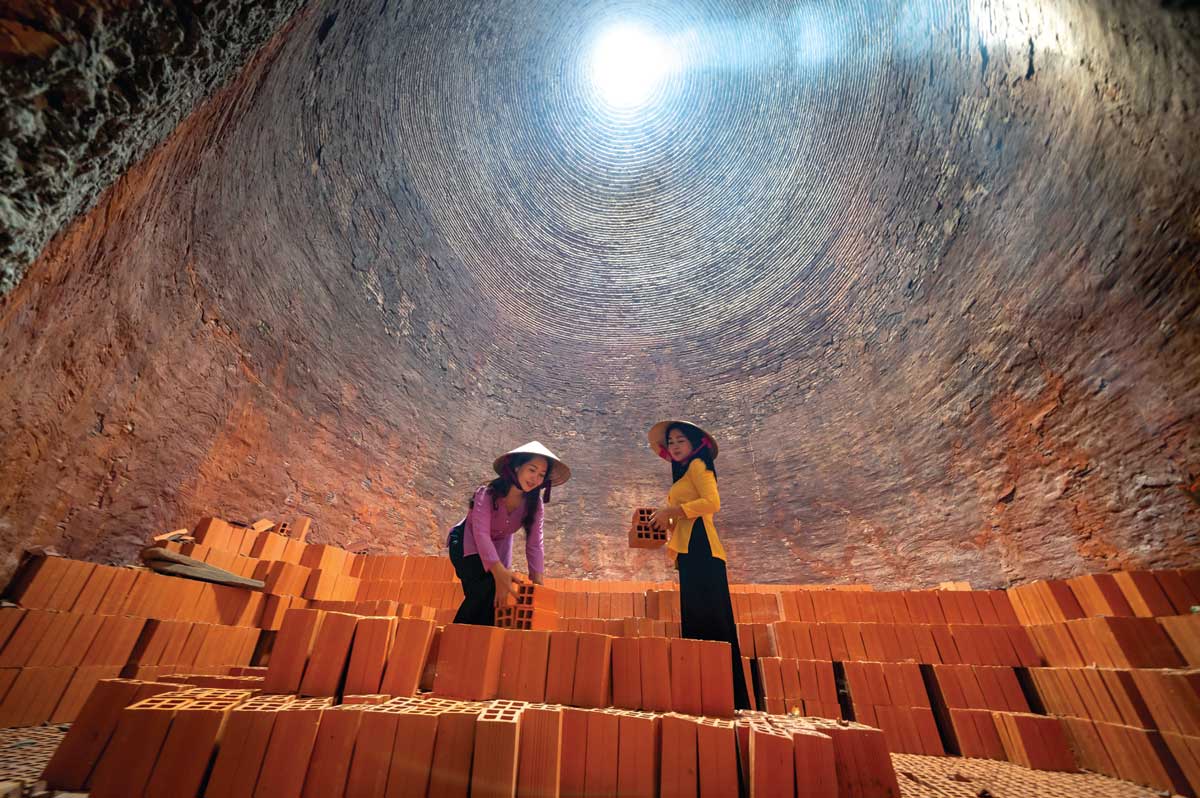
To protect the shell of the kiln from the high temperatures of the feed and combustion gases, a brick lining is used. Refractories play a critical role in both the rotary kiln lining, and the lining of the high-volume static equipment areas that comprise a modern pre-calciner kiln system.

Refractories require an insulating coating or lining further helping its function of preventing heat from escaping the kiln. Some of the key features that this coating material must have are:

  • High adhering potential to the lining and bricks
  • Mouldable to various shapes and sizes to fill in the gaps and holes of the brick lining
  • Acts as a protective layer against corrosion from flames and molten substances
  • Provides thermal spalling
  • Improves surface resistance to erosions and voids.
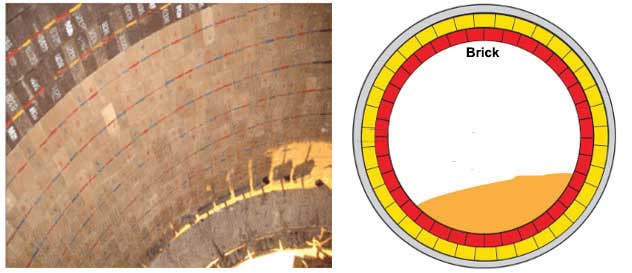
Layers of Refractories

Refractory is a customisable part of the rotary kiln and can be designed to suit the requirement of the desired clinker and subsequently, the end product of the process, cement. It can be tailored with multiple layers to meet the demands of a given application.

A refractory mostly has two layers, the working layer and the insulating layer and the combined thickness of the two ranges from 4.5 inches to 12 inches. They are made with materials that can withstand the high temperature process that takes place in the cement manufacturing process.

Working layer is designed with durable materials designed to withstand the heat within the rotary kiln as it comes directly in contact with the materials and raw mix being processed. It also goes through constant abrasion as it comes in contact with the materials.

An insulating layer is required beneath the working layer of the refractory to prevent the heat from slipping out to the shell of the kiln. This would be both dangerous as well as would lead to loss of efficiency and productivity of the process. It would also lead to damage of the kiln shell.

Typically, the working layer and the insulating layer are made of the same material (ie. brick or castable), with varying chemistries. The working layer tends to be a higher density, stronger material that is more conductive. The insulating layer does not need these qualities, and tends to be softer, lighter, and less conductive, therefore more insulating. These two layers often vary in thicknesses, determined by the needs of the rotary kiln and what material is being processed. In some cases, such as when temperatures are low, or when efficiency is not a concern, a single working layer may be all that is needed.

In contrast, when insulation is extremely critical, an optional third layer of ceramic fibre backing may be used. This thin, but very efficient layer is like fibreglass insulation found in a house, but it is much more compressed. The decision to employ this layer comes with some responsibility. Should a crack in the refractory occur and go unnoticed, it is possible for the high heat inside the rotary kiln to reach this backing and burn it up. This would create a gap between the refractory and the shell of the rotary kiln, which would cause disastrous problems. Due to this potential of increased risk, this third layer is not always appropriate.

Refractory Materials

A refractory is made of inert inorganic solid materials like oxides, carbides, nitrides, and borides of aluminium, silicon, alkaline earth metals, and transition metals. The key requirements of the materials from which a refractory is built are to be stable at high temperatures and to retain their original physical shape when they are exposed to corrosive solid, liquid or gaseous materials. Out of all these materials, very few qualify to be used in industrial scale, because of their instability under normal atmospheric conditions or because of the rare availability and high cost.

“Cement manufacturing is an energy intensive process. Burning alkaline raw materials (reactive) combined with smaller constituents of metals and abrasive raw materials at very high temperature is a major challenge. Therefore, a good refractory that can withstand high temperatures while retaining required strength and that is resistant to chemical properties of the alkaline raw materials is crucial. Besides, chemical attacks from sulphates or chlorine from the kiln feed, fuel or alternative fuels there are other factors that need to be factored in,” says Prabhat Singh Parihar, Vice President Technical Head, Mangrol Plant, JK Cement.

The source of the raw materials can be natural or synthetic. The raw materials used for refractory manufacturing are mainly naturally occurring minerals like bauxite, magnesite, clay etc., which are mined and processed before being used for refractory manufacturing. Some synthetic materials like mullite (3Al2O3.2SiO2), fused alumina (Al2O3), silicon carbide (SiC), spinel (MgO.Al2O3) etc., are also being used widely in refractories for the cement industry.

Operating Condition for Refractories

According to a report – Refractories Selection for Cement Industry, August 2020 published by IN Chakraborty, Ace Calderys Limited, Nagpur, refractory selection is the most important step for the maximisation of its performance.

Refractories play a critical role in both the rotary kiln lining, and the lining of the high-volume static equipment
areas that comprise a modern pre-calciner kiln system.

The major deciding factors for refractory selection are the working environment where the refractory would be used. The working environment, in general, is defined by the following parameters:

  • Operating temperature
  • Chemical condition
  • Chemical nature of solid or liquid, i.e., acidic, or basic, in contact with the refractory
  • Characteristic of the gaseous environment
  • Thermal shock
  • Mechanical stress
  • Abrasion

Refractory selection is the most important step for the maximisation of its performance. The major deciding factor for refractory selection is the working or operating environment where the refractory would be used. The working environment, in general, is defined by the following parameters:

Identification of critical parameters for a given working environment is vital for refractory life maximisation at optimal cost. Once the critical operating parameters are identified, the refractory should be so selected that it can withstand the operating condition for the stipulated lifespan. In the context of the refractory life in the cement rotary kiln, the lining design as well as the quality of refractory installation play a very critical role.

As a function of the cement manufacturing process, a raw meal i.e., a mix of limestone, quartz, clay and some lateritic material is fed in the kiln. This operating condition in this kiln is not severe except for in the burning zone where temperature can go up to 1450oC and the liquid content of the feed material falls in the range of 25 per cent to 27 per cent

By the time the raw mix attains a temperature of 900oC, the limestone present in the raw material is decomposed and quartz undergoes polymorphic transformation and cement constituents like C2S and C3A start forming. None of these have an adverse effect on the refractory. As the temperature rises to 1400oC, the liquid phase forms. At the maximum operating temperature, approximately 1450oC, the liquid phase concentration is about 25 per cent. On cooling down the C3S and C4AF precipitate out from the melt. As the clinker cools down, the reactivity of the mass reduces, i.e., the refractory is not chemically affected. However, the cold clinker becomes abrasive and may cause erosions on the refractory.

This operating condition of the kiln is of moderate severity from the chemical reactions point of view. The temperature in the non-burning zone part of the kiln system is not high enough for a chemical reaction between the aluminous refractory and the lime bearing raw material of the clinker.

This situation, however, becomes severe when alternative fuels are used. It is their alkali and chlorine concentrations that are significantly high compared to the conventional fuels. The melting points of these alkali compounds are lower than the maximum operating temperature of the kiln, hence, they evaporate in the kiln and travel along with the flue gas towards the kiln inlet areas whereas the rest escape in the kiln system by combining with the clinker. This alkali bearing gas then gets deposited on the incoming raw meal at the corresponding feeding point of these alkali compounds. The alkali enriched raw meal travels back to the kiln and the process repeats.

Refractory failure inside the rotary kiln is indicated when the kiln shell becomes red hot because the refractory lining
has either been entirely lost or has become too thin.

The chloride compounds have a lower melting point than the sulphates. They have the ability to travel further back in the kiln system, compared to sulphur bearing compounds. Owing to this cycling process, the kiln environment becomes richer in alkalis as compared to their concentration in the raw meals. Owing to the self-enrichment phenomenon, raw meal chemistry does not indicate the true chemical environment of the kiln.

Properties of Refractories

Refractories are characterised by their chemical and physical properties and are used to correlate its behaviour in actual high-temperature application.

Apparent Porosity: Refractories contain pores; some of the pores are open and connected and some are closed. The total volume of a refractory body is the sum of the volume of the matter, volume of the open pores and the volume of closed pores. The apparent porosity of a refractory is expressed in percentage and is defined as a percentage of the volume of open pores against the total volume.

It is a very important property and influences the mechanical strength, corrosion resistance, and thermal conductivity of a refractory. Porosity and bulk density of a refractory are inversely related. The lower the apparent porosity, the more will be the bulk density, mechanical strength, thermal conductivity, and corrosion resistance of the body. Besides total pore volume, the pore sizes are also very important to influence the corrosion resistance and thermal conductivity of the refractory. The smaller the pore sizes, the better is the corrosion resistance and the lower is the thermal conductivity.

Permeability: It is the measure of flow of gases through pores within the refractory body, and it indicates the extent of pore linkage. Permeability of refractories gives an indication on how well the Refractory will stand up to molten slag, a melt or to a gas penetration.

“The apparent porosity or open porosity (oPo) is the volume of the open pores, into which a liquid can penetrate, as a percentage of the total volume of the refractory. This property is important when the refractory is in contact with molten charge. A low apparent porosity prevents molten material from penetrating into the refractory, it makes a materialto- material bond and develops a good and stable coating on refractory / bricks, which enhances its life and its resistance to corrosion,” says Pradeep Kumar Chouhan, General Manager – Quality Control & Environment, Udaipur Cement Works Limited.

“The permeability of refractories is a governing factor in the deterioration of linings by liquids and gases. The permeability of any refractory material is defined as the volume of the gas or air, which passes through a cubic centimetre of material under a pressure of 10 mmWG per seconds” he adds.

Bulk Densities: It is the mass of the material per unit volume including pores. For the same kind of refractory, the bulk density can vary. The higher is the bulk density, the lesser will be the porosity and normally more will be the mechanical strength.

Specific Gravity: All different refractory minerals have different densities. They can be identified by their specific gravities. The specific gravity of a refractory can be determined by making powder of the sample of a specific size and using a specific gravity bottle and a balance.

Refractories are subjected to extreme temperatures and conditions. This is also a test of their mechanical properties. Some of the key mechanical properties of a refractory are:Cold Crushing StrengthModulus RuptureModulus of ElasticityFractureAbrasion Resistance

Factors Affecting the Maintenance of Refractories

Among kiln operators, refractory failure is considered the most critical upset in a kiln operation. Refractory failure inside the rotary kiln is indicated when the kiln shell becomes red hot because the refractory lining has either been entirely lost or has become so thin in an area that the kiln shell becomes overheated.

In most instances, however, damage can be avoided if the kiln is shut down for lining replacement as soon as the shell starts to show a large red spot.

Replacement of the kiln lining, especially in the burning zone, is unfortunately a frequent necessity, exerting a large strain on the operating budget and on production schedules.

Many plants have found that refractory life is often directly proportional to the number of kiln shutdowns that were experienced while the refractory was in the kiln. The more shutdowns and kilns stop, the shorter the life. The danger of damaging the refractory is directly related to the rate of cooling of the kiln, the danger being the greatest when cooling is too rapid.
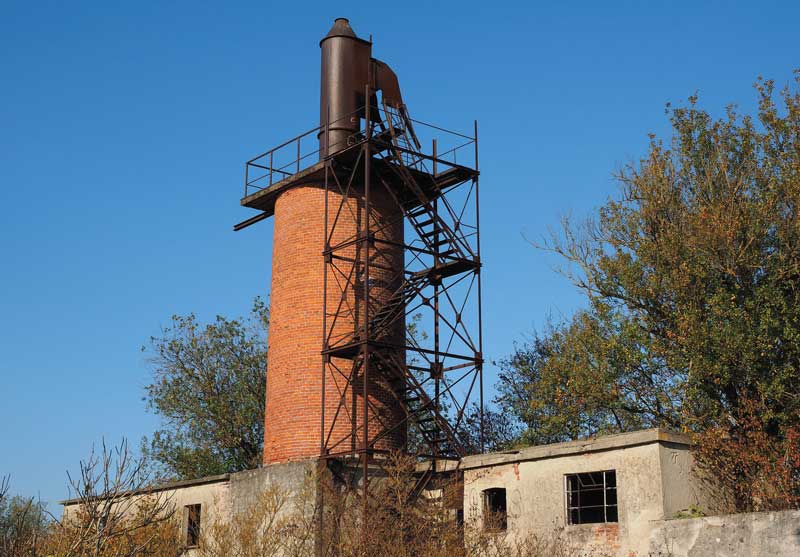
When processing a highly abrasive material, a brick refractory is advisable.

The first step in preventing this situation is to eliminate shutdowns by operating the kiln more efficiently on a continuous basis. The second step is to make sure that cooling is slow and uniform when the kiln is shut down. Cooling time should be a minimum of 8 hours or longer. Placing a large guillotine damper to seal the kiln exit (back-end) helps to conserve heat inside the kiln and retards cooling during a shutdown. Another method of ensuring slow cooling of the refractory in the kiln is to shut the draft fan immediately when the fire is taken out of the kiln.

The primary air fan should be left running only for such a time as needed to protect the burner pipe from heat during the early period of kiln cooling.

As rapid cooling can cause damage to the refractory, so can rapidly heating it. Heating up the refractory quickly can cause thermal deterioration of the brick. Governed partly by the concept of thermal conductivity of the refractory, the kiln shell expansion takes place slower than the bricks. Because of this, the heating process should be for a minimum of 16 hours and should be gradually built up.

Another important factor to be considered for the longevity of the refractory life is to avoid overheating it. This can be ensured by constant monitoring of the kiln temperature and taking corrective action if the temperature rises beyond the threshold.

Having the refractory installed uniformly and in a shapely manner as per the kiln and end product requirement prevents its wear and tear when exposed to high temperature and erosive conditions. Kiln managers should also select the right type of refractories for each location of the kiln which is easier said than done.

Building the right refractory is a key process in the cement manufacturing process as this protective layer of the kiln withstands high temperature and handles the process of converting limestone to clinker and its cooling. Having the right shape, size and composition of refractory in the manufacturing unit increases the overall productivity and efficiency of the cement manufacturing process, thus, also increasing the profitability of the organisation at large. Paying keen attention to its installation and maintenance is important and must be done on a regular basis under expert guidance.

Concrete

CarbonStrong Raises Rs 125 Million To Scale Low Carbon Cement Tech

To build capacity of 100,000 tonnes a year

Published

on

By

Shares


CarbonStrong has raised Rs 125 million (125 mn) to scale a low carbon cement technology and build commercial production capacity. The startup was founded in 2022 by Harsh Jain and Vikramaditya Singh and has moved from customer trials to plans for industrial supply. The company said its material replaces up to 50 per cent of cement in concrete while reducing costs and improving durability.

CarbonStrong states the product is around 30 per cent cheaper than cement and compatible with existing concrete plants, reducing the need for new equipment and operational disruption. Trials and paid pilots have been conducted in Bengaluru, Hyderabad and Chennai with demonstration projects involving ready-mix firms and precast manufacturers. Compatibility with current workflows forms a central part of the commercial strategy, aiming to ease adoption by builders and contractors.

The funding will support construction of a facility with capacity of up to 100,000 tonnes (100,000 t) a year over the next two years to supply early customers commercially. The firm is also developing materials from steel slag, copper slag and mine tailings to expand its feedstock base, while noting the technical challenge of homogenising different waste streams. Recognition by HCL ClimaForce in 2026 and by the Avaana-Startup India-NITI Aayog AIM Grand Challenge in 2025 has underscored progress.

Industry adoption remains the principal test and will require consistent material performance, supply reliability and competitive economics. CarbonStrong projects the Indian market for cement substitutes could reach Rs 250 billion (250 bn) by 2030 and has set an ambition to produce 10 million tonnes a year by 2035 (10 mn t), a target far above its near term capacity. Moving from pilots to production demands capital, manufacturing discipline and customers willing to specify the material beyond demonstrations. The recent Rs 125 million raise is intended to fund the next phase of scale and to demonstrate that industrial waste can become a dependable input for lower carbon construction.

Continue Reading

Concrete

Protect Your Margins

Published

on

By

Shares

In a research-backed article, Dr SB Hegde examines why carbon-adjusted profitability and LC3 will decide the next set of winners in cement manufacturing.

The Indian cement industry has achieved world-class operational efficiency through lower specific energy consumption, high plant utilisation and a reduced average clinker factor of approximately 67.5 per cent. These traditional measures of operational excellence remain essential. However, they are no longer sufficient. Carbon now carries a measurable financial cost under India’s Carbon Credit Trading Scheme (CCTS) and under European carbon markets. Future leadership will be defined by carbon-adjusted profitability, the ability to generate strong returns while systematically lowering the carbon intensity of every ton sold.
Limestone calcined clay cement (LC3) offers a practical, scalable pathway to achieve this dual objective. By replacing up to 50 per cent of clinker with calcined clay and limestone, LC3 can reduce CO2 emissions by 30–40 per cent while delivering comparable or superior durability performance.
This article examines the technical foundations of LC3, European industrial practices, the emerging Indian carbon market and a concrete roadmap for Indian companies to embed carbon-adjusted metrics and LC3 into daily operations, incentives and commercial strategy.

Limits of traditional operational excellence
For many years, plant performance has been judged primarily by five indicators: specific heat consumption, specific power consumption, kiln and mill utilisation, clinker factor and overall equipment effectiveness. These metrics drove continuous improvement and helped the industry reduce energy use and increase the share of blended cement. Three structural changes have rendered them incomplete as sole measures of success.
First, carbon now carries a real or opportunity cost. Plants that improve volume or lower cash cost while raising or stagnating emissions intensity create a hidden liability that will surface as CCTS trading matures and as green procurement expands.
Second, lower-carbon products such as LC3 and high-performance blended cements are creating differentiated market segments. Customers in infrastructure, real estate and export-oriented construction are beginning to specify embodied-carbon limits.
Third, investors and lenders increasingly treat carbon intensity as a financial risk factor. Traditional KPIs can mask the divergence between short-term cash profit and long-term carbon-adjusted value.

What is carbon-adjusted profitability?
Carbon-adjusted profitability evaluates normal profit after explicit adjustment for carbon performance. A practical expression is:
Carbon-Adjusted EBITDA = Conventional EBITDA – Carbon Cost + Green Premium Income
Carbon cost may be an internal carbon price, the actual cost of purchasing Carbon Credit Certificates under CCTS, or the opportunity cost of high emissions relative to peers. Green premium income arises when customers pay more for verified lower-carbon cement or when the company sells surplus credits. Tracking both conventional and carbon-adjusted profit side-by-side gives management a clearer picture of value creation under evolving market rules.

Table 1. Traditional KPIs versus Carbon-Adjusted Leadership Metrics
Traditional Focus New Leadership Metric Why It Matters
Specific energy consumption Emissions intensity (kg CO2/t cement) Directly linked to future CCTS and CBAM costs
Kiln utilisation Carbon-adjusted contribution margin Reveals true value of incremental volume
Clinker factor Share of lower-carbon products sold (incl. LC3) Measures commercial success of the transition
Power cost per tonne Effective carbon cost per tonne sold Expose hidden liabilities
Absolute EBITDA Carbon-adjusted EBITDA + green premium Aligning profit with future market reality

LC3: Technical foundations and performance advantages
LC3 is a ternary blended cement that typically combines approximately 50 per cent clinker, 30 per cent calcined clay, 15 per cent limestone and 5 per cent gypsum (the classic LC3-50 formulation). The decisive technical advantage is that clay is calcined at 700–850 °C, far below the 1,450 °C required for clinker production. This lower temperature, together with the substantial reduction in clinker content, delivers CO2 reductions of 30–40 per cent relative to ordinary Portland cement (OPC).
Chemistry is synergistic. Calcined kaolinitic clay (metakaolin) reacts with calcium hydroxide from clinker hydration and with limestone to form additional C-A-S-H gel and carboaluminate phases. These phases densify the microstructure, reduce porosity and improve durability.
Field experience shows superior resistance to chloride ingress, sulphate attack and alkali–silica reaction. Early-age strength can match OPC with high-reactivity clays; later-age strengths routinely meet 42.5 and 52.5 grade requirements.
Importantly, LC3 does not require high-purity kaolin. Clays with 40 per cent or even lower kaolinite content can be activated successfully, expanding raw-material availability across India. Calcination can use adapted rotary kilns or dedicated flash calciners, making the technology compatible with existing plant infrastructure and far less capital-intensive than carbon capture.
Economic analyses show that LC3 can be produced at equal or lower cost than OPC in many locations because of reduced energy demand and cheaper clay. Life-cycle assessments consistently report 30–40 per cent lower embodied CO2 per tonne of cement.
Table 2. Comparative profile: OPC versus LC3-50
Parameter OPC LC3-50
Typical clinker content ~95 per cent ~50 per cent
CO2 emissions (relative) Baseline (≈0.85 t CO2/t cement process + fuel) 30–40 per cent lower
Clay calcination temperature Not applicable 700–850 °C
Key hydration products C-S-H, portlandite, ettringite C-A-S-H + carboaluminates
Chloride & sulphate resistance Good Superior
Production cost potential Baseline Equal or lower in most locations
Infrastructure compatibility Existing High (minor adaptations)

In India, commercial adoption has begun in earnest. JK Cement commenced the first commercial production of LC3 in the Indian subcontinent at its Mangrol plant in Rajasthan in 2025 under BIS standard IS 18189.
By early 2026, approximately 2,000 tonnes had been produced and sold, avoiding an estimated 500 tonnes of CO2. JK Lakshmi Cement followed with commercial launch of its Green PRO LC3 grade from the Jaykaypuram plant. As of mid-2026, two producers are supplying LC3 to the market. The first large-scale infrastructure application is the Noida International Airport (Jewar), where LC3 was used in the runway and a building complex, demonstrating full constructability and performance under demanding conditions. These early volumes are still small relative to national cement demand, but they mark the critical transition from pilot to commercial reality. Companies that scale capacity now will be positioned to capture both CCTS credits and emerging green-procurement demand.

Why the shift is accelerating
According to the World Bank’s State and Trends of Carbon Pricing 2026, direct carbon pricing now covers nearly 30 per cent of global greenhouse-gas emissions and generated more than US$107 billion in public revenue in 2025. The average global carbon price stands at approximately US$21 per tonne, although regional prices vary widely.
In Europe, the EU ETS price has traded near €80–85 per tonen in mid-2026. Free allocation for cement is being withdrawn in parallel with CBAM. European producers therefore face a clear signal: every tonne of avoided CO2 improves both compliance and competitiveness. Holcim has scaled calcined-clay production, including Europe’s first dedicated line at Saint-Pierre-la-Cour (France) and a second line in the Czech Republic (2026). Heidelberg Materials, Cementir (FUTURECEM) and others have commercialised low-clinker calcined-clay blends across multiple markets, showing that carbon-adjusted profitability is already reshaping capital allocation in the world’s most mature carbon market.India’s CCTS is now operational. Binding emission intensity targets apply to 186 cement facilities for FY 2025–26 and FY 2026–27. Average required reductions for integrated plants are modest (around 2.7 per cent by FY 2027), yet the direction is clear.
Trading of Carbon Credit Certificates is expected in the second half of 2026, with early prices likely in the `800–1,500 per tonne range. Plants that outperform targets can sell credits; those that underperform must buy them or face compensation. Cement is well positioned to be a net supplier of credits if clinker factor continues to fall through LC3 and other low-clinker systems.

Way forward for India
India starts from a strong baseline, world-class energy efficiency and a clinker factor already lower than the global average. The next competitive frontier is the deliberate reduction of process emissions through clinker substitution at scale. LC3 is uniquely suited to Indian conditions because suitable clays are widely distributed, the technology fits existing kiln and grinding infrastructure, and the resulting product can meet the performance demands of both infrastructure and building construction.
A practical national pathway contains five interlocking elements:

  1. Standards and acceptance: Accelerated finalisation and promotion of BIS specifications for calcined-clay and limestone–calcined-clay cements will remove a key barrier to commercial uptake. Alignment with European practice (EN 197-5) can facilitate knowledge transfer and export readiness.
  2. Supply-chain development: Investment in flash calcination capacity and systematic characterisation of regional clay deposits will secure reliable, low-cost feedstock. Existing rotary kilns can be adapted for initial volumes while dedicated calciners are built.
  3. Incentive alignment: Part of variable compensation for plant managers, sales teams and senior leadership should be linked to emissions intensity reduction and to the volume of lower-carbon products (including LC3) sold. Without this link, traditional volume and cost targets will continue to dominate behaviour.
  4. Product-level carbon accounting: Reliable measurement of emissions intensity at the individual cement grade level, supported by third-party verification where required, is essential for both CCTS compliance and credible green claims.
  5. Demand-side pull: Green public procurement policies that specify maximum embodied-carbon thresholds for major infrastructure projects will create a predictable market for LC3 and other low-carbon cements, accelerating scale and cost reduction.
    Companies that treat LC3 as a strategic product line rather than a niche offering will be better positioned to generate surplus Carbon Credit Certificates, capture any emerging green premium, and protect margins as carbon costs rise.

Organisational changes required
Technical capability alone is insufficient. Three organisational shifts are required.
Daily management: Emissions intensity must appear on the same daily and monthly dashboards as heat consumption, power consumption and utilization. Plant reviews should examine both conventional and carbon-adjusted results.
Incentives: A meaningful portion of bonuses for plant heads, technical teams and sales leadership should be tied to lower emissions intensity and successful commercialisation of LC3 and other low-carbon grades.
Commercial approach: Sales teams need clear volume and pricing targets for lower-carbon products, supported by technical service that helps customers specify and place the material correctly. Without commercial pull, excellent technical performance remains under-utilised.

Table 3. Three-stage roadmap to carbon-adjusted profitability
Time Horizon Priority Actions Expected Outcome
Next 12 months Add emissions intensity to plant dashboards; establish internal carbon price; initiate LC3 pilot production and customer trials Visibility and early organisational learning
12–24 months Revise incentive systems; scale LC3 and other low-carbon grades to key accounts; secure third-party verification capability People and sales aligned with carbon goals
24–36 months Embed carbon-adjusted metrics in board reporting and capital allocation; expand calcined-clay capacity Full system integration and competitive advantage

Questions senior leaders should ask
Boards can accelerate the transition by insisting on answers to a short list of questions:
• Is our carbon-adjusted profit improving, stable or declining relative to conventional EBITDA?
• Did recent volume growth improve or worsen our emissions intensity?
• What share of sales already comes from lower-carbon products, including LC3, and what is the trajectory?
• How exposed is our capital expenditure plan to rising carbon costs under CCTS and potential CBAM-related requirements?
• Do our incentive systems still reward only volume and cost, or have they been updated to include carbon performance?
Treating carbon with the same seriousness as energy cost or kiln utilization does not diminish operational excellence; it expands the definition of excellence to match the new competitive reality.

Looking ahead
By 2030 the gap between leading and lagging cement companies will not be decided by who records the lowest specific heat consumption. It will be decided by who delivers the strongest carbon-adjusted profits.
Absolute emissions may still rise as national production grows. That is not the issue. Companies that reduce intensity year after year and successfully sell cleaner products will pull ahead in both domestic and export markets. Those that do not will fall behind, even if their traditional efficiency numbers look strong.
Operational excellence built the Indian cement industry. It remains the foundation. It is no longer the complete picture. Carbon-adjusted profitability is the clearer measure of success.
LC3 is not a distant technology. It is available now. It cuts CO3 by 30–40 per cent, works with existing plants, and is already in commercial production in India. Companies that treat it as a strategic product, not a pilot, will protect their margins and generate tradable credits.
Leaders who act now will place carbon metrics on daily dashboards, link incentives to intensity reduction and LC3 sales, invest in calcined-clay capacity, and build commercial capability to sell lower-carbon products. They will shape the next chapter of the industry.

References

  1. World Bank. (2026). State and Trends of Carbon Pricing 2026. Washington, DC: World Bank Group.
  2. International Carbon Action Partnership (ICAP). (2026). India Carbon Credit Trading Scheme – Status and Coverage. Berlin: ICAP.
  3. Ministry of Environment, Forest and Climate Change / Bureau of Energy Efficiency. (2025). Greenhouse Gases Emission Intensity Target Rules, 2025. New Delhi: Government of India.
  4. Scrivener, K., Martirena, F., Bishnoi, S., & Maity, S. (2018). Calcined clay limestone cements (LC3). Cement and Concrete Research, 114, 49–56.
  5. RMI. (2024). The Business Case for LC3. Rocky Mountain Institute.
  6. European Commission. (2026). EU Emissions Trading System – Allowance Price Data and Free Allocation Phase-out Schedule. Brussels.
  7. Holcim. (2025–2026). Scaling Calcined Clay for Sustainable Building – Corporate Updates on European and Latin American Capacity. Zurich: Holcim Ltd.
  8. LC3 Project / EPFL. (2026). LC3 – A Guide to Best Practices for Scalable, Affordable and Sustainable Low-Carbon Building. Lausanne: École Polytechnique Fédérale de Lausanne.
  9. Business Today / Industry Reports. (2026). First Large-Scale LC3 Application at Noida International Airport, Jewar. New Delhi.
  10. NITI Aayog / Industry Analyses. (2026). Roadmap and Baseline Performance Indicators for the Indian Cement Sector. New Delhi.
  11. Springer / Innovative Infrastructure Solutions. (2026). LC3 Systems: A Review of Chemistry, Performance, Durability and Sustainability toward Market Adoption.
  12. Cementir Holding / Industry Sources. (2025–2026). FUTURECEM and Related Low-Clinker Technologies in Europe.
  13. Climate Risk Horizons & Independent Analyses. (2026). Assessment of Emission Intensity Targets under India’s CCTS for Cement and Other Hard-to-Abate Sectors.
  14. GCCA / TERI. (Various years). Decarbonization Roadmaps for the Indian Cement Industry.
  15. EN 197-5:2021. Cement – Part 5: Portland-composite cement CEM II/C-M and Composite cement CEM VI. European Committee for Standardization.

Continue Reading

Concrete

More Oversight Makes Cement Plants Less Safe

Published

on

By

Shares

Dijam Panigrahi makes a counterintuitive but data-backed argument that routing every sensor alert through human approval does not make cement plants safer.

India’s cement industry has spent the last two years wiring kilns, mills and coolers with sensors and automated control systems, and the safety case for doing so is strong on paper. Contract workers still make up the majority of the industry’s workforce, and fatal accidents remain a recurring problem. The Indian National Cement Workers Federation has noted that around 83 per cent of workers in the sector hold precarious positions, a fact that resurfaced after an oxygen cylinder explosion killed three contract workers at a plant in Chhattisgarh.
Industry tallies compiled by IndustriALL found cement plants recorded at least seventeen accidents in one year with 21 workers killed, and ten accidents the following year with nine killed, most of them contract staff. Automated monitoring, in theory, closes that gap. A sensor never gets complacent and never skips a check because a shift is short staffed.
However, plants that respond by routing every anomaly reading to a person for approval are quietly building a system that fails the same way understaffing does. When operators receive dozens of flagged deviations a shift, most of them minor, they learn a simple lesson: the fastest way through the queue is to approve without reading closely. The safety benefit disappears, not because the technology failed, but because the humans supervising it adapted to the volume.

Why alerts get ignored
A study cited by manufacturing technology publisher Applied SmartFactory found more than 95 per cent of alarms in a semiconductor fab were low priority, and only about 4 per cent ever triggered an action, with just 100 out of 5,000 alarms accounting for 70 per cent of all alarm activity. The mechanism is the same whether the trigger is a vibration sensor or an AI model flagging a kiln temperature swing. Once the ratio of noise to signal crosses a threshold, workers stop treating the system as a decision aid and start treating it as a formality to clear.
The scale of AI deployment underway makes this more than a theoretical risk. Stanford’s 2026 AI Index Report found organisational adoption of AI has reached 88 per cent, even as documented AI incidents rose to 362 in 2025, up sharply from 233 the year before, according to analysis of the report. The Index also found only about a third of organisations have adopted a formal governance framework, with NIST’s AI Risk Management Framework cited by 33 per cent and ISO/IEC 42001 cited by 36 per cent.
Most manufacturers are deploying monitoring systems faster than they are building the judgment for when a flagged event actually needs a person’s attention. In India, plants run by JK Cement have begun pairing CCTV feeds with AI to define safe zones around heavy machinery, a promising direction that still depends on operators trusting and reading the alerts the system generates.

A three-tier model for cement plant
The fix is not less monitoring or more monitoring. It is classifying decisions by risk and by novelty, rather than treating human oversight as a single switch that is either on or off. A workable model sorts factory floor events into three tiers.
The first tier, proceed, covers deviations the plant has seen before that fall within known safe bounds, such as a kiln feed rate adjustment within an established range. These should run without a stop for approval, because routing them to a person only trains that person to click through.
The second tier, pause, covers events that are unusual but not yet dangerous, such as a vibration reading trending toward a limit or a fuel blend shifting outside its typical mix. These warrant a brief human check before the system proceeds, giving an operator the chance to apply judgment the model does not yet have.
The third tier, escalate, covers events that are both high risk and unfamiliar, such as a pressure reading combined with a temperature spike that has no close precedent in the plant’s history. These should stop the process entirely and require a decision from someone with the authority to shut down a line.

Who should set the threshold
Where these tiers get drawn matters as much as the framework itself. Threshold setting is frequently handed to the vendor supplying the monitoring software or to a plant’s IT department, both of which understand the technology but not the specific tolerances of a given kiln, mill or line. Operations staff, who know that a particular grinding unit runs hotter under monsoon humidity or that a calciner behaves differently after a refractory reline, are better positioned to calibrate what counts as routine on their own equipment.
Handing threshold ownership to operations does not remove IT or vendors from the process, but it puts the calibration decision closest to the people who live with its consequences on the floor.

Signals that oversight is actually working
A few concrete indicators reveal whether a monitoring setup is functioning as intended or simply providing the appearance of safety. The escalation rate over time is the first: a rate that stays flat or climbs slowly as operations mature is healthy, while one that spikes and then falls sharply often means operators have started overriding the system rather than engaging with it. Time to resolution is the second: escalations that take progressively longer to close suggest fatigue or confusion about ownership, not diligence. The third, and most telling, is how accurate the system’s own uncertainty estimates turn out to be, meaning whether events flagged as high risk actually correlated with real incidents, and whether events waved through stayed incident free. A system whose escalations do not track with actual outcomes trains operators toward the same complacency that unmonitored equipment produces.
None of this argues against automation in Indian cement manufacturing, where a labor structure built on contract work and a track record of serious accidents make better monitoring an urgent need. It argues for treating human oversight as a design problem with three distinct settings, rather than a single
dial turned up whenever a plant wants to look safer on paper.

About the author:
Dijam Panigrahi, Co-founder and COO, GridRaster, is a spatial computing platform for industrial enterprises and manufacturers.

Continue Reading

Video Thumbnail

    SIGN-UP FOR OUR GENERAL NEWSLETTER


    Trending News

    SUBSCRIBE TO THE NEWSLETTER


    Don't miss out on valuable insights and opportunities to connect with like minded professionals.


      This will close in 0 seconds