Concrete
A Taxonomical Approach to Gravimetric Dosing

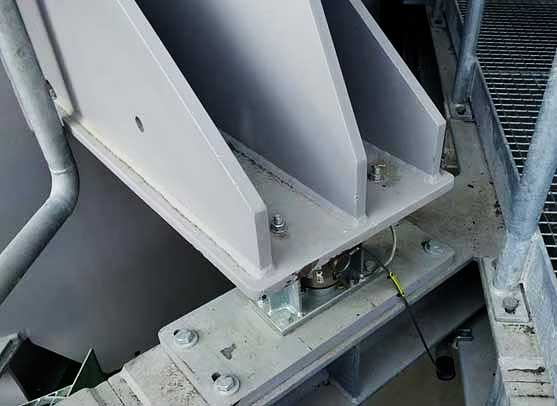
The process of metering of mass flows consists of a standard conveying system (e.g. a belt or screw conveyor) and the determination of the actual flow by means of an integrated weighing system. As an example the typical belt scale is shown in Figure 5, where a belt conveyor transports material with a certain speed v [m/s] to a single weighing roller (marked in green), which determines the actual belt load mbelt [kg].

Figure 5- Example for a metering device (here: belt scale)
From the measured belt load mbelt it is possible to compute the actual mass per length unit (?m/?l [kg/m]), which can be used to determine the actual mass flow [kg/h] as follows:

The standard metering device contains no control circuit at all, since it is only computing the actual mass flow but there is no feedback between this information and the actual speed of the conveyor. DI MATTEO offers such metering devices either as belts or as screw conveyors. An ODM-Screw MASTER screw scale (as shown in Figure 6) has the advantage that the system is completely closed and dust-proof and represents therefore in many cases the preferable solution.

3.3 Open-loop dosing
Open-loop dosing is also often called volumetric dosing, since the main principle behind it is the operation of a certain conveyor with a certain pre-defined speed for each possible mass flow setpoint. Thus, the actual weighing of the real material weight is neglected and instead it is assumed, that for the generation of a constant mass flow [kg/h] it is sufficient to generate a constant volume flow [m?/h]. This assumption is of course only valid, if it can be guaranteed that the bulk density ? [kg/m?] of the conveyed material is constant. Since there is no information of the actual mass flow from a gravimetric measurement unit, it is necessary to define a calibration curve or generalised mathematical relation in order to define the dependency between the actual speed of the conveyor v [m/s] and the mass flow. In most cases volumetric dosing is realised by a screw conveyor, since the usage of a through or tubular screw conveyor guarantees a quite stable volumetric feeding behaviour for different speeds if compared to e.g. a belt.
However, especially for materials with time-varying properties and volatile humidity or density, e.g. for the accurate dosing of alternative fuels, a closed loop dosing method is not applicable.
3.4 Closed-loop dosing ??ODM-GraviSCALE and ODM-WeighTUBE?
The most sophisticated and accurate solution for the proportioning of bulk materials is closed-loop dosing, which is often also referred to as gravimetric dosing, since the actual mass flow [kg/h] is determined by means of an integrated weighing unit.
The most prominent example for such a system is the ODM-GraviSCALE belt weigh feeder, as shown in Figure 7 ??(b). The working principle for the determination of the actual massflow is similar to the one shown in Equation (II), which means that the actual conveying speed v [m/s], as measured e.g. by an incremental encoder, and the actual material load m [kg] are evaluated continuously. As illustrated in Figure 7 ??(a), the closed-loop principle can be interpreted in such a way, that there is a direct feedback from the calculated mass flow to the variable speed drive unit. If there is a deviation between the actual mass flow and the desired setpoint, the actual conveying speed can be therefore continuously adapted. Thus, a high precision of the dosing operation is guaranteed and typically the maximum deviation from the setpoint lies below .

However, the operation of belt weigh feeders in practical applications is characterised by two main aspects: First of all, it needs to be said that belts are by nature non-closed systems. This leads to non-negligible dust emissions and spillage of material, which affects as a logical consequence subsequently the weighing units and their accuracy. DI MATTEO designed the ODM-GraviSCALE in such a way to avoid those effects as much as possible, which is achieved by a smart casing, sealing and scraping concept.
On the other hand and as it was already stated above, all existing dosing methodologies are suffering immensely from possible time-variant material properties of the conveyed bulk. This leads in practical applications to a non-negligible drift in the dosing accuracy over time. Thus, belt weigh feeders need to be recalibrated on a regular basis (e.g. once a month) in order to guarantee a long-term stability of the feeding process. This re-calibration needs to be done manually by service technicians in a time-consuming process, during that the machine has to remain offline.
These two aspects led in the past to the development of a completely novel closed-loop dosing system: the tubular weigh feeder ODM-WeighTUBE?, which is described in detail within the next section.
1. ODM-WeighTUBE? – A Novel Gravimetric Closed-Loop Dosing Unit
The initial base for the development of the ODM-GravitAS control system was the introduction of the innovative ODM-WeighTUBE? platform in 2010. Even if the first installations of the novel dosing system were mainly focused on plants for problematic bulk material, such as residue derived fuels (RDF), shredded tires or polyethylene granulate material, actually roundabout one hundred units of the ODM-WeighTUBE? are successfully integrated around the world and have been also used for more conventional bulk materials, such as raw meal, fly ash, iron core or clinker. This can be interpreted as a great success, especially for a relatively conservative industrial branch, such as the cement industry. Figure 8 provides an overview of the ODM-WeighTUBE? RWS series, in the German production facility of Di Matteo. Up to know, there are three different models of the WeighTUBE? available (RWS 500, RWS 400, RWS 250) depending on the type of bulk material and the intended dosing range.

FIG 8
The general dosing principles is similar to the classical closed-loop scheme, as it was introduced for the ODM-GraviSCALE belt weigh feeder. The same idea is transferred to a screw conveyor, as shown in Figure 9. The WeighTUBE consists of a tubular screw conveyor, which is continuously discharging material from an intermediate buffer. The material is conveyed to the tube section, which is placed on a set of load cells and decoupled from the main frame of the machine by flexible connections. Therefore it is possible to measure the actual material weight within the tube (tube weight) mtube [kg]. Furthermore, the actual conveying speed of the screw vscrew [m/s] is continuously acquired. Similar to the principle shown in Figure 7 ??(a), both physical values are processed in order to calculate the actual mass flow [kg/h]. By taken into consideration the desired mass flow (setpoint) it is possible to determine the actual deviation e [kg/h], which is fed to the continuous dosing controller (CDC), which calculates the necessary adaption of the screw speed in order to minimize the deviation under all circumstances and at any given time. All software elements are implemented within the ODM-GravitAS control system, which was developed by DI MATTEO as a unified platform for all weighing and dosing applications (see [4]).

FIG 9
Furthermore, the ODM-GravitAS control system implements an automatic calibration routine, which provides the possibility to estimate properties of the dosed bulk material and automatically adapt the controller parameters in such a way that the dosing accuracy remains stable over time. The actual process operation is not influenced by the execution of the automatic calibration routine, so that the available machine time can be increased.
During the automatic calibration routine the intermediate buffer hopper of the ODM-WeighTUBE is filled to a certain maximum in a first stage of operation. Within the second phase the buffer hopper is emptied by normal dosing operation (and parallel stopped feed of material to the buffer) up to a predefined minimum buffer weight. From the resulting difference in mass ( ) and the corresponding expired time ( ), the actual control parameters of the continuous dosing controller are automatically adapted. To avoid possible undesired influences, all controller parameters are checked for plausibility based on a probabilistic analysis of former calibration cycles, before they become active in the system. A typical calibration process, with its three phases, is shown in the following figure, where the actual buffer weight mplant [kg] is visualised over time.

The decreasing buffer weight in phase II of the calibration process follows an almost exact linear pattern, which can be interpreted as a manifestation of the highly constant material throughput of the device. A possible deviation between the actual and the desired mass flow during this phase is evaluated for the probabilistic adaption of the controller parameter.
The possibility for a continuous on-the-fly auto-tuning of the controller depending on the given material properties is a very important element for long-time stability and accuracy of the gravimetric dosing. In particular, if the decreasing quality of alternative fuels derived from industrial waste (see [3]) is taken into account. By the combination of the ODM-WeighTUBE? platform with the GravitAS control system a high dosing precision of <?1% related to the nominal throughput can be guaranteed.
1. Summary and Conclusion
This article introduced a framework for the systematic classification of dosing and metering equipment for cement plants and relative industries. The defined taxonomy allows a better understanding of the exact nature of a certain type of equipment and can be used as a guideline during the design and implementation of system setups.
Each class of system was defined in detail by using the complete variety of dosing and weighing equipment as offered by DI MATTEO, from static silo scales and weighing hoppers to the latest developments in closed-loop high-precision dosing (e.g. ODM-GraviSCALE belt weigh feeder).
Another important aspect for the selection of adequate dosing equipment is the typical ??tatus-quo decision-making trap??as described in [5]. It mainly states, that the logical consequence of most buying decisions in larger organisations is just the preservation of the current technological state. This is especially observable in relative conservative industries, such as cement manufacturing, since in most cases those systems are unintentionally preferred, that are already known. This has severe consequences on the competitive situation of many organisations, because it might happen that technological developments are adopted too late or even completely neglected.
However, the usage of AFs within the clinkering process is always associated by a more complex combustion behaviour, due to its volatile bulk material characteristics, such as humidity and bulk density (see [6]). Furthermore each fuel type has its own unique combustion characteristics that cement plant operators must adapt to in order to guarantee a successful kiln operation. In addition the presence of halogens (e.g. chlorine) found in biomass such as what straw and rice husks may be problematic for the kiln operation, while petroleum-based wastes are prone to cause sulphur and NOx emissions.
The more varying the characteristics of the fuel are the more important becomes a stable dosing of these fuels into the burning process. Every additional inaccuracy within the dosing itself would automatically lead to an increased uncertainty while handling those fuels. A simple example proves the importance of a stable feeding: Under the assumption that biomass (e.g. rice husks) shall be used as AF and the associated typical lower heat value varies between 10 and 20 GJ/T. Thus, if the dosing device would work with a maximum deviation of 5%, the actual deviation within the massflow accumulates with the deviation in heat value naturally given in the fuel itself. This would make it quite difficult to control the thermal process.
This article introduced the ODM-WeighTUBE? as the latest development in gravimetric long-term stable high accurate dosing of bulk materials, which has proven its capability to solve many problems and drawbacks of classical proportioning equipment in numerous different application fields. This can be considered to be a possibility to break the wall of the status-quo and guarantee long-term reliability and fast return-on-investment.
References
[1] Aufderheide, D., DI Matteo, L.: Dynamic Dosing. In World Cement 12 (2014), pp. 63-68, Palladian Publications, Farnham – ISSN 0263-6050
[2] Aufderheide, D., DI Matteo, L.: Full Modular Control System for Gravimetric Dosing Applications. In ZKG 11 (2014), pp. 44-49, Bauverlag, G?tersloh – ISSN 0949-0205
[3] Vetter, G (Ed.). (2002): Handbuch Dosieren. Vulkan Verlag GmbH, Essen ??ISBN 380-272-1993
[4] Aufderheide, D., DI Matteo, L.: ODM-GravitAS for DI MATTEO WeighTUBE feeders ??A Full Modular Control System for Gravimetric Dosing Applications. In Global Cement Magazine 2 (2015), Pro Global Media Ltd., Epsom – ISSN 1473-7940
[5] Emiliani, M.L.: Executive Decision-Making Traps and B2B online reverse auctions. In Supply Chain Managament: An International Journal 1 (11) (2006), pp. 6-9
[6] Aufderheide, D., Di Matteo, L.: Remote and preventative maintenance. In International Cement Review 4 (2016), pp. 60 ??66, Tradeship Publications ??ISSN 0959-6038

Prof. Dr. Dominik Aufderheide
About the authors
Prof. Dr. Dominik Aufderheide is a professor for industrial metrology at the South Westphalia University of of Applied Sciences in Soest, Germany. He had served for many years as the Head of the Automation and Research department at the DI MATTEO Group, Germany. He holds a PhD in Electrical Engineering from the University of Bolton in the UK. He has been an active researcher in the field of process technology, automation and sensor technology for more than a decade and participates actively in the development of new technologies within the field of co-processing of alternative fuels within the cement industry.

Dr. Luigi Di Matteo
Dr. Luigi Di Matteo is the CEO of the DI MATTEO Group, Germany. He received his doctorate degree from the Technical University of Braunschweig, Germany. His contributions to the field of conveying and process technology, especially for problematic bulk materials, have become a key element for utilizing alternative fuels within the clinkering process.











Concrete
Cement Margins to Erode as Energy Costs Rise: CRISIL
CRISIL warns of 150–200 bps margin decline this fiscal
Concrete
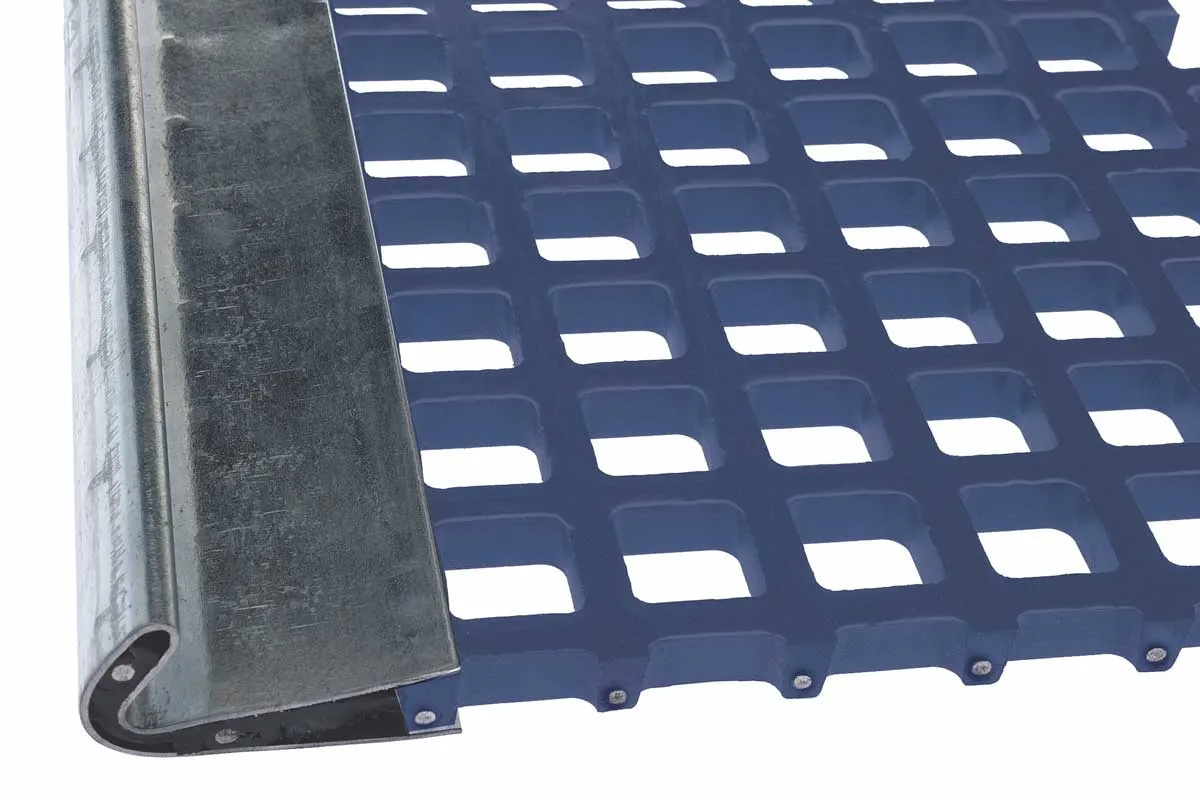
Haver & Boecker Niagara to showcase solutions at Hillhead
Focus on screening tech, diagnostics and quarrying efficiency
Concrete
Siyaram Recycling Secures Rs 21.03 mn Order From Anurag Impex
Domestic Fixed Cost Contract To Be Executed Within Seven Days



Cement Margins to Erode as Energy Costs Rise: CRISIL

Haver & Boecker Niagara to showcase solutions at Hillhead

Siyaram Recycling Secures Rs 21.03 mn Order From Anurag Impex

Nuvoco FY26 Income Rises 10% as Expansion Advances

BMC Cement Concretisation Cuts Pothole Repairs By 70 Per Cent
Cement Margins to Erode as Energy Costs Rise: CRISIL
Haver & Boecker Niagara to showcase solutions at Hillhead
Siyaram Recycling Secures Rs 21.03 mn Order From Anurag Impex
Nuvoco FY26 Income Rises 10% as Expansion Advances