

Concrete
Winning the War on Waste


One of the biggest challenges for manufacturing businesses is reducing wastes. So what is waste? Waste is defined as any activity that does not add value from the customer?? perspective. This wastage is not just inefficiency in terms of cost and return on investments (ROI), it also has a direct impact on the sustainability of a business. The waste of resources, directly or indirectly, impacts every factor in the manufacturing process and its efficiency. The War on Waste (WOW) must, therefore, be waged at multiple fronts to make a noticeable and measurable impact. The key will lie in leveraging technology to plan, implement, improve, and monitor process optimisation. Industry 4.0 will be dictated by the need to eliminate waste and the removal of non-value added (NVA) activities from the manufacturing process.
What is War on Waste?
The fight for reducing wastage is almost as old as the history of manufacturing. Some amount of wastage is inevitable and often written off as part of the production costs. However, the struggle to contain waste kicked in as soon as manufacturers realised that reducing waste was a more efficient way of increasing their profits as opposed to raising prices. Today the aim for reducing waste is not just about the profit margins. Modern producers also see it as a sustainable practice that must be followed as part of responsible manufacturing. The concept of WOW is a multifaceted approach that focuses on eliminating waste, optimise processes, cut costs, boost innovation, and reduce time in the ever-changing global and local marketplace.
The ultimate goal of practicing WOW isn?? simply to eliminate waste ??it is to sustainably deliver value to the customer. To achieve this goal, WOW defines waste as anything that doesn?? add value to the customer. This can be a process, activity, product, or service; anything that requires an investment of time, money, and talent that does not create value for the customer.. Idle time, underutilised talent, excess inventory, and inefficient processes are all considered waste under WOW concept. It provides a systematic method for minimising waste within a manufacturing system while staying within certain margins of control such as productivity and quality.
Where the traditional definition of waste included ??nything consumed in excess of what is needed for our survival and comfort?? this modern approach sees waste as a ??on-value-added activity that is not beneficial to the consumer, either directly or indirectly?? The distinction here must be made between NVA that is beneficial to the consumer (e.g. quality check processes) and activities that are not beneficial to the consumer (e.g. delayed raw material supply). WOW does not focus exclusively on waste reduction, but waste is minimised or eliminated more as an inevitable byproduct of better production flow. There are numerous areas of waste that go overlooked. WOW typically focuses on seven key wastes:
-
Wastes in Transportation
-
Wastes in Inventory
-
Wastes in Motion
-
Wastes in Waiting
-
Wastes in Over-production
-
Wastes in Over-processing
-
Wastes in Defect
Once the waste in these areas is identified, a centralised and well-planned approach must be adopted to address these systematic deficits. While some solutions may need tweaking or re-hauling of processes, others may need additional equipment. The cost of process disruption or new equipment is usually offset by the cost-efficiency brought in by the reduction in wastage.
Wastes in Transportation
The wastage of time and resources during the transportation of products/items and information results in a direct loss. Waste in transportation is most likely to occur while the product is in process and needs to be transported over a great distance for its finishing process or in between different warehouses. In the case of information, the wastage is usually during dissemination.
Solution: Waste in transportation at our plant is addressed through the reduction of transit losses at multiple points. This includes clinker, cement, and all other required raw materials, controlling transit damage of cement bags during road and rail dispatch, bringing down raw material and semi-finished goods carpet loss during storage and handling, reduction in demurrage hours & multiple handling inside the factory.
Wastes in Inventory
Any excessive product, service, or information comes under this category for example raw material, semi-finished goods, and final products. It may result in depreciation of material quality or parts and would require additional storage and transportation costs. There are other associated costs, such as wastage of rented godown and working capital. Wastage in inventory is often indicative of internal deficiencies like unbalanced production, delay in material delivery, inadequate supply planning, and unused machine capability.
Solution: To reduce waste in inventory, start with identifying ways to use slow-moving and non-moving spares and scraps. This is followed by an evaluation of the process of disposal of scraps. Once the gaps are identified, the process of optimisation starts with liquidating idle assets and reducing rented godown area.
Aim to manage the operation with lean inventory in terms of raw material, finished goods and semi-finished goods.
Wastes in Motion
Excessive movement of material and personnel during manufacturing indicates that there is an unproductive process that can be shortened, thereby reducing the time taken and any deterioration of quality. This also results in inefficient manufacturing.
Solution: Typically a time and motion study is conducted to identify and measure the different steps required in a process. Once the wasteful procedures are identified, a standard time and motion can be fixed for every process, leading to more efficient inter-warehouse movement and the reduction in sub-optimal cement movement. It can also help in addressing shortages in transit. Internal raw material handling is a key challenge in the cement industry, reduction in internal handling by optimum movement helps to minimise cost and wastage.
Wastes in Waiting
This includes the time wasted while waiting for a product, equipment, or information. It means an immediate loss of time and may impact the overall quality standards of raw material, semi-finished and finished goods. Wastage in waiting is indicative of unbalanced processes where one process takes longer than others so that a worker has to wait until they can fulfill their task. Wastage occurs only if the worker is not engaged in pre-planned and productive work while waiting.
Solution: Proper planning of raw material and finished goods helps to reduce bunching of rakes leading to less demurrage cost. Effective scheduling of shutdown, reduced waiting time between activities helps to reduce shutdown time and improve production.
Wastes in Over-production & Processes
Inaccurate estimation of demand or starting the production too soon can cause over-production. This is perhaps seen as the worst type of waste. It also leads to excessive inventory, resulting in wastage and deterioration of quality of semi-finished and finished products. Since the end product is in excess, the production process also becomes unnecessary, involving wastage of energy, raw material, resources, manpower, and time. It also indicates multiple process gaps.
Solution: Managing a proper production schedule will avoid over production. Inaccurate forecasting and demand information leads to higher production. So, projecting proper forecasting & planning gives better accuracy of production plans. For example- A warehouse filled with product that does not sell or has not sold.
The process starts with identifying over-processed products or services. The focus must be on minimising any excessive use of energy, fuel, water, and generation of fugitive dust while processing.

Wastes in Defect
Finally, there are mistakes and defects in the production process that must be eliminated or re-hauled completely. All repairs and inspections that do not add value to the final product must be treated as waste.
Solution: Multiple avenues must be explored in identifying defects and damages. There are various indicators of defective processes, such as customer complaints and product non conformity. It?? always advisable to avoid defects to reduce waste and increase efficiency.
WoW implementation process
To be successful, a process must be codified with well-defined Standard Operating Procedures (SOPs). WOW typically follows the following steps:
-
Observation of the various processes/products/services.
-
Identification of the wasteful practices or defective processes/products/services.
-
Analysis of the processes/products/services to determine the ideal outcome.
-
Exploring internal and external solutions. It can include a new technique, equipment, or tech support. Alternatively, it may require a readjustment of procedures.
-
Carrying out cost studies to determine the effectiveness of the alternative processes to identify the most suitable solution.
-
Carrying out a test run of the new process to understand its challenges and effectiveness.
-
Establishing the new process across the plant or the chosen area in a well-planned manner.
Educating employees and staff on the new procedures. This will include a clear enunciation of the SOPs. For the successful implementation of any change in tasks, it is also critical to explain the reason for the change and how it can benefit everyone.
The war on waste must be a continuous, multifaceted, and planned battle. Manufacturers can create highly desirable byproducts by following these principles of WOW, adopting these tools, and reducing these key wastes. WOW results in certain agility in meeting the competitive demands of a swiftly evolving marketplace. The focus on total expense and value rather than on single component costs not only eliminates waste and inefficiency, it also promotes quality and customer-driven solutions.
WOW?? seven key focus areas:
-
Wastes in transportation
-
Wastes in inventory
-
Wastes in motion
-
Wastes in waiting
-
Wastes in over-production
-
Wastes in over-processing
-
Wastes in defect
WOW Implementation process in eight steps:
-
Observation of the various processes/products/services.
-
Identification of the wasteful practices or defective processes/products/services
-
Analysis of the processes/products/services to determine the ideal outcome
-
Exploring internal and external solutions
-
Carrying out cost studies to determine the effectiveness of the alternative processes
-
Carrying out a test run of the new process
-
Establishing the new process across the plant or the chosen area
-
Educating employees and staff on the new procedures









Concrete
UltraTech Cement Expands in Andhra Pradesh with Rs. 26.5 bn
Petnikota plant adds 3.6 MTPA cement dispatch capacity
Concrete
Nuvoco reports 13.5% revenue growth in Q2 FY27
Cement sales rose 9% to 4.7 MMT, while EBITDA increased 11%.

Concrete
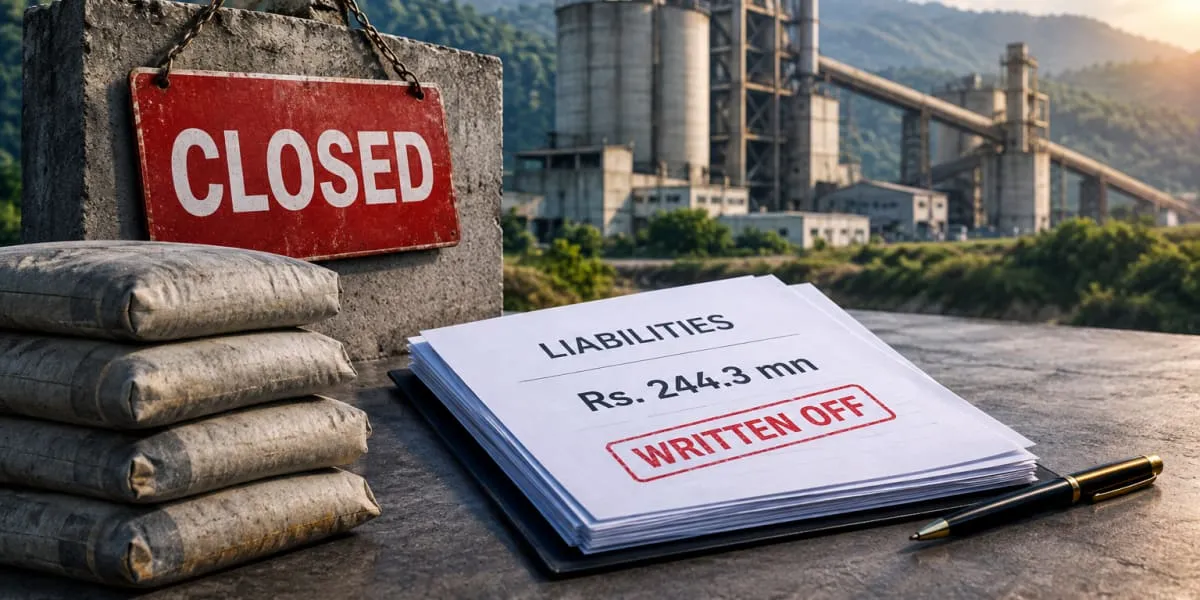
Meghalaya Cabinet Approves MCCL Closure, Writes Off Rs. 244.3 mn
Cabinet approves winding up of state-owned cement company


UltraTech Cement Expands in Andhra Pradesh with Rs. 26.5 bn

Nuvoco reports 13.5% revenue growth in Q2 FY27

Meghalaya Cabinet Approves MCCL Closure, Writes Off Rs. 244.3 mn

Fornnax Wins AIRIA’s Special Export Award for Rubber Machinery in 2025-26

Cement Prices Likely to Rise Rs. 10-15 per Bag from Mid-October
UltraTech Cement Expands in Andhra Pradesh with Rs. 26.5 bn
Nuvoco reports 13.5% revenue growth in Q2 FY27
Meghalaya Cabinet Approves MCCL Closure, Writes Off Rs. 244.3 mn
Fornnax Wins AIRIA’s Special Export Award for Rubber Machinery in 2025-26
Cement Prices Likely to Rise Rs. 10-15 per Bag from Mid-October
-

 Concrete4 weeks ago
JSW Cement Receives Rs. 2.3 bn GST Demand Notice
-

 Concrete4 weeks ago
Andhra Pradesh Clears Rs. 30 bn My Home Cement Plant
-
 Concrete4 weeks ago
Montra Electric, Wonder Cement Deploy 250-Vehicle EV Fleet
-
 Concrete3 weeks ago
Cement Prices Rise Rs. 7 per Bag in September; October Hikes Expected