India is the second largest manufacturer as well as consumer of cement in the world. The country produces nearly 5 crore metric tonne of cement every year, which is expected to grow to almost 6 crore metric tonne per year in the next four to five years. The major consumers are the real estate and the affordable housing sectors. Under the Prime Minister?? vision of Housing for All, which was initiated in June 2015 with the launch of Pradhan Mantri Awas Yojana ??Urban and the Pradhan Mantri Awas Yojana ??Rural, a large number of affordable housing projects have been taken up.
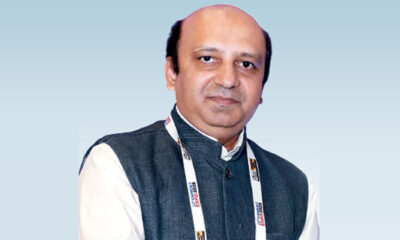
??n my own Ministry, in 2015, when we started having the initial estimation, the total demand was around 1 crore, which has now come to 1.12 crore housing across the country in the urban area, which includes 4,372 cities, towns or ULBs of different sizes,??said Durga Shanker Mishra, Secretary, Ministry of Housing & Urban Affairs, Government of India, in his chief guest address at the recently concluded 11th Cement Expo Plus Online that was presented by FIRST Construction Council and organised by Indian Cement Review. He spelled out big opportunities for the cement sector as he elaborated on the various achievements, initiatives, and ongoing and upcoming projects. Excerpts:
Cement requirement: So far, we have sanctioned more than 1.11 crore houses, and have grounded more than 75 lakh houses, of which, more than 43 lakh houses have been completed. The total cement consumption??hrough a technical study which was constituted by my ministry to an expert body??n just the houses that have been completed or are under construction is nearly 3.3 crore metric tonne. As per the estimates and the total quantity sanctioned, these projects will consume more than seven crore metric tonne of cement.
RERA for real opportunities: Post RERA, there has been various initiatives ??financial and fiscal measures ??through which construction has been promoted. And, the consumption of cement, steel and so many other industries ??about 300 different industries in the direct or indirect manner ??are connected with the real estate. There has been a slight dip in real estate due to Covid-19, but reports now indicate a positive trend in the sector and growth in demand. If you compare the present quarter to the same quarter in the pre-Covid period, the growth is very much there. The centre and state governments have also taken several measures to push this kind of a demand.
Focus on infrastructure: The Government of India has also taken up infrastructure in a big way. In my own ministry, the total metro-rail construction prior to 2014 was around 240 km. Today, nearly over 721 km of metro are running in 18 cities. More important is that more than 1,000 km of metro-rail are under construction, and this construction requires a huge amount of cement, be it in the viaduct, tunnels or the construction of the metro station.
What?? in AMRUT! There has been huge demand for water, sewer, drainage and various projects through AMRUT. Nearly 50,000 crore projects have been completed. We have provided water connection to 102 lakh households, sewer connection to 68 plus lakh households, and cement and steel are the basic ingredients in all these projects.
Smart openings: The total project size that has been envisaged through the Smart Cities Challenge is about Rs 2.05 lakh crore. Of this, nearly Rs 1.73 lakh crore projects are either tendered out, grounded for construction, or have been completed. Projects worth over Rs 39,000 crore have been completed.
Focus on economy: The Honorable Prime Minister has set a target of taking the Indian economy from $3 trillion to the $5 trillion by 2025 and to $10 trillion by 2030. There may be a set back of a year or so due to the COVID impact, but we are going to succumb that. The role of the National Infrastructure Pipeline (NIP) is crucial as it involves $1.5 trillion investment over a period of five years. There are more than Rs 110 lakh crore to be invested in the Indian economy in different sectors, of which, nearly 16 per cent is in my ministry. The implementation of NIP will roll up economic activities, and the cement sector will have an important role to play.
The sustainability quotient: Cement is one of the highest polluting industries. India has a commitment at the global forum, the Paris accord, for cutting down our pollution. We have set our own targets. Here, every industry has to play an important role, you have to modernise and adopt innovative measures that help treat all the carbon dioxide and carbon monoxide that is generated and we pollute the air in the minimum possible. Also, in June 2019, during the prime minister?? address on the World Environment Day, the chairman of the Cement Manufacturing Association made a commitment to use municipal solid waste, that is RDF, and we have been working with them during the special campaign Swachhata hi Sewa. Large amount of plastic waste has been taken by the cement industry.
Global housing technology challenge: We invited the best of the construction technologies from across the globe, and six technologies were selected of the 54 that participated in March 2019. On January 1, 2021, the prime minister laid the foundation of six such projects ??in Chennai, Rajkhot, Indore, Lucknow, Ranchi, and Agartala. The progress on site of these six technologies is such that a two and a half to three years construction can now be achieved in less than a year. Of these six technologies, three are primarily reinforced concrete cement. One is monolithic concrete construction through the tunnel form at Rajkhot. Second is precast concrete component assembles at site at Chennai. Third is the precast concrete component 3D volumetric at Ranchi. In India, we are creating one whole Chicago every year; we are constructing nearly 90 crore sq m of built-up space every year. And such built-up space requires so much cement and steel and so many other industries to work towards making a better India.
Industry focus: Can we make everything Atmanirbhar? With Make in India, we should not only have the technology, but make all our requirements here. Create something that is sustainable in terms of the environment and wider acceptability at all levels. And, ensure efficient utilisation of resources. Several activities are going to come up towards reviving the industry and bringing the Pride of India before the global community ??decisively in a time bound manner with the best quality. That is my message to the industry.
– SHRIYAL SETHUMADHAVAN
??e would like every engineering student, teacher, and practitioner to become a technograhi.??/strong>
– Durga Shanker Mishra
Opportunities and announcements made by Durga Shanker Mishra, Secretary, Ministry of Housing & Urban Affairs, Government of India, at the 11th Cement Expo Plus Online certainly gave the cement industry a lot of reasons to cheer. He further elaborated on certain statements in a virtual conversation with Pratap Padode, Founder & President, FIRST Construction Council.
On the PMAY awards 2021, the 100-day challenge that was launched and you wanted the states to fast-track completion. How was the participation?
The participation was good. The 100-day challenge is basically to ensure that the sanctioned housing gets grounded, and those already grounded are completed quickly. We have already grounded around 75 lakh, but the nodal sanction is 111 lakh, leaving a gap of almost 34 lakh to be actioned. Of the 75 lakh, about 44 lakh is already completed, and the balance 31 lakh will get completed. This is going to create healthy competition among cities and states. Also, this activity will emerge the need for all kind of building materials for faster completion.
You had also mentioned the six technologies that are being implemented across six projects in the country. Post implementation, will we replicate this model across locations?
We have launched a couple of things. One is ??echnograhi?? We would like every engineering student, teacher, and practitioner to become a technograhi and get enlisted on our website. We will allow them to visit the place, facilitate them so that all the activities that are broadcasted and webcasted, they can participate in it and learn from there. We are also promoting research activities so that they can learn and this becomes a part of the curriculum. We are promoting the state governments to take it further. So be it for affordable housing, the same technology can be used for commercial, residential and other purposes. Hence, states can take up such projects.
The beauty of these technologies is that as the volume increases, the cost will go down. We have also directed CPWD and NBCC to learn from there and adopt these in the government construction. These technologies have a bright future and they will be promoted across the country. In the year 2022, we plan to have the Construction Technology India, that is a conference come exhibition, which we held in 2019. We are going to award those for the performances on these six technologies, and showcase ASHA ??affordable, sustainable, housing, accelerators at five places ??four IITs and one central building research institute. We will showcase our own technologies and get those from different parts of the world who could not showcase in 2019. This will lead to an exchange of good ideas in terms of building materials, process, or the technologies.