BY Renjini Liza Varghese
Sustainability or green initiatives have set as a wider canvas for companies to define a set of standards to be more environmentally conscious. With climate change being a reality, and with the awareness of actions to arrest climate change increasing, all corporates feel the pressing need to initiate, activate, measure and audit the steps that are taken under sustainability.
Sustainability for each segment of business comes with varied set of compliances. Cement sector historically carries the burden of being the most polluting manufacturing. Starting from mining to packaging, there are various stages where the industry is burdened with the tag of being a polluting industry. Much has been changed in the recent decade with many of the companies, globally adapting measures to bring in improvement that are otherwise neglected.
Starting from bringing down excessive use of natural resources along with cutting down on impact on environment by controlling pollutions, the entities have looked at various measures broadly classifying them under environment, (emissions and waste management), water conservation, energy efficiency and switching to green energy from fossil fuels. This classification allows companies to draw a structure that culminates to tangible outcomes, which indirectly reflects on the capital expenses.
Various programmes
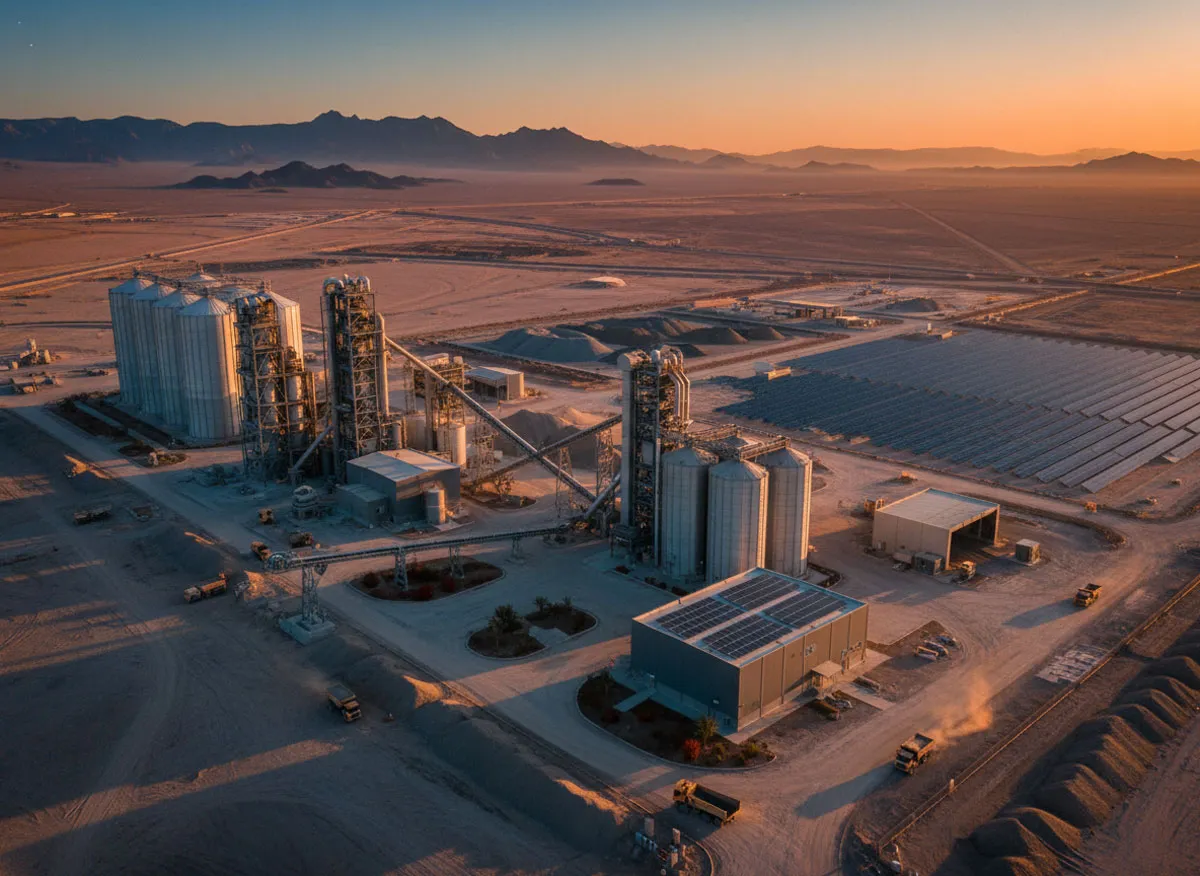
Many Indian cement companies over the last two decades have taken steps that are reaping results now. Sustainability programmes are not short term measures but long terms programmes. It is an ongoing process. Companies that have initiated the processes under the broader classification have further broke down it to actionable programmes like water neutrality, circular material, using efficient mining equipments, heat to recovery, setting up of renewable energy sources, and a clear road map for carbon negative targets.
It is a known fact that the cement industry is high on natural resources consumption -whether it is the raw material, water, energy. It is the third largest energy consumer. The sustainability programmes undertaken by the companies focused parallelly on all three. The first results were seen for the initiatives associated with water conservation and water positive programmes. The process includes water storage, waste water conversion and portable water supply. As a first step, some of the companies have converted their mining kits to store water. Some others have implemented no liquid discharge policy in the plant. This means that the water is recycled and used.
Companies like Ambuja Cement, Dalmia Cement and UltraTech Cement are already water positive. While the score of the companies varies from water positive 4 to 8, all of them have undertaken a mission to become water positive 20 to 30 in next 10 years.
At the same time, multiple energy efficiency programmes have been devised by cement manufacturers. Majority of them say that they are committed to the environment and that they focus on sustainable practices in the entire value chain of cement manufacturing. As per the studies, cement is the second largest carbon emitter and accounts for 6% of the global carbon emissions.
The climate change mitigation plans initiated globally have forced the cement companies to action measures that would bring down the carbon footprint. Clean, green and sustainable are three key areas that the cement companies are turning their focus to. The manufacturers have clearly carved a roadmap to become carbon neutral. Recalling here, globally, the set target for manufacturing companies to be carbon neutral is 2050. In CoP21, which is commonly referred as Paris Agreement or the Paris Climate Accord, it was agreed that all industry will implement measures to arrest the 2?C temperature rise.
Many of the companies have advanced their targets for 2040. Ashwani Pahuja, Chief Sustainability Officer and Executive Director, Dalmia Cement (Bharat) Limited, reveals that, ??n the last five years, the company has trimmed 17.6 million tonnes of carbon dioxide emissions from its operations.??/p>
He further elaborated, ??ur target is to become carbon negative by 2040. The first step is RE 100 by 2030 and fossil fuel replacement by 2035. Since the last decade, there are major initiatives on sustainability starting with material circularity, increased utilisation of industrial waste including fly-ash and and slag.??/p>
As per CDP (Carbon Disclosure Programme), Indian cement companies perform the best on climate-related metrics. If you further look, according to the recently published Science-Based Targets Initiative (SBTI), it has validated UltraTech Cement?? CO2 emissions reduction targets. The validation confirms that the company?? targets are in line with a 2?C temperature rise scenario under the Paris Agreement. The targets consist of a 27% reduction in Scope 1 CO2 emissions between 2017 and 2032 and a 69% reduction in Scope 2 CO2 emissions between 2017 and 2032. This corresponds to a 462kg/t net CO2 reduction for the producer?? cement.
Not just the manufacturers of cement but the equipment manufacturers are also jumping on the bandwagon. CASE India, a construction equipment company with a sizeable exposure in the mining segment
has, in the recent past, adopted various sustainable and environment friendly technologies that helps to address CO2 emissions to a great level.
Sandeep Mathur, Brand Leader, CASE India, believes that the implementation of such sustainable technologies and equipment will take some time in India. However, the company is doing its bit and is investing in any change that protects the environment.
He said, ??he CE sector is moving towards sustainability and becoming more eco-conscious. The government is also coming up with norms like BSVI and is trying to deploy more environment-friendly vehicles and equipment on the road. At CASE, we value the environment and believe that each change contributes to the betterment of the world we inhabit. We have also been recognized as a Global Sustainability Leader for several years in a row.??
Mathur further goes on to add that the company has introduced such sustainable, environment-friendly technologies globally. ??NH Industrial Project TETRA concept wheel loader is one such equipment. It is a sustainable, new Natural Gas (NG) Methane-Powered Wheel Loader. The concept ensures 15 percent less CO2 and 99 percent less
particulate matter than its diesel-based counterpart. It is cheap and helps in reducing the carbon footprint of the company. CASE also launched the industry?? first Fully Electric Backhoe this year ??the 580EV, which has zero emissions and helps customers save as much as 90 percent in annual vehicle, fuel and maintenance costs,??he revealed.
All manufacturing companies have shifted their focus towards reducing their carbon footprints. Jagmohan Sood, Director and CEO, Jindal Stainless (Hissar) another stakeholder of cement value chain, highlighted the need to bring in efficiency in the whole process of manufacturing. And according to him, sustainability is not a short term result-giving programme.
He said, ??he effect of sustainability programmes is visible in the medium to long term. The initiatives that are taken now will convert to a tangible result may in a couple of years. Our company we work with a three-year schedule. Some companies follow a 5-year schedule and it is work in progress.??
Technology is the biggest enabler when it comes to climate change mitigation. The most visible part is in the energy efficiency initiatives. Replacing existing lighting with more energy efficient ones, replacing
motors and other machineries with more energy efficient ones, more automation, moving from fossil fuel to green energy / biofuel/ heat to energy mode etc is part of the initiative.
Sood added, ??n 2017-18, we started the campaign towards energy conservation, renewable energy purchase, sustainable utilisation of natural resources. The result in the last year was a saving of 264 million units of electricity, and 11.5 Giga kilocalories in thermal energy. If compared to the last consumption period, it is 6% savings for JSL. That translates to a saving of Rs 25.5 crore. This translated to 16000 tonnes of carbon emission reduction.??/p>
This was made possible, Sood said, mainly because of the technological advancement seen in the segment.
While all agree technology is required, it also calls for further capital investments. Indian carbon markets may take little more time to develop and mature. Sustainability, as a programme, is still at a nascent stage in the country.
Pahuja, further added, ??s a standalone, it is very difficult to switch over to carbon neutral technologies unless there are very attractive carbon markets. In the near future, these carbon markets are likely to become active. There are Green Climate Funds to the tune of $100 million every year to the developing nations for carbon-neutral technologies.??/p>
Cement companies are of the opinion that they are aware of the environmental issues and are taking all possible measures to address it. And sustainability is the first step towards it. They feel that this ongoing process would require further attention and annual allocation from the company at least for next 10 years to achieve the climate mitigation targets.