Connect with us

Economy & Market

Yet to reach all corners

Published

on

Shares

The organised segment continues to focus on innovative special concrete, quality and timely delivery, while the unorganised players tend to reduce the operating costs by lower compliances tax evasions and employing unskilled labour at cheaper costs, says Atul Desai.

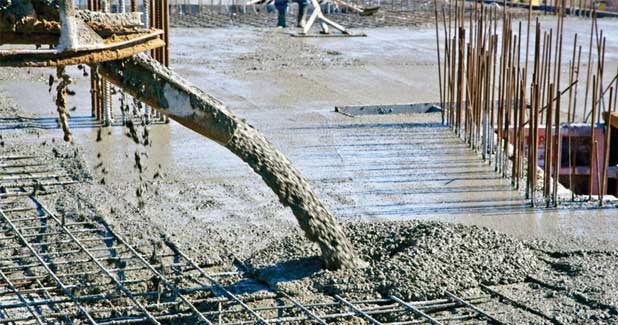
The construction industry is having a significant role in the India’s development and it contributes about 8-10 per cent to GDP on an average. Developing nations like India need to have faster construction with high quality, durability and a pollution-free environment, which can be achieved only with ready-mix concrete (RMC).

Market size
Overall economic slowdown impacted commercial and industrial construction combined with sluggish residential real estate activity and resulted in moderate rise in RMC market at a CAGR of 4-5 per cent to reach an estimated Rs 215 billion (58 million cubic meters) in 2015-16 from Rs 184 billion (50 million cubic meters) in 2012-13. This growth is anticipated to increase to 6-8 per cent CAGR touching close to 300 billion (81 million cubic meters) by 2020-21. The growth in RMC demand may be primarily attributed to government-infused spending in infrastructure and expected demand from affordable housing.

Growth trends & future projections
Real estate currently accounts for 60-65 per cent of RMC consumption with residential real estate occupying the majority share (38-42 per cent). Further while infrastructure constitutes about 32-35 per cent of RMC demand, industrial and commercial construction constituted about 26-28 per cent of the total RMC consumption in 2016-17.

RMC penetration, measured as the proportion of cement consumed in commercial RMC to total cement consumption in India, is expected to increase to 10 per cent by 2020-21 from the current 7 per cent on the back of healthy demand growth, increased usage in infrastructure projects and penetration of RMC plants in tier-II/ tier-III cities, consistent quality requirements, stringent project timeline, and higher focus on safety and quality norms amongst others. RMC penetration in India has gradually risen with increasing acceptability and usage of higher grade of concrete; however, the current levels are very low compared to other developed economies such as USA, Europe and China where it is above 65-70 per cent.

Southwest, India is anticipated to continue to grow faster than rest of India and is expected to contribute close to 70 per cent of total growth of RMC. North and East may have stable growth and their contribution to RMC growth is only 10 per cent, which may remain more or less range bound till 2020-21.

The biggest demand drivers for the country’s RMC and batching plant segments will be the Indian Government’s large-scale infrastructure and housing for all scheme. These infrastructure projects include the Bharatmala Pariyojana, Sagarmala, the Smart Cities Mission and the Pradhan Mantri Awas Yojana, and Affordable housing. The Government initiatives on the dedicated freight corridors have also provided opportunities for setting up new RMC plants across the country. With rapid urbanisation, the Indian construction industry has witnessed a major move towards complex architectural structures in commercial buildings, elevated driveways, coastal highways, bullet trains, etc., which may further fuel the demand for high performance concrete.

National capacities & regional/metro capacities
The cumulative current RMC capacity is estimated at about 60,000 cu.m/hr with a relatively comparative spread of commercial and dedicated batching plants across India. RMC demand also has increased at a CAGR of 4-5 per cent. However, owing to inadequate awareness and soft government norms, conversion from site mix is at a very negligible pace especially in small towns and rural areas.

Mumbai and Delhi alone constitute close to 45-50 per cent of total consumption in West and North respectively whereas, Bengaluru and Hyderabad put together constitute about 45 per cent of total consumption in South.

Going further, tier-II and tier-III cities may catch up soon, and the concentration of capacities is expected to gradually rise in such cities too.

Hotspots of growth
Key demand centres of western and southern regions are the most favourable markets for RMC business. Mumbai, Nagpur from West and Chennai, Hyderabad and Amravati from southern region are among the top ranked cities for RMC business attractiveness.

Mumbai leads the city-wise attractiveness list. Construction of multiple metro rail corridors, coastal road, trans harbour sea link and Mumbai-Nagpur Expressway to name a few may spurt RMC demand.

Challenges for growth
Site mix is still prominent due to lack of awareness and lack of focus on quality control and quality assurance – grey areas neglected by the Government authorities.
Capacity utilisation continues to remain low across regions due to restricted traffic hours, limited hours of functioning, stringent regulatory norms and diverse nature of business.
Low capex encourages growth of unorganised players, a segment which is yet to professionalise this business in the right direction.
Availability of consistent quality raw materials.
Increasing credit exposure to the real estate segment, which is under stress due to drop in sales and liquidity crunch is a major concern.

Issues at hand
Deterioration in quality due to site mix.
Limited supply of consistent quality river sand and availability of aggregate nearer to major city.
Freshly-made RMC needs to be placed or used in a fixed time frame, but transportation is a constraint due to huge traffic congestion and entry restrictions in city.
The perishable nature of RMC necessitates the need for the RMC batching plant to be located near construction sites. However, the setting up of commercial plants in metro cities is a challenge due to space constraints as there is no designated zone for RMC units,
Output is restrained due to reduction of working hours – no night work is entertained in residential zones.
Unrealistic short duration and multi-layer Government approvals lead to uncertainty of the plant locations.
Increase in credit exposure to real estate segment has led to huge working capital requirements.
Limited existence of product differentiation and less technological know-how due to spurt in local players is also a significant issue.
Unethical practices by local players.

Outward transport: 12-15 per cent (Unpredictable oil prices, which are directly linked to global crude oil prices are as well increase the cost.)
Power: 2-3 per cent
Wages: 7-8 per cent
Other overheads: 4-6 per cent
Cost due to high working capital because of huge credit exposure to real estate developer segment
Operating margins: 3-6 per cent
The organised segment continues to focus on innovative special concrete, quality and timely delivery. The segment is thus marred with high operating cost owing to high overheads and expenses, which are incurred on training, safety, technology, continuous R&D, QA/QC and testing to bring about transparency in the process. Huge credit exposure also carries significant cost.
The unorganised players, on other hand, tend to reduce the operating costs by lower compliances tax evasions and employing unskilled labour at cheaper costs, overlooking safety/quality norms with minimal upkeep and maintenance of the batching plant.

Crucial differentiators
RMC is operated in the local market, but provides global solutions, which are a real differentiator.
Quality and customised concrete suitable for each application, combined with speed at optimum cost differentiates RMC with site mix.
RMC being a service oriented industry; timely reach to the customer is significant.
Quality authorised labs affiliated to recognised professional bodies to ensure quality assurance and control.

Value offerings in form of special products – providing complete concrete solutions as below mentioned give an edge:

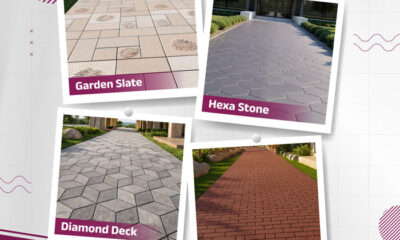
A.PRISM RMC Dyecrete: Aesthetic, though durable, solution to floor dTcor is the best replacement of erstwhile paver blocks. It is safe and minimises accidents. Above all it’s available in variety of designs and patterns to colour ones imagination.
B.PRISM RMC Perviouscrete: Instant solution to water logging at walkways/landscape/parking zones, additionally it may help in water harvesting and storing too.
C.PRISM RMC Elitecrete: Solution for thermal insulation. It is a lightweight concrete, which beats the heat on terrace floor, and is the best alternative to conventional brick-bat coba.
D.PRISM RMC Portacrete: Solution in portable ready-to-pour bags (30 kg) available for small concrete pours like stand- alone columns, starters, etc. and a quality replacement to site mix for all grades.
E.PRISM RMC Easycrete: High-performance concrete solution to congestion of steel reinforcement in the structural components like columns/beam-column junction/slabs, where concrete placement becomes easier due to its flowable and self-compacting properties.
F.PRISM RMC FRCcrete: Solution to rapid wear and tear, cracking. The addition of special fibres (steel/polypropylene) increases the structural integrity and improves durability. Best suited for concrete slabs/industrial floors, etc.
G.PRISM RMC Repaircrete: Strengthening solution for extra life. This ready to pour micro-concrete is best suited used for jacketing of structural members, and all types of repair work where quality, workmanship and space is a constraint.
H.PRISM RMC UTWT: Durable concrete solution towards early opening of road to common man. Reduced thickness concrete road, faster in construction with reduced maintenance cost and improved service life.

Additionally we have,
1.Megacrete:
Solution to high strength concrete for tall towers,
2.Environcrete: Solution towards ?go green? concept, utilising fly ash and GGBS, which are byproducts of thermal power plants and steel units respectively.
3.Thermocrete: Solution towards reducing heat of hydration in mass concrete
4.Coastcrete: Solution to aggressive attacks from sulphates, chlorides in water and soil.

Cement downstreams v/s standalone players
RMC is a local business, provides global solutions.
Its more construction service oriented business and hence may be seen as standalone business.
RMC provides opportunity to cement companies to understand the customer closely, thereby avoiding commercialisation of cement.
Various options of cement are available.
RMC may also offer aggregate crushers opportunity to ride on value chain, locking the customers.
Pragmatically, since local flavour is more prominent and a lot of options w.r.t cement are available, standalone plants preferably supported by aggregate supply back up may be desired.

Organised v/s unorganised players
Majority forward integrated players with nation-wide business reach constitute organised segment. They have large operational setups with huge capacities in anticipation of meeting the long-term demand. The product offerings are application based superior ones and they maintain highest safety standards. Their labs are usually certified by professional bodies like BIS/QCI/NABL and are well equipped. Continuous R&D is part and parcel of business, resulting in to new product developments and implementation of out-of-box innovations. Driven by professionalism, lots of focus is on training and development of the team.

Whereas, unorganised players are the local standalone one, who caters to regional demand with smaller capacities thriving on moderate profitability. Prices are generally lower and product offerings are standard replicated ones. Desired standards and quality are rarely implemented. Safety is a big concern. Grades widely used are replicated and on-the-job training is usually carried out.

Impact of demonetisation
Demonetisation had majorly hit residential real estate construction, which is characterised by large cash transactions. Furthermore, demonetisation also severely impacted unorganised players thriving on tax evasion and cash payments.

Impact of GST
Cement will attract 28% GST resulting in increased costs for the infrastructure sector. GST in India was a dream to reform various area of economy and taxation system. Implementation of GST has benefitted organised players as the same has brought about transparency in dealings.

Recommendations to the Government
Construction industry in India is in developing stage and the role of Government in bringing about changes is very significant as many areas need complete revamping. A few suggestions relevant suggestions are below mentioned:

Stringent and well-defined QA/QC and safety norms need to be laid down by the Government, which discourages and completely abolishes usage of site mix.
RMC being environment-friendly and pollution-free industry, the Government must enforce usage of RMC at all levels and ban site mix.
RMC being a green industry needs to have designated zones for setting up plants in major cities with long term approval of 10 years to reduce establishment cost.
Long terms single-window approvals from the Government, avoiding multiple agencies for ease-in-business and sustainability is expected.
Value concrete and environment-friendly solutions like UTWT for roads, Dyecrete for pavements and perviouscrete to avoid water logging may be recommended or even made mandatory as the case be.
To avoid accidents and have a safe ride, paver blocks need to be banned and better alternative solutions like Dyecrete?stamped concrete need to be specified.
Solution to traffic restrictions need to be worked out and permission to transport through transit mixers 24×7 should be allowed.
Quality authorisation from BIS/QCI should be mandatory not only for prequalification and tenders, but also for small sites.
Sops may be considered for encouraging RMC industry towards its valuable contribution by becoming environment friendly in "go green" concept utilising fly ash and GGBS.

About the author
Atul Desai is Executive Director & CEO of Prism Johnson (RMC India Division) a Rajan Raheja Group. Desai is currently helming RMC (India) Division employs over 3500 employees and operates a total of 101 ready-mixed concrete and aggregate crushing plants in 44 towns and cities across the nation. He possesses a strong business and leadership record as CXO and has a deep understanding of the consumer and business landscape in the Indian region. Desai is also a Secretary of Ready Mixed Concrete Manufacturers’ Association (RMCMA).


Continue Reading
Click to comment

Leave a Reply

Your email address will not be published. Required fields are marked *

Economy & Market

Smart Pumping for Rock Blasting

Published

on

By

Shares

SEEPEX introduces BN pumps with Smart Joint Access (SJA) to improve efficiency, reliability, and inspection speed in demanding rock blasting operations.
Designed for abrasive and chemical media, the solution supports precise dosing, reduced downtime, and enhanced operational safety.

SEEPEX has introduced BN pumps with Smart Joint Access (SJA), engineered for the reliable and precise transfer of abrasive, corrosive, and chemical media in mining and construction. Designed for rock blasting, the pump features a large inspection opening for quick joint checks, a compact footprint for mobile or skid-mounted installations, and flexible drive and material options for consistent performance and uptime.

“Operators can inspect joints quickly and rely on precise pumping of shear-sensitive and abrasive emulsions,” said Magalie Levray, Global Business Development Manager Mining at SEEPEX. “This is particularly critical in rock blasting, where every borehole counts for productivity.” Industry Context

Rock blasting is essential for extracting hard rock and shaping safe excavation profiles in mining and construction. Accurate and consistent loading of explosive emulsions ensures controlled fragmentation, protects personnel, and maximizes productivity. Even minor deviations in pumping can cause delays or reduce product quality. BN pumps with SJA support routine maintenance and pre-operation checks by allowing fast verification of joint integrity, enabling more efficient operations.

Always Inspection Ready

Smart Joint Access is designed for inspection-friendly operations. The large inspection opening in the suction housing provides direct access to both joints, enabling rapid pre-operation checks while maintaining high operational reliability. Technicians can assess joint condition quickly, supporting continuous, reliable operation.

Key Features

  • Compact Footprint: Fits truck-mounted mobile units, skid-mounted systems, and factory installations.
  • Flexible Drive Options: Compact hydraulic drive or electric drive configurations.
  • Hydraulic Efficiency: Low-displacement design reduces oil requirements and supports low total cost of ownership.
  • Equal Wall Stator Design: Ensures high-pressure performance in a compact footprint.
  • Material Flexibility: Stainless steel or steel housings, chrome-plated rotors, and stators in NBR, EPDM, or FKM.

Operators benefit from shorter inspection cycles, reliable dosing, seamless integration, and fast delivery through framework agreements, helping to maintain uptime in critical rock blasting processes.

Applications – Optimized for Rock Blasting

BN pumps with SJA are designed for mining, tunneling, quarrying, civil works, dam construction, and other sectors requiring precise handling of abrasive or chemical media. They provide robust performance while enabling fast, reliable inspection and maintenance.With SJA, operators can quickly access both joints without disassembly, ensuring emulsions are transferred accurately and consistently. This reduces downtime, preserves product integrity, and supports uniform dosing across multiple bore holes.

With the Smart Joint Access inspection opening, operators can quickly access and assess the condition of both joints without disassembly, enabling immediate verification of pump readiness prior to blast hole loading. This allows operators to confirm that emulsions are transferred accurately and consistently, protecting personnel, minimizing product degradation, and maintaining uniform dosing across multiple bore holes.

The combination of equal wall stator design, compact integration, flexible drives, and progressive cavity pump technology ensures continuous, reliable operation even in space-limited, high-pressure environments.

From Inspection to Operation

A leading explosives provider implemented BN pumps with SJA in open pit and underground operations. By replacing legacy pumps, inspection cycles were significantly shortened, allowing crews to complete pre-operation checks and return mobile units to productive work faster. Direct joint access through SJA enabled immediate verification, consistent emulsion dosing, and reduced downtime caused by joint-related deviations.

“The inspection opening gives immediate confidence that each joint is secure before proceeding to bore holes,” said a site technician. “It allows us to act quickly, keeping blasting schedules on track.”

Framework agreements ensured rapid pump supply and minimal downtime, supporting multi-site operations across continents

Continue Reading

Concrete

Digital process control is transforming grinding

Published

on

By

Shares

Satish Maheshwari, Chief Manufacturing Officer, Shree Cement, delves into how digital intelligence is transforming cement grinding into a predictive, stable, and energy-efficient operation.

Grinding sits at the heart of cement manufacturing, accounting for the largest share of electrical energy consumption. In this interview, Satish Maheshwari, Chief Manufacturing Officer, Shree Cement, explains how advanced grinding technologies, data-driven optimisation and process intelligence are transforming mill performance, reducing power consumption and supporting the industry’s decarbonisation goals.

How has the grinding process evolved in Indian cement plants to meet rising efficiency and sustainability expectations?
Over the past decade, Indian cement plants have seen a clear evolution in grinding technology, moving from conventional open-circuit ball mills to high-efficiency closed-circuit systems, Roller Press–Ball Mill combinations and Vertical Roller Mills (VRMs). This shift has been supported by advances in separator design, improved wear-resistant materials, and the growing use of digital process automation. As a result, grinding units today operate as highly controlled manufacturing systems where real-time data, process intelligence and efficient separation work together to deliver stable and predictable performance.
From a sustainability perspective, these developments directly reduce specific power consumption, improve equipment reliability and lower the carbon footprint per tonne of cement produced.

How critical is grinding optimisation in reducing specific power consumption across ball mills and VRMs?
Grinding is the largest consumer of electrical energy in a cement plant, which makes optimisation one of the most effective levers for improving energy efficiency. In ball mill systems, optimisation through correct media selection, charge design, diaphragm configuration, ventilation management and separator tuning can typically deliver power savings of 5 per cent to 8 per cent. In VRMs, fine-tuning airflow balance, grinding pressure, nozzle ring settings, and circulating load can unlock energy reductions in the range of 8 per cent to 12 per cent. Across both systems, sustained operation under stable conditions is critical. Consistency in mill loading and operating parameters improves quality control, reduces wear, and enables long-term energy efficiency, making stability a key operational KPI.

What challenges arise in maintaining consistent cement quality when using alternative raw materials and blended compositions?
The increased use of alternative raw materials and supplementary cementitious materials (SCM) introduces variability in chemistry, moisture, hardness, and loss on ignition. This variability makes it more challenging to maintain consistent fineness, particle size distribution, throughput and downstream performance parameters such as setting time, strength development and workability.
As clinker substitution levels rise, grinding precision becomes increasingly important. Even small improvements in consistency enable higher SCM utilisation without compromising cement performance.
Addressing these challenges requires stronger feed homogenisation, real-time quality monitoring and dynamic adjustment of grinding parameters so that output quality remains stable despite changing input characteristics.

How is digital process control changing the way grinding performance is optimised?
Digital process control is transforming grinding from an operator-dependent activity into a predictive, model-driven operation. Technologies such as online particle size and residue analysers, AI-based optimisation platforms, digital twins for VRMs and Roller Press systems, and advanced process control solutions are redefining how performance is managed.
At the same time, workforce roles are evolving. Operators are increasingly focused on interpreting data trends through digital dashboards and responding proactively rather than relying on manual interventions. Together, these tools improve mill stability, enable faster response to disturbances, maintain consistent fineness, and reduce specific energy consumption while minimising manual effort.

How do you see grinding technologies supporting the industry’s low-clinker and decarbonisation goals?
Modern grinding technologies are central to the industry’s decarbonisation efforts. They enable higher incorporation of SCMs such as fly ash, slag, and limestone, improve particle fineness and reactivity, and reduce overall power consumption. Efficient grinding makes it possible to maintain consistent cement quality at lower clinker factors. Every improvement in energy intensity and particle engineering directly contributes to lower CO2 emissions.
As India moves toward low-carbon construction, precision grinding will remain a foundational capability for delivering sustainable, high-performance cement aligned with national and global climate objectives.

How much potential does grinding optimisation hold for immediate energy
and cost savings?
The potential for near-term savings is substantial. Without major capital investment, most plants can achieve 5 per cent to 15 per cent power reduction through measures such as improving separator efficiency, optimising ventilation, refining media grading, and fine-tuning operating parameters.
With continued capacity expansion across India, advanced optimisation tools will help ensure that productivity gains are not matched by proportional increases in energy demand. Given current power costs, this translates into direct and measurable financial benefits, making grinding optimisation one of the fastest-payback operational initiatives available to cement manufacturers today.

Continue Reading

Concrete

Refractory demands in our kiln have changed

Published

on

By

Shares

Radha Singh, Senior Manager (P&Q), Shree Digvijay Cement, points out why performance, predictability and life-cycle value now matter more than routine replacement in cement kilns.

As Indian cement plants push for higher throughput, increased alternative fuel usage and tighter shutdown cycles, refractory performance in kilns and pyro-processing systems is under growing pressure. In this interview, Radha Singh, Senior Manager (P&Q), Shree Digvijay Cement, shares how refractory demands have evolved on the ground and how smarter digital monitoring is improving kiln stability, uptime and clinker quality.

How have refractory demands changed in your kiln and pyro-processing line over the last five years?
Over the last five years, refractory demands in our kiln and pyro line have changed. Earlier, the focus was mostly on standard grades and routine shutdown-based replacement. But now, because of higher production loads, more alternative fuels and raw materials (AFR) usage and greater temperature variation, the expectation from refractory has increased.
In our own case, the current kiln refractory has already completed around 1.5 years, which itself shows how much more we now rely on materials that can handle thermal shock, alkali attack and coating fluctuations. We have moved towards more stable, high-performance linings so that we don’t have to enter the kiln frequently for repairs.
Overall, the shift has been from just ‘installation and run’ to selecting refractories that give longer life, better coating behaviour and more predictable performance under tougher operating conditions.

What are the biggest refractory challenges in the preheater, calciner and cooler zones?
• Preheater: Coating instability, chloride/sulphur cycles and brick erosion.
• Calciner: AFR firing, thermal shock and alkali infiltration.
• Cooler: Severe abrasion, red-river formation and mechanical stress on linings.
Overall, the biggest challenge is maintaining lining stability under highly variable operating conditions.

How do you evaluate and select refractory partners for long-term performance?
In real plant conditions, we don’t select a refractory partner just by looking at price. First, we see their past performance in similar kilns and whether their material has actually survived our operating conditions. We also check how strong their technical support is during shutdowns, because installation quality matters as much as the material itself.
Another key point is how quickly they respond during breakdowns or hot spots. A good partner should be available on short notice. We also look at their failure analysis capability, whether they can explain why a lining failed and suggest improvements.
On top of this, we review the life they delivered in the last few campaigns, their supply reliability and their willingness to offer plant-specific custom solutions instead of generic grades. Only a partner who supports us throughout the life cycle, which includes selection, installation, monitoring and post-failure analysis, fits our long-term requirement.

Can you share a recent example where better refractory selection improved uptime or clinker quality?
Recently, we upgraded to a high-abrasion basic brick at the kiln outlet. Earlier we had frequent chipping and coating loss. With the new lining, thermal stability improved and the coating became much more stable. As a result, our shutdown interval increased and clinker quality remained more consistent. It had a direct impact on our uptime.

How is increased AFR use affecting refractory behaviour?
Increased AFR use is definitely putting more stress on the refractory. The biggest issue we see daily is the rise in chlorine, alkalis and volatiles, which directly attack the lining, especially in the calciner and kiln inlet. AFR firing is also not as stable as conventional fuel, so we face frequent temperature fluctuations, which cause more thermal shock and small cracks in the lining.
Another real problem is coating instability. Some days the coating builds too fast, other days it suddenly drops, and both conditions impact refractory life. We also notice more dust circulation and buildup inside the calciner whenever the AFR mix changes, which again increases erosion.
Because of these practical issues, we have started relying more on alkali-resistant, low-porosity and better thermal shock–resistant materials to handle the additional stress coming from AFR.

What role does digital monitoring or thermal profiling play in your refractory strategy?
Digital tools like kiln shell scanners, IR imaging and thermal profiling help us detect weakening areas much earlier. This reduces unplanned shutdowns, helps identify hotspots accurately and allows us to replace only the critical sections. Overall, our maintenance has shifted from reactive to predictive, improving lining life significantly.

How do you balance cost, durability and installation speed during refractory shutdowns?
We focus on three points:
• Material quality that suits our thermal profile and chemistry.
• Installation speed, in fast turnarounds, we prefer monolithic.
• Life-cycle cost—the cheapest material is not the most economical. We look at durability, future downtime and total cost of ownership.
This balance ensures reliable performance without unnecessary expenditure.

What refractory or pyro-processing innovations could transform Indian cement operations?
Some promising developments include:
• High-performance, low-porosity and nano-bonded refractories
• Precast modular linings to drastically reduce shutdown time
• AI-driven kiln thermal analytics
• Advanced coating management solutions
• More AFR-compatible refractory mixes

These innovations can significantly improve kiln stability, efficiency and maintenance planning across the industry.

Continue Reading

Trending News

SUBSCRIBE TO THE NEWSLETTER


Don't miss out on valuable insights and opportunities to connect with like minded professionals.


    This will close in 0 seconds