Connect with us

Concrete

The Curious Business of Concrete

Published

on

Shares

If cement was not a global business but a regional business at best, then concrete (or ready mixed concrete, RMC, as one may call the concrete business in some parlances) business can at best be called local, in terms of geographical spread. Some have attempted to use glorified jargons such as "glocal" etc., in respect of cement, to signify its globalisation in the areas of technology and sustainability, but in case of RMC, even such coined adjectives are not applied. Even so, there is sense in looking at the global scenario of ready mixed concrete business, simply because the global trends, and the global learnings, particularly those from Europe and North America provide a window into what may happen in emerging markets like ours, as our construction markets mature, and as our construction practices advance.

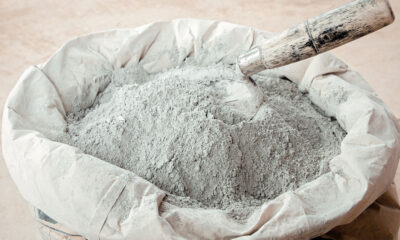
But, before we do that, a small introduction of "concrete" itself will be in order. We have always tried to remind our readers that the value chain is cement – concrete- construction, and that if cement is a construction material, then concrete is a construction intermediate. To introduce concrete to the lay person, one may say that the grey powder-like product that we know as cement is but one ingredient, albeit an important one, for making concrete mix. To quote volubly from the report entitled ‘Global Concrete Report 2018, published by Global Cement Magazine:

‘Cement is the main ‘active’ ingredient in a concrete mix, which, when combined with water recrystallises into a hard matrix which solidifies around the other constituents, binding them together. Cement makes up around 15-20 per cent of the weight of the ingredients, which also include water, sand and aggregate. Other ingredients may include special chemicals that delay or accelerate setting, that impart higher early strength or reduced heat of hydration, or which increase the flowability of the unset concrete. Other ingredients may include inert fillers such as ground limestone, or cementitiously-active alternative materials such as ground-granulated blast furnace slag, silica fume, rice husk ash or flyash. Each cubic metre of concrete weighs around 2,400 kg, and includes 350 kg of cement (140 kg/t), 700 kg of sand (280 kg/t), 1,200 kg of aggregate (480 kg/t) and 150 kg of water (60 kg/t).’ This gives us an idea that, clearly, concrete is not just cement, but many other things indeed!

Here are a few conclusions that one can draw from the same report:
Top 25 RMC companies in the world produced 388 million cubic metres of concrete in 2017, which was a mere 10 per cent of the global output. This tells us that the business is local in nature, and is fragmented, if we analyse market-by-market.

There are only two Indian Concrete Businesses figuring in this top 25, namely UltraTech Concrete at seventh, and ACC Concrete at 21st positions. This is an apparent anomaly, given that India is by far the second largest cement producing nation in the world, and this reflects the situation of the Indian construction market – the fact that it is unorganised, non-automated, retail and fragmented.

The list of top 25 has just a few concrete companies, which are not backed by cement manufacturing ventures, and the few that make the grade are in USA, and have aggregate supplies integrated into them. In fact, the top 10 concrete companies are all subsidiaries of bigger cement set-ups. This tells us some things about downstream integration strategies and evolution of cement delivery channels as markets mature.

In India, while the ready-mix concrete market has still a long way to go, we already find instances of cement companies integrating downstream into concrete delivery businesses, as also construction companies finding it useful to integrated upstream into RMC outfits. I am sure that many of these enterprises are discovering the truism that even if the overall value chain is profitable, individual components of that chain may be value- destroying.

Sumit Banerjee Chairman, Editorial Advisory Board

Continue Reading
Click to comment

Leave a Reply

Your email address will not be published. Required fields are marked *

Concrete

World Cement Association Annual Conference 2026 in Bangkok

Global leaders to focus on decarbonisation and digitisation

Published

on

By

Shares

The World Cement Association (WCA) will host its 2026 Annual Conference from 19–21 April 2026 at The Athenee Hotel in Bangkok, Thailand. The two-day programme will convene global cement industry leaders, policymakers, technology providers and stakeholders to examine strategic, operational and sustainability challenges shaping the sector’s next phase of transformation. The conference theme of shaping a sustainable future through digitisation, innovation and performance will frame sessions and networking opportunities across the event.\n\nThe programme will open with a comprehensive assessment of the global economic environment and its impact on cement markets, alongside regional outlooks across Asia and Europe. Speakers will address regulatory developments including carbon border adjustment mechanisms (CBAM) in Europe, progress in China’s carbon trading system and market dynamics in Thailand and South East Asia, and will outline practical decarbonisation pathways such as alternative fuels, next-generation supplementary cementitious materials (SCMs) and calcined clay developments. Sessions will also examine AI-enabled kiln optimisation and other digital approaches to improve plant performance.\n\nDay two will focus on overcapacity challenges and industry restructuring, using case studies and regional perspectives to provide delegates with practical insights into unlocking performance while accelerating decarbonisation. Discussions will explore digital maturity and AI-driven plant operations, manufacturing optimisation, sustainable building solutions and circular concrete models, together with evolving customer requirements across the construction value chain. The event will include the WCA Awards Ceremony at the Awards Gala Dinner on 20 April to recognise excellence in sustainability, innovation, safety and leadership.\n\nPhilippe Richart, chief executive officer of the WCA, said the sector was navigating a period of profound transformation, from managing overcapacity and market volatility to deploying AI and delivering measurable decarbonisation, and that the Annual Conference would bring global leaders together to exchange practical solutions and strengthen collaboration. Registration is open and tickets include admission to the two-day event, all sessions, refreshments and lunch, exhibition access and the Awards Gala Dinner. Further information on the programme is available via the WCA Annual Conference 2026 event page and queries on sponsorship or exhibition may be directed to events@worldcementassociation.org.

Continue Reading

Concrete

Assam Chief Minister Opens Star Cement Plant In Cachar

New plant aims to boost local industry and supply chains

Published

on

By

Shares

Chief Minister Himanta Biswa Sarma inaugurated the Star Cement plant in Cachar on 28 February 2026, marking the opening of a manufacturing facility designed to serve the region. The event was attended by state officials and company representatives, and it was reported with inputs from ANI. The plant is positioned as a strategic addition to the industrial landscape of southern Assam and is expected to improve the availability of construction materials for local projects.

The establishment is expected to generate employment opportunities and to stimulate ancillary businesses in the supply chain, including transport and local vendors. State officials indicated that the plant will enhance logistical efficiency by reducing the need to transport cement over long distances, which may lower construction costs for public and private projects. Observers said the presence of a regional cement facility can support housing and infrastructure initiatives that are underway or planned.

Government representatives reiterated that the state seeks to attract responsible investment that complements regional priorities and that the administration will continue to facilitate infrastructure and connectivity to support industrial operations. The inauguration was presented as consistent with broader efforts to diversify the industrial base in the northeast and to create an enabling environment for small and medium enterprises that supply goods and services to larger manufacturers.

Company sources and the state leadership underlined the importance of maintaining environmental safeguards while pursuing industrial growth, and they signalled that compliance with applicable norms will be a priority at the new facility. The announcement was framed as a step towards balanced development that links job creation, regional supply chains and local economic resilience. The report was prepared by the TNM Bureau with inputs from ANI.

Continue Reading

Concrete

Adani Cement, NAREDCO Form Strategic Alliance

 Partnership to advance skills and sustainable construction

Published

on

By

Shares
Adani Cement has entered into a strategic partnership with the National Real Estate Development Council (NAREDCO) to support India’s expanding housing and infrastructure requirements aligned with the vision of Viksit Bharat 2047.
The collaboration brings together Adani Cement’s building materials portfolio, research capabilities and technical expertise with NAREDCO’s network of over 15,000 member organisations. The partnership will focus on skill development, knowledge exchange, technology adoption and sustainable construction practices across the real estate ecosystem.
Joint initiatives will include certification programmes for masons and contractors, along with training modules for site supervisors from NAREDCO member organisations to strengthen execution standards and quality control. The partners will also promote modern construction technologies, green materials and integrated building solutions, including ready-mix concrete, while exploring support for affordable housing.
Vinod Bahety, CEO – Cement Business, Adani Group, said, “This partnership reflects a shared commitment to nation-building and to creating an ecosystem where quality, innovation, and sustainability are integral to every project. By working closely with NAREDCO, we aim to equip developers with advanced materials, deeper technical support, and structured knowledge platforms that can improve performance across the entire project lifecycle.”
Dr. Niranjan Hiranandani, Chairman, NAREDCO, stated that the association aims to encourage responsible construction practices and promote adoption of green building norms across expanding urban centres.

Continue Reading

Trending News