Connect with us

Economy & Market

The Critical Role of Homopolymer Acrylic in High-Performance Filtration

Published

on

Shares

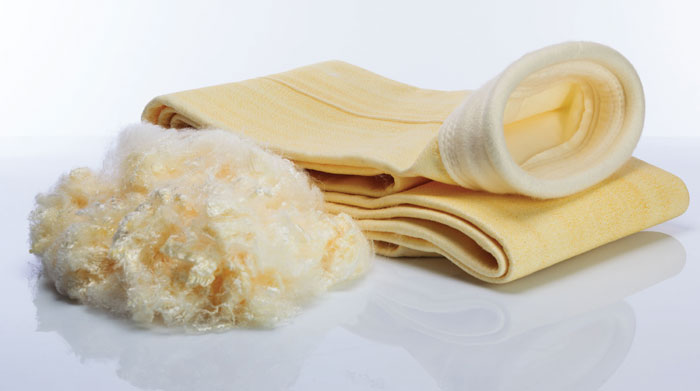
Acryterna, a 100 per cent homopolymer acrylic fiber, delivers superior hydrolytic resistance, thermal stability, and durability for demanding industrial filtration environments where copolymers fail.

In the competitive landscape of industrial filtration, the term “acrylic” is often used broadly. However, for plant managers and engineers focused on longevity and efficiency, the distinction between Homopolymer and Copolymer acrylic is the defining factor in filter bag performance. At Aksa Akrilik, we understand that harsh environments demand precise engineering. With Acryterna, our specialised homopolymer acrylic solution, we provide a technical advantage that far exceeds alternatives.

Microscale Differences in Crystallinity and Structure
To understand why generic filters fail, one must look at the polymer chain.
The hydrolytic resistance of homopolymer acrylic is derived not only from its chemical composition but also from its physical morphology. As established by Frushour (1987), the para-crystalline structure of homopolymer PAN possesses a high density that acts as a barrier, preventing water molecules from penetrating the fiber’s interior. Conversely, the randomly positioned side groups in copolymers disrupt this crystalline order, rendering the fiber an ‘open target’ for degradation.
Acryterna (Homopolymer) maintains a high degree of crystallinity and a para-crystalline structure. This dense, regular packing ensures superior chemical and thermal resistance, preventing the formation of moisture traps and ensuring durability in harsh environments where less ordered structures degrade.

Take the Advantage with Acryterna:
Unlike copolymers, Acryterna is engineered to resist this degradation. While copolymers struggle above 5 per cent humidity, Acryterna shows no tendency to hydrolyse even up to 30 per cent relative humidity. It offers excellent acid and abrasion resistance where polyesters or copolymers would fail due to potential hydrolysis.

Thermal Stability and Operational Range
For industries such as power generation, cement, and smelting, thermal stability is non-negotiable.
Acryterna (Homopolymer): Designed for continuous operation at 125°C with surge capabilities up to 140°C. It possesses a much higher modulus and tenacity, ensuring dimensional stability.
Furthermore, homopolymer fibers do not melt; carbonisation only starts at temperatures over 160°C, providing a robust safety margin.

Applications and Strategic Value
Acryterna is the ideal solution for both dry and wet filtration in pH ranges of 3-10.
Key application areas are:
• Power generation and Incineration
• Cement and Limestone processing
• Asphalt and Smelting industries

Conclusion
For critical filtration processes, the choice of homopolymer acrylic is not just a technical preference but a necessity for operational safety. To ensure a filter bag life of several years rather than months, homopolymer acrylic is the proven industrial solution.
By choosing Acryterna, you are choosing a 100 per cent Homopolymer acrylic fiber with low density, superior thermal resilience, and unmatched chemical stability. For operations that cannot afford downtime, Acryterna is the proven choice.

Authors:
Ayse Karadag Eren| Aksa Akrilik| Acryterna Product Manager
Zekiye Has Tekiner| Aksa Akrilik| Acryterna Quality Assurance Manager

Concrete

JSW Cement commissions additional 1 MTPA grinding unit at Nagaur

Published

on

By

Shares

With this commissioning, JSW Cement’s total cement grinding capacity has increased to 25.10 MTPA, 
Mumbai

JSW Cement, one of India’s leading green cement producers and part of the diversified JSW Group, today announced the successful commissioning of an additional 1.00 MTPA cement grinding unit at Nagaur, Rajasthan. The commissioning marks another significant milestone in the Company’s growth strategy.

With this commissioning, JSW Cement’s total cement grinding capacity has increased to 25.10 MTPA, while its total clinker manufacturing capacity, including clinker capacity at its joint venture, JSW Cement FZC, stands at 9.74 MTPA.

JSW Cement had commenced operations in North India in March 2026 with the Nagaur Integrated Plant, comprising a 3.30 MTPA clinkerisation unit and 2.50 MTPA cement grinding unit. With the commissioning of the additional 1.00 MTPA cement grinding unit, the plant’s total cement grinding capacity has increased to 3.50 MTPA, enhancing the company’s ability to cater to the growing cement demand across Rajasthan, Haryana, Punjab and the National Capital Region (NCR). The expansion has been funded through a strategic mix of equity and long-term debt.

During the quarter ended 30th September 2026, JSW Cement has also commissioned the Alternate Fuel Handling System and the Waste Heat Recovery system (WHRS) at the Nagaur Integrated Plant.

Nilesh Narwekar, CEO, JSW Cement, said: “The commissioning of additional 1.00 MTPA grinding capacity at Nagaur is a key strategic priority for us and will accelerate JSW Cement’s expansion into North India. We look forward to servicing the growing needs of the region and contributing to the economic growth of Rajasthan, Haryana, Punjab and the NCR area. I am delighted to share that the company has commissioned this grinding unit within the expected timeline, showcasing our project execution capabilities. Further, the Alternate Fuel Handling System and the Waste Heat Recovery system (WHRS) are expected to substantially reduce our production costs going forward.”

Continue Reading

Concrete

UltraTech becomes first Indian cement firm to cross 2 GW green energy

Published

on

By

Shares

UltraTech Cement has crossed 2 GW of captive green energy capacity, with renewables and waste heat recovery meeting 48 per cent of its power needs.

Mumbai

UltraTech Cement Limited has surpassed 2 GW of installed green energy capacity for captive use, becoming the first cement company in India to achieve the milestone. The Aditya Birla Group company commissioned 116.55 MW of wind capacity at its Inter-State Transmission System-connected wind-solar hybrid project in Barmer, Rajasthan, along with 10 MW of Waste Heat Recovery System capacity at Sarlanagar Cement Works in Karnataka.

With these additions, UltraTech’s cumulative installed green energy capacity has reached 2,024 MW. This includes 1,580 MW of renewable energy capacity and 444 MW of waste heat recovery capacity, together meeting around 48 per cent of the company’s current power requirements.

The company said the milestone reflects the progress of its long-term energy transition strategy. In FY27 so far, nearly one-third of UltraTech’s 76 manufacturing units in India have maintained green energy utilisation above 50 per cent of their electricity requirements, while five units have crossed 95 per cent.

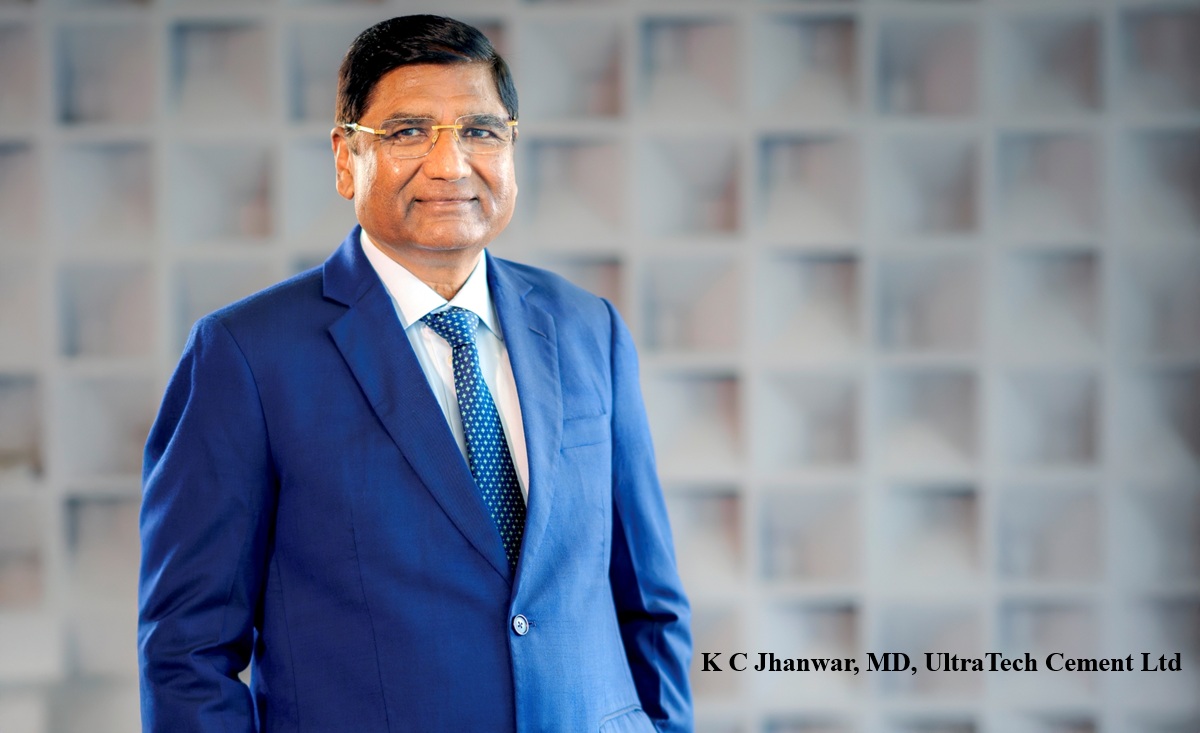
K C Jhanwar, Managing Director, UltraTech Cement Limited, said, “Crossing the 2 GW green energy milestone is the result of a strategy we have pursued consistently over the past decade. Cement is an energy-intensive, hard-to-abate sector, and showing that reliability and growth can go hand in hand with a rapid shift to green energy sets a benchmark for the industry. With nearly half of our power needs now met through green energy, we are significantly less exposed to fossil fuel supply constraints and power price volatility. As we scale up renewables, waste heat recovery and battery storage across our operations, we are building an energy foundation for stable, long-term growth.”

UltraTech commissioned 430 MW of green energy capacity in FY26 and continues to expand its renewable energy and waste heat recovery portfolio.

The company is also progressively integrating Battery Energy Storage Systems across its operations to improve renewable energy utilisation and supply reliability.

In 2025, UltraTech operationalised what it described as India’s first on-site hybrid round-the-clock renewable energy project at Sewagram Cement Works in Gujarat. The project combines solar, wind and battery storage.

As part of its decarbonisation strategy, UltraTech said it has not invested in new captive thermal power capacity for either greenfield projects or brownfield expansions at its integrated units for more than a decade.

The company said its expanding green energy portfolio is helping reduce dependence on conventional grid electricity and fossil fuel-based power, while lowering exposure to fluctuations in coal and electricity prices.

UltraTech aims to increase green energy’s share in its total power mix to 85 per cent by 2030. As a member of RE100, it has also committed to meeting 100 per cent of its electricity requirement through renewable sources by 2050.

UltraTech Cement, the cement flagship of the Aditya Birla Group, has a total grey cement capacity of 210.1 MTPA and white cement and putty capacity of 3.5 MTPA. The company is also a signatory to the GCCA Climate Ambition 2050 and has committed to the GCCA Net Zero Concrete roadmap.

Continue Reading

Concrete

Shiva Cement Merges with JSW Cement

Published

on

By

Shares

JSW Cement has announced a scheme of arrangement to merge its listed subsidiary Shiva Cement with itself, creating a single unified cement platform. The boards of both companies have approved the proposal, which will require clearances from stock exchanges, the Securities and Exchange Board of India, the National Company Law Tribunal, Odisha Industrial Infrastructure Development Corporation and other applicable authorities.

The transaction is expected to be completed within 12 to 14 months, subject to the necessary approvals from regulators, shareholders and creditors. Under the scheme, JSW Cement will issue 5 equity shares with a face value of Rs. 10 each for every 41 equity shares with a face value of Rs. 2 each held by Shiva Cement shareholders other than JSW Cement.

The company said the merger would consolidate financial, managerial, technical, distribution and marketing resources while reducing administrative duplication and compliance requirements. It would also provide greater funding flexibility, potentially lower financing costs and eliminate inter-company guarantees.

The consolidation is expected to strengthen backward integration by enabling JSW Cement to use Shiva Cement’s clinker manufacturing facility. This would reduce dependence on external clinker procurement and improve supply-chain efficiency. Public shareholders of Shiva Cement would receive direct ownership in JSW Cement, which has a broader institutional investor base and a more liquid listed presence.

JSW Cement acquired a controlling stake in Shiva Cement through transactions that began in January 2017. Shiva Cement operates a clinker facility in Odisha, near the borders of Odisha, Chhattisgarh and Jharkhand, and commissioned a 1 mtpa cement grinding unit at Sambalpur in FY26 through a commercial arrangement with Bhushan Power and Steel.

JSW Cement has 24.10 mtpa of cement grinding capacity and 9.74 mtpa of clinkerisation capacity. Its Indian operations comprise nine plants, including two integrated units, one clinker unit and six grinding units. The proposed merger is intended to simplify the corporate structure and align the financial statements of the two companies.

Continue Reading

Video Thumbnail
▶

    SIGN-UP FOR OUR GENERAL NEWSLETTER

    Trending News

    SUBSCRIBE TO THE NEWSLETTER


    Don't miss out on valuable insights and opportunities to connect with like minded professionals.


      This will close in 0 seconds