Connect with us

Concrete

Concrete Products: Shaping Cement’s Future

Published

on

Shares

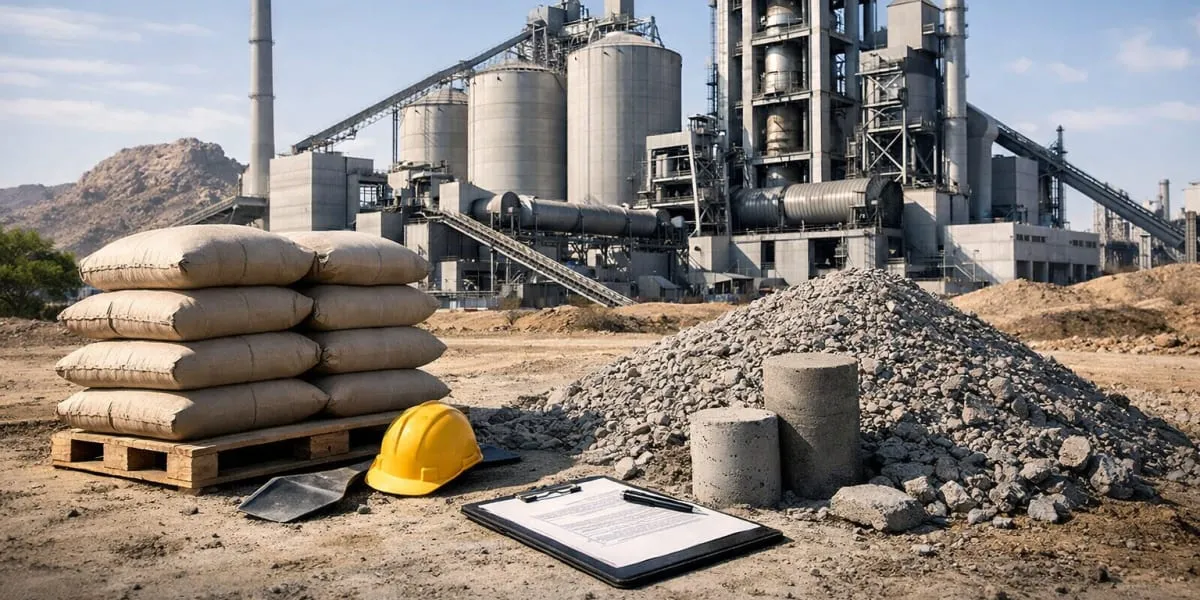
Concrete products have the potential to transform the way we use cement.
Although this may sound funny or even out rightly outrageous, cement in itself can not be called a building product per se, unlike steel, glass or aluminium. It can, at best, be called a building material intermediate, because when cement is used, along with other ingredients, to produce concrete, then and only then, a finished building material is created, that can compete on equal terms with peers like steel or wood. To strengthen this argument with an example, when it comes to compare the Carbon Dioxide intensity of competing construction materials, cement is not pitted against steel or wood or glass, but CO2 emitted per unit weight of concrete is compared with other alternatives. So, buildings require concrete, while concrete requires cement. That’s the linkage.
Whenever we think of concrete, we think of casting in position, which is technically called cast in-situ. All the concreting that we conventionally and regularly encounter around us, in most cases, are concrete poured and cast and cured in position. To the lay person like us, concrete means beams, columns, roof slabs, foundations, lintels, and alike. This situation is now a thing of the past. There are a lot a of concrete items which are cast previously and sold as castings for later use in position. In broad terms, these are called concrete Products, also loosely termed as ‘Pre-Cast Concrete’.
The global precast concrete market was valued at approximately $100 billion in 2016 and is projected to expand at a CAGR of more than 5 per cent from 2016 to 2025, according to a new report titled, ‘Precast Concrete Market – Global Industry Analysis, Size, Share, Growth, Trends, and Forecast, 2016-2025”, published by Transparency Market Research. The report concludes that the application of precast concrete in construction reduces the lead time and provides better properties such as durability and sustainability to the construction as compared to the use of conventional in-position casting processes. The report says that such advantages will drive up the precast concrete market during the forecast period, viz. 2016 to 2025.
Asia Pacific and Europe are reportedly the leading markets for precast concrete. Interestingly, the precast concrete market in Asia Pacific is expected to grow at a CAGR of greater than 6% during the same period owing to rise in investments in residential and infrastructural projects in the region. Such projections regarding the prospects of Concrete Products for the Indian market are not readily available, but perhaps one could safely extrapolate from these reported global trends, that directionally, pre-cast concrete will do well in India as well.
In order to better understand and analyse any product-market configuration, there is a need to segment the market/products in an effective manner. The segmentation of Concrete Products can be done in various different ways, some of which are as follows :By structure system

  • Beam and column system
  • Floor and roof system
  • Bearing wall system
  • Fatade system
  • Others
  • By end-use
  • Building works
  • Residential
  • Non-residential
  • Civil works
  • Hydraulic works
  • Transportation works
  • Power plants and communication works
  • Specialised works
  • By geography
  • Asia Pacific
  • Americas
  • Europe
  • Africa, etc

However, the one way of categorisation of the concrete products that we like, is standard products and customised/tailormade products. Examples of standard concrete products are like paver blocks, concrete railway sleepers, concrete pipes, decorative balustrades or grills, etc.
On the other hand, customised products are designed and cast specifically for the needs of a customer or a given construction project. These are normally large concrete castings, requiring casting yards to be set up near the project sites, but these help speed up on site construction. Pre-cast beams, slabs, columns, lintels and aerated autoclaved concrete blocks.
All concrete products have the advantage of delivering better consistency and quality, because these have the benefit of controlled manufacturing conditions like in a factory, as against the harsh conditions prevalent at a construction site.
Previously, larger cement companies thought that having control over downstream cement consumer industries was very important, in order to have influence over the delivery channels. On the basis of this strategy, some global cement companies acquired or developed upstream as well as downstream businesses such as aggregate mines, ready-mixed concrete plants, and concrete products, both standard and custom-made. In time, they discovered that scale and technology are not competitive advantages in these industries, but proximity to the markets is. Today in India, most of these industries downstream of cement are mainly served by small and medium sized companies or larger construction companies.


Continue Reading
Click to comment

Leave a Reply

Your email address will not be published. Required fields are marked *

Concrete

World Cement Association Annual Conference 2026 in Bangkok

Global leaders to focus on decarbonisation and digitisation

Published

on

By

Shares

The World Cement Association (WCA) will host its 2026 Annual Conference from 19–21 April 2026 at The Athenee Hotel in Bangkok, Thailand. The two-day programme will convene global cement industry leaders, policymakers, technology providers and stakeholders to examine strategic, operational and sustainability challenges shaping the sector’s next phase of transformation. The conference theme of shaping a sustainable future through digitisation, innovation and performance will frame sessions and networking opportunities across the event.\n\nThe programme will open with a comprehensive assessment of the global economic environment and its impact on cement markets, alongside regional outlooks across Asia and Europe. Speakers will address regulatory developments including carbon border adjustment mechanisms (CBAM) in Europe, progress in China’s carbon trading system and market dynamics in Thailand and South East Asia, and will outline practical decarbonisation pathways such as alternative fuels, next-generation supplementary cementitious materials (SCMs) and calcined clay developments. Sessions will also examine AI-enabled kiln optimisation and other digital approaches to improve plant performance.\n\nDay two will focus on overcapacity challenges and industry restructuring, using case studies and regional perspectives to provide delegates with practical insights into unlocking performance while accelerating decarbonisation. Discussions will explore digital maturity and AI-driven plant operations, manufacturing optimisation, sustainable building solutions and circular concrete models, together with evolving customer requirements across the construction value chain. The event will include the WCA Awards Ceremony at the Awards Gala Dinner on 20 April to recognise excellence in sustainability, innovation, safety and leadership.\n\nPhilippe Richart, chief executive officer of the WCA, said the sector was navigating a period of profound transformation, from managing overcapacity and market volatility to deploying AI and delivering measurable decarbonisation, and that the Annual Conference would bring global leaders together to exchange practical solutions and strengthen collaboration. Registration is open and tickets include admission to the two-day event, all sessions, refreshments and lunch, exhibition access and the Awards Gala Dinner. Further information on the programme is available via the WCA Annual Conference 2026 event page and queries on sponsorship or exhibition may be directed to events@worldcementassociation.org.

Continue Reading

Concrete

Assam Chief Minister Opens Star Cement Plant In Cachar

New plant aims to boost local industry and supply chains

Published

on

By

Shares

Chief Minister Himanta Biswa Sarma inaugurated the Star Cement plant in Cachar on 28 February 2026, marking the opening of a manufacturing facility designed to serve the region. The event was attended by state officials and company representatives, and it was reported with inputs from ANI. The plant is positioned as a strategic addition to the industrial landscape of southern Assam and is expected to improve the availability of construction materials for local projects.

The establishment is expected to generate employment opportunities and to stimulate ancillary businesses in the supply chain, including transport and local vendors. State officials indicated that the plant will enhance logistical efficiency by reducing the need to transport cement over long distances, which may lower construction costs for public and private projects. Observers said the presence of a regional cement facility can support housing and infrastructure initiatives that are underway or planned.

Government representatives reiterated that the state seeks to attract responsible investment that complements regional priorities and that the administration will continue to facilitate infrastructure and connectivity to support industrial operations. The inauguration was presented as consistent with broader efforts to diversify the industrial base in the northeast and to create an enabling environment for small and medium enterprises that supply goods and services to larger manufacturers.

Company sources and the state leadership underlined the importance of maintaining environmental safeguards while pursuing industrial growth, and they signalled that compliance with applicable norms will be a priority at the new facility. The announcement was framed as a step towards balanced development that links job creation, regional supply chains and local economic resilience. The report was prepared by the TNM Bureau with inputs from ANI.

Continue Reading

Concrete

Adani Cement, NAREDCO Form Strategic Alliance

 Partnership to advance skills and sustainable construction

Published

on

By

Shares
Adani Cement has entered into a strategic partnership with the National Real Estate Development Council (NAREDCO) to support India’s expanding housing and infrastructure requirements aligned with the vision of Viksit Bharat 2047.
The collaboration brings together Adani Cement’s building materials portfolio, research capabilities and technical expertise with NAREDCO’s network of over 15,000 member organisations. The partnership will focus on skill development, knowledge exchange, technology adoption and sustainable construction practices across the real estate ecosystem.
Joint initiatives will include certification programmes for masons and contractors, along with training modules for site supervisors from NAREDCO member organisations to strengthen execution standards and quality control. The partners will also promote modern construction technologies, green materials and integrated building solutions, including ready-mix concrete, while exploring support for affordable housing.
Vinod Bahety, CEO – Cement Business, Adani Group, said, “This partnership reflects a shared commitment to nation-building and to creating an ecosystem where quality, innovation, and sustainability are integral to every project. By working closely with NAREDCO, we aim to equip developers with advanced materials, deeper technical support, and structured knowledge platforms that can improve performance across the entire project lifecycle.”
Dr. Niranjan Hiranandani, Chairman, NAREDCO, stated that the association aims to encourage responsible construction practices and promote adoption of green building norms across expanding urban centres.

Continue Reading

Trending News

SUBSCRIBE TO THE NEWSLETTER


Don't miss out on valuable insights and opportunities to connect with like minded professionals.


    This will close in 0 seconds