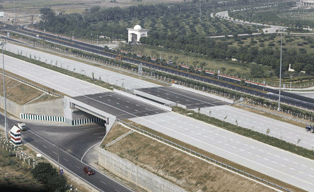
Roads are the lifelines of a nation and a good network of highways is absolutely essential for the development of trade, commerce and other activities that characterise a vibrant and forward-looking nation. John F Kennedy once said, ?The US did not build concrete roads because it was a great country, but it is a great country because of the concrete roads it had built.? It is high time that we too realise the value of concrete roads and do away with bitumen pavements wherever possible.
The government of India has been stretching its budget allocations year after year to upgrade Indian roads to meet the global standards. However, despite all such efforts our roads are still in a very pathetic condition mainly due to the preference given to the conventional bitumen roads. These roads deteriorate faster requiring heavy expenditure on maintenance. Bitumen roads exhaust a major chunk of the annual road funds for their frequent maintenance leaving behind very small amount to build new roads and extend the network.
Building concrete roads
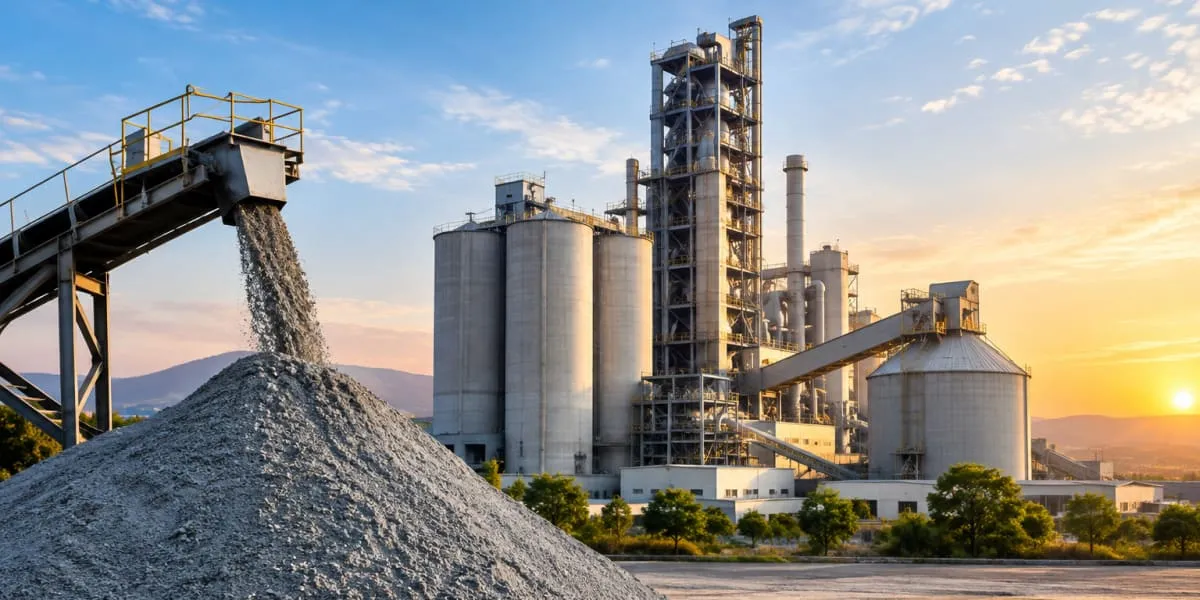
If we are to make our infrastructure durable and at par with international standards, it is high time for us to shift our construction practices from bitumen roads to techno-economically superior cement concrete roads. Cement roads have a definite edge over bitumen roads in all respects, viz., construction cost, maintenance, service life, etc. The construction of cement roads has become all the more necessary looking at the scarce and erratic availability of bitumen the world over, as also its ever-rising price. India is fully dependent on imported bitumen. On the other hand, cement, an indigenous product, is available in plenty on demand, across the country and its availability is assured for many years to come. The present cement production capacity of the nation is 360 MLT, which will be 700 MLT by 2022 and will comfortably meet all domestic cement demand. The quality and technology of Indian cement is already of international standards.
The IT and Telecommunication sectors in the country saw a revolutionary change after the government took bold policy decisions and adopted modern technologies in these sectors. Indian road infrastructure too can benefit immensely once we adopt and implement cement concrete technology in the roads sector on a larger scale as has been done in many countries.
It is a happy augury that the Minister of Road Transport and Highways, Nitin Gadkari, has not only realised and acknowledged this, but has also taken various positive initiatives for adopting techno-economically superior cement concrete roads in the country to steer the flagging economy back on fast trajectory of growth.
Road Network of India
Construction is the second largest economic activity in India after agriculture. India?s total road network is of 4.11 million km, which is the second largest in the world. National highways, the arteries of the nation, carrying nearly 40 per cent of the total road traffic, are in immediate need of modernisation. Nearly 21 per cent of their length has only a single lane pavement and at least one in every three km is in need of immediate attention due to cumulative neglect for the past two decades. The break-up of different categories of road network is shown below.
Indian Road Network National highways/ expressways – 80,000 km State highways – 1,46,294 km Major district roads – 2,66,058 km Other district roads and rural roads – 36,17,240 km Total 41,09,592 km
Pavements in India have many inherent weaknesses. Inadequate thickness, poor compaction of sub grade soil, ineffective drainage, low-cost specifications and poor riding quality are some of them. Excessive overloading of goods carriers adds to the problem. Maintenance of pavements is a neglected activity, leading to premature failures and loss of assets.
Pavements, which bear the heavy loads of modern vehicles, are the costly component of the road. Pavement design, construction and maintenance call for a high degree of skill and expertise. Good performance and economy are the key attributes of a pavement. There are two types of pavements in use, viz., flexible pavement and the rigid pavement. So far India has preferred the age-old conventional flexible pavement due to certain compelling reasons such as amenability to stage construction; constraints of funds; lower initial cost; and scarcity of cement.
Global scenario
In many European countries, notably Germany, France, Austria, Belgium, Netherlands and Switzerland, concrete roads were built on considerable length of the most heavily trafficked routes. In USA, nearly 60 per cent of the interstate highway system was built in concrete.
Recognising the need to foster competition and thereby ensure economical options, many countries have made it compulsory when calling for road-building tenders, to invite bids on both flexible and concrete specifications. In such cases, concrete roads scored over bituminous roads in several instances. The wide acceptability of concrete as a road pavement material is mainly due to certain principal advantages it scores over bituminous material.
Realising the loss of thousands of crores of rupees to the economy due to bitumen roads, which develop potholes and become unserviceable particularly after rains, the government of India has been providing major thrust to the construction of durable and long-lasting highways, urban and rural roads. Several schemes such as NHDP, PMGSY and JNNURM have been launched to achieve this goal. For the XII plan, the government has earmarked one trillion dollars for the infrastructure development of the country, a large chunk of this would be spent in the construction of roads and highways.
Concrete overlay/white topping
Deterioration of bituminous roads in the cities specially during the rainy seasons is an annual feature and a perpetual problem. During the monsoon, the roads constructed with bituminous binders suffer severe damage causing great inconvenience to the users. All this results in wastage of precious and expensive fuel, increased travel time and creation of more pollution.
Concrete overlay over the existing bitumen roads (known as White Topping technology) is one of several such technologies that can provide long lasting road network in India. It is a major rehabilitation technology for improving old pavements with a strong, long life, and low maintenance structure. This technology has been developed over the last two decades, especially in USA, to improve the highways, runways, light duty roads and streets. It is very cost effective, fast and easy to construct.
In view of the serious doubts over the future availability of bitumen, a petroleum crude based commodity and its steep rising prices, many countries abroad are now adopting concrete overlays (white topping). In India, Mumbai city has taken a big lead in this direction. Many other cities like Pune, Nagpur, Indore, Chennai and Bengaluru have also been adopting white topping technology for city roads. The Cement Manufacturers? Association and cement companies in recent times have completed successfully three white topping technology demo projects in Jaipur, Bangalore and Chennai, which were all well accepted and appreciated by the concerned authorities of these states.
Why cement concrete roads
A few major advantages of cement concrete roads are mentioned below:
Long life
The one big advantage of cement concrete road is the long life of 30-40 years. If the condition of the road is carefully monitored and a concrete overlay is provided just before the occurrence of extensive cracks, the life can be extended further.
Practically maintenance free
Unlike a flexible pavement, the cement concrete pavement does not develop potholes and rutting. Thus, routine repairs such as pothole filling and patching so common in flexible pavements are not necessary. This saves money, materials and hindrance to traffic.
Economics of concrete roads
One of the commonly held beliefs is that the initial cost of a cement concrete pavement is higher than that of a flexible pavement. This argument might have been valid when bitumen was available at low prices. Since the price of bitumen has sky rocketed in past few years, the construction of cement concrete road is now cheaper than bitumen roads by 4-10 per cent even initially. Although white topping and cement roads constructed in villages are a bit costlier initially due to their design aspects, they become cheaper after 4-5 years of their construction. Thus, when whole-life-cycle-costs are considered, a cement concrete pavement always emerges as the better and cost-effective alternative. The table above shows cost comparison of 7 mtr wide bituminous and concrete highway.
14 per cent Fuel Savings
When heavy wheel load is put on a pavement, it deflects. The amount of deflection in pavement depends upon various factors such as, the wheel load; the flexural strength of the pavement and the soil support strength. A flexible pavement has low flexural strength, whereas a concrete pavement has high flexural strength. Because of its low flexural strength, a flexible pavement deflects considerably as the wheel of a vehicle passes over it. In case of concrete pavement, this deflection is very little. As a result, in the former case, the wheel has to overcome the large deflection bowl created in the flexible pavement as it moves along. This consumes a significant part of the energy that would otherwise be available to propel the vehicle. The consumption of fuel is consequently more on pavements that deflect excessively than on those that deflect less. Rigid pavements are thus more fuel efficient than flexible pavements, when the riding quality of both is the same. Commercial vehicles, which have heavy wheel loads, can thus derive the benefit of lower fuel consumption on rigid concrete roads. Experiments conducted in America have reported fuel savings of up to 20 per cent.
Limited experiments carried out in India have also shown fuel savings up to 14 per cent on concrete roads.
Assuming that all Indian trucks numbering approx 82 lakh in 2013 ply on cement roads and cover 300 km. in a day, the annual savings on account of diesel alone would work out to be over Rs. 1.71 lakh crore, considering the pan India average diesel price is Rs 60/ltr and that one ltr diesel gives a mileage of 4 km.
Savings on foreign exchange
India imports about 83 per cent of its annual crude requirement. Crude import at high price leads to heavy drainage of foreign exchange. As per the provisional data released by the commerce and industry minister, the nation?s crude oil bill touched the Rs 7.85 lakh crore mark during the financial year ended 31st March, 2013. In the context of current depreciating value of rupee against dollar, the outgo of forex for the same quantity of crude import will go up significantly. The country?s colossal annual import bill on crude oil can definitely be brought down by at least 8 per cent if techno-economically superior cement concrete roads are constructed in the country as a policy, instead of conventional bitumen roads constructed which are mostly with the imported crude (bitumen is a residue of crude). In absolute terms, the value of the savings, if calculated on year 2013 import bill, would be Rs 63,000 crore to the least.
Better reflectivity resulting in 10 per cent savings on street lights
Concrete being light coloured, reflects light. Hence, the illumination required for a concrete road is less than that for the dark coloured bituminous surface. For city streets, consumption of energy is thus 10 per cent less on cement concrete roads which if translated into money would work out to several crores of rupees to the economy.
Effective utilisation of fly ash
Fly ash can replace cement up to 25-35 per cent in concrete for almost all usages. It is well known that fly ash is a waste-material produced in thermal power plants where coal is used as the fuel. Fly ash is pozzolanic and reacts with lime as the cement hydrates, thereby producing cementitious materials. Fly ash improves concrete strength, improves workability, increases durability and reduces the cost of concrete. Its disposal has become a great nuisance and health hazard.
Pollution-free construction
Concrete batching and mixing plants do not cause pollution the way hot-mix bituminous plants do. This is a considerable advantage near towns and cities. There is mounting concern among the public to shift polluting bitumen plants away from habitations. In fact, the Supreme Court has banned hot mix plants in the capital.
Conservation of stone materials
For a highway carrying high volume and heavy axle load traffic consumption of aggregate in flexible (bituminous) pavement will be approximately 50-70 per cent more than concrete pavement. Though various types of stone raw materials are available in good quantity is some parts of the country, they are scarce in the plains of northern India. Any technology that conserves aggregates should thus get precedence in national interest.
Ambient temperature
A large volume of literature available (such as an article published in ?R&T Update,? by American Concrete Pavement Association (ACPA) dealing with heat reflectance; as also one published by the European Concrete Paving Association (EUPAVE) titled ?Concrete Roads: A Smart and Sustainable Choice?) establishes that construction of cement concrete roads lead to reduction in ambient temperature.
Misconception
Apart from the mistaken belief that the cost of initial construction of cement roads is high, which has been amply clarified earlier, there has been another common misconception about higher incidents of tyre bursting on cement concrete roads which is not true. It has been found that the tyre burst cases are reported on small passenger cars when they were driven at 100 km/hr or higher speed. Under such conditions incidents of tyre burst would be similar on both concrete or bituminous roads. Highway specialists recommend that during long distance travel tyres should not be fully inflated. At high speeds that CC roads enable the driver to attain easily, the air inside the tyres gets heated up and expands. So it is of utmost importance to ensure that tyre inflation is kept within prescribed parameters in addition to ensuring that the speed restrictions indicated on the signages are scrupulously observed.
In conclusion
It could be said there is a serious case for the government and other stakeholders in the road infrastructure segment to seriously consider concrete roads as a solution to many of the problems experienced with conventional road building methods. Cement roads would also go a long way in addressing a host of major concerns of the government without making any specific additional expenditure in respect of evolving measures for conservation of diesel/petrol, minimisation of forex outgo, protection of environment, generation of ample downstream employment opportunities, etc. All these, in turn, would have a ?domino effect?on our economy.
| Sl. No. |
Bonding Material |
Initial Cost |
Maintenance cost |
Construction and Maintenance cost (Life Cycle Cost) |
Concrete Road Cheaper by %age |
| 1 |
Bituminous |
242 |
117 |
359 |
– |
| 2 |
Concrete |
241 |
17 |
258 |
28.13% |
| 3 |
Concrete with Fly ash Replacement@25% |
230 |
17 |
247 |
31.19% |




















 Concrete4 weeks ago
 Concrete2 weeks ago
 Concrete2 weeks ago
 Concrete4 weeks ago