Connect with us

Concrete

Beyond the Gearbox: How a Holistic Lubrication Strategy Reduces Total Cost of Ownership in Cement Plants

Published

on

Shares

Cement manufacturing runs on rotating equipment, and every one of those assets is connected to the same bottom line. The plants seeing the biggest gains today are the ones that stopped treating lubrication as a line-item cost and started treating it as a plant-wide reliability strategy.

For India’s cement plants, the economics of operations come down to two variables: energy consumption and equipment uptime. Both are directly influenced by lubrication – not just at a single point in the plant, but across multiple critical systems running simultaneously, every day. Most lubrication conversations in cement manufacturing begin and end with the gearbox. That focus is understandable – gearboxes are among the most demanding and most expensive assets to maintain. But limiting the lubrication conversation to one asset type means leaving real savings on the table. The plants that are reducing total cost of ownership most effectively are those looking at lubrication strategy across the whole plant, not just the most visible application.

The Gearbox
Conventional mineral-based gear oils under high-load, high-temperature conditions can shear, lose viscosity, and force early change-outs – with oil changes at every 2,000 hours adding up in labour, downtime, and lost production over the life of the asset. Mobil SHC™ 600 Series synthetic lubricants are engineered for exactly these conditions. They can reduce energy consumption in gearboxes and circulating systems by up to 3.6 per cent*, extend oil life by up to six times versus conventional oil, and are approved by Siemens AG for use in Flender gearboxes. In one documented instance at a cement plant in Tamil Nadu, switching to Mobil SHC™ 632 delivered a 1 per cent increase in energy efficiency, a 3°C reduction in gearbox temperature, an oil drain interval extended by four times, and annual savings of INR 4,76,772**.
That result alone makes the case for better fluid selection. But it is only part of the story.

The Compressor: Where the Bigger Opportunity Often Sits
Compressors are as operationally critical as gearboxes in a cement plant – and typically receive far less lubrication attention. Running continuously under high load cycles, with lubricant exposed to sustained heat and oxidation, compressors on conventional oils often degrade faster than their scheduled drain intervals suggest. The result is increased maintenance frequency, elevated running temperatures, and higher total lubricant consumption than necessary.
Mobil Rarus SHC™ 1020 Series is formulated for exactly this environment. Recognised by more than 20 global compressor builders, it delivers up to 8,000 hours of oil life – significantly reducing change-out frequency and the associated downtime, labour, and disposal costs that conventional compressor oils generate.
The results from Indian cement plant operations are documented. In one instance, a cement sector facility operating 23 screw compressors reduced lubricant consumption from 10-12 litres per compressor to 5-7 litres, achieving annual savings of approximately INR 4,96,000**. In another, a cement manufacturer extended oil drain intervals by two times, lowered running temperature by approximately 10°C, and achieved annual savings of INR 4,86,747**.
The pattern across both operations is consistent: extended drain intervals, lower consumption, and measurable cost reduction – driven by a single product decision.

One Strategy Across the Plant
Gearboxes and compressors are only two examples. The same principle extends across a cement plant’s rotating equipment, mixer roll bearings, roll neck bearings, plastic calenders, and centrifuge applications all place similar demands on lubrication. Mobil SHC™ 600 Series spans seven viscosity grades, from ISO VG 32 to ISO VG 1000, giving plants the flexibility to match the right grade to the right application across this range of equipment, rather than defaulting to a single product for every use case.

The Bigger Picture
Energy and downtime are two of the largest controllable costs in cement plant operations, and lubrication is one of the few decisions that influences both directly. As demonstrated across the gearbox and compressor examples above, the right lubricant, matched to the right application and supported by field engineering services, can measurably reduce energy consumption, extend oil drain intervals, and lower maintenance costs.
For cement plants evaluating lubrication as part of a broader efficiency strategy, these results offer a starting point rather than an endpoint. Mobil SHC™ 600 Series and Mobil Rarus SHC™ 1020 Series are both engineered for the demanding conditions cement plants operate under daily, and the field results documented here reflect what that engineering can deliver in practice.
Fill with Mobil™. Fill with Confidence.

For more information, visit www.mobil.in/business

*Energy efficiency relates solely to the performance of Mobil SHC 600 when compared to conventional (mineral) reference oils of the same viscosity grade in circulating and gear applications. The technology used allows up to 3.6 per cent efficiency compared to the reference when tested in a worm gearbox under controlled conditions. Efficiency improvements will vary based on operating conditions and application.
**This Proof of Performance is based on the experience of individual customers. Actual results may vary depending on the type of equipment used, its maintenance, operating conditions, environmental factors, and the lubricants previously used, among other variables. Exxon Mobil Corporation has numerous affiliates, many with names that include ExxonMobil, Exxon, Esso, and Mobil. For convenience and simplicity, those terms, and references to “corporation,” “company,” “ExxonMobil,” “EM,” and other similar terms are used for convenience and may refer to one or more specific affiliates or affiliate groups.
For more information, visit www.mobil.in/business


Concrete

Cement Prices Likely to Rise Rs. 10-15 per Bag from Mid-October

Input costs and steady demand may drive cement price increases

Published

on

By

Shares


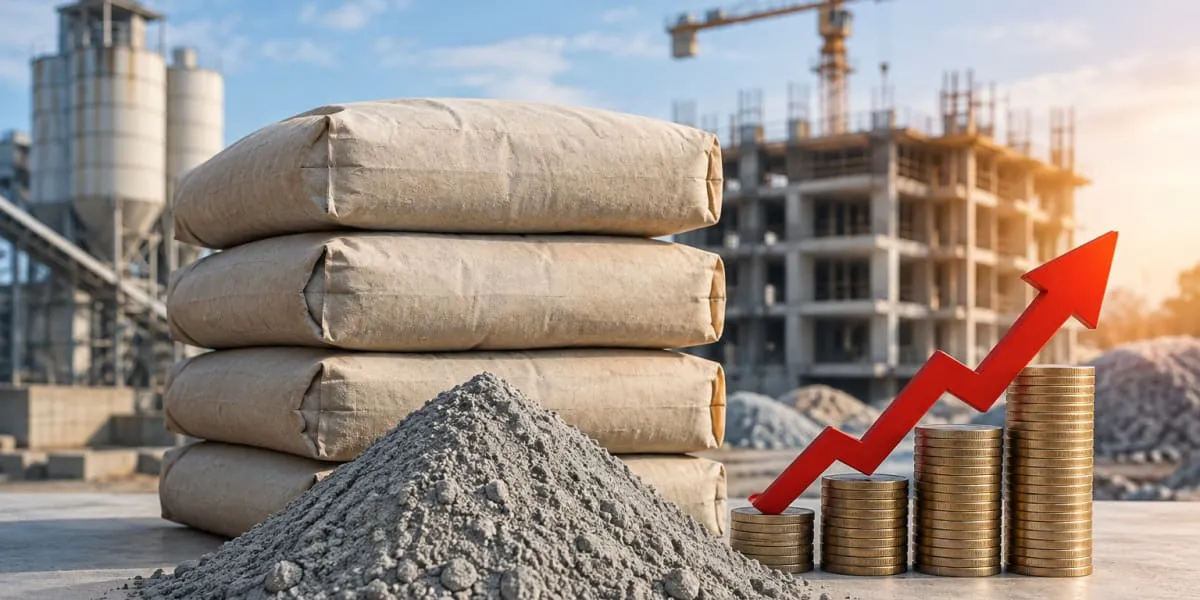
Cement manufacturers in India are likely to raise prices by Rs. 10-15 per bag from mid-October, as they seek to offset persistent increases in power and fuel costs. Emkay Research said its channel checks indicated a high probability of an increase from October 12, supported by the start of the busy construction season and favourable demand-supply conditions.

The sector had implemented similar rate adjustments of Rs. 10-15 per bag during the first quarter, but the increases were insufficient to cover higher operating costs. Prices also softened during July and August because of the monsoon, widening the gap between realisations and input expenses. Delayed plant expansion programmes have pushed clinker utilisation rates towards 79 per cent by FY28, helping to balance market fundamentals.

Emkay Research said steady volume offtake was supporting cement consumption, with non-trade demand driving activity across regional markets. Industry volumes are expected to grow by 7-8 per cent year on year during the first half of FY27, while demand momentum is projected to remain firm over the following 18 months. The outlook includes the busy construction season in the second half of FY27 and infrastructure activity linked to general elections in the first half of calendar year 2029.

The brokerage expects overall cement demand to record a compound annual growth rate of about 7 per cent between FY26 and FY28. However, elevated operating expenses are likely to continue weighing on profitability. Input costs have risen by Rs. 300-400 per t over the past six to seven months, with the full impact expected to become visible in second-quarter earnings and remain persistent through the second half of FY27.

Spot prices for petcoke and imported coal are approximately 20 per cent and 16 per cent above their second-quarter averages, at USD 175 per t and USD 150 per t, respectively. Packing costs have also increased, with polypropylene granule prices rising above Rs. 135 per kg. Emkay Research estimated that second-quarter earnings could decline by Rs. 200-250 per t sequentially because of higher fuel bills and negative operating leverage, and said the sector requires sustained price increases of about Rs. 10 per bag to offset cost inflation.

Continue Reading

Concrete

Nuvoco Marks 10 Years, Targets 35 MMTPA Capacity by FY28

Nuvoco celebrates a decade of growth, targeting 35 MMTPA cement capacity by FY28.

Published

on

By

Shares


Nuvoco Vistas Corporation Limited is celebrating a decade of operations under the theme ‘Dus Saal Bemisaal’, highlighting its expansion in India’s building materials sector. The company has grown from a single cement manufacturing facility into a diversified organisation operating across cement, ready-mix concrete (RMC) and modern building materials.
The company’s journey began in 2014 when its parent, Nirma Group, commissioned a 2 million metric tonnes per annum (MMTPA) greenfield cement plant at Nimbol, Rajasthan. A major milestone followed in October 2016 with the acquisition of Lafarge India, significantly expanding its manufacturing footprint.
Nuvoco strengthened its market presence through the acquisition of Emami Cement, now NU Vista Limited, in 2020, followed by its public listing in 2021. In April 2025, the company added Vadraj Cement to its portfolio, strengthening its presence in western India.
Nuvoco has an operating cement capacity of 27 MMTPA and 14 manufacturing units, including the Kutch and Sachana facilities in Gujarat, which are in advanced stages of completion. It also operates 58 ready-mix concrete plants across India and offers a range of modern building materials.
The company aims to increase its cement capacity to 35 MMTPA by FY2027-28, representing approximately 15-fold growth over the decade.
Reflecting on the milestone, Hiren Patel, Chairman, Nuvoco Vistas Corporation Limited, said, “From our beginnings at Nimbol to the organisation we are today, every milestone has added a new chapter to Nuvoco’s journey and strengthened our belief in building for the long term.”
The company continues to focus on capacity expansion, operational efficiency, innovation and sustainability while strengthening its position in India’s construction materials market.

Continue Reading

Concrete

J&K Government Notifies City Gas Distribution Policy

Policy targets PNG and CNG expansion across all 20 districts

Published

on

By

Shares


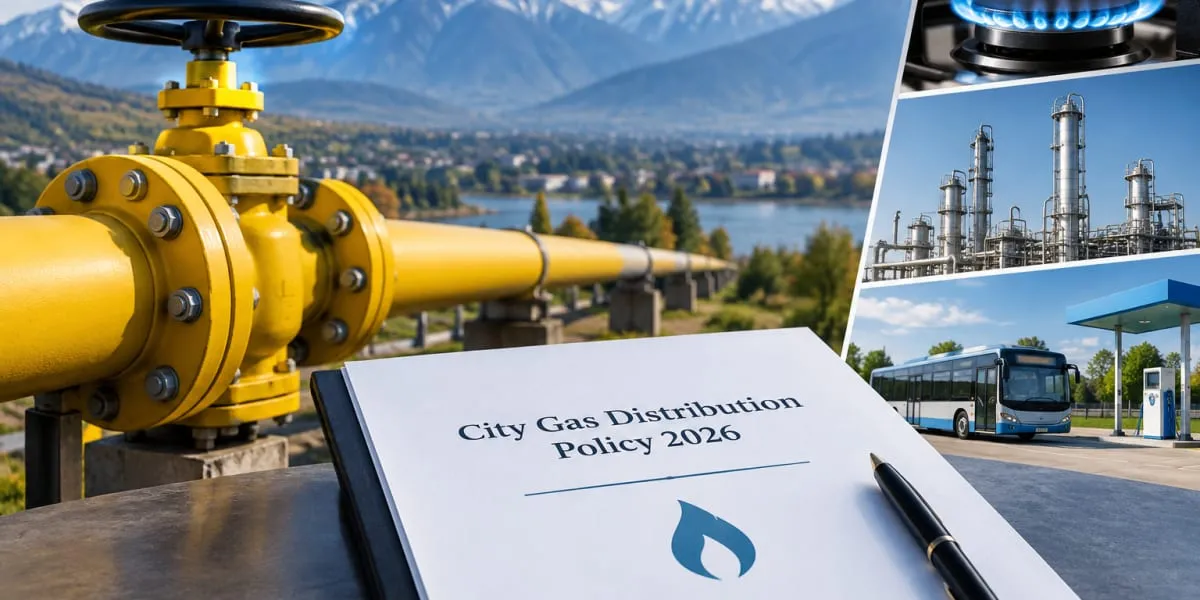
Jammu and Kashmir government has notified the City Gas Distribution (CGD) Policy, 2026, following its approval by the Council of Ministers headed by Chief Minister Omar Abdullah. The policy sets out a phased framework for expanding Piped Natural Gas (PNG) and Compressed Natural Gas (CNG) access for households, businesses, industries and the transport sector across the Union Territory.

CGD networks will be expanded in phases across all 20 districts, with the aim of bringing reliable natural gas closer to consumers and supporting a gradual shift from conventional fuels. The government said the policy is designed to improve energy access while creating an investor-friendly and time-bound environment for gas distribution projects.

The policy provides for single-window and time-bound clearances, streamlined procedures for setting up CNG stations and standardised norms for the Right of Way. These measures are intended to reduce procedural delays, simplify project implementation and facilitate investment in natural gas infrastructure.

It also prioritises gas connectivity for major industrial estates, including those in Kathua, Samba and Pulwama. Improved access to natural gas is expected to support industrial activity, enhance energy efficiency and help businesses manage fuel costs, while strengthening their competitiveness and encouraging investment in the clean-energy sector.

The policy is also expected to create opportunities for local employment, apprenticeships and skill development in the construction, operation and maintenance of gas distribution networks and related services. Abdullah described the measure as an important step towards cleaner growth, sustainable development and a modern energy ecosystem in Jammu and Kashmir, saying it would expand reliable energy access and support industry and investment.

Continue Reading

Video Thumbnail
▶

    SIGN-UP FOR OUR GENERAL NEWSLETTER

    Trending News

    SUBSCRIBE TO THE NEWSLETTER


    Don't miss out on valuable insights and opportunities to connect with like minded professionals.


      This will close in 0 seconds