Connect with us

Concrete

Product life is always a matter of innovation

Published

on

Shares

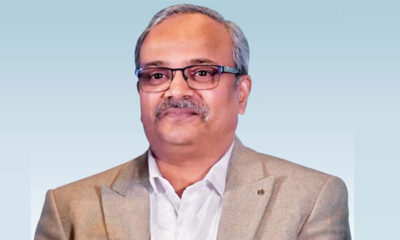
Utssav Gupta, Director, Supertech Fabrics, explains how innovation in industrial filtration is evolving towards energy optimisation, material resilience and sustainability.

As cement manufacturers embrace new fuels, stricter emission norms and evolving material chemistries, the role of filtration has become more strategic than ever. Supertech Fabrics, a pioneer in industrial filter media, is redefining performance through advanced coating chemistries, collaborative R&D and intelligent design. In this conversation, Utssav Gupta shares insights into how Supertech Fabrics is aligning technology, collaboration and sustainability to shape the next phase of filtration excellence.

How do you define innovation in industrial fabrics for cement applications?
I think there’s a lot of room for innovation as the processes are changing, the fuels are changing, which leads to changes in the stream. The powder is evolving with the innovations of cement producers themselves. There are also more stringent environmental norms now. So, the whole cement industry—whether in terms of materials or systems—is going through a lot of transition. These are minor transitions, not as big as inventing the wheel, but still significant enough to fine-tune cement processes. This transition percolates down to us as well, as filter fabric producers, where we need to respond in conjunction with the system and the end users’ goals of creating a more sustainable cement industry than before.

What’s driving your latest breakthroughs in filtration and fabric performance?
For us, the focus is on energy saving in the plant. We aim to address not only the efficiency of filtration but also the cleanability aspects of the filter fabric, which directly impact energy consumption and running losses for cement users. So, the driver for us is not just filtration quality but also the amount of energy used to achieve that filtration quality.
Of course, product life is always a matter of innovation. We constantly evaluate the impact of changes in powder chemistry and fluid chemistry on filter fabric performance. That is an ongoing area of in-house research for us.

How do your products maintain their durability in high-heat and dusty plant environments?
It’s because of the coating chemistries we use. As I mentioned earlier, durability is not just about product life—it’s also about performance aspects. Heat, dust and gaseous environments are all part of the cement process. We must embrace them rather than treat them as problems. With these coating chemistries, we can fine-tune our products to deliver both filtration efficiency and energy efficiency.

How do your collaborations with OEMs or cement producers shape the innovations that happen in your organisation?
Collaboration is very important. When we talk to OEMs or cement producers, they often face issues they haven’t encountered before, because small changes in their supply chain can impact their systems. As someone passionate about filtration, our understanding comes primarily from such interactions and collaborations. Once we learn about a problem, we try to feed that insight back into our system, making the first supply itself as intelligent as possible.
Industry collaboration is essential—no one can progress without it. But what makes it truly interesting is how you collaborate in an environment that’s constantly bringing new and unknown challenges. That’s what has kept our collaborations engaging—with all major OEMs and top producers in the
cement industry.

What steps are you taking toward making your materials more sustainable for production? And how are you bringing sustainability into your operations?
Sustainability has multiple dimensions. Gone are the days when we could simply say ‘go green’ and call it sustainable. We must embrace the challenges of the industry. The cement industry has historically been very polluting, and that pollution isn’t just about dust—it’s also about discarded materials.
Now, with the use of AFRs, the industry is evolving into a pollution-absorbing one, since waste that would have ended up in the environment is now being used as a fuel source. But this brings new challenges for material performance. If you look at all these dimensions, I will say filtration must improve—not only to prevent air pollution but also to withstand the challenges of using other waste-based fuels. Our filters must not absorb one type of waste and create another problem through shorter life cycles. Material life cycles must be strong enough to reduce industrial waste simultaneously. In combining all these aspects, we work toward a comprehensive sustainability model—of which we are a small but integral part.

How has digitalisation influenced your R&D and quality control?
Digitalisation is a very interesting and fast-evolving subject. OEMs are moving toward IoT sensors and live data analysis. However, we’ve found that live data is often not as detailed from a filtration perspective. As filter bag producers, we sometimes find it difficult to analyse system performance without the right data. Nevertheless, this trend is growing. Through collaboration with OEMs, we’ve been able to provide feedback on which parameters should be monitored while installing instrumentation. Once you have proper instrumentation, you can gain live insights into what’s happening in real time—allowing for calculations and understanding of where more efficiency can be achieved. These digital tools—IoT sensors, predictive analytics, trend mapping—are giving us insights we never had before. This is reshaping the industry and prompting us to raise our game further.

What material or filtration trends do you see shaping the industry’s future?
I’d say the base materials themselves are going through a small shift—not too drastic. We’re still using traditional materials but combining them with advanced chemistries. It’s essentially a two-part system—resurrecting the old while adapting it for the future through coating chemistry.
The trends are largely driven by the changes we discussed earlier: in-feed composition, material supply chains, and the broader economic environment. The supply chain for end users is not entirely under their control, so equipment and materials need to adapt. This adaptability helps ensure that end users are not constrained by external changes.

What’s next for Supertech Fabrics in advanced filtration and sustainability?
We’re riding the innovation curve right now and pushing in that direction. One major development I see is deeper collaboration with technical OEMs, which allows us to innovate more effectively. In the future, I see more integration between filtration systems and OEM technologies. That’s one of the trends that will have an immediate impact on both filtration quality and sustainability. That’s the direction we are moving toward in the coming years.

– Kanika Mathur

Concrete

Steel: Shielded or Strengthened?

CW explores the impact of pro-steel policies on construction and infrastructure and identifies gaps that need to be addressed.

Published

on

By

Shares

Going forward, domestic steel mills are targeting capacity expansion
of nearly 40 per cent through till FY31, adding 80-85 mt, translating
into an investment pipeline of $ 45-50 billion. So, Jhunjhunwala points
out that continuing the safeguard duty will be vital to prevent a surge
in imports and protect domestic prices from external shocks. While in
FY26, the industry operating profit per tonne is expected to hold at
around $ 108, similar to last year, the industry’s earnings must
meaningfully improve from hereon to sustain large-scale investments.
Else, domestic mills could experience a significant spike in industry
leverage levels over the medium term, increasing their vulnerability to
external macroeconomic shocks.(~$ 60/tonne) over the past one month,
compressing the import parity discount to ~$ 23-25/tonne from previous
highs of ~$ 70-90/tonne, adds Jhunjhunwala. With this, he says, “the
industry can expect high resistance to further steel price increases.”

Domestic HRC prices have increased by ~Rs 5,000/tonne
“Aggressive
capacity additions (~15 mt commissioned in FY25, with 5 mt more by
FY26) have created a supply overhang, temporarily outpacing demand
growth of ~11-12 mt,” he says…

To read the full article Click Here

Continue Reading

Concrete

JK Cement Commissions 3 MTPA Buxar Plant, Crosses 31 MTPA

Company becomes India’s fifth-largest grey cement producer

Published

on

By

Shares

JK Cement  has commissioned its new 3 MTPA grey cement plant in Buxar, Bihar, taking the company’s total installed capacity to 31.26 million tonnes per annum (MTPA) and moving it past the 30 MTPA milestone. With this addition, JK Cement now ranks among the top five grey cement manufacturers in India, strengthening its national presence.

Commenting on the development, Dr Raghavpat Singhania, Managing Director, JK Cement, said, “Crossing 31 MTPA is a significant turning point in JK Cement’s expansion and demonstrates the scale, resilience, and aspirations of our company. In addition to making a significant contribution to Bihar’s development vision, the commissioning of our Buxar plant represents a strategic step towards expanding our national footprint. We are committed to developing top-notch manufacturing capabilities that boost India’s infrastructure development and generate long-term benefits for local communities.”

Spread across 100 acres, the Buxar plant is located on the Patna–Buxar highway, enabling efficient distribution across Bihar and neighbouring regions. While JK Cement entered the Bihar market last year through supplies from its Prayagraj plant, the new facility will allow local manufacturing and deliveries within 24 hours across the state.

Mr Madhavkrishna Singhania, Joint Managing Director & CEO, JK Cement, said, “JK Cement is now among India’s top five producers of grey cement after the Buxar plant commissioning. Our capacity to serve Bihar locally, more effectively, and on a larger scale is strengthened by this facility. Although we had already entered the Bihar market last year using Prayagraj supplies, local manufacturing now enables us to be nearer to our clients and significantly raise service standards throughout the state. Buxar places us at the center of this chance to promote sustainable growth for both the company and the region in Bihar, a high-growth market with strong infrastructure momentum.”

The project has involved an investment of Rs 5 billion. Commercial production began on 29 January 2026, following construction commencement in March 2025. The company said the plant is expected to generate significant direct and indirect employment and support ancillary industrial development in the region.

Continue Reading

Concrete

JK Cement Crosses 31 MTPA Capacity with Commissioning of Buxar Plant in Bihar

Published

on

By

Shares

JK Cement has commissioned a 3 MTPA Grey Cement plant in Buxar, Bihar, taking its total capacity to 31.26 MTPA and placing it among India’s top five grey cement producers. The ₹500 crore investment strengthens the company’s national footprint while supporting Bihar’s infrastructure growth and local economic development.

JK Cement Ltd., one of India’s leading cement manufacturers, has announced the commissioning of its new state-of-the-art Grey Cement plant in Buxar, Bihar, marking a significant milestone in the company’s growth trajectory. With the commissioning of this facility, JK Cement’s total production capacity has increased to 31.26 million tonnes per annum (MTPA), enabling the company to cross the 30 MTPA threshold.

This expansion positions JK Cement among the top five Grey Cement manufacturers in India, strengthening its national footprint and reinforcing its long-term growth strategy.

Commenting on the strategic achievement, Dr Raghavpat Singhania, Managing Director, JK Cement, said, “Crossing 31 MTPA is a significant turning point in JK Cement’s expansion and demonstrates the scale, resilience, and aspirations of our company. In addition to making a significant contribution to Bihar’s development vision, the commissioning of our Buxar plant represents a strategic step towards expanding our national footprint. We are committed to developing top-notch manufacturing capabilities that boost India’s infrastructure development and generate long-term benefits for local communities.”

The Buxar plant has a capacity of 3 MTPA and is spread across 100 acres. Strategically located on the Patna–Buxar highway, the facility enables faster and more efficient distribution across Bihar and adjoining regions. While JK Cement entered the Bihar market last year through supplies from its Prayagraj plant, the Buxar facility will now allow the company to serve the state locally, with deliveries possible within 24 hours across Bihar.

Sharing his views on the expansion, Madhavkrishna Singhania, Joint Managing Director & CEO, JK Cement, said, “JK Cement is now among India’s top five producers of grey cement after the Buxar plant commissioning. Our capacity to serve Bihar locally, more effectively, and on a larger scale is strengthened by this facility. Although we had already entered the Bihar market last year using Prayagraj supplies, local manufacturing now enables us to be nearer to our clients and significantly raise service standards throughout the state. Buxar places us at the center of this chance to promote sustainable growth for both the company and the region in Bihar, a high-growth market with strong infrastructure momentum.”

The new facility represents a strategic step in supporting Bihar’s development vision by ensuring faster access to superior quality cement for infrastructure, housing, and commercial projects. JK Cement has invested approximately ₹500 crore in the project. Construction began in March 2025, and commercial production commenced on January 29, 2026.

In addition to strengthening JK Cement’s regional presence, the Buxar plant is expected to generate significant direct and indirect employment opportunities and attract ancillary industries, thereby contributing to the local economy and the broader industrial ecosystem.

Continue Reading

Trending News

SUBSCRIBE TO THE NEWSLETTER


Don't miss out on valuable insights and opportunities to connect with like minded professionals.


    This will close in 0 seconds