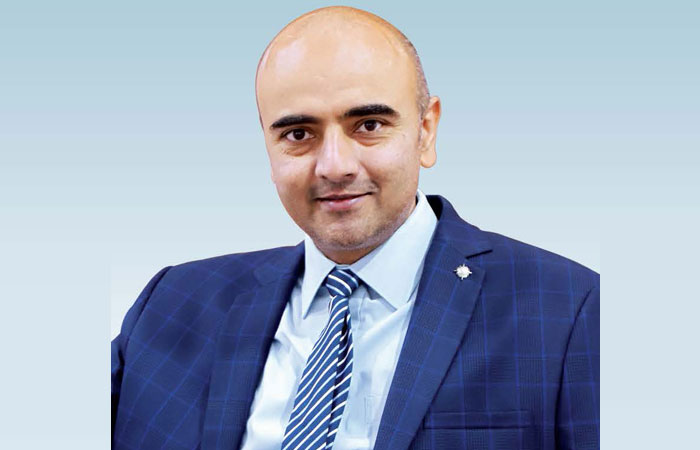
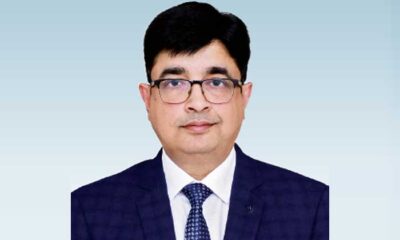
Jignesh Kundaria, CEO and Director, Fornnax, shares how the company is transforming the role of shredding systems from mechanical workhorses into intelligent, adaptive platforms for the cement and waste-to-energy industries.
As alternative fuels and raw materials (AFR) become central to cement manufacturing, the demand for intelligent waste pre-processing systems is stronger than ever. Fornnax, a leading Indian innovator in shredding and recycling technology, is reimagining what industrial shredders can achieve through design precision, digital integration and performance consistency. At the heart of this innovation lies a commitment to turn waste into opportunity. In this conversation, Jignesh Kundaria outlines how the company’s next-generation shredders are paving the way for an intelligent, data-driven future for the cement sector.
What core design or engineering philosophies drive your approach to developing next-generation shredding solutions for modern waste and
AFR applications?
Our core design philosophy at Fornnax, centred on Heavy-Duty Reliability and Precision for AFR Quality, drives us to engineer feedstock quality enhancers rather than just shredders. This approach rests on three principles: firstly, ensuring Robustness by designing equipment like the world’s biggest R-MAX 3300 secondary shredder with best-in-class technology and heavy, wear-resistant components to endure non-stop, high-impact operations and guarantee minimal failure. Secondly, focusing on Optimal Particle Geometry to achieve the precise size and homogeneity (e.g., 30-50mm for fine
RDF/SRF) critical for efficient kiln feeding and minimising clinker quality disturbances. Finally, maximising Throughput with Efficiency by leveraging high-torque, low-speed technology to deliver high tonnes per hour (TPH) while maintaining the lowest possible power consumption per tonne across diverse waste streams.
How does your solution address the harsh environmental and operational challenges typical in cement plants?
Our solutions are engineered to specifically address the demanding conditions of Indian cement plants, starting with rigorous R&D focused on the reality of Indian Municipal Solid Waste (MSW), which is typically among the most highly contaminated in the world. We address the harsh environmental challenge of contamination through robust, integrated separation and shredding technology that handles abrasive materials and un-shreddable objects efficiently. For the operational challenges of non-stop production and unforgiving environments, our machinery is built with extreme durability to minimise breakdowns. Crucially, our commitment extends beyond the equipment, as our highly trained after-sales team is always available for round-the-clock serviceability, ensuring maximum uptime and rapid operational recovery for our partners.
In large-scale waste processing environments, how do you ensure consistent performance, reliability, and output quality despite the unpredictable nature of input materials?
We ensure consistent performance and output quality through a strategy combining heavy-duty engineering with intelligent process control. For example, our R-MAX3300 secondary shredder utilises a powerful, high-torque drive to provide the necessary mechanical force to process unpredictable, high-density materials without jamming, ensuring continuous operation. Output consistency, critical for AFR, is achieved by an integrated screening system that precisely controls the particle size (e.g., up to 50 mm), recirculating oversized material until it meets the required specification.
How do you approach process optimisation in high-throughput shredding systems—balancing power, efficiency, and output consistency across diverse waste streams?
At Fornnax, process optimisation in high-throughput shredding is not just about increasing speed or power; it’s about engineering harmony between mechanical robustness, intelligent control, and material behaviour. We use high-torque, low-speed drives to deliver consistent shearing force with lower energy draw, ensuring stable throughput even when the feed varies in density or composition. Our systems integrate real-time monitoring and closed-loop screening that automatically adjusts cutting dynamics to maintain precise particle geometry and AFR-ready quality. This adaptive control philosophy allows our shredders to self-balance between performance and efficiency, turning process variability into a predictable, optimised output that defines Fornnax’s engineering DNA.
What are the biggest challenges and opportunities when designing advanced shredding systems?
When we look at integrating advanced shredding systems into existing infrastructures, whether it’s for cement AFR or waste-to-energy, we face unique challenges that specifically guide our R&D approach and New Product Development (NPD). As a ‘Made in India’ equipment manufacturer, our primary design brief is to conquer the problems of Indian MSW which is arguably the most contaminated waste stream in the world and make our systems fit seamlessly. The biggest challenge is the tight physical constraints and legacy integration within existing plants, requiring us to design high-capacity shredders that are compact enough to avoid extensive civil work and ensure their modern PLC controls can communicate with older plant systems.
We must also meet the non-negotiable challenge of strict AFR specification compliance by consistently producing a highly homogeneous fuel but this leads directly to our biggest opportunity: by guaranteeing this quality, we empower the customer to dramatically increase their AFR replacement rate, saving huge costs, while the advanced operational data in our systems enable a shift to predictive maintenance for the entire AFR line, eliminating unplanned downtime.
How do you see AI, automation, and smart control systems redefining the future of waste pre-processing and material recovery efficiency?
The future of this industry and the very notion of waste as a valuable resource that will be defined not by mechanical horsepower, but by intelligent systems that can sense, adapt and optimise in real time. At Fornnax, while our foundation remains rooted in world-class mechanical engineering, we are envisioning the next generation of shredding technology that will seamlessly integrate AI, automation and smart control capabilities to deliver unprecedented precision, reliability and energy efficiency.
Our vision by 2030 is simple: to become a global leader in recycling technology that is state-of-the-art, innovative, economical, efficient, reliable and eco-friendly. And with this approach, we are aiming to evolve shredding systems strategically, from purely mechanical equipment into intelligent, adaptive platforms capable of learning from material behaviour, optimising energy use and ensuring consistent output quality. This forward-looking mindset will allow us to redefine process reliability and material recovery efficiency for the next decade making Fornnax a driving force in shaping the intelligent future of recycling and waste-to-energy systems.
What future technological trends (e.g. self-healing systems, digital twins, automated decision-making) do you believe Fornnax should be pioneering in the cement sector?
At Fornnax, we believe the future lies in engineering machines that not only perform but also perceive, predict and prevent. Our next wave of innovation focuses on integrating advanced sensors through IoT to enable intelligent, data-driven maintenance. These smart sensors continuously monitor parameters such as temperature, vibration and torque, transmitting real-time data to the plant’s control system. This allows for easy, periodic maintenance and helps predict potential wear or misalignment before they escalate into costly downtime.
Additionally, our equipment is evolving through next-generation PLC-based control systems that provide greater operational visibility, adaptive performance tuning, and seamless integration with plant-wide automation networks. This enhances the operator’s ability to optimise throughput and energy use with precision.
We are also advancing our bearing housing design, a critical element in heavy-duty shredding, by using improved material strength, lubrication pathways, and heat dissipation capabilities to extend life cycles under extreme load conditions. These innovations collectively reduce mechanical stress, improve reliability and lower maintenance intervals essential for continuous cement operations.
In the near future, we aim to bring these technologies together into a digitally intelligent shredding ecosystem, where machines self-monitor, communicate insights, and support decision-making across the AFR value chain. This shift will redefine what reliability means in cement co-processing—moving from reactive maintenance to predictive intelligence and process resilience.
– Kanika Mathur















 Concrete4 weeks ago
 Concrete3 weeks ago
 Concrete2 weeks ago
 Concrete4 weeks ago