Connect with us

Economy & Market

The main pushback against automation is budget

Published

on

Shares

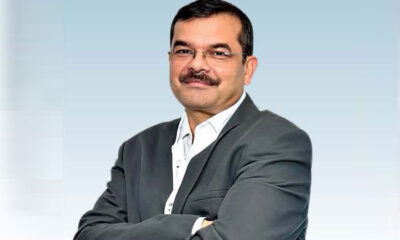
Mehul Doshi, Head of Department — Customer Support and Service, HAVER & BOECKER, shares insights on leveraging diagnostics and optimisation tools to address challenges in automation of bagging, packaging, and palletising processes.

In the fiercely competitive cement industry, optimising bagging, packaging and palletising processes is no longer a luxury but a necessity. Cutting-edge diagnostics and tailored optimisation plans are transforming how plants enhance efficiency, reduce waste, and boost safety — all while advancing sustainability goals. Through a seamless blend of digital monitoring and hands-on audits, manufacturers are now able to identify bottlenecks, minimise product loss and future-proof their operations, shares Mehul Doshi, Head of Department — Customer Support and Service, HAVER & BOECKER, in this exclusive interview.

How do QUAT2RO® and POP enhance efficiency in bagging, packaging, and palletising for the cement industry?
Comprising the diagnostics section of HAVER & BOECKER’s PROcheck lifecycle approach, QUAT2RO® and the Plant Optimisation Plan (POP) help operations increase plant performance, optimise machine conditions, set up and use resources, raise health and safety standards and improve energy efficiency.
As the digital tool of HAVER & BOECKER’s diagnostics approach, QUAT2RO® collects short-term and long-term production data on all connected machines. The data combines performance and maintenance reports into a single dashboard to make monitoring equipment settings simple. QUAT2RO® System Monitoring alerts operators to any discrepancy in the packing or palletising machines to allow faster maintenance and increase efficiency on the packing line. HAVER & BOECKER recommends installing QUAT2RO® on packing lines before engaging in a Plant Optimisation Plan (POP) to collect information on the baseline performance of the line.
POP is the human approach toward diagnostics. For the POP, HAVER & BOECKER engineers visit the customer plant to observe the operation and recommend enhancements classified by level of urgency. The full plant audit considers all areas, from product storage and handling to packing, bag transport, palletising and loading lines, as well as surrounding machines and environmental factors. The engineers send a full report tagged with green, yellow or red to highlight areas for improvement, ensuring that critical updates are prioritised.
HAVER & BOECKER’s Bag Optimisation Plan (BOP) is a very important part of the POP and allows it to go beyond the mechanical equipment and into the important role of consumables. While the goal of the POP is to find the perfect harmony between the bag, the product and the machine, the BOP focuses on all aspects of the bag and includes a bag volume test, bag valve check, visual pallet check and a bag specification check. The HAVER & BOECKER Institute tests and analyses the bag and the product to optimise all three major factors in the packing process — machine, bag and product —resulting in the highest levels of productivity and efficiency.

What common challenges in cement packing plants do your diagnostics tools address, and how are the solutions tailored?
HAVER & BOECKER diagnostics tools primarily focus on production issues, whether that’s tracking equipment efficiency through QUAT2RO® or providing recommendations for optimising existing equipment and processes. One of the biggest challenges plants face is dust escaping as bags are filled. Most packing equipment comes in a one-size-fits-all approach, meaning it’s not optimised for each individual product. If not treated properly, free-flowing powder material like cement will settle on the floor, equipment and operators instead of in the bag. HAVER & BOECKER diagnostics, specifically their POP and BOP, considers the individual properties of the cement being poured and how to direct it into the bag most effectively.
The bags used for packing cement can contribute to the amount of material lost in the packing process. Unsealed valve bags rely on the inner pressure of the bag to close, which results in the bag being only 70 per cent closed, leaving a 30 per cent opening for spillage. An improperly sealed bag results in material loss at a rapid rate while in storage and throughout transport, leading to a total product loss of up to 5 per cent. That’s why HAVER & BOECKER offers SEAL technology. Ultrasonic sealing effectively welds bags shut, resulting in the bag being 100 per cent closed. Unlike adhesive closed bags, this type of seal means bags won’t unstick over time and cause spillage if left in storage. This bag also eliminates product loss during transport.
If a facility is seeing similar product loss in their plant, HAVER & BOECKER will address the type of bag being used and recommend an upgrade to SEAL technology in their optimisation plan. They will also address any dust production issues in the full packing line to optimise production.

How does QUAT2RO® improve process efficiency, and which KPIs are critical?
QUAT2RO® detects issues before they become critical to the packing line. Operators can monitor machines’ production rates in real time to see how their equipment is performing. The results can be used to check production levels and identify solutions to productivity challenges and inefficiencies. This data can show any bottlenecks in the packing line so operators can address the issue immediately.
All data is stored in a single online portal with customisable alert systems and report templates. The portal keeps track of maintenance intervals for all assemblies and components and sends early notifications as a reminder to order wear parts. The system can also be accessed by the HAVER & BOECKER service team, providing cement plants with direct contact with our experts to address any of their concerns.

How do your solutions support sustainability goals like energy efficiency and waste reduction?
Sustainability and energy efficiency are at the heart of what we do. HAVER & BOECKER offers 10 energy saving solutions for packing lines that cover everything from optimising equipment performance to keeping equipment clean and having equipment serviced regularly. Optimising machine performance leads to energy efficiency because any material that escapes the packing process is a loss, which means the rest of the production plant needs to produce more to make up for it. Having a packing line fully optimised is one easy way to ensure energy efficiency and waste reduction.

How does the PROcheck lifecycle approach integrate with existing equipment in cement plants?
One of the many benefits of PROcheck lifestyle approach is that it can be integrated into the cement plant’s processes at any time. The first step to a full PROcheck is the Plant Optimisation Plan where an engineer comes to visit the plant and assess the technology, packing line and product being produced. No matter what technology is currently in use, our engineers provide a full report addressing any concerns and suggesting updates.

What trends in bagging, packaging, and palletising are shaping the cement industry?
Sustainability and automation are prime motivators for the cement industry right now. Whether that’s completely automating processes to increase efficiency or using electric equipment to cut down on carbon emissions, cement producers want to be able to produce better quality cement with more technologically advanced equipment.
The industry has seen a huge push toward automation in many places around the world. However, the main pushback against automation is budget. Budgetary restrictions are universal and often hold cement plants back from taking the plunge. We recognise this need and have started working with The Portland Company to provide Assemble to Order packing equipment with introductory automation that helps plants start their journey with plenty of room to expand into more customised equipment with us later. This ensures that all operations, no matter where in the world they’re located, can get an automated option suited for their unique packing line and access best-in-class service.

How does POP (and BOP) ensure optimal coordination of machines, bags, and products?
A POP includes a full plant audit that considers all areas, from product storage and handling to packing, bag transport, palletising and loading lines as well as surrounding machines and environmental factors. The goal of the report is to give plant managers a thorough, solid idea of how their plant is currently performing and where critical updates need to be made. The full POP, including the BOP, considers machines, bags and products to give an overarching recommendation on how all of them can work together for the best results.
The HAVER & BOECKER Institute completes the BOP, checking the chemical composition of the product, how the machine can aerate the product for maximum efficiency in filling and which bags provide the best protection for that specific product. The goal is to have a cohesive packing line that works together in the most efficient way possible.

What new innovations or upgrades are you introducing to improve packing plant performance?
Our newest products are meant to continually improve the packing line and provide the best support possible throughout the packing process. One major update we’ve introduced is the AMICUS Advanced Robot Family. The AMICUS DEPAL Edition depalletises bags and places them on an automatic bag applicator while the AMICUS PAL Edition palletises bags, boxes, drums and pails for transport. The AMICUS DEPAL replaces a previously manual process and increases safety, which is one of the major benefits of the system. If a facility invests in both an AMICUS PAL and DEPAL, they can create a fully automated packing line from empty to full bag.
Another optimisation HAVER & BOECKER is focused on is the unique ADAMS® Technology. ADAMS® is the system for packing cement into PE bags, offering an unlimited list of advantages. There has been rapid growth in the way ADAMS® is used, including how it has expanded into the cement sector. The FFS film bags used with the ADAMS® ROTO-PACKER protect powder cement from the elements while in transit and in storage. The waterproof, weatherproof bags offer a variety of benefits to all the industries we touch, which is an exciting expansion of our pre-existing line.


Economy & Market

Smart Pumping for Rock Blasting

Published

on

By

Shares

SEEPEX introduces BN pumps with Smart Joint Access (SJA) to improve efficiency, reliability, and inspection speed in demanding rock blasting operations.
Designed for abrasive and chemical media, the solution supports precise dosing, reduced downtime, and enhanced operational safety.

SEEPEX has introduced BN pumps with Smart Joint Access (SJA), engineered for the reliable and precise transfer of abrasive, corrosive, and chemical media in mining and construction. Designed for rock blasting, the pump features a large inspection opening for quick joint checks, a compact footprint for mobile or skid-mounted installations, and flexible drive and material options for consistent performance and uptime.

“Operators can inspect joints quickly and rely on precise pumping of shear-sensitive and abrasive emulsions,” said Magalie Levray, Global Business Development Manager Mining at SEEPEX. “This is particularly critical in rock blasting, where every borehole counts for productivity.” Industry Context

Rock blasting is essential for extracting hard rock and shaping safe excavation profiles in mining and construction. Accurate and consistent loading of explosive emulsions ensures controlled fragmentation, protects personnel, and maximizes productivity. Even minor deviations in pumping can cause delays or reduce product quality. BN pumps with SJA support routine maintenance and pre-operation checks by allowing fast verification of joint integrity, enabling more efficient operations.

Always Inspection Ready

Smart Joint Access is designed for inspection-friendly operations. The large inspection opening in the suction housing provides direct access to both joints, enabling rapid pre-operation checks while maintaining high operational reliability. Technicians can assess joint condition quickly, supporting continuous, reliable operation.

Key Features

  • Compact Footprint: Fits truck-mounted mobile units, skid-mounted systems, and factory installations.
  • Flexible Drive Options: Compact hydraulic drive or electric drive configurations.
  • Hydraulic Efficiency: Low-displacement design reduces oil requirements and supports low total cost of ownership.
  • Equal Wall Stator Design: Ensures high-pressure performance in a compact footprint.
  • Material Flexibility: Stainless steel or steel housings, chrome-plated rotors, and stators in NBR, EPDM, or FKM.

Operators benefit from shorter inspection cycles, reliable dosing, seamless integration, and fast delivery through framework agreements, helping to maintain uptime in critical rock blasting processes.

Applications – Optimized for Rock Blasting

BN pumps with SJA are designed for mining, tunneling, quarrying, civil works, dam construction, and other sectors requiring precise handling of abrasive or chemical media. They provide robust performance while enabling fast, reliable inspection and maintenance.With SJA, operators can quickly access both joints without disassembly, ensuring emulsions are transferred accurately and consistently. This reduces downtime, preserves product integrity, and supports uniform dosing across multiple bore holes.

With the Smart Joint Access inspection opening, operators can quickly access and assess the condition of both joints without disassembly, enabling immediate verification of pump readiness prior to blast hole loading. This allows operators to confirm that emulsions are transferred accurately and consistently, protecting personnel, minimizing product degradation, and maintaining uniform dosing across multiple bore holes.

The combination of equal wall stator design, compact integration, flexible drives, and progressive cavity pump technology ensures continuous, reliable operation even in space-limited, high-pressure environments.

From Inspection to Operation

A leading explosives provider implemented BN pumps with SJA in open pit and underground operations. By replacing legacy pumps, inspection cycles were significantly shortened, allowing crews to complete pre-operation checks and return mobile units to productive work faster. Direct joint access through SJA enabled immediate verification, consistent emulsion dosing, and reduced downtime caused by joint-related deviations.

“The inspection opening gives immediate confidence that each joint is secure before proceeding to bore holes,” said a site technician. “It allows us to act quickly, keeping blasting schedules on track.”

Framework agreements ensured rapid pump supply and minimal downtime, supporting multi-site operations across continents

Continue Reading

Concrete

Digital process control is transforming grinding

Published

on

By

Shares

Satish Maheshwari, Chief Manufacturing Officer, Shree Cement, delves into how digital intelligence is transforming cement grinding into a predictive, stable, and energy-efficient operation.

Grinding sits at the heart of cement manufacturing, accounting for the largest share of electrical energy consumption. In this interview, Satish Maheshwari, Chief Manufacturing Officer, Shree Cement, explains how advanced grinding technologies, data-driven optimisation and process intelligence are transforming mill performance, reducing power consumption and supporting the industry’s decarbonisation goals.

How has the grinding process evolved in Indian cement plants to meet rising efficiency and sustainability expectations?
Over the past decade, Indian cement plants have seen a clear evolution in grinding technology, moving from conventional open-circuit ball mills to high-efficiency closed-circuit systems, Roller Press–Ball Mill combinations and Vertical Roller Mills (VRMs). This shift has been supported by advances in separator design, improved wear-resistant materials, and the growing use of digital process automation. As a result, grinding units today operate as highly controlled manufacturing systems where real-time data, process intelligence and efficient separation work together to deliver stable and predictable performance.
From a sustainability perspective, these developments directly reduce specific power consumption, improve equipment reliability and lower the carbon footprint per tonne of cement produced.

How critical is grinding optimisation in reducing specific power consumption across ball mills and VRMs?
Grinding is the largest consumer of electrical energy in a cement plant, which makes optimisation one of the most effective levers for improving energy efficiency. In ball mill systems, optimisation through correct media selection, charge design, diaphragm configuration, ventilation management and separator tuning can typically deliver power savings of 5 per cent to 8 per cent. In VRMs, fine-tuning airflow balance, grinding pressure, nozzle ring settings, and circulating load can unlock energy reductions in the range of 8 per cent to 12 per cent. Across both systems, sustained operation under stable conditions is critical. Consistency in mill loading and operating parameters improves quality control, reduces wear, and enables long-term energy efficiency, making stability a key operational KPI.

What challenges arise in maintaining consistent cement quality when using alternative raw materials and blended compositions?
The increased use of alternative raw materials and supplementary cementitious materials (SCM) introduces variability in chemistry, moisture, hardness, and loss on ignition. This variability makes it more challenging to maintain consistent fineness, particle size distribution, throughput and downstream performance parameters such as setting time, strength development and workability.
As clinker substitution levels rise, grinding precision becomes increasingly important. Even small improvements in consistency enable higher SCM utilisation without compromising cement performance.
Addressing these challenges requires stronger feed homogenisation, real-time quality monitoring and dynamic adjustment of grinding parameters so that output quality remains stable despite changing input characteristics.

How is digital process control changing the way grinding performance is optimised?
Digital process control is transforming grinding from an operator-dependent activity into a predictive, model-driven operation. Technologies such as online particle size and residue analysers, AI-based optimisation platforms, digital twins for VRMs and Roller Press systems, and advanced process control solutions are redefining how performance is managed.
At the same time, workforce roles are evolving. Operators are increasingly focused on interpreting data trends through digital dashboards and responding proactively rather than relying on manual interventions. Together, these tools improve mill stability, enable faster response to disturbances, maintain consistent fineness, and reduce specific energy consumption while minimising manual effort.

How do you see grinding technologies supporting the industry’s low-clinker and decarbonisation goals?
Modern grinding technologies are central to the industry’s decarbonisation efforts. They enable higher incorporation of SCMs such as fly ash, slag, and limestone, improve particle fineness and reactivity, and reduce overall power consumption. Efficient grinding makes it possible to maintain consistent cement quality at lower clinker factors. Every improvement in energy intensity and particle engineering directly contributes to lower CO2 emissions.
As India moves toward low-carbon construction, precision grinding will remain a foundational capability for delivering sustainable, high-performance cement aligned with national and global climate objectives.

How much potential does grinding optimisation hold for immediate energy
and cost savings?
The potential for near-term savings is substantial. Without major capital investment, most plants can achieve 5 per cent to 15 per cent power reduction through measures such as improving separator efficiency, optimising ventilation, refining media grading, and fine-tuning operating parameters.
With continued capacity expansion across India, advanced optimisation tools will help ensure that productivity gains are not matched by proportional increases in energy demand. Given current power costs, this translates into direct and measurable financial benefits, making grinding optimisation one of the fastest-payback operational initiatives available to cement manufacturers today.

Continue Reading

Concrete

Refractory demands in our kiln have changed

Published

on

By

Shares

Radha Singh, Senior Manager (P&Q), Shree Digvijay Cement, points out why performance, predictability and life-cycle value now matter more than routine replacement in cement kilns.

As Indian cement plants push for higher throughput, increased alternative fuel usage and tighter shutdown cycles, refractory performance in kilns and pyro-processing systems is under growing pressure. In this interview, Radha Singh, Senior Manager (P&Q), Shree Digvijay Cement, shares how refractory demands have evolved on the ground and how smarter digital monitoring is improving kiln stability, uptime and clinker quality.

How have refractory demands changed in your kiln and pyro-processing line over the last five years?
Over the last five years, refractory demands in our kiln and pyro line have changed. Earlier, the focus was mostly on standard grades and routine shutdown-based replacement. But now, because of higher production loads, more alternative fuels and raw materials (AFR) usage and greater temperature variation, the expectation from refractory has increased.
In our own case, the current kiln refractory has already completed around 1.5 years, which itself shows how much more we now rely on materials that can handle thermal shock, alkali attack and coating fluctuations. We have moved towards more stable, high-performance linings so that we don’t have to enter the kiln frequently for repairs.
Overall, the shift has been from just ‘installation and run’ to selecting refractories that give longer life, better coating behaviour and more predictable performance under tougher operating conditions.

What are the biggest refractory challenges in the preheater, calciner and cooler zones?
• Preheater: Coating instability, chloride/sulphur cycles and brick erosion.
• Calciner: AFR firing, thermal shock and alkali infiltration.
• Cooler: Severe abrasion, red-river formation and mechanical stress on linings.
Overall, the biggest challenge is maintaining lining stability under highly variable operating conditions.

How do you evaluate and select refractory partners for long-term performance?
In real plant conditions, we don’t select a refractory partner just by looking at price. First, we see their past performance in similar kilns and whether their material has actually survived our operating conditions. We also check how strong their technical support is during shutdowns, because installation quality matters as much as the material itself.
Another key point is how quickly they respond during breakdowns or hot spots. A good partner should be available on short notice. We also look at their failure analysis capability, whether they can explain why a lining failed and suggest improvements.
On top of this, we review the life they delivered in the last few campaigns, their supply reliability and their willingness to offer plant-specific custom solutions instead of generic grades. Only a partner who supports us throughout the life cycle, which includes selection, installation, monitoring and post-failure analysis, fits our long-term requirement.

Can you share a recent example where better refractory selection improved uptime or clinker quality?
Recently, we upgraded to a high-abrasion basic brick at the kiln outlet. Earlier we had frequent chipping and coating loss. With the new lining, thermal stability improved and the coating became much more stable. As a result, our shutdown interval increased and clinker quality remained more consistent. It had a direct impact on our uptime.

How is increased AFR use affecting refractory behaviour?
Increased AFR use is definitely putting more stress on the refractory. The biggest issue we see daily is the rise in chlorine, alkalis and volatiles, which directly attack the lining, especially in the calciner and kiln inlet. AFR firing is also not as stable as conventional fuel, so we face frequent temperature fluctuations, which cause more thermal shock and small cracks in the lining.
Another real problem is coating instability. Some days the coating builds too fast, other days it suddenly drops, and both conditions impact refractory life. We also notice more dust circulation and buildup inside the calciner whenever the AFR mix changes, which again increases erosion.
Because of these practical issues, we have started relying more on alkali-resistant, low-porosity and better thermal shock–resistant materials to handle the additional stress coming from AFR.

What role does digital monitoring or thermal profiling play in your refractory strategy?
Digital tools like kiln shell scanners, IR imaging and thermal profiling help us detect weakening areas much earlier. This reduces unplanned shutdowns, helps identify hotspots accurately and allows us to replace only the critical sections. Overall, our maintenance has shifted from reactive to predictive, improving lining life significantly.

How do you balance cost, durability and installation speed during refractory shutdowns?
We focus on three points:
• Material quality that suits our thermal profile and chemistry.
• Installation speed, in fast turnarounds, we prefer monolithic.
• Life-cycle cost—the cheapest material is not the most economical. We look at durability, future downtime and total cost of ownership.
This balance ensures reliable performance without unnecessary expenditure.

What refractory or pyro-processing innovations could transform Indian cement operations?
Some promising developments include:
• High-performance, low-porosity and nano-bonded refractories
• Precast modular linings to drastically reduce shutdown time
• AI-driven kiln thermal analytics
• Advanced coating management solutions
• More AFR-compatible refractory mixes

These innovations can significantly improve kiln stability, efficiency and maintenance planning across the industry.

Continue Reading

Trending News

SUBSCRIBE TO THE NEWSLETTER


Don't miss out on valuable insights and opportunities to connect with like minded professionals.


    This will close in 0 seconds