Connect with us

Concrete

JK Cement Boosts Production Capacity with New Production Line at Panna Plant

Published

on

Shares

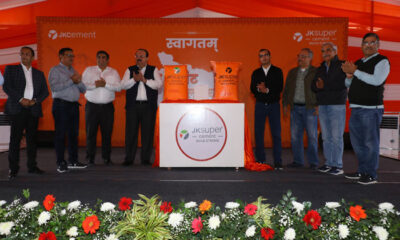
JK Cement hasannounced the inauguration of a new production line at its Panna Plant. This development marks a significant milestone in the company’s expansion strategy and reaffirms its commitment to meeting the growing demand for cement while setting its position as a key industry player.

The new production line at the Panna Plant effectively doubles its clinker production capacity to 6.6 million metric tons per annum (MTPA), up from the previous 3.3 MTPA. This expansion positions JK Cement to cater efficiently to the increasing demand for cement across Uttar Pradesh, Bihar, and Central India.

Dr Raghavpat Singhania, Managing Director, JK Cement Ltd., said, “JK Cement is built on a foundation of growth and expansion. Our new Panna Plant production line is a key pillar in our comprehensive business expansion plan, propelling us towards our vision of becoming a leading player in the cement industry. This strategic expansion allows us to meet the rising demand for high-quality cement, ultimately enhancing our ability to serve our customers. We remain committed to delivering value to all stakeholders and contributing to the nation’s development.”

Madhavkrishna Singhania, Deputy Managing Director and CEO, JK Cement Ltd., commented, “The launch of our new production line underscores JK Cement’s unwavering commitment to achieving long-term growth and operational excellence. This expansion empowers us to optimize production processes, unlock our full potential, and position ourselves for the future of the cement industry.”

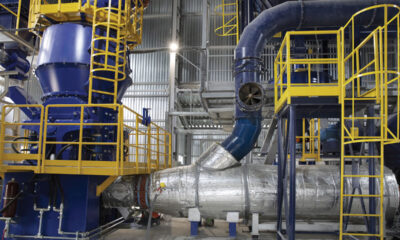
The new production line integrates advanced automation systems for precise control and monitoring, minimising human intervention and enhancing efficiency. State-of-the-art machinery and equipment ensure optimal performance, reliability, consistent output quality, and energy efficiency, reflecting JK Cement’s commitment to sustainability. The plant incorporates energy-saving technologies, optimised kiln systems, and waste heat recovery systems to reduce energy consumption and lower the carbon footprint. Stringent quality control measures in the plant guarantee that cement products meet the highest industry standards.

Additionally, the Panna Plant expansion project generates employment opportunities, contributing to socio-economic growth in the region. JK Cement actively engages with the local community through educational, healthcare, and social initiatives, strengthening its bond with stakeholders.

With a significant investment of Rs. 2850 Cr, the Panna Plant expansion project reflects JK Cement’s vision for sustainable growth, environmental protection, and contribution to economic and social development in the region.

Concrete

Cement Production Up Eight Point Six Per Cent To 491.4 mn t In FY26

Icra Sees Seven To Eight Per Cent Growth In FY27

Published

on

By

Shares


Icra reported that cement production volumes rose by eight point six per cent in the financial year 2026 to 491.4 million (mn) metric tonne (t). March output was 48.4 mn t, up four per cent year on year on a high base.

The agency projected that volumes are expected to grow by seven to eight per cent in the current financial year, supported by sustained demand from the housing and infrastructure sectors. Average cement prices were reported to have remained flat in March at Rs 340 per bag on a month on month basis, while prices for FY26 increased by two per cent to Rs 345 per bag year on year.

Among inputs, coal prices declined by 17 per cent year on year to USD 102 per t in April 2026 while petcoke prices rose sharply by 19 per cent month on month and 22 per cent year on year to around Rs 15,800 per t in April. Petcoke was higher by about five per cent year on year in FY26 and diesel prices were reported to have remained steady. Icra noted that coal, petcoke and diesel are expected to trend higher in FY27 and remain exposed to risks from the ongoing West Asia conflict.

The report emphasised that operating margins for Icra’s sample set of companies are estimated to moderate by 200 to 400 basis points (bps) in FY27 on account of a likely increase in input costs, with further downside risks should crude prices rise owing to geopolitical tensions. However, debt protection metrics are projected to remain comfortable and Icra maintained a stable outlook on the Indian cement sector.

Continue Reading

Concrete

UltraTech Cement FY26 PAT Crosses Rs 80 bn

Company reports record sales, profit and 200 MTPA capacity milestone

Published

on

By

Shares


UltraTech Cement reported record financial performance for Q4 and FY26, supported by strong volumes, higher profitability and improved cost efficiency. Consolidated net sales for Q4 FY26 rose 12 per cent year-on-year to Rs 254.67 billion, while PBIDT increased 20 per cent to Rs 56.88 billion. PAT, excluding exceptional items, grew 21 per cent to Rs 30.11 billion.

For FY26, consolidated net sales stood at Rs 873.84 billion, up 17 per cent from Rs 749.36 billion in FY25. PBIDT rose 32 per cent to Rs 175.98 billion, while PAT increased 36 per cent to Rs 83.05 billion, crossing the Rs 80 billion mark for the first time.

India grey cement volumes reached 42.41 million tonnes in Q4 FY26, up 9.3 per cent year-on-year, with capacity utilisation at 89 per cent. Full-year India grey cement volumes stood at 145 million tonnes. Energy costs declined 3 per cent, aided by a higher green power mix of 43 per cent in Q4.

The company’s domestic grey cement capacity has crossed 200 MTPA, reaching 200.1 MTPA, while global capacity stands at 205.5 MTPA. UltraTech also recommended a special dividend of Rs 2.40 billion per share value basis equivalent to Rs 240.

Continue Reading

Concrete

Towards Mega Batching

Optimised batching can drive overall efficiencies in large projects.

Published

on

By

Shares


India’s pace of infrastructure development is pushing the construction sector to work at a significantly higher scale than previously. Tight deadlines necessitate eliminating concreting delays, especially in large and mega projects, which, in turn, imply installing the right batching plant and ensuring batching is efficient. CW explores these steps as well as the gaps in India’s batching plant market.

Choose well

Large-scale infrastructure and building projects typically involve concrete consumption exceeding 30,000-50,000 cum per annum or demand continuous, high-volume pours within compressed timelines, according to Rahul R Wadhai, DGM – Quality, Tata Projects.

Considering the daily need for concrete, “large-scale concreting involves pouring more than 1,000–2,000 cum per day while mega projects involve more than 3,000 cum per day,” says Satish R Vachhani, Advanced Concrete & Construction Consultant…

To read the full article Click Here

Continue Reading

Video Thumbnail

    SIGN-UP FOR OUR GENERAL NEWSLETTER


    Trending News

    SUBSCRIBE TO THE NEWSLETTER


    Don't miss out on valuable insights and opportunities to connect with like minded professionals.


      This will close in 0 seconds