Dr Avijit Mondal, Scientist, NTPC Energy Technology Research Alliance (NETRA), explores the holistic pathway to decarbonise the cement industry and build a resilient, low-carbon future for India.
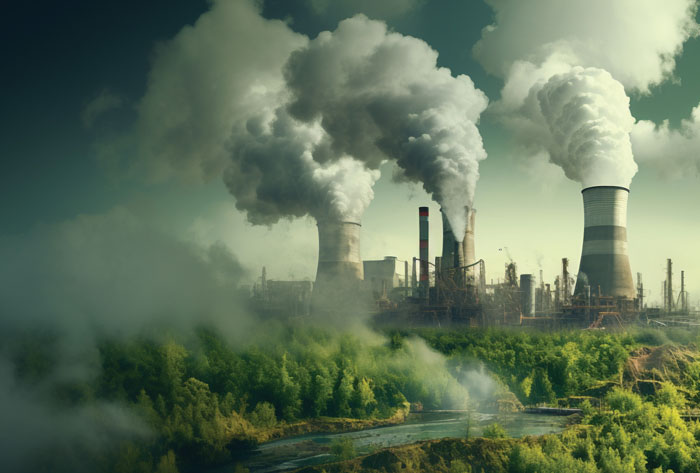
The global climate discourse has placed the spotlight firmly on hard-to-abate sectors, and the cement industry is one of the most critical among them. Cement is the backbone of modern infrastructure, but it also accounts for nearly 7-8 per cent of global CO2 emissions. As economies continue to grow, the demand for cement will persist-making decarbonisation strategies not just desirable but indispensable.
In this context, the 3Cs of decarbonisation – Cut emissions, Cement innovations, and Carbon capture and utilisation (CCU) – offer a comprehensive framework for reshaping the industry’s future.
1. Cut emissions: Driving efficiency and clean energy integration
The first step is to cut emissions at the source. Cement production is energy-intensive, and approximately 40 per cent of emissions come from fuel combustion in kilns. The rest originates from the calcination of limestone during clinker production. Cutting emissions, therefore, requires both process optimisation and energy transition.
- Energy efficiency: Adoption of waste heat recovery systems, improved kiln design, and digitalisation-driven process control can reduce the thermal and electrical energy footprint.
- Alternative fuels: Replacing coal and petcoke with biomass, agricultural residues, and refuse-derived fuels can significantly lower carbon intensity.
- Green power integration: Utilisation of solar, wind, and hybrid renewable solutions in auxiliary operations (grinding, material handling, etc.) ensures indirect emissions are reduced.
Case studies
- Ambuja Cements (India) has installed waste heat recovery systems across multiple plants, reducing dependency on fossil fuels and cutting CO2 emissions.
- CEMEX (Mexico) has adopted alternative fuels at a massive scale, with some plants operating on more than 80 per cent non-fossil fuel share.
For countries like India, where cement demand is still growing, integrating efficiency measures with renewable energy can yield rapid decarbonisation gains.
2. Cement innovations: Rethinking the product itself
The second ‘C’ focuses on redefining what cement is and how it is made. Since clinker production is the largest source of process emissions, lowering clinker factor is central to innovation.
- Blended cements: Increased utilisation of supplementary cementitious materials (SCMs) such as fly ash, slag, silica fume and calcined clays can replace a portion of clinker while maintaining strength and durability.
- Novel binders: Research is advancing in alternative binders like geopolymers and limestone calcined clay cement (LC3), which can reduce emissions by up to 40 per cent compared to ordinary
Portland cement.
- Circular economy integration: Industrial by-products (steel slag, red mud and other
mineral wastes) can be valorised into cementitious materials, reducing both environmental burden and resource dependency.
- Digital innovations: AI-driven mix design optimisation can ensure maximum performance with lower carbon content.
Case studies
- NTPC Ltd (India) has been a pioneer in fly ash utilisation, supplying millions of tonnes annually to cement manufacturers, turning a waste product into a valuable resource.
- Dalmia Cement (India) has adopted a carbon-negative vision by pushing for low-clinker cement and exploring alternative binders.
- LC3 Project (Switzerland, India, and Cuba) demonstrated at pilot scale that calcined clay + limestone blends can reduce emissions by 30-40 per cent, offering a scalable solution for emerging economies.
In India, the synergy between power plants and cement units highlights how industrial symbiosis can accelerate innovation.
3. Carbon capture and utilisation: Closing the loop
Even with aggressive efficiency measures and material innovations, residual emissions from calcination will remain a challenge. This is where CCU technologies come in.
- Carbon capture: Advanced post-combustion capture systems (amine scrubbing, oxy-fuel combustion and emerging solid sorbents) are being piloted globally in cement kilns.
- Carbon utilisation: Captured CO2 can be converted into value-added products-carbonated aggregates, synthetic fuels, or even used in curing processes for concrete. Such solutions not only mitigate emissions but also create new revenue streams.
- Carbon storage: Where utilisation is not feasible, geological storage offers a long-term abatement pathway.
Case studies
- Lafarge Holcim’s plant in Brevik (Norway) is building the world’s first full-scale carbon capture facility for cement, capable of capturing 400,000 tonnes of CO2 annually.
- Dalmia Cement (India) has announced plans to build a large-scale carbon capture facility at its Tamil Nadu plant, with a target of capturing 500,000 tonnes of CO2 per year.
- Solidia Technologies (USA) has developed a process where concrete cures with CO2 instead of water, permanently locking in carbon while reducing cement use.
These pilots demonstrate that CCU is not a distant dream – it is already being tested and scaled.
The road ahead
The cement industry’s decarbonisation journey is both a technological and policy challenge. A mix of regulatory frameworks, carbon pricing, green financing and stakeholder collaboration will be essential to accelerate adoption of the 3Cs.
For India, which is expected to remain the second-largest producer and consumer of cement, the 3Cs framework aligns with national goals of Net Zero by 2070. As power and cement sectors increasingly converge-through ash utilisation, renewable integration, and CCU-the scope for cross-industry partnerships is immense.
Ultimately, the 3Cs of decarbonisation represent more than strategies; they embody the industry’s commitment to building not just infrastructure, but a sustainable future.
References:
• L. Marques, M. Vieira, J. Condeo, H. Sousa, C. Henriques, M. M. Mateus, “Review of Power-to-Liquid (PtL) Technology for Renewable Methanol (e-MeOH): Recent Developments, Emerging Trends and Prospects for the Cement Plant Industry,” None, 2024. https://doi.org/10.20944/preprints202409.0956.v1
• V. Mittal, L. Dosan, “System Dynamics Modelling of Cement Industry Decarbonization Pathways: An Analysis of Carbon Reduction Strategies,” Sustainability, 2025. https://doi.org/10.3390/su17157128
• I. Bolbot, O. Slovikovskyi, “Multi-Physics Modelling and Adaptive Control of Gas Burner Systems for Enhanced Energy Efficiency and Emission Reduction in Cement Drying Processes,” None, 2025. https://doi.org/10.33042/2079-424x.2025.64.2.01
• K. Sun, J. Sun, C. Bu, L. Jiang, C. Zhao, “Historical Drivers and Reduction Paths of CO2 Emissions in Jiangsus Cement Industry,” C++ Conference, 2025. https://doi.org/10.3390/c11010020
• T. Nayab, T. Ahmed, “CO2 Mitigation of a Cement Industry in North Macedonia, Balkans Peninsula: A Short Review,” Environmental Contaminants Reviews, 2024. https://doi.org/10.26480/ecr.01.2024.32.36
• F. Branger, P. Quirion, “Reaping the Carbon Rent: Abatement and Overallocation Profits in the European Cement Industry, Insights from an LMDI Decomposition Analysis,” RELX Group (Netherlands), 2014. https://doi.org/10.2139/ssrn.2497474
• J. A. Brefo, A. K. Osei, J. A. Opoku, “Sustainable Low-Carbon Cement Technologies for Reducing U.S. Construction Carbon Emissions,” None, 2025. https://doi.org/10.51594/estj.v6i6.1954
• J. Glvez Martos, R. Chaliulina, A. Elhoweris, J. A. Mwanda, A. Hakki, Y. Alhorr, “Techno-Economic Assessment of Calcium Sulfoaluminate Clinker Production Using Elemental Sulfur as Raw Material,” Elsevier BV, 2021. https://doi.org/10.1016/j.jclepro.2021.126888
• Q. Su et al., “Life Cycle Assessment and Environmental Load Management in the Cement Industry,” Systems, 2025. https://doi.org/10.3390/systems13070611
• K. Kaptan, S. Cunha, J. Aguiar, “A Review: Construction and Demolition Waste as a Novel Source for CO2 Reduction in Portland Cement Production for Concrete,” Sustainability, 2024. https://doi.org/10.3390/su16020585
ABOUT THE AUTHOR:
Dr Avijit Mondal, Scientist, NTPC Energy Technology Research Alliance (NETRA), has an extensive research experience in materials processing, powder metallurgy, and advanced characterisation techniques.
















 Concrete1 month ago
 Concrete4 weeks ago
 Concrete3 weeks ago
 Concrete1 month ago