

Concrete
Socially Committed


Corporate Social Responsibility (CSR), a management concept that integrates social and environmental concerns, is a widely used and practised term. From philanthropy to environmental sustainability, CSR covers a gamut of verticals. ICR looks at the ongoing CSR initiatives of companies to understand how a unified platform works to maximise their impact.
Industries, corporates, people – all part of an ecosystem that is continuously trying to build something new and better with every passing day. The cement organisations with their plants and research and development units spend each building better quality cement that is safer for the environment and stronger for the infrastructure. Amidst this hustle, these organisations end up using resources in huge quantities, thus depleting the reservoirs of nature but they make the big bucks and strengthen the economy of the nation.

Corporate Social Responsibility (CSR), according to the United Nations Industrial Development Organisation, is a management concept whereby companies integrate social and environmental concerns in their business operations and interactions with their stakeholders CSR is generally understood as being the way through which a company achieves a balance of economic, environmental and social imperatives (‘Triple-Bottom-Line-Approach’), while at the same time addressing the expectations of shareholders and stakeholders. In this sense it is important to draw a distinction between CSR, which can be a strategic business management concept, and charity, sponsorships or philanthropy.
UNIDO identifies environmental management, eco-efficiency, responsible sourcing, stakeholder engagement, labour standards and working conditions, employee and community relations, social equity, gender balance, human rights, good governance, and anti-corruption measures as the key issues that need to be addressed under the CSR vertical of any organisation.
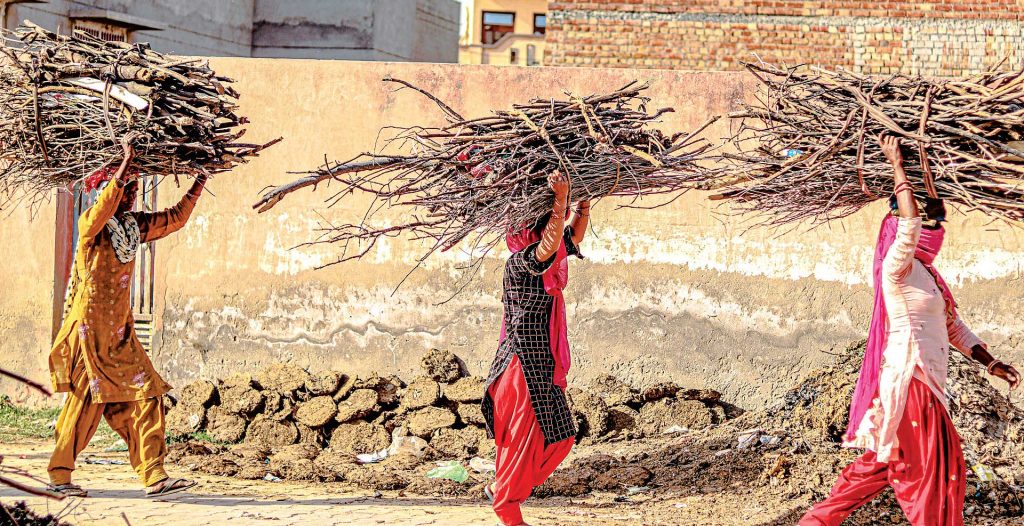
India is the second largest producer of cement in the world with more than seven per cent installed capacity globally. The industry plays a binding and pivotal role in building the socio-economic environment of the nation, development of infrastructure and education sector by spending millions in their CSR activities.
Increasing accountability
According to the CSR Journal, India, as of financial year 2020, the top five cement companies that have taken CSR seriously and have given back to the society are Ultratech Cement with a spend of over Rs 125 crore and betterment of 16 lakh lives, followed by Ambuja Cement with a spend of Rs 53.97 crore reaching to people in 44 locations through 11 states, followed by Shree Cement with a spend of Rs 40.47 crore working for the betterment of around 255 villages, followed by ACC Cement with a spend of 32 crores and Ramco Cements with a spend of Rs 14.99 crores.
ACC Trust, the Corporate Social Responsibility (CSR) arm of ACC Limited in its latest effort of healing the environment and giving back to the society has been consistently making collaborative efforts for enhancing availability of water in the rural communities in 9 villages of Chandrapur & Yavatmal District of Maharashtra. Recognising water as vital for survival and needed for the purposes of irrigation, power generation, domestic use and basic living, they have taken up the responsibility of providing water for the various needs of villages by implementing activities and models for the benefit of the people.
ACC Trust implemented the community interaction intervention model, which began with Participatory Rural Appraisal (PRA) exercises all over the potential project areas. Following PRA, agricultural production and practices, as well as the water sources through which irrigation networks were managed.
Sridhar Balakrishnan, MD and CEO, ACC Limited, for India Education Diary said, “At ACC Trust, we have consistently worked to enhance the lives of rural people by addressing their crucial needs such as access to water through water conservation programmes. Our focus on water resource management, especially in water scarce areas, will continue to grow further through persistent interventions and collaboration with the local communities. The Company adopts a holistic approach which ensures sustainable management of water resources.”
Nuvoco Cement believes in building a better world beyond the realm of their business. Keeping this ideology as a fundamental to their value creation philosophy the organisation believes that they can create a positive and engaged community by playing an active role with it. Their key focus areas for community building include health, safety, education, livelihood and infrastructure. Their various projects are aimed to empower women in rural areas, support women’s health, educate children and build a strong ecosystem for the communities that need upliftment.
Jayakumar Krishnaswamy, Managing Director, Nuvoco Vistas Corp. Ltd. says, “In the past few years, we have streamlined our CSR activities so that there is an increased focus on achieving Global Sustainable Goals. Last year, we added the theme of Sangrahit Bharat through which we will be focusing on natural resource management and promoting clean energy initiatives in villages. Apart from our other themes of health, education and livelihood, this theme will focus on promoting the sustainable use of natural resources, especially groundwater – an increasingly scarce resource across the country. We will work towards improving groundwater availability through recharging, rainwater harvesting and reducing the rampant use of underground water. This will involve activities such as constructing recharging pits, anicuts on small water streams and rainwater harvesting structures in local buildings”.
“We will also focus on promoting clean energy initiatives in villages by installing solar street lights, promoting the use of solar pumps, and installing small solar plants in community buildings like panchayat offices, primary health centres in villages, government school buildings, etc.” he adds.
While the big players in the industry are doing their bit for the community, aspiring to become giants in the industry, organisations like Udaipur Cement Works also have a strong hold on their corporate social responsibility. Their Corporate Social Responsibility policy formed in accordance with the Companies Act 2013, contains the approach and direction given by the Board of Directors, taking into account the recommendations of the CSR Committee. This CSR Policy also lays down the guiding principles for selection, implementation and monitoring of activities as well as formulation of the annual action plan to carry out CSR projects by the Company.
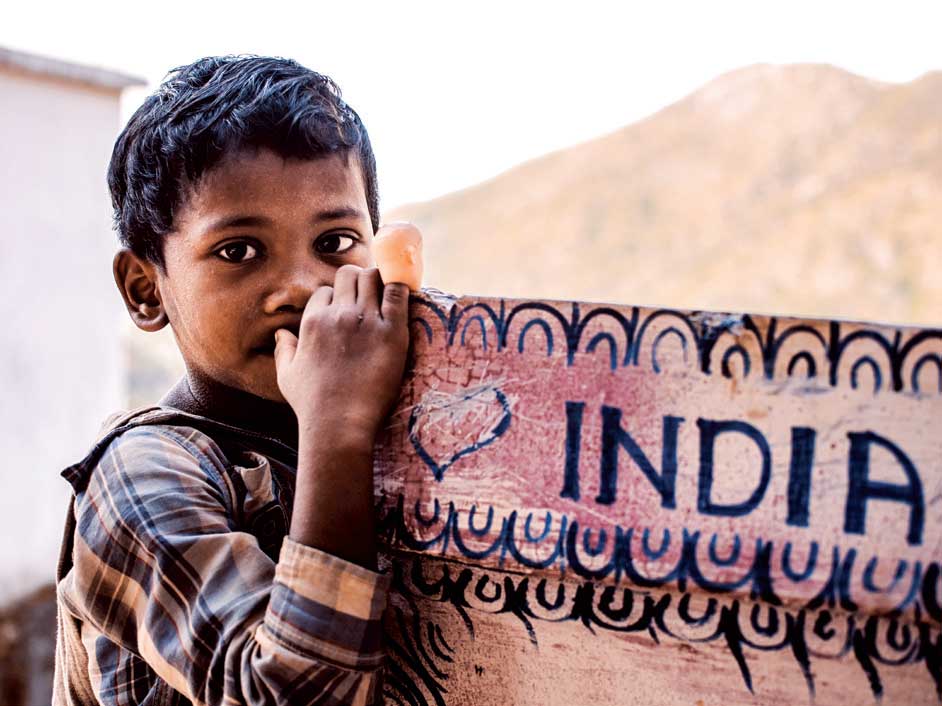
Udaipur Cement Works in accordance to its policy is committed to taking up appropriate evaluation and impact assessment of all or selected projects. Third parties shall be engaged for this to ensure objective assessment. There shall be clarity about the objective/scope of the project and the need it is attempting to address.
Governing policies
In August 2013, the Companies Act 2013 replaced the Companies Act of 1956. The new act introduced changes in businesses that affect company formation, administration, and governance, and incorporates an additional section, Section 135, a clause on Corporate Social Responsibility obligations for companies listed in India. This clause covered essential prerequisites pertaining to the execution of CSR activities of a business, like fund allotment, reporting, and successful project implementation.
Post the replacement of the Companies Act 1956, India in April 2014 became the first country to legislate the need to undertake CSR activities and mandatorily report CSR initiatives under the new Companies Act 2013.
Under the Companies Act 2013, every company having a net worth of Rs 500 crores or more, turnover of Rs 1000 crores or more or net profit before tax of Rs 5 crore or more is required to establish a corporate social responsibility committee of the board which would involve three or more directors.
This committee is required to formulate and recommend a CSR policy to the board, recommend the amount of expenditure to be incurred on the activities and monitor the Corporate Social Responsibility Policy of the company from time to time. The board shall approve and look after the implementation of the CSR activities for the organisation and ensure that the company spends, in every financial year, at least 2 per cent of the average net profits of the company made during the three immediately preceding financial years.
This Companies Act 2013 was amended in 2019. The new amendment requires organisations to report the failure of amount spent on CSR activities with reason for the same. They are required to spend
that amount to a Fund specified in Schedule VII, within a period of six months of the expiry of the financial year.
The Ministry of Corporate Affairs, India takes the rehabilitation of the environment and communities by large organisations like cement manufacturers seriously as they are major players in one of the biggest industries of the nation, as well as utilising a large reserve of resources. They have the means to make the lives of those around them better.
Impact of the pandemic
The Covid-19 pandemic is one of the worst phases the world has witnessed. It not only impacted the health of people, but also brought the world to a standstill. With nations across the globe going into a lockdown, industries slowing down operations, some shutting down work – there were millions who lost their livelihood, homes and more. This was the time when the cement industry came forward as a community to bring its nation back on its feet.
With leading players Ambuja Cement and ACC Cement joining hands and contributing
Rs 3.3 crores to three NGOs to support daily-wagers, migrant labour, slum-dwellers and the homeless stranded across the country to support them during the ongoing lockdown.
Ultratech Cement’s integrated unit in Chandrapur District, Maharashtra, provided 60 computers to 15 Zilla Parishad (ZPs) schools in its nearby villages. With most of the schools being shut due to the pandemic in 2020, these new computers will assist more than 1,700 students in their studies. The CSR team at Awarpur Cement Works finalised the number of computers required after conducting a detailed study of the needs and requirements of these schools. Their CSR team across several manufacturing units, under the project Udaan also distributed nutrition kits to more than 1,400 women, which included expectant mothers, lactating mothers, women from other vulnerable groups, and covered more than 70 anganwadis whose nutrition needs were majorly impacted due to the pandemic. They also launched a livelihood programme to support migrant labourers.
“As the beginning of the financial year saw the outbreak of Covid-19 pandemic, the company responded to this unprecedented crisis by taking several initiatives in collaboration with local panchayats and district administration. Number of food kits, sanitisers, cotton masks and hand wash were distributed to the needy families as well as sessions and meetings were organised to create awareness on Covid-19. The company also undertook multiple CSR activities like medical camps, skills training for the women and girls and supporting them for income earning under its flagship project ‘Swavalamban’, among otheRs Projects like farmers’ training, exposure visits and veterinary camps were organised to improve agricultural and cattle rearing practices to strengthen livelihoods of the marginalised families. These CSR projects have positively impacted the lives of the beneficiaries around the plant,” says Shashikant Kumar, General Manager (HR & IR), Udaipur Cement Works Limited.
Such responses by players of the cement industry are a prime example of them playing a vital role in rebuilding their nation and their people, thus,
living up to the responsibility towards society and community building
-Kanika Mathur














JSW Cement Commissions 1 MTPA Unit in Rajasthan

Wonder Cement appoints Mahesh Singh as VP Corporate Brand Communication

JSW Cement commissions additional 1 MTPA grinding unit in Rajasthan

JSW Cement Boards Approve Proposed Shiva Cement Merger

JSW Cement commissions additional 1 MTPA grinding unit at Nagaur
JSW Cement Commissions 1 MTPA Unit in Rajasthan
Wonder Cement appoints Mahesh Singh as VP Corporate Brand Communication
JSW Cement commissions additional 1 MTPA grinding unit in Rajasthan
JSW Cement Boards Approve Proposed Shiva Cement Merger







