Ulhas Parlikar, Director MRAI and Global Consultant, recommends harnessing India’s vast waste potential. The cement industry can dramatically cut carbon emissions through advanced co-processing of alternative fuels and raw materials (AFRs).
Indian cement plants emitted approximately 177 million tonnes of CO2 in 2023, representing about 6 per cent of the country’s total fossil and industrial emissions. These emissions result primarily from the calcination of limestone (about 56 per cent), combustion of fuels for process heat (about 32 per cent) and about 12 per cent is from the electricity used in the manufacturing process. The sector’s total emissions are rising due to increased cement demand to meet rapid urbanisation and infrastructure needs. Without policy interventions to reduce the emissions, they are projected to rise significantly with the demand projections of the cement of the future.
There are following five major initiatives
feasible for reducing the carbon emissions from the cement manufacture.
1. Reducing energy consumption and use of waste heat recovery processes
2. Reducing clinker content
3. Use of alternative fuels and raw materials (AFRs)
4. Carbon capture, use and storage (CCUS)
5. Developing low carbon cements, novel binders etc.
The first three options are immediately feasible to be implemented for carbon emission reduction by the Indian cement industry and among them the use of AFRs offers a huge opportunity. This is because the Thermal Substitution Rate (TSR) of Indian cement industry is only at a level of about 7-8 per cent as at present and is easily feasible to be increased to >80 per cent with the availability of large quantum of untreated waste in the country and is already established as feasible in some of the countries.
With the available policy support, the Indian cement plants can easily leverage use of AFRs as a feasible local and sustainable solution for the management of wastes. This initiative of use of wastes as AFRs provides a great opportunity to the Indian cement industry to contribute to targets set by themselves to comply to the India’s commitment to reach net-zero by 2070.
Use of waste materials as AFRs
Use of waste as AFRs requires the waste materials to be converted into AFRs by pre-processing. The technology of utilising these waste materials as AFRs is called as co-processing. The Indian cement plants are advancing co-processing technology by using industrial, agricultural and municipal wastes as AFRs.
The key AFR sources in India include:
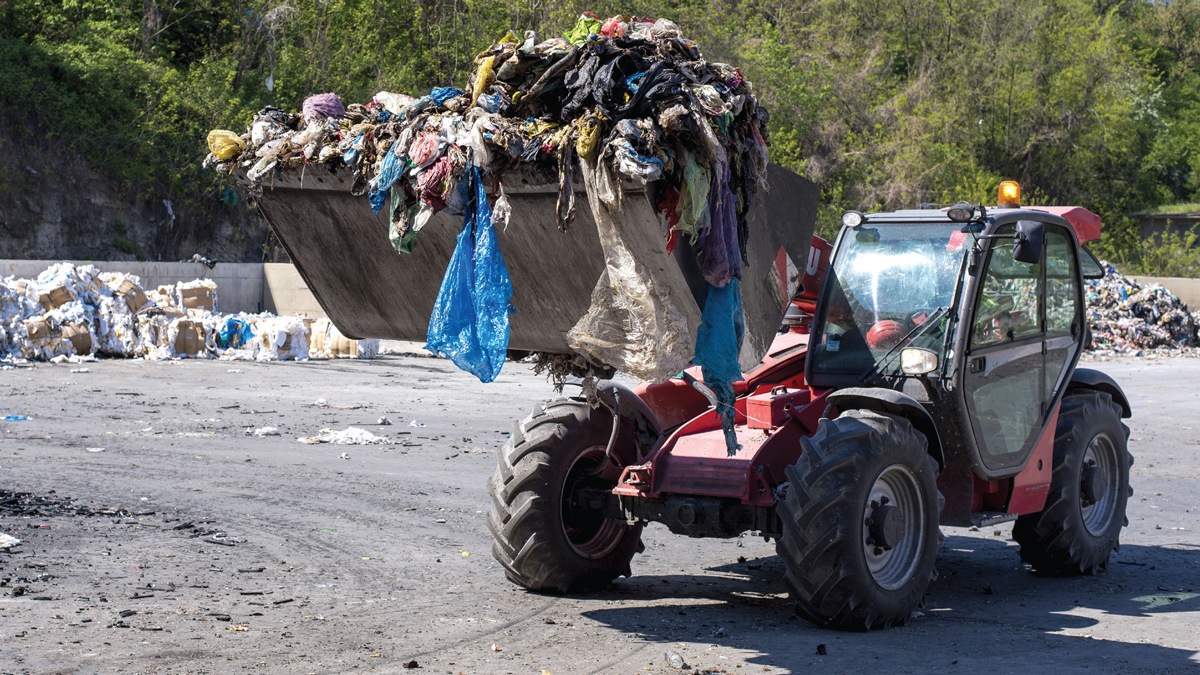
- Refuse-derived fuel (RDF): Made from urban municipal waste diverted away from landfill and fresh waste.
- Biomass: Crop residues such as rice husk, bagasse, coconut shells, and other regionally abundant wastes and also the harvest residues, field leftovers, rejects from the food and agro processing industries, forest felling and dry leaves, etc.
- Industrial by-products: Hazardous and non-hazardous waste from pharmaceuticals,chemical, automobile, refinery and other manufacturing sectors.
- Waste plastics that is non-recyclable.
AFR co-processing strategy
The co-processing strategy of AFRs in India supports national waste management goals such as reducing landfill, incineration of hazardous and municipal wastes, and enabling safe resource recovery. Cement kilns are uniquely positioned to help address the country’s growing urban and industrial waste challenge, aligning climate goals and circular economy priorities.
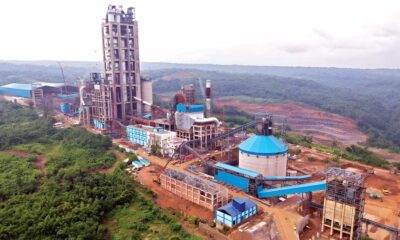
Many plants manufacturing clinker in India that belong to Adani Group, UltraTech, Dalmia, Shree, JK, JK Lakshmi, Nuvoco Vista, Vicat, Heidelberg, Ramco, KCP, Nagarjuna, Chettinad and others are operating at a reasonable scale of AFR utilisation. Some of these plants have even achieved a TSR level of more than 35 per cent. Some of these cement plants that have reached the higher levels of chlorine have also set up the chlorine by-pass systems.
Barriers in use of waste materials
While cement units strive towards their target thermal substitution rate (TSR), they face following logistical and technical barriers.
- Consistency in the quality of the input waste materials
- Higher levels of moisture
- Appropriate facilities to handle and processing them efficiently
- Appropriate facilities to feed AFRs in a consistent manner to achieve stability in the kiln operations.
- Innovations in achieving improved calciner and feed chute design for efficient combustion.
- Innovations to deal with the inefficient combustion of AFRs experienced in the kiln system.
- Availability of only marginal grade limestone in most of the clusters manufacturing cement.
- Advanced innovations to deal with the coatings experienced kiln process due to chlorine, alkalis and sulphur.
- Unavailability of the personnel that are equipped with the science and technology knowledge associated with the pre-processing and co-processing operations.
- Lack of opportunity to improve the skill levels of the operating personnel associated with the pre-processing and co-processing of AFRs.
Indian policy instruments and national programmes
The Indian policy instruments such as the Perform, Achieve, Trade (PAT) scheme and Extended Producer Responsibility (EPR) have accelerated the efforts towards improving the energy efficiency, AFR co-processing and waste heat recovery within Indian cement plants. Other national programmes such as Swatch Bharat Abhiyan, Mission Samarth and Carbon Emission Trading scheme are also expected to contribute this drive of increasing AFR utilisation in the clinker manufacture by way of bringing more and more waste material in the market place.
To facilitate the desired level of growth in the co-processing initiative in India, following measures are desired.
- Characterisation of the region-specific wastes along with their inventory.
- Investment in pre-processing facilities by the waste management agency to produce uniform quality AFRs from waste materials having diverse level of characteristics.
- Investment in the co-processing infrastructure to feed higher level of AFRs with consistent flow rates in the calciners, kiln inlet and main burners of the cement plant.
- Standardisation and certification to assure quality of AFRs.
- Appropriate intervention related to artificial intelligence, machine learning and block chain technologies and other technologies in the kiln process to achieve process stability.
- Cross-industry partnerships for waste stream security.
- Community awareness and local government participation are essential for robust waste supply chains.
Improving good quality waste streams
RDF from municipal source and biomass from agricultural sectors are the two waste streams that get generated in large volumes and are available for use by the cement industry in India. To harness the use potential of these large quantum waste streams and gainfully co-process them in the cement kilns following are the proposed recommendations.
- Raise awareness across municipalities and farmers about co-processing benefits.
- Incentivise and accelerate the investments in waste sorting, transportation, and pre-processing infrastructure.
- Encourage collaboration between cement companies, regulators, city authorities, waste management agencies, farmers and research institutions.
- Mandate the inclusion of the production of RDF meeting Grade 1, Grade 2 and Grade 3 in the DPR & RFQ of the treatment projects of the municipalities that are being implemented for the management of fresh MSW and also MSW from dump yards.
- Mandate the use of leftover biomass from the fields as well as from the food and agro processing industries as AFR in the power plants and cement plants through suitable incentive schemes.
- To promote use of biomass being secured under mission Samarth for use in cement industry, too.
Key success factors
Following are the key factors that facilitate successful co-processing with smooth kiln operation. These need to be respected critically.
- Securing consistent quality and quantity of segregated waste for pre-processing into AFRs.
- Continuous technology improvement (handling, blending, emissions monitoring) to achieve processed AFR having consistent quality that is aligned with the raw mix and fuel mix design.
- Strong partnerships with waste processors with win-win, adaptable and operable business models.
- Adaptable infrastructure to deal with the variable waste feeds, higher TSR and regulatory changes.
Equipment for co-processing
For achieving successful co-processing of AFRs, cement plant needs following well designed equipment and facilities.
- Environmentally sound waste receiving and storage systems (open and covered) with impervious floor, leachate management and fire-fighting systems for different kinds of waste materials.
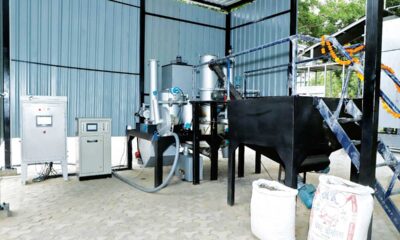
- Pre-processing equipment consisting of shredders, dryers, screens, metal separators etc to homogenise AF feed and achieve desired level of standard deviation in its quality.
- AFR co-processing equipment consisting of appropriately designed feeding, weighing and dosing systems with control instrumentation that feed the AFR at each entry pint of the kiln system with consistent rate with defined accuracy levels.
- Appropriate fire-fighting system for the protection of the preprocessing and coprocessing facilities.
Kiln burner with required upgrades and momentum to permit efficient combustion of the AFRs.
- Automated process control and emissions monitoring with required sensors and AI interventions for smooth process operation.
- Laboratory facility to monitor and control the AFR quality, its consistency, impact of AFR and its heavy metals, chlorine and sulphur content on the process, environment and clinker product etc.
Conclusion
By aggressively pursuing alternative fuels and raw materials, Indian cement plants can leverage their geographic, industrial and policy strengths, rapidly cutting carbon intensity while solving waste challenges and supporting sustainable growth. Leading companies are already pioneering these transitions; the sector’s future lies in scaling these solutions, investing in technical innovation, and collaborating widely with different stakeholders to fulfil India’s climate commitments and infrastructural ambitions.
ABOUT THE AUTHOR:
Ulhas Parlikar, Director MRAI and Global Consultant, served on numerous national and international committees leading initiatives in waste management, AFR utilisation, and sustainable practices.


















 Concrete4 weeks ago
 Concrete2 weeks ago
 Concrete2 weeks ago
 Concrete4 weeks ago