Connect with us

Economy & Market

Smart sustainable solutions

Published

on

Shares

Efficient bulk material handling has always been critical for seamless production, cost reduction and environmental compliance. Kanika Mathur delves into advanced automation, smart sensors and sustainable transport solutions that are key to overcoming challenges.

The cement industry is a cornerstone of infrastructure development, contributing significantly to economic growth. However, cement production involves the handling and transportation of vast quantities of raw materials such as limestone, clay, iron ore, fly ash and gypsum, as well as the final product—cement itself. Efficient bulk material handling (BMH) systems are crucial in ensuring uninterrupted production, reducing operational costs, minimising material wastage and improving overall efficiency.

In an industry where material losses, dust emissions, and energy consumption are major concerns, advancements in bulk material handling technology are playing a vital role in optimising operations. Automated and energy-efficient bulk handling solutions, such as pneumatic conveying systems, belt conveyors and stacker-reclaimer systems, are transforming the way cement plants manage their raw materials and finished products. This article explores the key aspects of bulk material handling in the cement industry, the latest technological advancements, and the challenges and opportunities in this space.

Importance of bulk material handling
Cement manufacturing requires the continuous movement of raw materials from mines and quarries to processing plants, followed by the transportation of the finished product to storage facilities and distribution networks. Bulk material handling systems ensure that this process runs smoothly, reducing downtime and enhancing productivity.
According to the Global Cement Report (2023), inefficient material handling contributes to 5 – 10 per cent of total cement production losses in India. Additionally, poor handling practices lead to high levels of dust pollution, which is a significant environmental and health concern. With cement production in India expected to reach 500 million metric tonnes by 2025, the demand for advanced and automated material handling systems is increasing rapidly.
Jacob Jose, CEO and Managing Director, Methods India, says, “With our advanced pipe conveyors, downhill conveyors and cross-country conveyors, we have revolutionised the way cement plants transport raw materials. Our technology helps reduce operational costs, minimise environmental impact and improve energy efficiency. Over the years, we have observed a positive impact in the industry, particularly with the growing adoption of pipe conveyors and cross-country conveyors, which have proven to be more efficient and environmentally friendly alternatives to traditional transport methods.”

Key bulk material handling technologies
1. Belt conveyors: The workhorse of cement plants
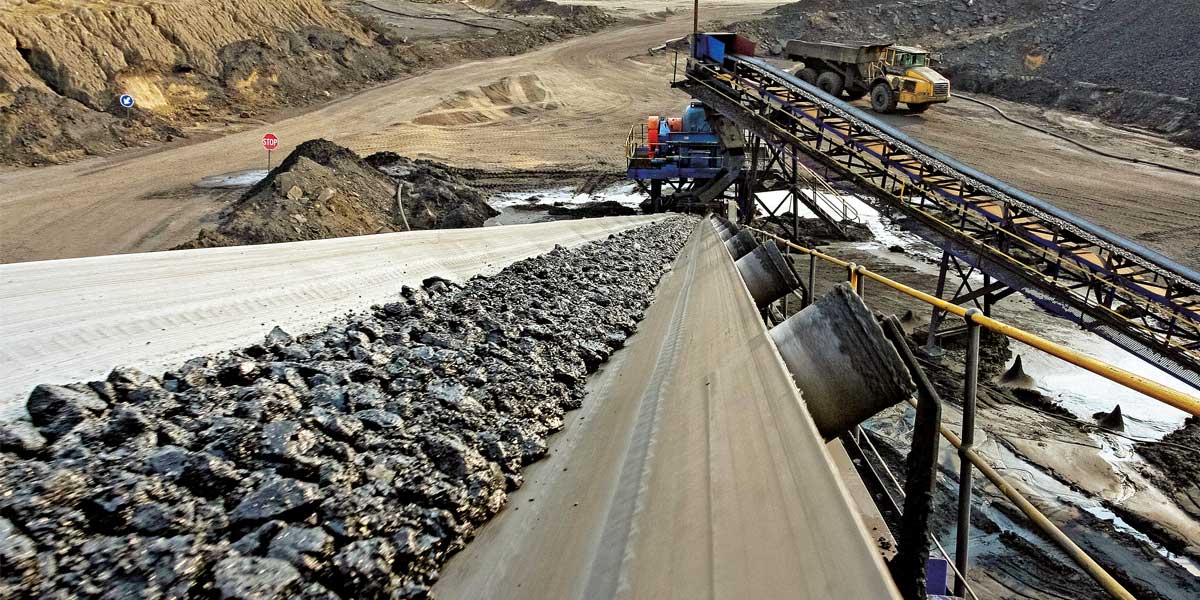
Belt conveyors are one of the most widely used bulk material handling solutions in the cement industry. They transport raw materials, clinker and finished cement over long distances within the plant and to storage facilities. Modern high-capacity belt conveyors can handle loads exceeding 10,000 tonnes per hour, significantly improving efficiency.

  • Advantages: High efficiency, low operational costs, and reduced manual intervention.
  • Challenges: Belt wear and tear, spillage, and maintenance requirements.
  • Technological advancement: The introduction of heat-resistant and fire-retardant conveyor belts has improved durability, while sensor-based predictive maintenance systems help detect belt failures before they occur.

2. Stacker and reclaimer systems: Optimising storage and retrieval
Stackers and reclaimers are essential for managing bulk raw materials in cement plants. Stackers pile materials such as limestone, coal, and gypsum, while reclaimers retrieve them for processing. These systems ensure homogeneous blending, reducing material variability and enhancing cement quality.

  • Latest innovation: Automated stacker and reclaimer systems with AI-driven optimisation help maximise storage space and minimise
    retrieval time.
  • Efficiency gains: Newer stacker-reclaimer designs allow for material recovery rates of over 90 per cent, reducing wastage and ensuring a steady feed to the production line.

3. Pneumatic conveying systems: Dust-free material transfer
Pneumatic conveying systems use air pressure or vacuum systems to move powdered and granular materials such as fly ash, cement and kiln dust through pipelines. They are particularly useful in reducing dust emissions and preventing material contamination.

  • Advantages: Dust-free operation, reduced environmental impact, and minimal maintenance.
  • Industry adoption: Many Indian cement plants are shifting from mechanical conveyors to high-pressure pneumatic conveying systems to comply with pollution control regulations set by the Central Pollution Control Board (CPCB).

4. Screw conveyors and bucket elevators: Compact and versatile solutions

  • Screw conveyors: Used for short-distance material movement, particularly for handling fine and powdered materials such as cement, gypsum, and pulverised coal.
  • Bucket elevators: Ideal for vertical material transport, commonly used for lifting raw meal, cement, and clinker to storage silos.
  • Technological upgrades: The introduction of wear-resistant alloy buckets and variable-speed drives has enhanced the reliability and efficiency of these systems.

Challenges in bulk material handling
Despite significant advancements, several challenges continue to hinder bulk material handling efficiency in cement plants:
1. Material spillage and dust emissions
Material spillage and dust emissions pose environmental, health, and financial challenges. Uncontrolled dust emissions from conveyors, transfer points, and storage facilities not only violate regulatory norms but also lead to material losses. Studies show that up to three per cent of bulk materials are lost due to improper handling in Indian cement plants.

  • Solution: Enclosed conveyors, dust suppression systems, and bag filters help reduce dust pollution.

2. High energy consumption
Bulk material handling systems consume a significant amount of energy, especially in large cement plants where materials need to be transported over long distances. According to a CII (Confederation of Indian Industry) report (2023), energy costs account for nearly 40 per cent of total production expenses in cement manufacturing.

  • Solution: Energy-efficient conveyor motors, regenerative braking systems, and smart automation can help reduce power consumption.

3. Wear and tear of equipment
Continuous exposure to abrasive materials like limestone and clinker leads to significant wear and tear in bulk material handling equipment, increasing maintenance costs and downtime.

  • Solution: The use of wear-resistant liners, ceramic-coated conveyor belts, and automated lubrication systems extends equipment life and reduces maintenance downtime.

4. Logistics and transportation bottlenecks
Moving bulk materials from cement plants to distribution centers requires an efficient logistics network. Rail and road congestion, inadequate infrastructure, and high transportation costs often result in delays and increased operational expenses.

  • Solution: Integrated bulk terminals and automated dispatch systems improve supply chain efficiency. The Indian government’s push for multi-modal logistics parks (MMLPs) is expected to enhance cement transportation efficiency.

Indrendra Singh Raghuwanshi, Sales Head – Cement Division, ATS Conveyors, says, “Ensuring that our systems handle diverse alternative fuels reliably is at the core of our engineering approach. Alternative fuels, such as biomass, MSW, RDF and industrial waste vary significantly in terms of composition, size, moisture content, and combustibility. All our systems are designed with flexibility and robustness to meet the unique challenges posed by these fuels while maintaining operational efficiency and safety. Also, before deployment to site, we conduct extensive testing for our equipment to ensure that they can reliably handle alternative fuels under a variety of conditions. This includes testing different fuel types, moisture levels, and feeding rates to identify any potential challenges. Our systems are then fine-tuned during the commissioning phase to ensure optimal performance in real-world conditions.”

The future is automation and digitalisation

The future of bulk material handling in the cement industry lies in automation, artificial intelligence (AI), and digital twin technologies. Leading cement manufacturers are investing in IoT-enabled bulk handling systems that provide real-time monitoring, predictive maintenance, and AI-based process optimisation.

1. Smart sensors and predictive maintenance
AI-powered sensors are now being integrated into conveyors and stackers to detect early signs of wear and tear, enabling proactive maintenance and reducing unplanned downtime.
Nishith Kundar, Co-Managing Partner, Cemtech Engineering Solutions, says, “One of our latest advancements is the introduction of drone inspection technology. Since silos are confined spaces, it is often difficult to assess their internal condition, particularly at the top. We have incorporated drone inspections for both pre-cleaning and post-cleaning assessments. Pre-cleaning drone inspections help us analyse the extent of material buildup, while post-cleaning inspections ensure that the silo has been thoroughly cleaned. This technology is also applicable to pre-heaters, allowing us to monitor internal conditions in confined spaces. By leveraging drone technology, we provide precise and efficient cleaning services, improving safety and operational efficiency.”

2. Digital twin technology
Digital twin models create a virtual replica of bulk handling systems, allowing operators to simulate various scenarios and optimise material flow before implementing changes in real time.

3. Automated Guided Vehicles (AGVs) and robotics
The adoption of AGVs and robotic material handling systems is gaining traction in cement plants for automated raw material transport, warehouse management, and truck loading/unloading.
Gaurav Gautam, Business Unit Head,
Beumer Group, says, “A major recent focus has been integrating digital monitoring tools into our equipment. These tools include condition monitoring sensors that track temperature variations, vibrations and operational anomalies in real-time. By capturing this data, plant operators can take proactive actions when conditions start deviating from normal parameters. This approach prevents sudden breakdowns and, in the long term, enhances the durability and reliability of the equipment.”
“Moving forward, digitalisation will play a key role in tackling wear and tear challenges. By increasing the number of data capture points and applying advanced analytics tools, we can gain deeper insights into equipment health and performance, ensuring a more efficient and predictive maintenance strategy,” he adds.

Conclusion
Efficient bulk material handling is the backbone of cement manufacturing, ensuring a seamless flow of raw materials and finished products while minimising environmental impact and operational costs. As India’s cement industry moves towards higher production capacities and stricter environmental norms, investing in advanced, automated and energy-efficient bulk handling solutions will be key to maintaining competitiveness.
By embracing smart technologies, automation and sustainable handling practices, cement manufacturers can enhance productivity, reduce material losses, and contribute to a greener and more efficient future for the industry.


Concrete

Dalmia Bharat Acquires Jaiprakash Associates Cement Assets for ₹2,850 Crore

Published

on

By

Shares

Dalmia Cement executed a Business Transfer Agreement with Jaiprakash Associates and Adani Infra, to acquire 5.2 MnTPA of cement capacity across Madhya Pradesh and Uttar Pradesh.

Dalmia Cement (Bharat) announced on May 22, 2026 that it had signed a Business Transfer Agreement with Jaiprakash Associates Limited and Adani Infra (India) Limited for the acquisition of cement plants located at Rewa in Madhya Pradesh and Churk, Chunar and Sadwa in Uttar Pradesh. The deal was struck at an enterprise value of ₹2,850 crore and is expected to close within two weeks of execution.

The acquired assets from Jaiprakash Associates include 5.2 MnTPA of cement capacity and 3.3 MnTPA of clinker capacity. The package also covers 99 MW of thermal power capacity and railway sidings at Rewa, Chunar, and a common siding at Churk. This infrastructure gives the acquisition immediate operational utility beyond just production tonnage.

The transaction has a long backstory. Dalmia Cement had originally entered into a framework agreement with Jaiprakash Associates in December 2022, covering the sale of these business assets along with a long-term clinker supply arrangement. However, before the deal could be completed, Jaiprakash Associates was admitted to insolvency proceedings under the Insolvency and Bankruptcy Code. The earlier agreements could not be consummated as a result.

In an official statement, Puneet Dalmia, Managing Director & CEO, Dalmia Bharat, said, “I am very excited about addition of these assets in our portfolio. This serves as a great strategic fit for Dalmia. It helps us move forward in our journey to be a pan India player and provide a strong head start to serve the high potential markets in Central region. I am optimistic that the expansion potential of these assets along with close proximity with Dalmia’s captive mines will help us create a capacity hub for the future”.

Following the approval of Adani Group’s resolution plan for Jaiprakash Associates under the IBC framework, Dalmia approached the new management to revive discussions. The fresh Business Transfer Agreement was executed to settle all pending disputes, legal proceedings, and arbitration matters arising from the original framework agreement with Jaiprakash Associates.

Expanding market reach

Dalmia added, “Our familiarity with these assets under the earlier tolling arrangement gives us a deep understanding of the facilities and helps us establish strong connect with channel partners and vendors. We believe that this will help us in faster ramp up of capacities and quicker inroads into the market. As we look forward, I am very confident that we will be able to leverage the strengths of Dalmia to operate these assets in a manner where we can maximise value creation for all our stakeholders.”

With the addition of these plants, Dalmia Bharat’s total installed cement capacity will rise to 54.7 MnTPA upon consummation. The company has further expansion projects underway at Belgaum, Pune, and Kadapa, which are expected to take overall capacity to 66.7 MnTPA by Q2 to Q3 FY28.

The Central India location of the Jaiprakash Associates plants gives Dalmia Bharat faster access to markets in Madhya Pradesh and Uttar Pradesh than a greenfield build would have allowed. The company also cited debottlenecking and brownfield expansion as near-term opportunities at the acquired sites. Dalmia Bharat said the assets were expected to contribute positively to EBITDA and overall returns, given the pricing environment in the region and the company’s cost structure.

Continue Reading

Concrete

PROMECON introduces infrared-based tertiary air measurement system for cement kilns

Published

on

By

Shares

The new solution promisescontinuous, real-time tertiary air flow measurement in cement plant operations.

PROMECON GmbH has launched the McON IR Compact, an infrared-based measuring system designed to deliver continuous, real-time tertiary air flow measurement in cement plant operations. The system addresses the longstanding process control challenge of accurate tertiary air monitoring under extreme kiln conditions. It uses patented infrared time-of-flight measurement technology that operates without calibration or maintenance intervention.

Precise tertiary air measurement is a critical requirement for stable rotary kiln operation. The McON IR Compact is engineered to function reliably at temperatures up to 1,200°C and in the presence of abrasive clinker dust. Its vector-based digital measurement architecture ensures that readings remain unaffected by swirl, dust deposits or drift. Due to these conditions conventional measurement systems in pyroprocess environments are often compromised.

The system is fully non-intrusive and requires no K-factors, recalibration or periodic readjustment, enabling years of uninterrupted operation. This design directly supports plant availability and reduces the maintenance overhead typically associated with process instrumentation in high-temperature zones.

PROMECON has deployed the McON IR Compact at multiple cement facilities, including Warta Cement in Poland. Plant operators report that the system has aided in identifying blockages, optimising purging cycles for gas burners, and supplying accurate flow data for AI-based process optimisation programmes. The practical outcomes include more stable kiln operation, improved process control, and earlier detection of process disturbances.

On the energy side, real-time tertiary air data enables reduction in induced draft fan load and helps flatten process oscillations across the pyroprocess. This translates to lower fuel and energy consumption, fewer unplanned shutdowns, and a measurable reduction in NOx peaks. This directly reflects on the downstream cost implications for plants operating SCR or SNCR systems for emissions compliance.

Continue Reading

Concrete

Filtration Technology is Critical for Efficient Logistics

Published

on

By

Shares

Niranjan Kirloskar, MD, Fleetguard Filters, makes the case that filtration technology, which has been long treated as a routine consumable, is in fact a strategic performance enabler across every stage of cement production and logistics.

India’s cement industry forms the core for infrastructure growth of the country. With an expected compound annual growth rate of six to eight per cent, India has secured its position as the second-largest cement producer globally. This growth is a result of the increasing demand across, resulting in capacity expansion. Consequently, cement manufacturers are now also focusing on running the factories as efficiently as possible to stay competitive and profitable.
While a large portion of focus still remains on production technologies and capacity utilisation, the hidden factor in profitability is the efficiency of cement logistics. The logistics alone account for nearly 30 per cent to 40 per cent of the total cost of cement, making efficiency in this segment a key lever for profitability and reliability.
In the midst of this complex and high-intensity ecosystem, filtration often remains one of the most underappreciated yet essential enablers of performance.

A demanding operational landscape
Cement production and logistics inherently operate in some of the harshest industrial environments. With processes such as quarrying, crushing, grinding, clinker production, and bulk material handling expose the machinery to constant high temperatures, heavy loads, and dust, often the silent destructive force for engines.
The ecosystem is abrasive, and often one with a high contamination index. These challenging conditions demand equipment such as the excavators, crushers, compressors, and transport vehicles to perform and perform efficiently. The continuous exposure to contamination across every aspect like air, fuel, lubrication, and even hydraulic systems causes long-term damage. Studies have also shown that 70 to 80 per cent of hydraulic system failures are directly linked to contamination, while primary cause of engine wear is inadequate air filtration.
For engines as heavy as these, even a minor contaminant has a cascading effect; reducing efficiency, performance and culminating to unplanned downtime. Particles as small as 5 to 10 microns, far smaller than a human hair (~70 microns), can cause significant damage to critical engine components. In an industry where margins are closely linked to operational efficiency, such disruptions can significantly affect both cost structures and delivery timelines.

Dust management: A persistent challenge
Dust is a natural by-product in cement operations. From drilling and blasting in the quarries to packing in plants, this fine particulate matter does occupy a large space in operations. Dust concentration levels in quarry and crushing zones often create extremely high particulate exposure for equipment. These fine particles, when enter the engines and critical systems, accelerates the wear and tear of the component, affecting directly the operational efficiency. Over time every block fall; engine performance declines, fuel consumption rises, and maintenance cycles shorten. In this case, effective air filtration is the natural first line of defence. Advanced filtration systems are designed to capture high volumes of particulate matter while maintaining consistent airflow, ensuring that engines and equipment operate under optimal conditions.
In high-dust applications, as in cement production, even the filtration systems are expected to sustain performance over extended periods without the need of frequent replacement. This becomes crucial in remote quarry locations where access to frequent maintenance may be limited.

Fluid cleanliness and system integrity
Beyond air filtration, fluid systems also play a crucial role for equipment reliability in cement operations. Fuel systems are required to remain free from contaminants for efficient working of combustion and injection protection. Additionally, lubrication systems also need to maintain the oil purity to reduce friction and prevent any premature wear of moving parts. The hydraulic systems, which are key to several heavy equipment operations, are especially sensitive to contamination.
If fine particles or water enters these systems, it can lead to reduced efficiency, erratic performance, and eventual failure of the system. Modern filtration systems are designed with high-efficiency media capable of removing extremely fine contaminants, with advanced fuel and oil filtration solutions filtering particles as small as two to five microns. Multi-stage filtration systems further ensure that fluid performance is maintained even under challenging operating conditions.
Another critical aspect of fuel systems is water separation. Removing moisture helps prevent corrosion, improves combustion efficiency and enhances overall engine reliability. Modern water separation technologies can achieve over 95 per cent efficiency in removing water from fuel systems.

Ensuring reliability across the value chain
Filtration plays a critical role across every stage of cement logistics:
• Quarry operations: Equipment operates in highly abrasive environments, requiring strong protection against dust ingress and hydraulic contamination.
• Processing units: Crushers, kilns, and grinding mills depend on clean lubrication and cooling systems to sustain continuous operations.
• Material handling systems: Pneumatic and mechanical systems rely on clean air and fluid systems for efficiency and reliability.
• Transportation networks: Bulk carriers and trucks must maintain engine health and fuel efficiency to ensure timely deliveries.
Across these operations, filtration plays a vital role; as it supports consistent equipment performance while reducing the risk of unexpected failures.
Effective filtration solutions can reduce unscheduled equipment failures by 30 to 50 per cent across heavy-duty operations.

Uptime as a strategic imperative
In cement manufacturing, uptime is currency. Downtime not only delays the production, but it also greatly impacts the supply commitments and logistics planning. With the right filtration systems, contaminants are kept at bay from entering the
critical systems, and they also significantly extend the service intervals.
Optimised filtration can extend service intervals by 20 to 40 per cent, reducing maintenance frequency while maintaining consistent performance across demanding operating conditions. Filtration systems designed for heavy-duty applications sustain efficiency throughout their lifecycle, ensuring reliable protection with minimal interruptions. This leads to improved equipment availability, lower maintenance costs, and more predictable operations, with well-maintained systems capable of achieving uptime levels of over 90 to 95 per cent in challenging cement environments.

Supporting emission and sustainability goals
With the rising environmental awareness, the cement industry too is aligning with the stricter norms and sustainability targets. In this scenario, the operational efficiency is directly linked to emission control.

Air and fuel systems that are clean enable
much more efficient combustion. They also reduce emissions from both the stationary equipment and transport fleets. Similarly, with a well-maintained fluid cleanliness, emission systems function better. Poor combustion due to contamination can increase emissions by 5 to 10 per cent, making clean systems critical for compliance.
Additionally, efficient and longer lasting filtration systems significantly reduce any waste generation and contribute to increased sustainable maintenance practices. Extended-life filtration solutions can reduce filter disposal and maintenance waste by 15 to 20 per cent. Smart and efficient filtration in this case plays an important role in meeting the both regulatory and environmental objectives within the industry.

Advancements in filtration technology
Over the years, there has been a significant evolution in the filtration technology to meet the modern industrial applications.
Key developments include:
• High-efficiency filtration media capable of capturing very fine particles without restricting flow
• Compact and integrated designs that combine multiple filtration functions
• Extended service life solutions that reduce replacement frequency and maintenance downtime
• Application-specific engineering tailored to different stages of cement operations
Modern multi-layer filtration media can improve dust-holding capacity by up to two to three times compared to conventional systems, while maintaining consistent performance. These advancements have transformed filtration from a basic maintenance component into a critical performance system.

Adapting to diverse operating conditions
The cement industry of India operates across diverse geographies. Spanning across regions with arid regions with higher dust levels, to the coastal areas with higher humidity, challenges of each region pose different threats to the engines. Modern filtration systems are thus tailored to address these unique challenges of each region.
Indian operating environments often range from 0°C to over 50°C, with some of the highest dust loads globally in mining zones.
Additionally, filtration technology can also be customised to variations which then align the system design with factors like dust load, temperature, and equipment usage patterns. Equipment utilisation levels in India are typically higher than global averages, making robust filtration even more critical. This approach ensures optimal performance and durability across different operational contexts.

Impact on total cost of ownership
Filtration has a direct and measurable impact on the total cost of ownership of equipment.
Effective filtration leads to:
• Lower wear and tear on critical components
• Reduced maintenance and repair costs
• Improved fuel efficiency
• Extended equipment life
• Higher operational uptime
Effective filtration can extend engine life by 20 to 30 per cent and reduce overall maintenance costs by 15 to 25 per cent over the equipment lifecycle. These benefits collectively enhance productivity and reduce lifecycle costs. Conversely, inadequate filtration can result in frequent breakdowns, increased maintenance expenditure, and reduced asset utilisation.

Building a more efficient cement ecosystem
With the rising demand across various sectors, the cement industry is expected to expand at an unprecedented rate. This growth is forcing the production to move towards a more efficient and resilient system of operations. This requires attention not only to production technologies but also to the supporting systems that enable consistent performance. Filtration must be viewed as a strategic investment rather than a routine consumable. By ensuring the cleanliness of air and fluids across systems, it supports reliability, efficiency, and sustainability.

The road ahead
The future of cement logistics will be shaped by increasing mechanisation, digital monitoring, and stricter environmental standards. The industry is also witnessing a shift towards predictive maintenance and condition monitoring, where filtration performance is increasingly integrated with real-time equipment diagnostics.
In this evolving landscape, the role of filtration will become even more critical. As equipment becomes more advanced and operating conditions more demanding, the need for precise contamination control will continue to grow. From quarry to construction site, filtration technology underpins the performance of every critical system. It enables equipment to operate efficiently, reduces operational risks, and supports the industry’s broader goals of growth and sustainability. In many ways, it is the unseen force that keeps the cement ecosystem moving, quietly ensuring that every link in the value chain performs as expected.

About the author
Niranjan Kirloskar, Managing Director, Fleetguard Filters, is focused on driving innovation, operational excellence, and long-term business growth through strategic and people-centric leadership. With a strong foundation in ethics and forward-thinking decision-making, he champions a culture of collaboration, accountability, and technological advancement.

Continue Reading

Video Thumbnail

    SIGN-UP FOR OUR GENERAL NEWSLETTER


    Trending News

    SUBSCRIBE TO THE NEWSLETTER


    Don't miss out on valuable insights and opportunities to connect with like minded professionals.


      This will close in 0 seconds