The cement industry, vital for global infrastructure, faces the dual challenge of meeting rising demand while addressing environmental concerns. Kanika Mathur explores how innovative practices and sustainable solutions are transforming the sector towards a greener future.
The cement industry, a cornerstone of global infrastructure development, has long been associated with significant environmental challenges. Cement production is responsible for approximately seven per cent to eight per cent of global CO2 emissions, making it one of the most carbon-intensive industries. However, with increasing awareness and global commitments to combat climate change, the industry is undergoing a green transformation.
This article delves into the critical aspects of sustainability in the cement industry, highlighting innovative practices, technological advancements, and policy frameworks that are reshaping the sector.
Environmental impact
Cement production involves the calcination of limestone, a process that releases large amounts of CO2. Additionally, the energy-intensive nature of the industry contributes to emissions from fossil fuel combustion. The environmental impact extends to resource depletion, dust emissions, and water usage, emphasising the need for sustainable practices.
In India, where demand for cement is expected to grow exponentially due to infrastructure projects, addressing these challenges is critical. Companies must adopt sustainable strategies to balance economic growth with environmental stewardship.
Low carbon cement and clinker substitutes
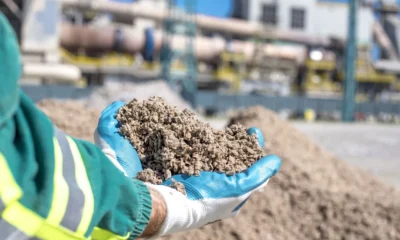
One of the most effective ways to reduce emissions in cement production is by replacing clinker, the most carbon-intensive component, with alternative materials. Fly ash, slag, and natural pozzolans are commonly used substitutes that reduce the clinker factor in cement.
Björn Fahle, Technical Sales and Project Engineer, Westeria, says, “Sustainability is a critical concern for the cement industry, especially in the context of reducing CO2 emissions. India has made remarkable progress in achieving its 2030 carbon emission targets, and the cement sector has been a significant contributor to this effort. By integrating alternative fuels into their operations, cement producers can significantly lower their carbon footprint.”
“We also foresee advancements in green cement production, with materials such as clay coming into the picture. Our work helps the cement industry transition towards greener practices by promoting the use of alternative fuels and improving the efficiency of fuel feeding systems. Sustainability is no longer optional—it is imperative for long-term environmental and industrial health. By reducing coal consumption and utilising alternative raw materials, we are steadily contributing to the industry’s shift toward sustainable operations” he adds.
For example, India’s Ambuja Cement has developed a range of low-carbon cement products that use supplementary cementitious materials (SCMs), significantly lowering their carbon footprint. Such innovations are key to achieving industry-wide sustainability.
Alternative fuels and raw materials
The use of alternative fuels and raw materials (AFR) is gaining momentum as a sustainable practice in cement manufacturing. Waste materials like industrial by-products, municipal solid waste, and biomass are increasingly being utilised as fuel sources, reducing dependency on fossil fuels. UltraTech Cement has pioneered the use of AFR in India, implementing co-processing technologies to convert waste into energy. This not only cuts emissions but also addresses waste management challenges, contributing to a circular economy.
Energy efficiency
Energy accounts for a significant portion of the costs and emissions in cement production.
Energy-efficient technologies, such as vertical roller mills, preheater-precalciner systems, and waste heat recovery (WHR) systems, play a crucial role in reducing energy consumption.
“The journey towards net zero is advancing steadily. In 2018, we at Dalmia Cement announced our carbon-negative and net zero roadmap during COP24. This commitment inspired other companies worldwide to adopt similar strategies. By COP26 in Glasgow, the Global Cement and Concrete Association committed to achieving net-zero cement and concrete by 2050,” says Mahendra Singhi, Member of Board of Governors and Strategic Advisor, Dalmia Cement (Bharat).
“The global cement sector has been proactive, embracing new technologies and sustainability practices. Indian companies, too, are leading the way with innovative strategies and strong commitments. I am optimistic that within the next 10 to 25 years, the Indian cement industry will make significant strides towards achieving net zero, setting a benchmark for other industries globally,” he adds.
Dalmia Cement has set a benchmark in India with its commitment to energy efficiency. The company’s investments in WHR systems have reduced reliance on grid electricity and lowered overall energy costs. Such initiatives demonstrate the dual benefits of cost savings and sustainability.
Carbon capture, utilisation and storage
Carbon capture, utilisation, and storage (CCUS) technologies are emerging as a game-changer for the cement industry. These technologies capture CO2 emissions from production processes and either store it underground or use it to create new products.
Saurabh Rai, CEO, Arahas, says, “One of the most promising technologies emerging in the cement industry is carbon capture, utilisation and storage (CCUS). CCUS allows companies to capture CO2 emissions before they are released into the atmosphere and either store them or repurpose them for other uses. This technology not only reduces emissions but also turns carbon into a valuable resource. Captured CO2 can be used in the production of synthetic fuels or other materials, adding an innovative twist to what was once considered waste.”
“Beyond CCUS, cement manufacturers are increasingly moving away from traditional fossil fuels, which have historically been a significant source of emissions. In their place, alternative energy sources like biomass and waste-derived fuels are being utilised. These renewable fuels not only help to cut emissions but also align with circular economy principles, where waste is redefined as a resource rather than a burden,” he adds.
Though still in its nascent stages in India, CCUS projects have shown promise globally. Indian
cement companies are beginning to explore partnerships and pilot projects to adapt these technologies to
local conditions, paving the way for large-scale implementation.
“India’s commitment to a net zero target by 2070 faces significant challenges, according to the World Economic Forum (WEF). The nation is the third-largest emitter of GreenHouse Gases after China and the US, and has the potential to meet this goal; they emphasise the need for more concrete sectoral targets, trajectories, and short-term milestones. The urgency for this initiative is underscored by India’s status as home to some of the world’s most polluted cities, contributing to high pollution-related mortality rates. Additionally, funding remains a critical issue as achieving the 2070 target requires an investment of $10.1 trillion; if the goal is accelerated to 2050, this figure increases to $13.5 trillion,” says Pushpank Kaushik, CEO & Head of Business Development (Subcontinent, Middle East and SouthEast Asia), Jassper Shipping.
Circular economy and waste management
The adoption of a circular economy model is essential for sustainable cement production. This involves using industrial waste as raw material, recycling by-products, and minimising waste generation. Fly ash from thermal power plants, slag from steel mills, and waste-derived fuels are valuable resources in this context. For instance, JSW Cement’s focus on utilising industrial waste has allowed the company to manufacture Portland Slag Cement (PSC), which not only reduces emissions but also conserves natural resources. Circular economy practices offer a win-win solution for industry and the environment.
Digital technologies for sustainability
Digitalisation is transforming the cement industry, enabling better resource management and emission control. Technologies like IoT, AI, and big data analytics allow companies to monitor emissions, optimise production, and enhance energy efficiency.
MSR Kaliprasad, Chief Digital and Information Officer, Shree Cement, says, “Our commitment to sustainability is deeply embedded in our digital strategy. We integrate power and production data captured through sensors with SAP S4 HANA, enabling real-time tracking of power efficiency and consumption, optimising energy use across operations. Renewable energy projects, such as the solar plant in Beawar (Rajasthan) and wind plants in Kushtagi and Jath, are monitored digitally to ensure optimal performance. Digital tools effectively help monitor, manage and reduce our environmental footprint, aligning with our sustainability goals.”
Companies like ACC Cement are leveraging digital solutions to create ‘smart factories’ that minimise environmental impact while maximising operational efficiency. These tools are crucial for achieving sustainability goals and improving competitiveness.
Utssav Gupta, Director, Supertech Fabrics, says, “Globally, energy balance structures are being implemented as part of bottom-up strategies. We need to determine where energy costs can be optimised, such as through renewable energy sources. For example, in emission control systems, power costs are a significant concern. Our innovation efforts target two primary areas: reducing the power costs associated with emission control and achieving
lower emissions levels. My pitch to stakeholders is to consider a one-time investment in renewable energy to address these challenges. With this approach, emissions are reduced, recovery is improved, and everyone benefits.”
Sustainable logistics
Transportation contributes significantly to the carbon footprint of cement. Sustainable logistics solutions, such as using energy-efficient vehicles, optimising transport routes, and shifting from road to rail, can significantly reduce emissions. Indian Railways’ initiatives to promote freight corridors for bulk transportation have provided cement companies with an opportunity to transition to more sustainable logistics solutions. Such collaborations between industry and infrastructure providers are critical for long-term sustainability.
Role of policy and regulation
Government policies and regulations are instrumental in driving sustainability in the cement industry. In India, initiatives like the PAT (Perform, Achieve, Trade) scheme under the National Mission for Enhanced Energy Efficiency (NMEEE) encourage energy-efficient practices. The Cement Sustainability Initiative (CSI), a global effort under the World Business Council for Sustainable Development (WBCSD), also provides guidelines for sustainable practices. Indian companies actively participating in such frameworks are better positioned to align with global sustainability goals.
Future trends in sustainable cement manufacturing
The future of sustainability in the cement industry lies in innovation and collaboration. Technologies like green hydrogen, advanced CCUS, and zero-carbon fuels are on the horizon. Collaboration between governments, industry players, and technology providers will be critical for achieving these breakthroughs. In India, the transition to green energy sources, coupled with innovations in production and logistics, will determine the industry’s ability to meet its ambitious sustainability targets. Companies that invest in R&D and embrace a long-term vision will lead this transformation.
Conclusion
Sustainability in the cement industry is no longer an option—it is a necessity. With growing pressures from regulators, consumers, and global environmental commitments, the industry must adopt innovative and responsible practices. From low-carbon cement and AFR to digitalisation and sustainable logistics, the path forward is filled with opportunities for growth and transformation.
India, as one of the largest cement producers in the world, has the potential to set an example in sustainable practices. By embracing new technologies, prioritising energy efficiency, and fostering a culture of innovation, the cement industry can contribute to a greener, more sustainable future while ensuring its own long-term success.




















 Concrete4 weeks ago
 Concrete3 weeks ago
 Concrete2 weeks ago
 Concrete4 weeks ago