Connect with us

Economy & Market

RAHSTA to submit policy recommendations to NHAI

Published

on

Shares
  • RASHTA Expo 2024 and 10th India Construction Festival (ICF) receive grand reception from infrastructure industry
  • 10th India Construction Festival 2024 awards over 75 companies from infrastructure industry
  • At the 14th RAHSTA Expo – India’s first indoor trade fair for the construction equipment technology – more than 100 companies showcase their latest technologies, products and solutions for building a strong infrastructure
  • A M Naik, Chairman Emeritus of L&T, and Mofatraj Munot, Group Founder, Promoter and Chairman of Kalpataru Group, were bestowed with Construction World (CW) Lifetime Achievement Awards
  • Dineshchandra Agrawal, CMD, Dineshchandra R Agrawal Infracon Pvt Ltd (DRAIPL) was honoured with the CW Person of the Year (Private Sector) award
  • Jaideep Shekhar, MD, Terex India, was recognised as the “Equipment India Person of the Year 2024”
  • More than 50 speakers discussed innovative technologies, sustainable practices, and funding opportunities for the roads sector at 14th India RAHSTA (Roads) Conference

Mumbai, 10 October 2024

The 10th Edition of India Construction Festival (2024) – comprising 14th RAHSTA Expo, 14th India RAHSTA (Roads) Conference, 12th Equipment India Awards and 22nd Construction World Global Awards – received a big thumps up from industry leaders of the construction and infrastructure industry for recognising the industry’s contribution to the nation building by awarding & celebrating its success.

Held on October 9-10, 2024, at Jio World Convention Centre, BKC, Mumbai and hosted by infrastructure think-tank FIRST Construction Council in partnership with Construction World (CW) and Equipment India (EI) magazines, India Construction Festival 2024 honoured over 75 companies in the infrastructure and construction equipment sectors with awards under various categories.

The 14th RAHSTA Expo – India’s first indoor trade fair for the construction equipment technology – provided a platform to more than 100 companies for showcasing their latest technologies, products and solutions that are crucial for the development of a strong infrastructure. The RASHTA Expo and conference united all stakeholders in the infrastructure sector, including policymakers, industry professionals, and supporting industries such as financial institutions and technology providers. This gathering aimed to showcase integrated solutions for challenges within the construction industry and establish best practices for efficiency.

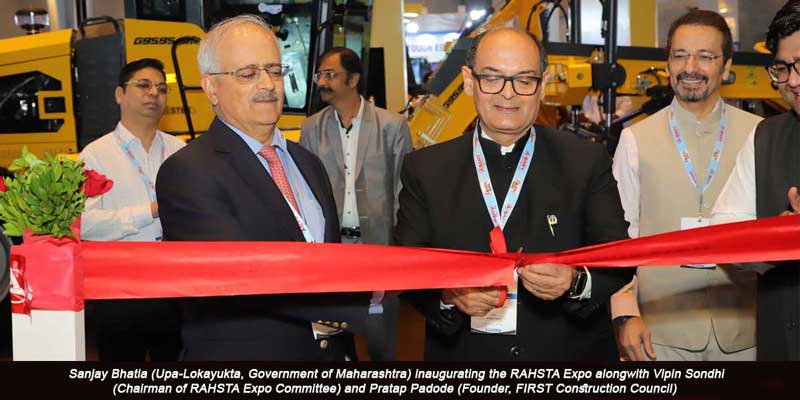
Sanjay Bhatia, Upa-Lokayukta, Government of Maharashtra along with Vipin Sondhi, Chairman, RAHSTA Expo Committee, inaugurated the RAHSTA Expo. Speaking at the inaugural session, Sanjay Bhatia, who has been instrumental in projects like Atal Setu, NAINA region, Mumbai East Coast Marina, Sagarmala during his stints leading CIDCO, Mumbai Port Trust etc., expressed his delight at the huge display of construction technology at the expo, “The RAHSTA expo has put the construction industry on an international standard. India is experiencing nation building at a robust pace and I am truly impressed with the work being now done by our youth with their start-ups many of which are showcasing their innovation here at this expo.”

Launching his to-be-released book ‘Tarmac to Towers – India’s infrastructure story’, Pratap Padode, Founder, FIRST Construction Council stated, “RAHSTA Expo is a paradigm shift in exhibition presentation for the construction industry. It has drawn 4000 quality business visitors who have had fruitful discussions with material manufacturers and OEMs of equipment and technology. The RAHSTA Expo has brought together road contractors, developers, financiers, material manufacturers, equipment OEMs, government authorities and engineering firms on the same platform to share from each other.”

Speaking at the inauguration, Pam Mcfarland, Senior Editor, Engineering News – Record (ENR), said, “India and the USA deals with a lot of similar issues such as flooding, hurricane, etc. Billions of dollars are being poured into construction, roads, and variety of transportation which has climate and environmental resilience focus. In India, pace of road construction has increased manifold. I am looking forward to learn more about what’s going on in India and particularly resilient materials in roads and bridge construction.”

Vipin Sondhi, Chairman, RAHSTA Committee, and former MD & CEO, Ashok Leyland & JCB, said, “This occasion is not just a gathering but reflects our collective strides in shaping the future of India’s highway sector. This sector is not only critical for economic growth but is the backbone of physical connectivity that binds our nation together. The union budget reflected the priority of the sector and allocated Rs 2.7 trillion for Ministry of road transport and highways (MoRTH). India’s road network is the second largest and it moves not only goods, people but drives opportunities of inclusivity and development. National highway construction has seen a remarkable upward trajectory, growing at 9 per cent CAGR from FY2016 to FY2024.”

The 14th India RAHSTA Conference (IRC) convened policymakers, industry leaders, and experts to explore innovative technologies, sustainable practices, and funding opportunities aimed at transforming the road construction landscape in India.

Padode stated, “India has the distinction of the second largest road network in the world. In the last 10 years, the speed of road development has increased manifold, and today we are building roads at the rate of 30-37 km per day. But, we need to build roads and bridges of the best quality that can last for 100 plus years. With rising environment and climate change concerns, India need to promote climate and disaster resilience in the infrastructure development process. RASHTA conference provides an ideal forum to discuss, debate and form strategies for building more sustainable, resilient infrastructure projects.”

During the conference Ashish Kumar Singh, Chief General Manager – Finance, National Highway Authority of India (NHAI) has asked FIRST Construction Council to submit policy recommendations based on deliberations and discussions at the RAHSTA conference and expo.

The two days of RAHSTA Conference paved the way for fruitful engagement and informed participants about novel technologies, strategies and processes required to build a resilient infrastructure.

With over 50 speakers, participants gained valuable insights through engaging panel discussions, thought-provoking keynotes, and displays of cutting-edge innovations at IRC 2024. The event enhanced understanding of industry trends and facilitated important partnerships, contributing significantly to the development of safer, greener, and more efficient road networks.

On the occasion, seven RASHTA Awards were presented in various categories such as Award for best in Road Engineering & Construction, Bridge Engineering, Road Financier, technology in road building, project management, project execution, etc.

CW Global Awards presented to 50 construction industry leaders

The awards were presented at a dazzling ceremony attended by leading figures from the construction industry, including V Chandrashekar, MD & CEO, GMMCO; Sarat Chandak, CEO, H&R Johnson; Srikrishna Subramanian, Director & Sr. VP – HR, GA & ICT, Komatsu India; R K Bansal, Executive VP & Head – Roads, Larsen & Toubro; Anil Kumar Singh, MD, APCO Infratech; Ashish Kataria, Ashoka Buildcon, Director; Rajeev Mishra, CFO, H G Infra Engineering; Sudhir Hoshing, CEO Execution, IRB Infrastructure Developers; Nalin Gupta, MD, J Kumar Infraprojects; Suhas Eklahare, Director, NCC; Kavita Shirvaikar, MD, Patel Engineering; Yancharla Rathnakara Nagaraja, MD, Ramky infrastructure; Sandeep Garg, CEO & MD, Welspun Enterprises; B R Parthasarathy, Sr VP & Head-Infrastructure Cluster, Tata Consulting Engineers; Shammi Khurana, VP – Execution, Civil, KEC International; and Puneet Singh Narula, CEO & Director, Ceigall, among others.

The 22nd Construction World Global Awards brought together top construction industry leaders, experts and policymakers. CW Global Awards were presented to 50 companies such as Berger Paints, Century Plyboards India, GMMCO, H&R Johnson, Komatsu India, Larsen & Toubro, Afcons Infrastructure, APCO Infratech, Ashoka Buildcon, DRAIPL, H G Infra Engineering, IRB Infrastructure Developers, ITD Cementation India, J Kumar Infraprojects, NCC, Patel Engineering, PNC Infratech, Ramky Infrastructure; Welspun Enterprises; Shapoorji and Pallonji, Tata Consulting Engineers, KEC International, and Kalpataru Projects International, among others in different categories. The CW Global Awards and ENR Awards offered a platform to acknowledge and celebrate the innovation, dedication, and outstanding accomplishments of individuals and companies in the construction industry, raising the standard for future endeavors.

A M Naik, Chairman Emeritus of Larsen & Toubro (L&T), and Mofatraj Munot, Group Founder, Promoter and Chairman of Kalpataru Group, were bestowed with CW Lifetime Achievement Awards, for their incredible contribution to the growth of not just their companies, but also of the industry.

A M Naik commented, “I would like to extend my gratitude to the jury of the 22nd Construction World Global Awards and to the entire team at First Construction Council and Construction World magazine for this honour. To be recognised in this way, for contributing to a sector that has been a passion of mine for decades is a moment of great pride. Not just for me but for all those who have been a part of this journey. I have been fortunate to work with some of the brightest minds and most committed professionals, and I share this award with them. It is through their dedication and innovation that we have been able to achieve so much and propel both our company and the industry forward. Over the years, we have seen immense transformation in technology processes and practices, and it is heartening to witness how this industry continues adapting to new challenges while always looking to build better and smarter. This recognition from Construction World serves as a powerful reminder that our efforts to drive progress, innovation, and sustainability have been noticed.”

While accepting the award, Mofatraj Munot said, “A project can progress successfully only with the support of right equipment. Timely and quality completion depends on having reliable machinery at the site. I vividly remember, back in 1980s, I used to visit Bauma in Germany to see the latest machines because, at that time, India lacked a platform to showcase innovative equipment. Today, thanks to efforts like those of Construction World, we have access to all these machines right here in India. I want to express my gratitude to Construction World for the award.”

Dineshchandra Agrawal, CMD, Dineshchandra R Agrawal Infracon Pvt Ltd (DRAIPL) honoured with the prestigious Construction World Person of the Year (Private Sector) award.

Expressing deep gratitude to the Jury and Construction World for selecting him for the award, Dineshchandra Agrawal said, “This field is my passion, and I believe we are contributing to nation-building by generating employment and fostering growth. Also, it is important to mention that the construction equipment industry has been playing a key role as an enabler to build a strong, sustainable India. With the ‘Viksit Bharat’ vision, I hope we become a developed country where businesses thrive, and government policies support fair and transparent contracts. I dedicate this award to all the individuals and organisations that have been part of my journey and supported me throughout. It is because of their encouragement that I am receiving this recognition today.”

Equipment India awards 22 industry leaders

The eagerly awaited 12th Equipment India Awards 2024, presented by BKT, brought together industry leaders, top construction equipment manufacturers, and components & accessory suppliers to recognise and celebrate excellence and innovation in the construction equipment sector. Some of winning companies included Schwing Stetter India, Sany Heavy Industry India, Ammann India, Schwing Stetter India, Caterpillar India, JCB India, Tata Hitachi Construction Machinery, Action Construction Equipment (ACE); BEML Limited, Doosan Bobcat India, LiuGong India, AJAX Engineering, Case Construction India, etc.

A key highlight of the evening was the announcement of the Equipment India Person of the Year 2024, awarded to Jaideep Shekhar, MD of Terex India. The jury recognized Terex India’s impressive growth under Shekhar’s strong leadership.

Jaideep Shekhar said, “I’m deeply grateful to the Jury and Equipment India for this remarkable honour. This award reflects not only my contributions but also the dedication and hard work of my team. I have been associated with the industry for more than 25 years, and this award motivates me to keep pushing boundaries and to lead the growth with integrity.”

Equipment India and Smart Manufacturing & Enterprises (SME) also hosted a CE Panel Discussion – titled RAHSTA (Road) Ahead for CE Industry – to deliberate on opportunities and future trends in the construction equipment (CE) industry. Panelists of the panel discussion – moderated by Ranjan Sharma, Senior Director – Large Corporate Ratings, CareEdge Ratings – included Dimitrov Krishnan, MD, Volvo CE India Pvt Ltd; Sandeep Singh, MD, Tata Hitachi Construction Machinery Company Pvt Ltd; Shalabh Chaturvedi, MD for India & SAARC region, CASE Construction Equipment; SP Rajan, VP and Head Plant & Machinery, L&T Construction; Sanjay Koul, President – India and SE Asia and MD – India, The Timken Company; and Sitaram Ganeshan, President, Wipro Hydraulics.

Partnership galore

The industry’s overwhelming support was evident from the numerous partnerships it was able to garner as below:

  • 22nd Construction World Global Awards: Powered by BKT, Varindera Construction as the Platinum Partner, ITD Cementation, Gmmco, and Dinesh Chandra R. Agrawal Infracon Pvt. Ltd. as Gold Partners, Liugong as the Silver Partner, TATA Hitachi as the Equipment Partner, LivSYT as the Technology Partner, and Shyam Steel and Action Construction Equipment as Association Partners.
  • 12th Annual Equipment India Awards: Presented by BKT, Timken as the Platinum Partner, TATA Hitachi as the Equipment Partner, and Schwing Stetter and Action Construction Equipment as Association Partners.
  • India RAHSTA Conference: Presented by BKT, Timken as the Gold Partner, Liugong and Nemetschek India as Silver Partners, TATA Hitachi as the Equipment Partner, LivSYT as the Technology Partner, and Action Construction Equipment as the Association Partner.
  • RAHSTA Expo: Hosted by MSRDC as the Host State Partner, Birla Pivot as the Powered By Partner, AF Star as the Platinum Partner, ArcelorMittal Nippon Steel India as the Gold Partner, NPL Bluesky Automotive as the Silver Partner, Mahindra Construction Equipment, Terex, Shyam Steel, and PNC Infratech as Associate Partners, TATA Hitachi as the Equipment Partner, Volvo as the Badge Partner, SANY as the Lanyard Partner, Steel Authority of India as the VIP Lounge Partner, and Automark Industries as the Bag Partner.
  • 10th India Construction Festival: Larsen & Toubro as the Gold Partner, TATA Hitachi as the Equipment Partner, and Action Construction Equipment as the Associate Partner.

————————————————————————————————————————————-

Contact:

For exhibitor enquiries (for RAHSTA Expo 2025), contact Sujoy Gomes on Mob: +91 86577 95881, or Email:sujoy.g@asappinfoglobal.com Office: 022-3103 3000

Concrete

Nuvoco Vistas launches Limla cement plant, expands Gujarat footprint

Published

on

By

Shares

Nuvoco Vistas opens a 2 MMTPA grinding unit at Limla, entering Gujarat and advancing its target of 35 MMTPA capacity by FY 2028.

Surat (Gujarat)

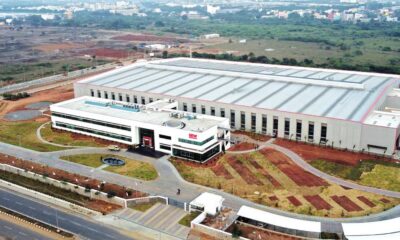
Nuvoco Vistas Corporation Ltd, a part of Nirma Group and one of India’s leading building materials company, has inaugurated the Limla Cement Plant in Surat (Gujarat), one of Vadraj Cement Limited’s (VCL) principal manufacturing facilities. The commissioning represents a key milestone in Nuvoco’s acquisition and restoration of VCL, while supporting the company’s expansion across the Western Indian cement market.

Vadraj Cement Limited is a subsidiary of Nuvoco Vistas Corporation Limited and has installed cement capacity of 6 MMTPA across its assets. The Limla inauguration therefore represents the first operational step in the acquired platform’s wider revival, while the Kutch facilities provide clinker supply, mineral security and coastal logistics support for the western business.

Nuvoco completed its acquisition of Vadraj Cement Limited, then under the Corporate Insolvency Resolution Process, after paying a consideration of Rs 1,800 crore in June 2025. VCL’s asset portfolio comprises a clinker unit at Kutch and a grinding unit at Limla in Surat. It also includes high-quality captive limestone reserves and a captive jetty at Kutch, supporting more efficient logistics. Following the takeover, Nuvoco began an extensive programme of restoration, refurbishment and expansion at both locations, leading to the commissioning of the Limla plant.

The Limla Cement Plant is expected to support a phased increase in sales volumes across Gujarat. It will also help Nuvoco supply neighbouring markets in Western Maharashtra and release cement capacity from its northern plants, which can consequently be redirected towards markets in North India. The plant will manufacture a full portfolio comprising Ordinary Portland Cement, Portland Slag Cement, Portland Pozzolana Cement and Portland Composite Cement. It will additionally produce the complete Nuvoco Duraguard range, including the premium Nuvoco Duraguard Microfibre product. The acquisition is also expected to generate operational synergies with Nuvoco’s existing plants at Nimbol and Chittorgarh in Rajasthan, improving logistics optimisation and market reach across important regional markets.

The grinding unit at the Limla Cement Plant was completed ahead of schedule, with 2 MMTPA of capacity now inaugurated to expand Nuvoco’s operating scale and customer reach. After Vadraj Cement’s assets become fully operational, plants in North and West India are expected to account for nearly 40 per cent of Nuvoco’s total cement capacity. This will broaden the company’s manufacturing network, strengthen access to high-growth markets and support its plan to increase consolidated cement capacity to 35 MMTPA by FY 2028, reinforcing its longer-term growth strategy.

Commenting on the development, Jayakumar Krishnaswamy, Managing Director, Nuvoco Vistas Corp Ltd, said: “The inauguration of the Limla Grinding Unit in Surat is an important milestone in Nuvoco’s growth journey and demonstrates our commitment to disciplined, value-accretive expansion. Gujarat is strategically significant for Nuvoco, with substantial opportunities arising from infrastructure investment, industrial growth, rapid urbanisation and continuing demand from the housing and construction sectors. The facility strengthens our regional footprint, improves operational flexibility and increases our ability to serve customers across northern and western markets with greater reliability and efficiency.”

He added: “Through the Vadraj acquisition, we have refurbished and restarted a strategically important asset, returning it to operations in record time through strong execution and collaboration between teams. The achievement demonstrates our ability to create value from acquired assets, fulfil our commitments and retain the confidence of stakeholders. It also highlights the strength of our project delivery capabilities and our continued focus on building sustainable, profitable growth over the long term.”

Nuvoco Vistas Corporation Limited is a building materials company whose vision is to build a safer, smarter and more sustainable world. It is among the leading players in East India and has a significant presence across North and West India. Nuvoco began operations in 2014 with a greenfield cement plant at Nimbol, Rajasthan. It later acquired Lafarge India Limited, which had entered India in 1999, followed by Emami Cement Limited in 2020 and Vadraj Cement Limited in April 2025. The company has also announced an expansion in eastern India through a new grinding mill at the Arasmeta Cement Plant, supported by several debottlenecking programmes involving equipment upgrades, process improvements and internal capacity initiatives. These developments place Nuvoco on track to achieve total cement capacity of approximately 35 MMTPA. The company reported total income of Rs 11,362 crore in FY 2025-26, reflecting its continuing growth trajectory.

Nuvoco operates a diversified portfolio across three segments: Cement, Ready-Mix Concrete and Modern Building Materials. Its cement portfolio includes Concreto, Duraguard, Double Bull, PSC, Nirmax and Infracem, covering Ordinary Portland Cement, Portland Slag Cement, Portland Pozzolana Cement and Portland Composite Cement. Its pan-India RMX business provides value-added products under Concreto for performance concrete, Artiste for decorative concrete, InstaMix for ready-to-use bagged concrete, X-Con covering M20 to M60 grades, and Ecodure for specialised green concrete. Nuvoco has supplied materials to projects including the Mumbai-Ahmedabad Bullet Train, Birsa Munda Hockey Stadium in Rourkela, Aquatic Gallery at Science City in Ahmedabad, and metro railway projects in Delhi, Jaipur, Noida and Mumbai.

Continue Reading

Concrete

Green Construction Through Cement Innovation

Published

on

By

Shares

Indian Cement Review (ICR) and Fuller Technologies brought industry, policy and technology leaders together to discuss how cement innovation can drive green construction at scale, writes Rakesh Rao.

India is building at a pace few countries can match. Highways, airports, housing, logistics parks, industrial corridors and urban infrastructure are reshaping the country’s economic geography. But beneath this growth story lies a difficult question: can India continue to build at scale without locking itself into a high-carbon future?

That question formed the core of an online panel discussion titled “Driving Green Construction Through Cement Innovation”, organised by Indian Cement Review (ICR) in association with Fuller Technologies as the Presenting Partner on June 25, 2026. The webinar brought together experts from cement technology, R&D, global industry platforms, building performance policy and international development cooperation to examine how low-carbon cement and material innovation can accelerate India’s green construction transition.

The discussion came at a crucial time. India has committed to achieving net-zero emissions by 2070 and reducing the carbon intensity of its economy by 45 per cent by 2030. At the same time, the country’s construction sector is expanding rapidly, driven by urbanisation, infrastructure development, housing demand and industrial growth. Cement, as one of the most widely used construction materials, sits at the heart of this transition. It is indispensable to development, but also central to the challenge of reducing embodied carbon in buildings and infrastructure.

Moderated by Nitika Krishan, Senior Urban Infrastructure and Sustainable Policy Consultant, the panel featured:

  • Kiranmai Sanagavarapu, Director, Low Carbon Solutions, Fuller Technologies;
  • Dr Hemantkumar Aiyer, VP and Head R&D, Nuvoco Vistas Corp Ltd;
  • Devika Wattal, Innovation Lead, Global Cement and Concrete Association (GCCA);
  • Dr Sunita Purushottam, MD, GBPN India (Global Buildings Performance Network); and
  • Vaibhav Rathi, Senior Technical Advisor, GIZ (the German Agency for International Cooperation)

Setting the tone for the discussion, Nitika Krishan underlined the scale of the challenge before the sector. “The question before us is no longer whether we build, but how we build sustainably,” she said. She pointed out that construction accounts for nearly 40 per cent of global energy-related carbon emissions when both operational and embodied carbon are considered. Cement production, she added, remains one of the hardest industrial processes to decarbonise.

For India, this is not merely an environmental issue. It is a development issue, a competitiveness issue and increasingly, a market issue. As one of the world’s largest cement producers and among the fastest-growing construction markets, India’s material choices will influence the carbon trajectory of its built environment for decades. As Krishan observed, sustainability solutions in economies such as India must not remain limited to laboratory success. They must be scalable, commercially viable and practical at national level.

The innovation gap: From technology to market

Experts believe that there is a need to bridge the innovation gaps for making decarbonisation in cement and concrete scalable. Devika Wattal of GCCA, explained, “The starting point must be the core cement manufacturing process itself. The first and foremost is the heart of our process, the heart of cement manufacturing. How do we reduce clinker? That is always a topic where industry is working very intrinsically.”

Clinker reduction remains one of the most important pathways for lowering emissions in cement. Since clinker production is energy-intensive and chemically emits carbon dioxide, reducing the clinker factor through supplementary cementitious materials (SCMs), blended cements and new chemistries can have a significant impact. Wattal also noted that carbon capture, utilisation and storage (CCUS) will have a role, though it may not be the first lever for all markets.

However, she stressed that innovation cannot stop at technology development. A solution that works in the lab must also be adaptable to industry, scalable in production and acceptable in construction practice. “It is important for that innovation to be adaptable, to be scalable, and so that it can be executed in real time,” she said.

Wattal also called for stronger enabling systems around innovation. These include performance-based standards, product-level embodied carbon databases and clearer frameworks for evaluating green materials. Without these, low-carbon cement products may struggle to compete with conventional materials in procurement and design.

R&D must balance carbon, cost and performance

Bringing in the R&D perspective into the discussion, Dr Hemantkumar Aiyer of Nuvoco Vistas emphasised that low-carbon cement development cannot be treated as a single-variable exercise. Cement must perform in real construction conditions. It must deliver strength, durability, consistency and cost competitiveness, while also reducing carbon.

“The root of understanding and balancing all these aspects lies in materials, and knowing the materials,” he said.

According to Dr Aiyer, R&D teams must understand the variability of raw materials such as fly ash, slag and clinker. Different sources produce different material behaviours. This makes mix optimisation, material characterisation and processing-property relationships critical. When performance is affected, cement manufacturers must understand how strength enhancers, admixtures and other performance chemicals interact with the material system.

He also linked material science with process efficiency. Clinkerisation takes place at extremely high temperatures, around 1,400 to 1,450 degrees Celsius. Any improvement in raw mix design, process control or energy optimisation can, therefore, help reduce emissions and cost. Dr Aiyer pointed to artificial intelligence-based optimisation, Cement 4.0 tools and advanced software as important enablers for real-time process and material control.

“The more you understand the materials, the more you can control it,” he said.

LC3: The promise is proven, the sequencing is not

Limestone calcined clay cement, commonly referred to as LC3, has attracted global attention because it can reduce clinker content significantly by using calcined clay and limestone while maintaining performance in many applications. Kiranmai Sanagavarapu of Fuller Technologies said the technology itself has already moved beyond proof of concept. Fuller Technologies has worked with calcined clay technology for nearly two decades and has seen plants running in France and Ghana. These plants, she said, are meeting local and national specifications, while the economics are beginning to make sense.

“The calciner is performing, the economics is stacking up, it is making business sense to produce,” she said.

But if the technology is viable, why has adoption not scaled faster? For Sanagavarapu, the answer lies in project sequencing. Too often, clay characterisation happens after equipment is specified. This, she warned, is a backward approach because calciner design depends on clay mineralogy, kaolinite content, iron levels, reactivity, moisture and other variables.

“If you don’t know what your deposit looks like before you commit for the equipment, you are, in a way, going blind into designing,” she said.

She also identified permitting and plant integration as major bottlenecks. Environmental clearances, mining permissions and local regulatory approvals must begin early. Similarly, calcined clay must be integrated into existing grinding, blending and logistics systems from the design stage, not treated as an afterthought during commissioning.

India already has IS 18189:2023 standard for LC3, but Sanagavarapu pointed out that the standard is not yet visible enough in procurement documents. “The gap between what is technically being permitted and what the procurement is asking is the single biggest bottleneck,” she said.

In her view, successful scale-up depends on getting the sequence right: clay characterisation first, permitting in parallel, standards aligned with construction, and integration built into plant design.

India’s LC3 journey: Progress, but demand remains thin

Providing details of India’s LC3 commercialisation experience, Vaibhav Rathi of GIZ noted that JK Cement carried out the first commercial production of LC3 at its Rajasthan plant, followed by JK Lakshmi Cement three months later. These initiatives were supported by the International Climate Initiative of the Government of Germany, with IIT Delhi contributing deep institutional knowledge on LC3 research and BIS certification.

Rathi said India’s early experience has produced clear lessons. One of the biggest was the need to build capacity among regulators. While BIS certification existed, State Pollution Control Boards were unfamiliar with the technology and unsure about the approval pathway.

“The capacity building is not just needed amongst the producer and the users of the cement, but also the regulators who are working with this technology for the first time,” he said.

He also highlighted the need for better information on China clay deposits. Since China clay is currently classified as a minor mineral, centralised data on availability, quality and location is limited. If cement manufacturers are to adopt LC3 at scale, stronger mineral intelligence will be important.

The third issue is demand. LC3 has already been used in projects such as Palava City in Mumbai and Noida International Airport, but these remain limited examples. “It is in a chicken and egg situation,” Rathi said. “Cement companies are saying we need more demand, and users are saying there is not enough cement available.”

Public procurement, he suggested, could help break this cycle. If agencies such as CPWD and other public bodies begin testing, accepting and specifying LC3, it could create the market confidence needed for cement companies to invest in production and storage.

Building codes must catch up with innovation

Dr Sunita Purushottam of GBPN India argued that material choices will determine built environment emissions over the long term, but India’s current policy signals remain fragmented. Although LC3 has received BIS recognition, she pointed out that building codes, municipal bylaws, schedules of rates and sustainability codes do not yet provide uniform guidance on low-carbon cement.

“The current cement regulations are largely prescriptive and favouring traditional materials,” she said. This limits the ability of alternative materials to compete on performance, durability and emissions.

Dr Purushottam also raised the issue of taxation. Cement, including LC3, currently falls under the same GST bracket as conventional cement. A differentiated tax structure, she argued, could help accelerate market adoption. “In order for the market to demand LC3, that differentiation in the GST could go a long way,” she said.

She noted that green building certifications such as IGBC and GRIHA are already creating demand for low-carbon materials by assigning points for embodied carbon and sustainable material use. However, she said large-scale adoption will require regulatory mandates, particularly through building codes and state-level notifications.

She also cautioned that low-carbon cement alone does not solve the entire building performance problem. A material may reduce embodied carbon, but the operational carbon of a building depends on thermal performance, design, insulation and energy use. “The energy part has two elements,” she said. “One is the embodied carbon of the material itself, and the other is the operational carbon.”

Collaboration is the bridge between invention and impact

Wattal said GCCA sees innovation as a strategic priority and works through platforms that connect industry with academia and start-ups. “There is no way we will decarbonise our sector without innovation,” she said.

However, she stressed that research must be connected to actual industry challenges. Innovations developed in isolation may fail when they encounter real-world barriers such as raw material variability, plant integration, cost, standards and finance. Start-ups, too, need industry mentorship and scale-up pathways.

Wattal also flagged the importance of finance. Even strong technologies may struggle to attract investment if there is no common understanding of bankability. “We have always put projects into, is this a bankable project? But the definition of a bankable project has never been defined,” she said.

For India, she saw strong potential in its academic and start-up ecosystem, but said the challenge lies in alignment and prioritisation. The country has the research base, industrial capacity and market size. What it now needs is a coordinated route from innovation to deployment.

There is a practical concern for cement manufacturers: how can existing plants be adapted for lower emissions without compromising reliability or commercial viability?

Kiranmai Sanagavarapu addressed, “The reliability risk in calcined clay retrofit is definitely real, but it is almost always self-inflicted. The risk arises when a new process is added to an existing circuit without properly redesigning grinding and blending configurations.”

Existing cement plants, she explained, can take two broad routes. The first is external sourcing of calcined clay combined with mill optimisation. This requires lower capital investment and can potentially move in 12 to 18 months if other conditions are in place. It may reduce emissions by around 20 to 30 per cent. The second route is integrated calcination on site, which requires higher capital expenditure and longer lead times, but provides greater control over quality, supply and emissions reduction potential.

For Sanagavarapu, the principle is simple: low-carbon retrofits must be designed with intent. “Design it with an intent properly from the start. Start in the market conditions where the economics are already working,” she said.

Circularity: The overlooked advantage

According to Vaibhav Rathi, fly ash and slag are already well established in cement and construction (C&D), but construction and demolition waste remains underutilised. “C&D waste is a growing business opportunity which not many have taken up,” he said. India’s continuous construction and demolition activity creates huge volumes of waste, much of which contributes to air pollution, land degradation and material inefficiency. With the right processing and standards, this waste can be converted into useful construction products.

Rathi also pointed out that LC3 has a circular economy dimension that is often overlooked. It can use low-grade kaolin-rich clay left behind after high-grade clay is extracted for other applications. “LC3 is not only a low-carbon solution, but also a circular economy solution,” he said.

At the same time, he cautioned that LC3 in India is not yet cheap because it has not reached scale. Site-specific techno-commercial feasibility studies, supported jointly by development agencies and industry, could help companies assess whether LC3 production makes technical and financial sense at a given location.

Dr Purushottam added that India must address both low-carbon cement and construction waste together. “Both low-carbon cement and C&D waste go hand in hand. India does not have an option but to work on both,” she said.

Dr Aiyer called for policy shifts from both government and industry, including preferential purchasing of sustainable materials, minimum supplementary cementitious material requirements in public and public-private projects, and faster regulatory implementation. “If we can fast-track the regulatory standards and their implementation on the ground, that is the way to go,” he said.

From green ambition to green construction

Cement innovation is no longer only about chemistry. It is about systems. Low-carbon cement will scale only when technology, standards, procurement, finance, regulation, education and construction practice move together.

LC3 and other low-carbon technologies have shown promise. India has early commercial examples, strong research capability and growing market interest. But mainstream adoption will depend on whether demand can be created, regulators can be capacitated, standards can be embedded in procurement, and manufacturers can see a clear business case.

For a country building at India’s scale, the opportunity is enormous. Cement will continue to be central to infrastructure and urban development. The challenge now is to ensure that the cement used in India’s growth story carries a lower carbon burden.

  • Rakesh Rao

Participate in Cement Expo 2026 and discover how next-gen infrastructure can be built with innovations in cement.

Continue Reading

Concrete

Indian Railways Plans Green Fly Ash Transport Network

Published

on

By

Shares

Specialised rail logistics will move fly ash from power plants to infrastructure industries.

New Delhi

Indian Railways is planning a large-scale green logistics initiative to transport fly ash from thermal power plants to industries where it can be reused in infrastructure and construction activities.

The initiative was discussed during a review meeting chaired by Union Minister for Railways Ashwini Vaishnaw. Union Ministers of State for Railways V Somanna and Ravneet Singh Bittu were also present.

India generates nearly 340 million tonnes of fly ash every year from thermal power plants. The proposed initiative aims to create an efficient rail-based transport system using specialised containers and dedicated logistics arrangements to move fly ash safely from power plants to end-use industries.

Fly ash is widely used in road construction, cement manufacturing, brick production, concrete, blocks and boards. By improving its movement through the railway network, the initiative is expected to support better utilisation of this industrial by-product while reducing environmental concerns linked to storage and disposal.

The move also aligns with India’s circular economy goals by converting waste from thermal power generation into a useful raw material for the construction and infrastructure sectors. Wider availability of fly ash can help reduce material costs in areas such as bricks and cement, supporting more affordable infrastructure and housing development.

Through this initiative, Indian Railways aims to provide a cleaner, safer and more organised transport solution for fly ash, turning an environmental challenge into an infrastructure resource.

Continue Reading

Video Thumbnail

    SIGN-UP FOR OUR GENERAL NEWSLETTER


    Trending News

    SUBSCRIBE TO THE NEWSLETTER


    Don't miss out on valuable insights and opportunities to connect with like minded professionals.


      This will close in 0 seconds